Newsletters


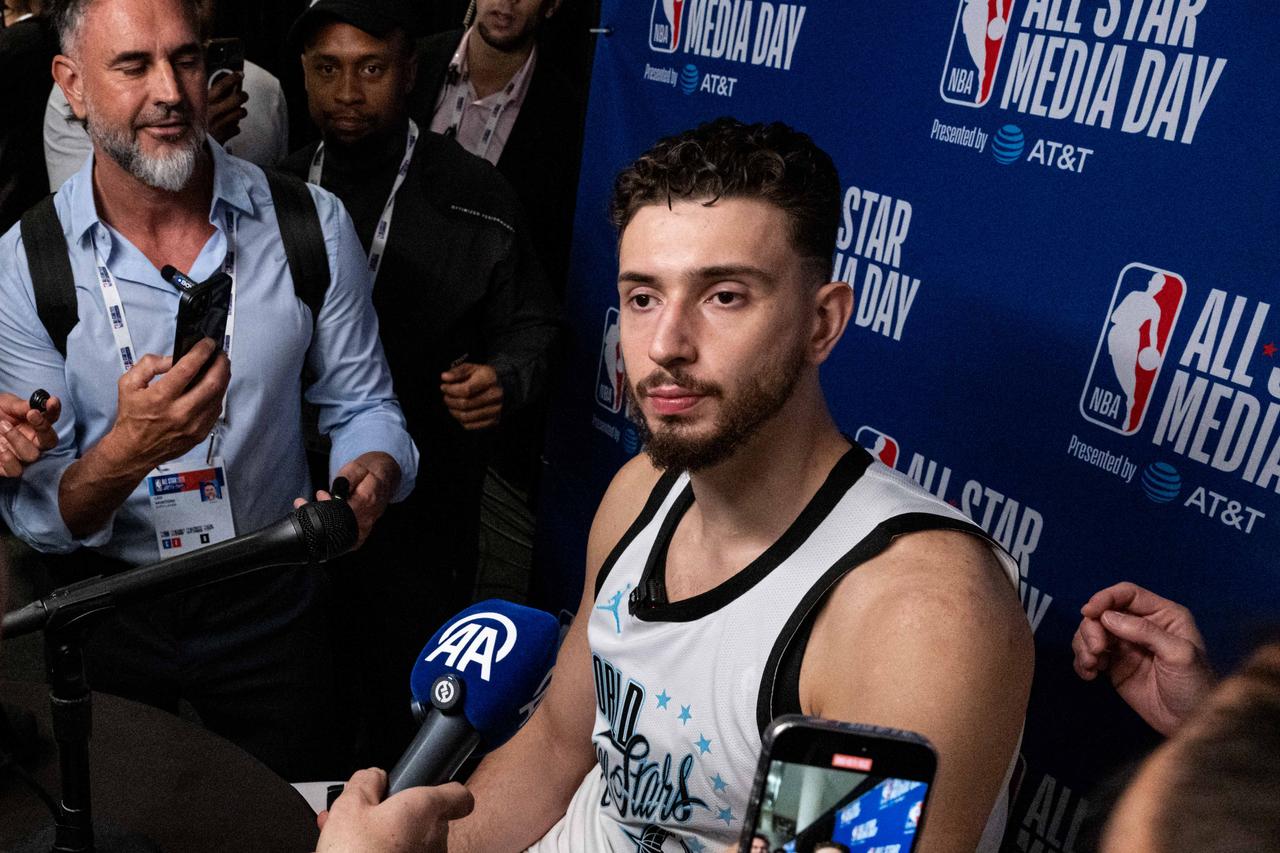


As many observers had anticipated, Turkish basketball star Alperen Sengun was finally asked about playing alongside Israeli forward Deni Avdija ahead of the 2026 NBA All-Star Game.
During the interview, Sengun appeared uncomfortable as he delivered a carefully worded response emphasizing unity and peace while avoiding direct comment on the wider controversy.
The Turkish national team standout described Avdija as “a hard worker, great guy, great person” and expressed hope that basketball could help unite people worldwide.
The comments, delivered during All-Star media availability in Los Angeles, drew criticism from some observers who pointed to the ongoing war in Gaza and the political controversy surrounding the Israeli player.
The 2026 NBA All-Star Game, held in Los Angeles from Feb. 14 to 16, features a revamped format built around international competition, including a World team that brings together players from different countries.
Alperen Sengun, the Houston Rockets center, is participating in the event for the second consecutive year following another strong season, while Portland Trail Blazers forward Deni Avdija is making his debut as the first Israeli player ever selected to the midseason showcase.
Ahead of the event, Sengun was asked whether he and Avdija could use the platform to help bring people together, given global tensions. The 23-year-old emphasized that political issues were beyond the role of professional athletes.
“That stuff is a lot bigger than us. We are going to represent our countries the best we can,” Sengun said. “We are here doing what we love, and other stuff is out of our control. Hopefully, basketball brings everyone to love and to stay together. Hopefully, the whole world is at peace.”
He added that Avdija was “one of my good friends in this league,” framing his response around unity and shared professional respect rather than political discussion.
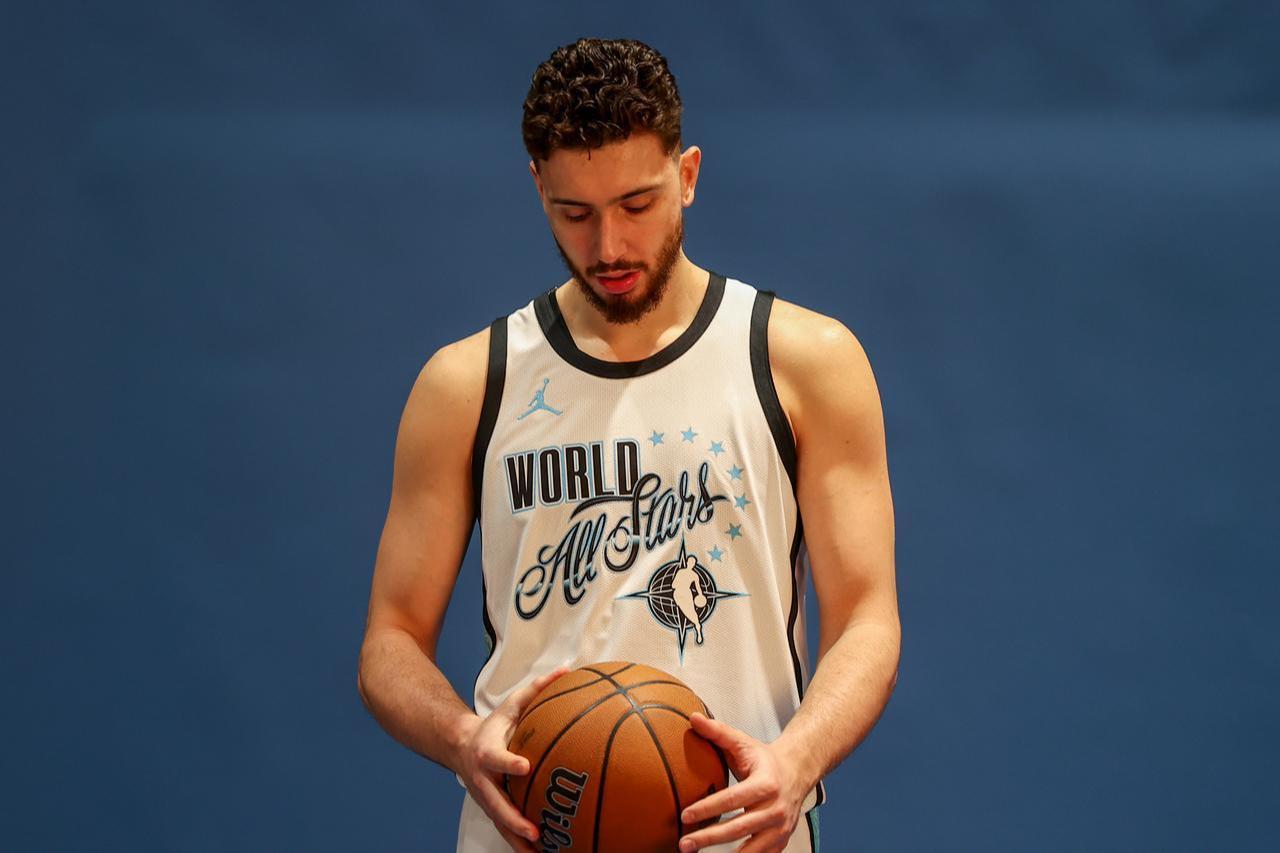

Alperen Sengun’s comments quickly circulated on social media, where some users criticized what they viewed as a conciliatory tone toward an Israeli player amid Israel’s ongoing military campaign in Gaza.
Critics questioned public praise directed at Avdija and argued that athletes should take clearer positions on global political issues.
The reaction reflects growing expectations that high-profile sports figures engage with international conflicts, particularly when national representation is involved. While Sengun’s remarks focused on peace and unity, many proposed that neutrality itself can be considered as alignment with a certain side.
Much of the debate centers on Avdija’s background and national identity. The 25-year-old forward is one of Israel’s most prominent athletes and has repeatedly emphasized his pride in representing his country on the international stage.
During All-Star Weekend media availability, Avdija thanked supporters. “First of all, thank you for waking up and sacrificing your sleeping hours,” he said. “So many of them voted for me and continue to support me, and I get to play with the people of Israel on the court.”
His selection follows a breakout season with the Trail Blazers, where he is averaging around 25 points, seven rebounds, and six assists per game. The achievement has been widely celebrated in Israel as a milestone for the country’s basketball program.
However, Avdija’s rising visibility has also brought political scrutiny. Israeli Prime Minister Benjamin Netanyahu publicly congratulated the player following his All-Star selection, writing that each time Avdija stepped onto the court, “our country shines with pride.”
The message drew thousands of responses online, many referencing Israel’s military operations in Gaza and questioning the political implications of the endorsement.
Avdija’s past military service has also become a central focus of criticism. He enlisted in the Israel Defense Forces in 2020 under Israel’s compulsory military service system, which requires most citizens to serve.
According to reports, he completed his service in a non-combat role while continuing his professional basketball career abroad.
The player has not publicly addressed the backlash linked to his All-Star selection or the criticism surrounding his military background.
The debate surrounding Alperen Sengun’s remarks and Avdija’s selection highlights the complex position of athletes competing in global leagues, where national identity and political conflict often intersect.
International sporting events such as the NBA All-Star Game amplify national representation, increasing the likelihood that broader geopolitical issues will shape public reactions.
As athletes gain prominence, they can become symbolic figures in debates that extend beyond their professional roles.
Observers have noted that public responses to Avdija’s performances have at times reflected wider political tensions rather than purely sporting considerations, illustrating how global conflicts can influence the perception of individual players.
Avdija himself has expressed frustration that his career is frequently viewed through a political lens. He has said he considers himself primarily an athlete and has questioned why his nationality should define how his performances are judged.
“I’m an athlete. I don’t really get into politics, because it’s not my job,” Avdija said, according to The Guardian. He added, “I obviously stand for my country, because that’s where I’m from. It’s frustrating to see all the hate."
At the same time, he has described representing Israel as a source of pride and responsibility, underscoring the tension between national identity and political expectation that increasingly shapes global sport.
Sengun’s remarks reflect a similar approach adopted by many professional athletes, who often seek to avoid political positioning while emphasizing unity and shared values.
His repeated calls for peace and his insistence that global conflicts were beyond athletes’ control mirror the broader stance taken by sports organizations that promote international competition as a platform for cultural exchange.
The NBA has long framed its global events as spaces that bring people together across national boundaries.
Yet the reaction to the 2026 All-Star selections demonstrates how international conflict continues to influence how athletes are perceived, both on and off the court.


 Set as preferred source
 Set as preferred source


 1 min read