Newsletters


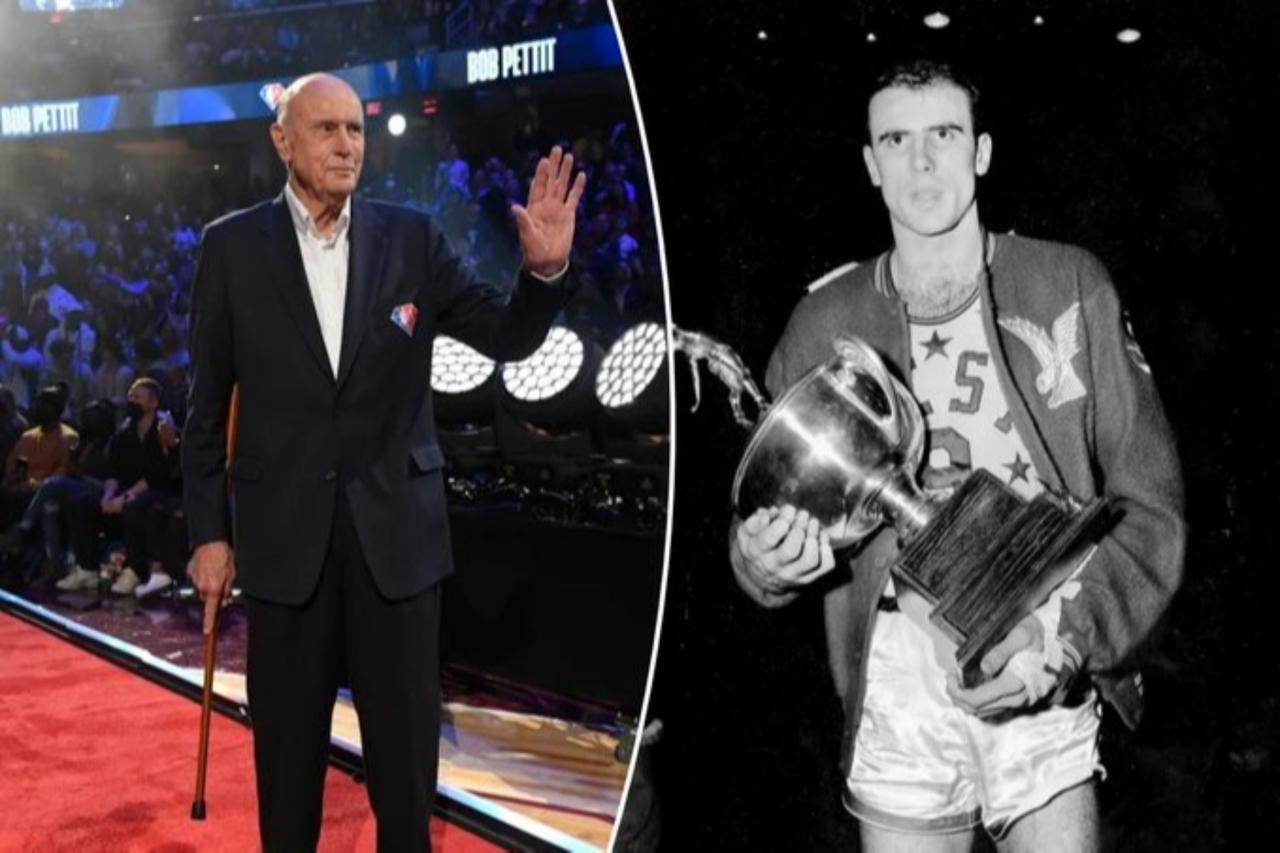


Bob Pettit, the first player ever named the NBA's Most Valuable Player and the first to reach 20,000 career points, has died at age 93.
An 11-time All-Star who retired as the league's all-time leading scorer, Pettit spent his entire 11-year career with the St. Louis Hawks, joining the franchise in its final season in Milwaukee before it settled in St. Louis and, later, Atlanta.
He led the Hawks to their only NBA championship in 1958, beating the Boston Celtics in a six-game series capped by a 110-109 win in which Pettit scored 50 points, still the most ever in a title-clinching game until Giannis Antetokounmpo matched it in 2021.
That title made Pettit the only man to beat Bill Russell in a Finals series; Russell went on to win 11 championships in 12 seasons with the Celtics. The two had met in the Finals the year before as well, in 1957, when a Pettit tip-in rolled off the rim in the closing seconds of overtime in what many regard as the greatest Game 7 in NBA history. Russell later praised his rival's tenacity, saying Pettit "made 'second effort' a part of the sports vocabulary" and was "always great under pressure."
Pettit won the NBA's first-ever MVP award in 1956 and won it again in 1959. He was a 10-time All-NBA First Team selection and a four-time All-Star Game MVP, and he was inducted into the Naismith Memorial Basketball Hall of Fame in 1971.
Standing 6-foot-9 (206 cm) and a relatively lean 205 pounds (93 kg), Pettit played with a physical intensity that defied his slender frame. He thrived in an era when few big men possessed the coordination or aggression to serve as their team’s primary scoring option.
Raised in Baton Rouge, Louisiana, he had honed an outside shot in high school, after initially being cut from the team, and grew five inches by the time he enrolled at LSU, giving him a rare combination for a big man: the ability to score from 15 feet (4.57 meters) as well as dominate the paint and the boards.
That blend of skills, decades ahead of its time, became the blueprint for what the league would eventually call the power forward position. Pettit averaged a double-double for his career, 26.4 points and 16.2 rebounds, and was especially prolific chasing offensive rebounds, which he once estimated were "worth 8-to-12 points a night" for him, at a time when few players prioritized them.
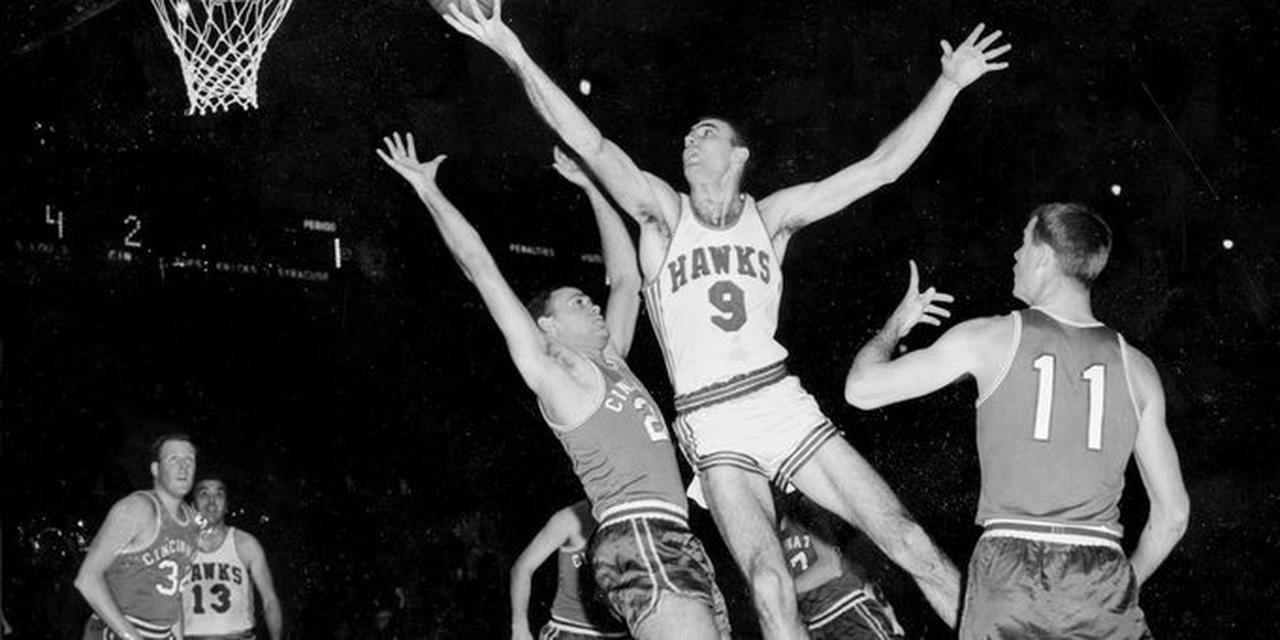

He finished his career as the NBA's second-leading rebounder and never averaged fewer than 20 points in a season, a level of consistency Hall of Famer Oscar Robertson called "unheard of today."
Pettit credited his effectiveness to relentlessness rather than raw talent. "I played as hard as I could play every minute I was in the game," he said. "Every time my teammate shot, I went after the ball. Not once, not twice, every time."
Lenny Wilkens, his teammate in St. Louis late in his career, remembered him similarly: "This guy came ready to play every night. He never made excuses."
The NBA honored Pettit as a member of its 25th, 35th, 50th and 75th anniversary teams. In a statement, the league said he "raised the bar for excellence as the league's first MVP, first 20,000-point scorer and first four-time All-Star Game MVP."
LSU, his alma mater, said Thursday that Pettit "defined what the modern power forward should be in the NBA," adding that his achievements are less remembered today only because his career unfolded when television coverage and film preservation of games were still limited.


 Set as preferred source
 Set as preferred source


 1 min read


 1 min read