Newsletters


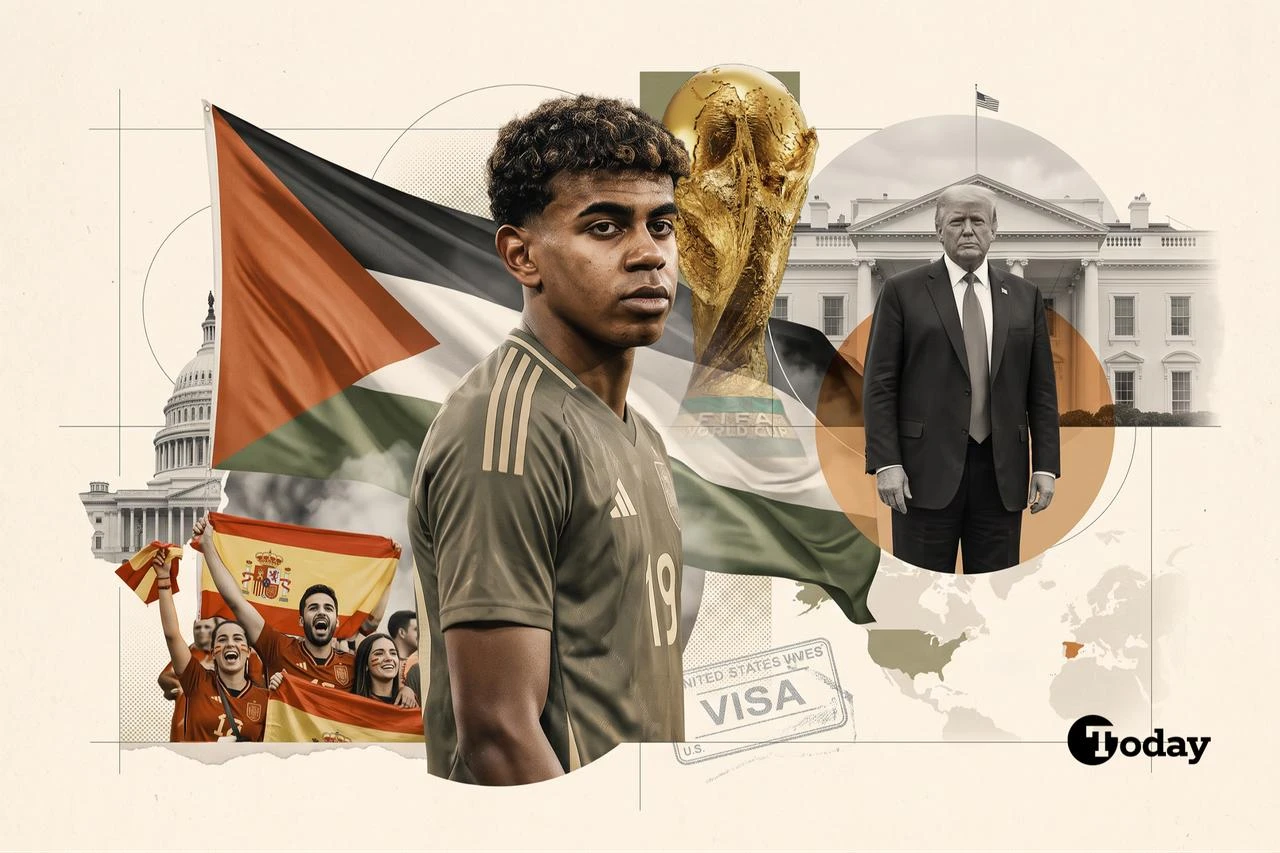


Politics is not supposed to show up at the World Cup. It shows up anyway, in visa offices, on team buses, and in press conferences.
Every four years, the tournament promises to be the one thing bigger than the arguments between governments, and every four years, it ends up carrying those arguments onto the pitch regardless.
This year, the dispute between Spain and the United States has already made its mark on the tournament, more than either government expected.
Sixteen years ago, Joan Capdevila lifted the World Cup with Spain. On Sunday, July 19, just hours before Spain's next chance at the trophy, he still didn't know if he would be allowed into the host country.
The reason had nothing to do with football. Capdevila says his U.S. travel authorization was denied over a friendly he played in Iran a decade ago, in 2016, when a squad of La Liga veterans faced an Iranian all-star team in Tehran.
He learned about the denial just two days before Spain's second World Cup final, set to be played against Argentina at the New York-New Jersey Stadium. He posted about it online, tagging Spain's sports ministry and asking if anyone could help him get in to watch with his kids and former teammates.
A World Cup champion, locked out of a World Cup final, over a decade-old exhibition match. It reads like a bureaucratic accident. It is not.
For months, Washington and Madrid have been locked in an escalating fight over war, defense spending and trade, one that has nothing to do with football and, again and again, keeps landing on it anyway. Capdevila is only the latest name caught in it.
To understand how he ended up there, it helps to start with where the fight actually began.
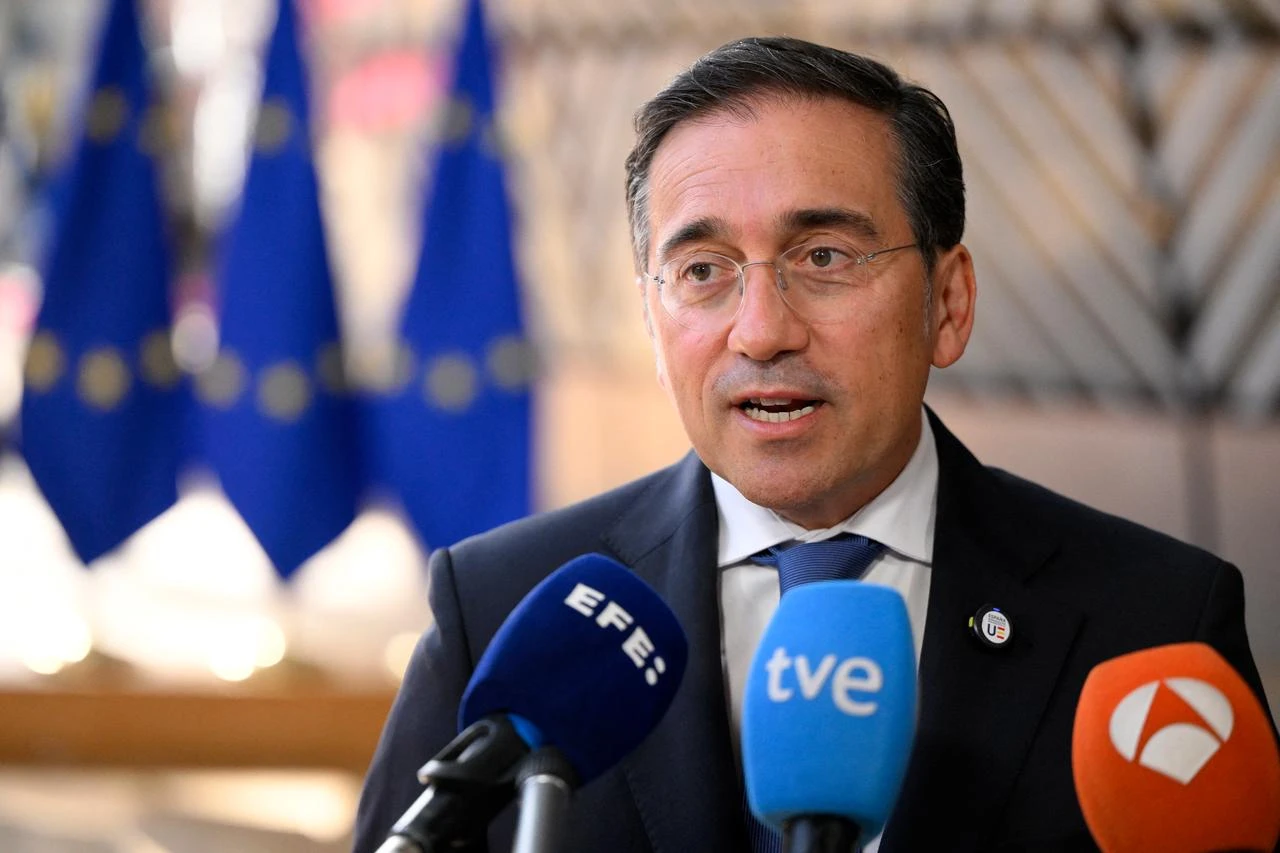

The dispute began in March, when Spain refused to let American aircraft use its bases for operations related to the war against Iran.
Prime Minister Pedro Sanchez said the strikes were unjustified. Spanish officials explained that Spain would not host any operation unless the U.N. charter authorized it.
President Trump answered the only way he knows how. He ordered Treasury Secretary Scott Bessent to cut trade ties with Spain, a threat he has now made more than once.
Then Spain became the only NATO member to flatly reject the alliance's proposed defense-spending target of 5% of GDP. Sanchez called the number unreasonable.
Trump called Spain a "terrible partner." At the NATO summit in Ankara on July 8, he escalated again, ordering an immediate halt to all U.S. trade with Spain.
There was one problem. EU trade policy runs through Brussels, not through bilateral orders from Washington, a detail the European Commission pointed out within hours.
The economic stakes are modest. Spain sells olive oil, wine, steel and auto parts to the U.S., and its wine exports were already sliding before Trump's latest threat.
Analysts say Spain has less exposure to American retaliation than most of its EU neighbors. The political noise, though, has traveled well past trade ministries.
The first place it landed was on a football pitch, or rather, on one that never got played on.
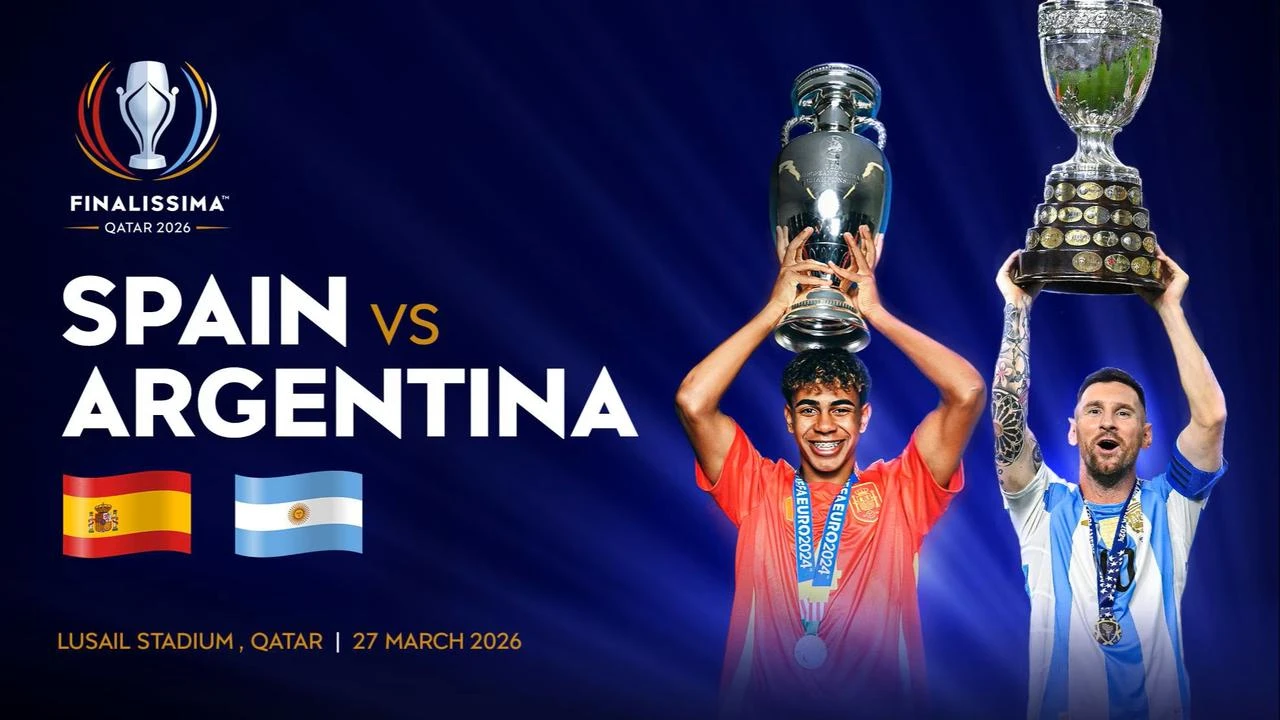
The first sign came in March, when Spain and Argentina were set to play in Doha for the Finalissima, an official cup match between the reigning European and South American champions.
UEFA and the Qatari organizers canceled the match, citing regional instability, airspace disruptions, and travel restrictions related to the conflict in Iran.
Argentina suggested rescheduling the match after the World Cup, but the federations could not agree on dates or a neutral location. The match was quietly dropped.
Sunday's final is only the second time Spain and Argentina have met at a World Cup, the first being a group match in 1966. It's also their first real test against each other in years.
Neither team got the title match they were due to play. The cancellation was a decision made by officials, far from the stadium.
The most obvious clash between Spain's foreign policy and its football team came from a much less official place.
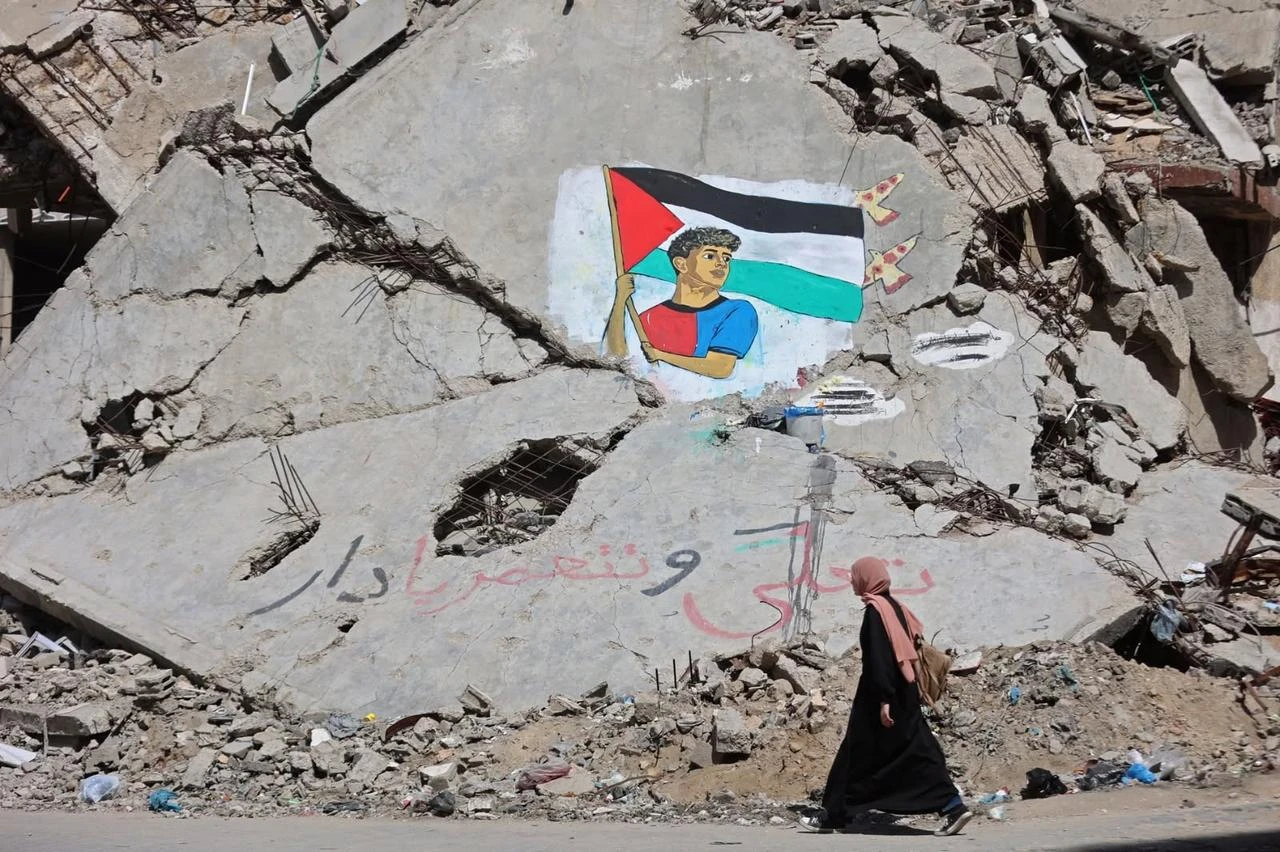
In May, 18-year-old Lamine Yamal held up a Palestinian flag from Barcelona's open-top bus during the club's title parade, in front of about 750,000 people. Yamal is Muslim, and his father moved to Spain from Morocco. He has previously spoken about anti-Muslim chants directed at him during matches.
Reactions were divided, as expected. Barcelona coach Hansi Flick said it wasn't his personal preference, but he respected that it was Yamal's decision.
Israel's defense minister accused him of inciting hatred. Sanchez defended him. Within days, a mural of Yamal holding the flag appeared on rubble in a Gaza refugee camp.
Spain's government had already staked out this ground. Madrid recognized a Palestinian state in May 2024, a decision that helped earn Spain the label "unfriendly" from Trump months before any fight over Iran or NATO spending began. Spain has also barred ships and aircraft carrying weapons to Israel from its ports and airspace.
Yamal was not breaking from his country's position on Gaza. He was echoing it, on a bus, with a flag, in front of three-quarters of a million people.
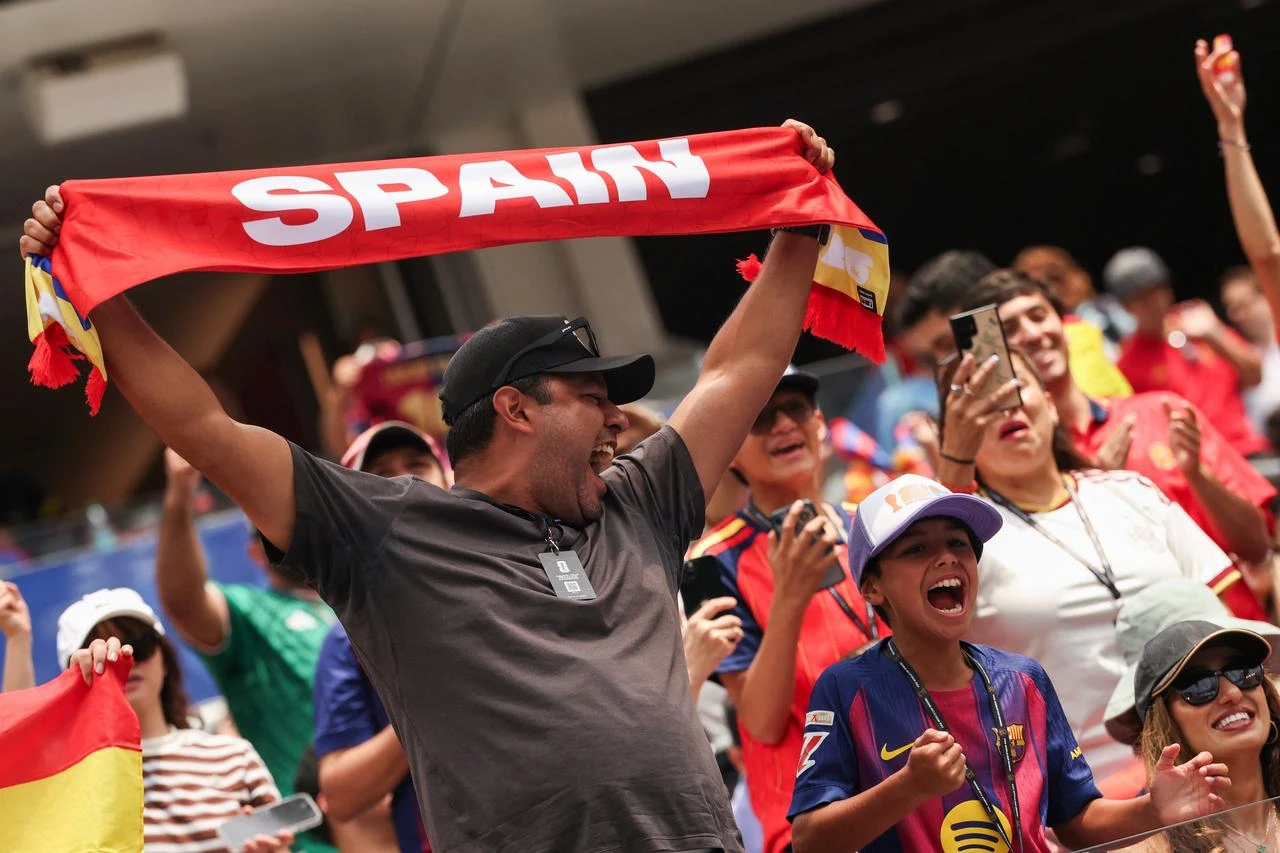
None of this will affect the match itself. Spain comes into the final unbeaten. Whatever happens with Capdevila's case, it won't change the result.
But the feud has already left its mark on this tournament, starting with an official match that most people didn't even notice was canceled. Now, it's affecting individual fans and former players, one denied travel document at a time.
If Spain wins on Sunday, the celebration will happen in the country whose president tried to cut off trade with Spain just five months ago, in a stadium that a former champion almost couldn't enter because of a trip to Iran ten years ago.
Whether that remains a small detail or becomes the story people remember may depend on what Spain's players decide to do, or to wave, once the whistle blows.


 Set as preferred source
 Set as preferred source


 2 min read