Newsletters


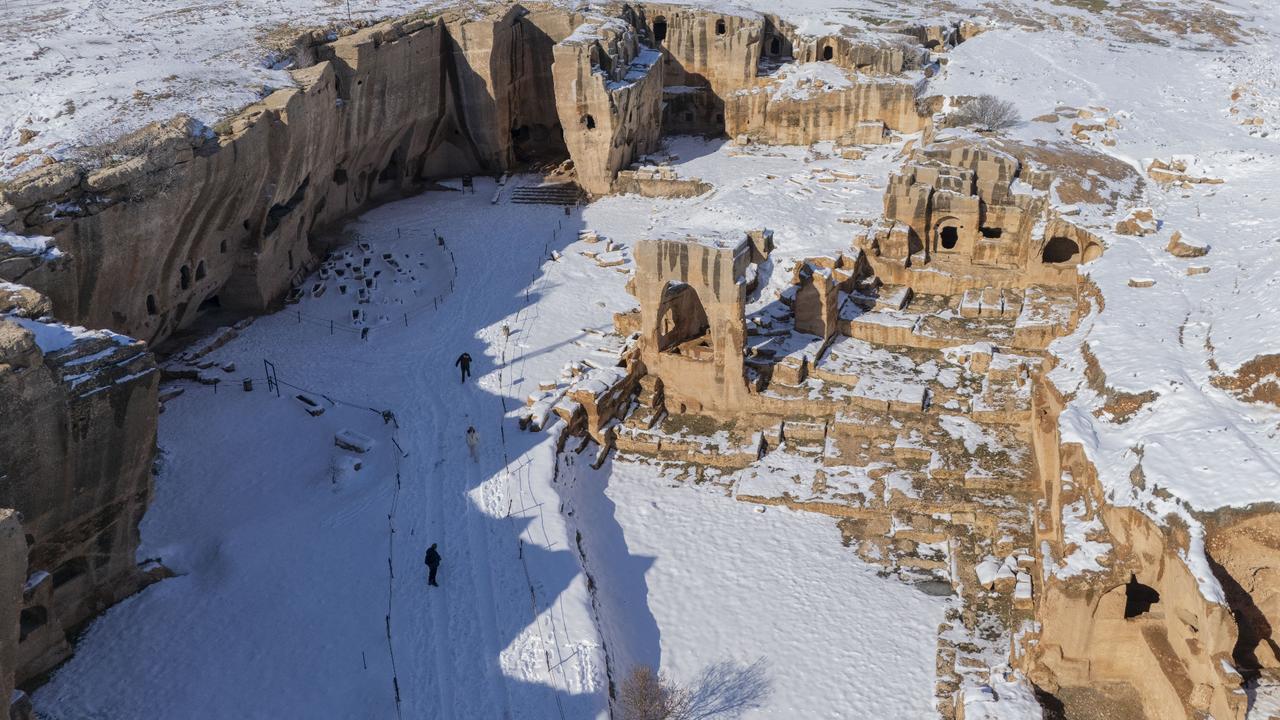
Heavy snowfall has blanketed the ancient city of Dara in southeastern Türkiye, revealing its layered history through snow-covered fortifications, necropolises, water systems, and religious monuments that once made it a strategic stronghold of Northern Mesopotamia.
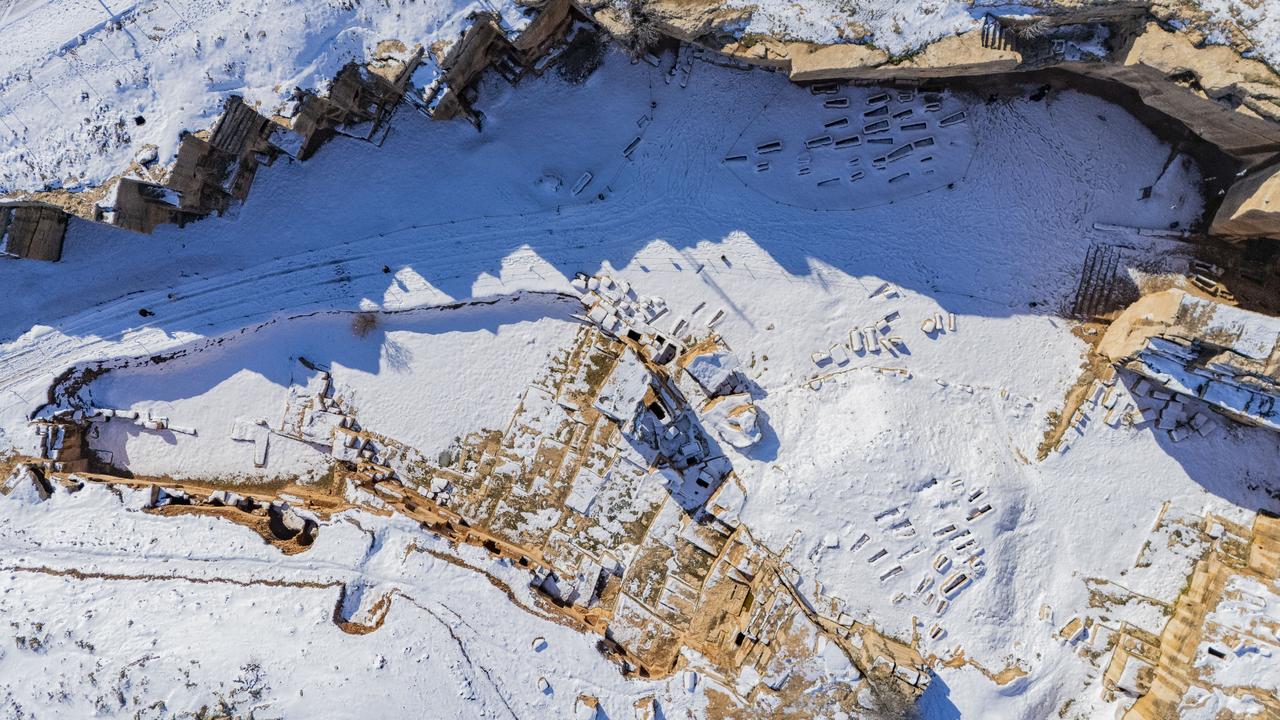
Located near the Syrian border, Dara stands on the southern skirts of the Tur Abdin Mountains, overlooking the Mesopotamian Plain, a position that once allowed it to dominate key military and trade routes. Today, the snow brings out the city’s topography and long-abandoned architecture, offering a rare seasonal view of one of the region’s most important ancient settlements.
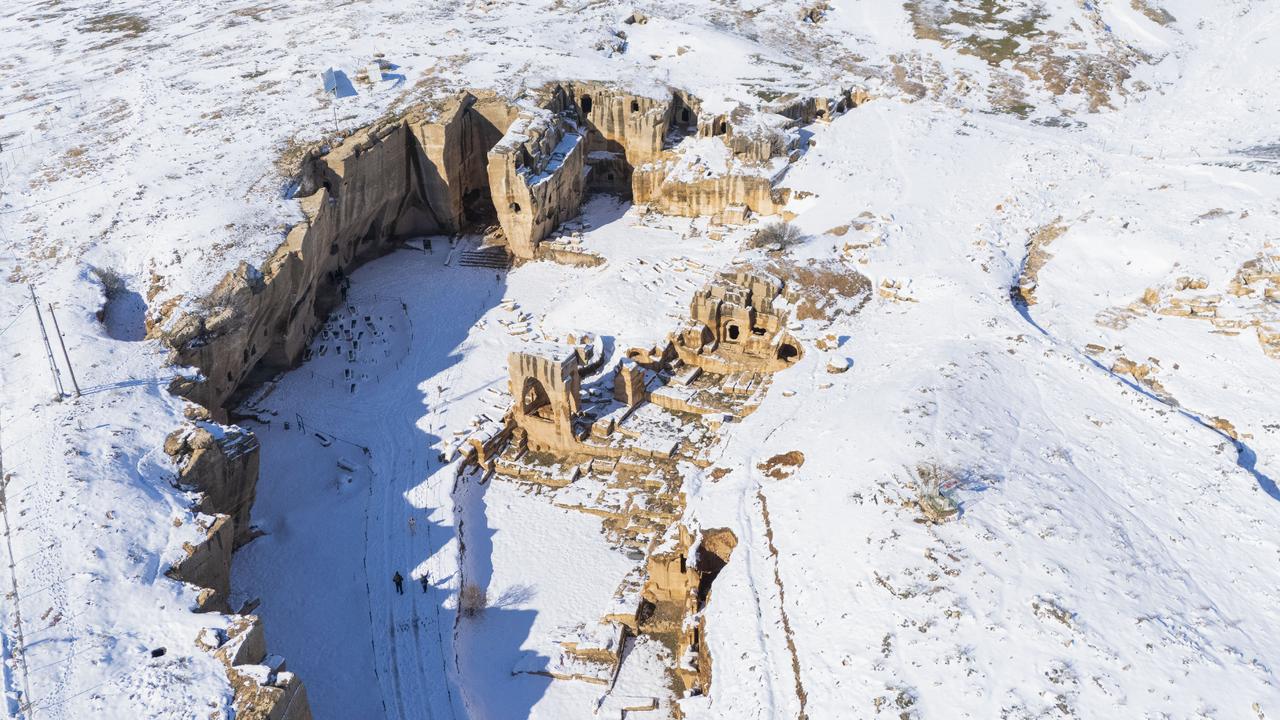
Ancient sources associate Dara with early Parth history, linking its name to King Arsakes I and describing it as a naturally fortified city surrounded by steep rocks, fertile land, water sources, and woodlands. Although it changed hands between Parth and Seleucid powers, its decisive transformation came in the early sixth century, when Eastern Roman Emperor Anastasius I turned a small village into a fortified garrison city later known as Anastasiopolis, reshaping Dara into a military and administrative center of Mesopotamia.
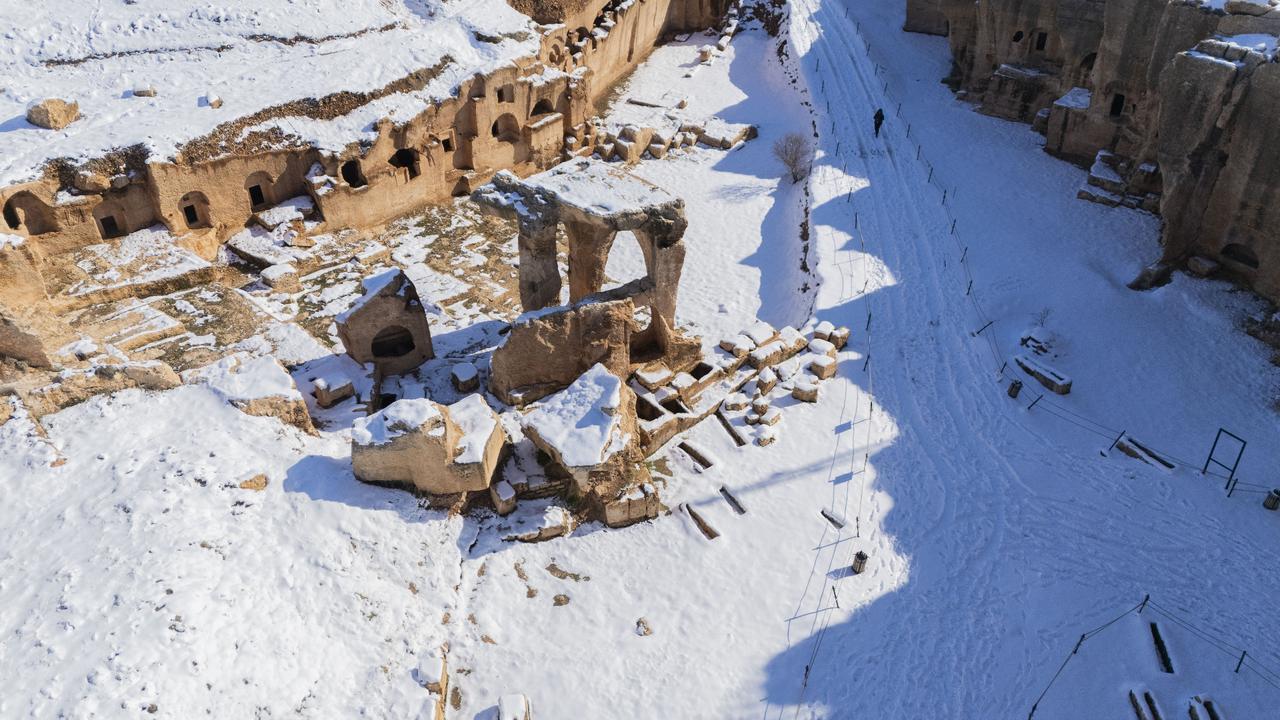
Snow-covered ruins trace the long sequence of rule over Dara, from the Eastern Roman Empire to the Sassanids, and later to Arab, Seljuk, and Artuqid control. Each transition left architectural and cultural layers behind, while repeated sieges and invasions gradually weakened the city. By the fourteenth century, Dara had been largely abandoned, and the modern village that emerged centuries later was built directly on top of the ancient remains.
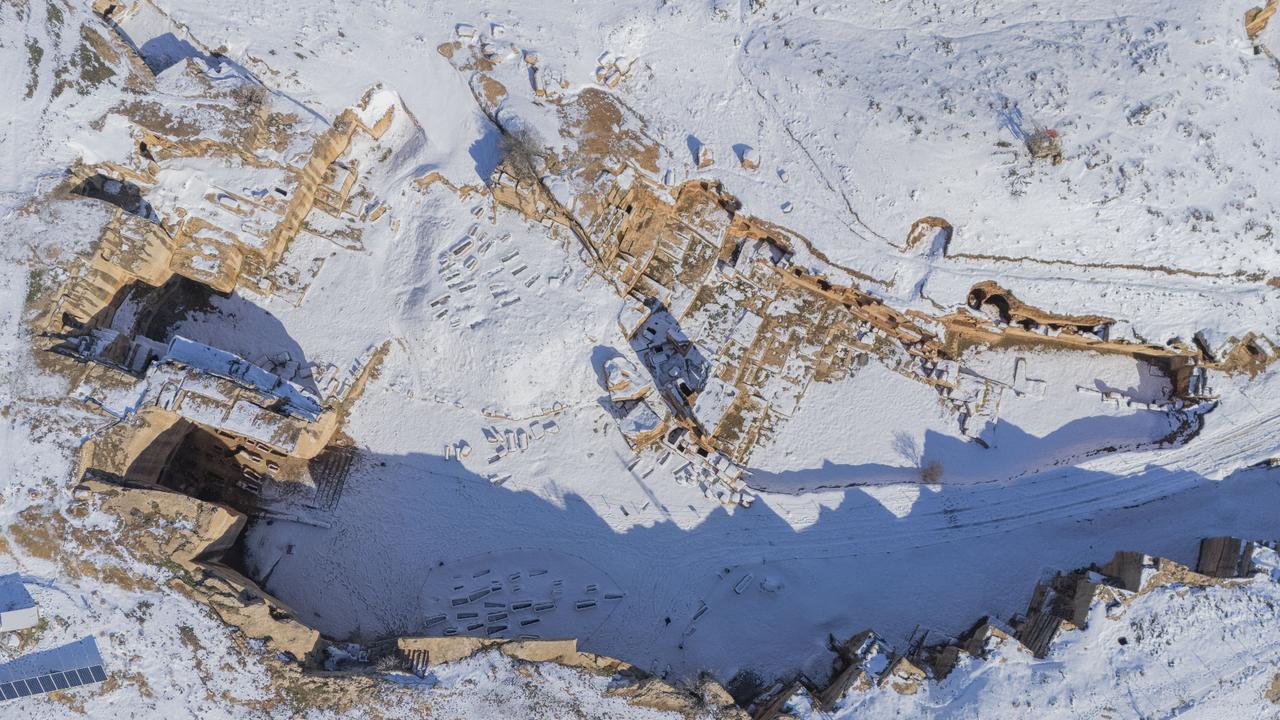
The western hills of Dara, now dusted with snow, contain one of its most remarkable features: a vast rock-cut necropolis carved into bedrock. These tombs, ranging from chamber graves to sarcophagi and later simple cist graves, reflect changing burial practices over centuries. Early burials were linked to beliefs in rebirth and the cult of Mithras, a deity associated with being born from rock, showing how older pagan traditions continued even after Christianity spread through the city.


 Set as preferred source