Newsletters


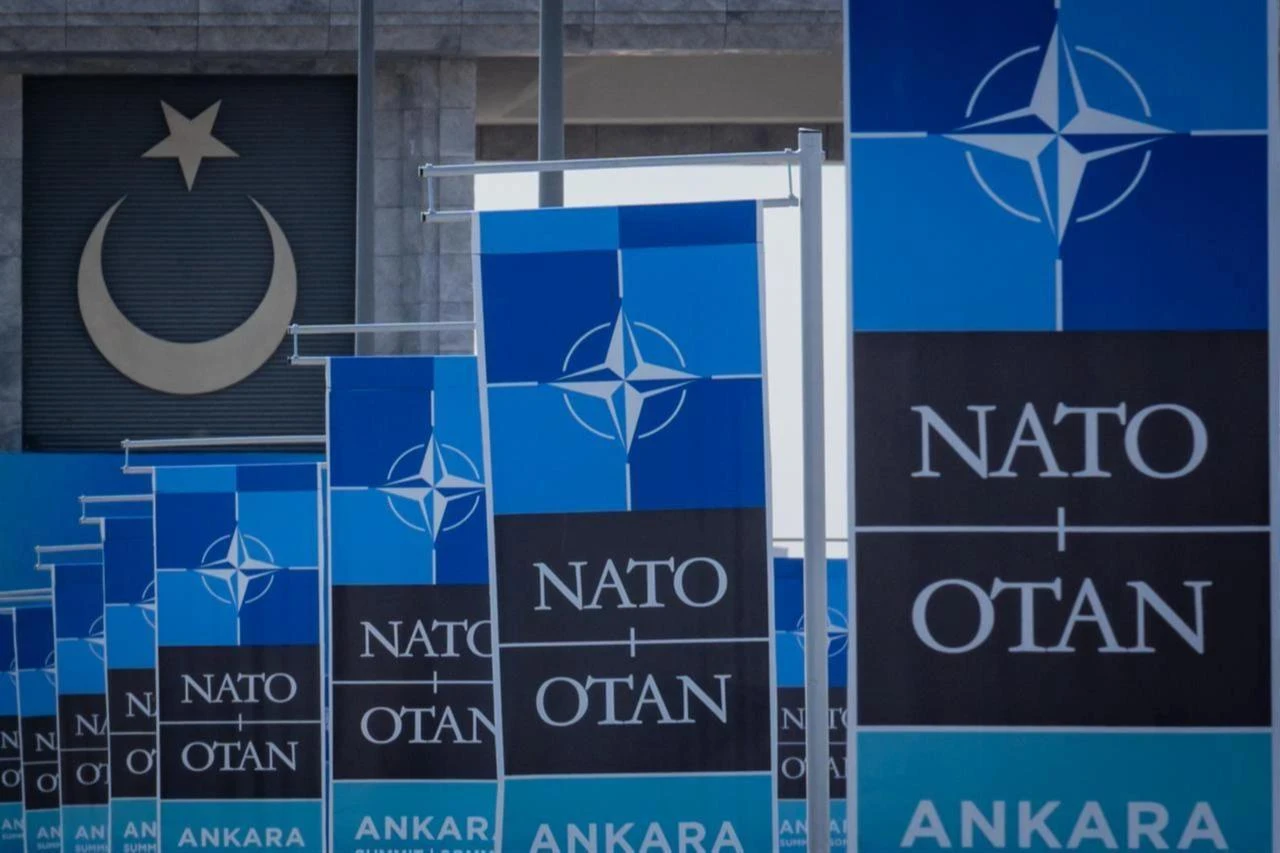


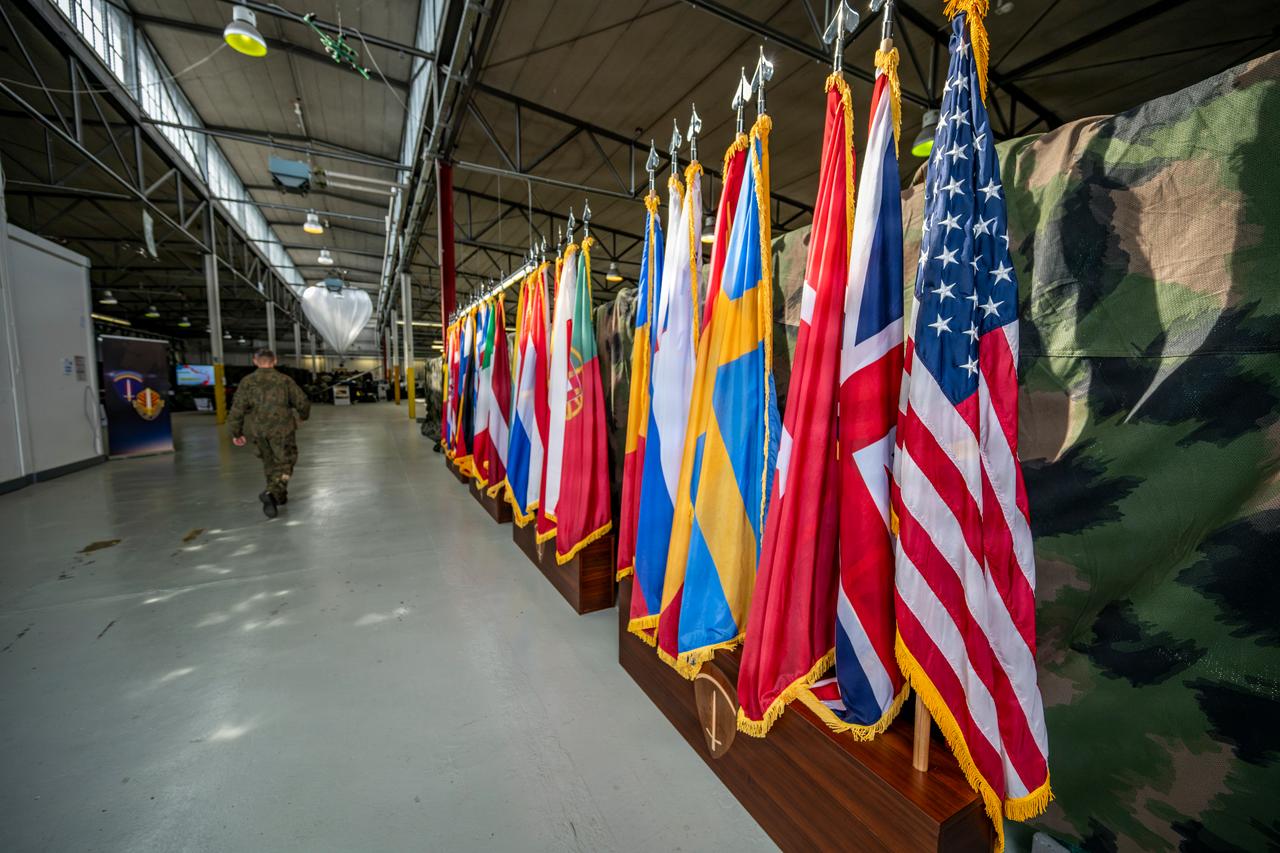
Thirty-two flags snap against a white July sky over the Presidential Complex in Ankara, and then a handful more that do not belong to any member state.
Inside, over two days, the world's most heavily armed alliance will hold its summit. But the story worth watching this week is not who is a member. It is who was pulled up to the table anyway.
By 2026, the idea of a contained, regional NATO reads like a relic. The lines that separated the Euro-Atlantic theater from the Indo-Pacific, or European energy security from the Strait of Hormuz, have gone soft.
NATO's actual perimeter now runs through the Black Sea, the Taiwan Strait, and the tanker lanes off Bandar Abbas, and the guest list in Ankara is the clearest map of that fact.
In this sandbox, the roll call of attendees and the glaring absences have something to tell about the new geometry of alignment.
The guest matrix pulls in heavy hitters from outside the formal treaty boundaries: Australia’s Anthony Albanese, Azerbaijan’s Ilham Aliyev, the European Union's tag-team of Antonio Costa and Ursula von der Leyen, Japan’s Sanae Takaichi, New Zealand’s Christopher Luxon, South Korea’s Lee Jae Myung, and Ukraine’s Volodymyr Zelenskyy.
Every single player on this roster anchors a distinct regional calculus, showing up with skin in the game and a tailored agenda.
Yet, while the Gulf, the Indo-Pacific, and the South Caucasus are flexing major diplomatic equity in Ankara, the complete radio silence from Central Asian frameworks signals a different story about where NATO 3.0’s peripheral boundaries wrap up.
NATO’s official website features a detailed, minute-by-minute schedule of the upcoming summit. On the second day of the summit, one of the event’s major highlights will be the “big reveal announcement," which will kick off the day. This announcement has a good chance of being about Ukraine.
Hence, start with the one leader in the room who needs no introduction. Zelenskyy is not a first-time visitor to a NATO summit anymore; he is closer to the table's most seasoned member without a membership card, the one whose presence forces every abstract policy discussion back into contact with an active war.
His agenda in Ankara is straightforward: lock in defense-industrial supply lines and keep Western production schedules synchronized with what Ukraine actually needs on the ground—in a country that has spent four years learning the difference between a pledge and a delivered shell casing.
Türkiye, having spent that same period balancing its NATO obligations against its role as a Black Sea mediator, gives Zelenskyy a stage built for exactly that kind of task.
Sitting a few seats over, the European Union's leadership arrives with a different kind of mandate, less about firepower than about making sure Brussels' sanctions regime and financing packages actually plug into whatever NATO decides on deterrence.
It is an old marriage of hard power and economic statecraft, and Ankara is where the two sides check that the wiring still connects.
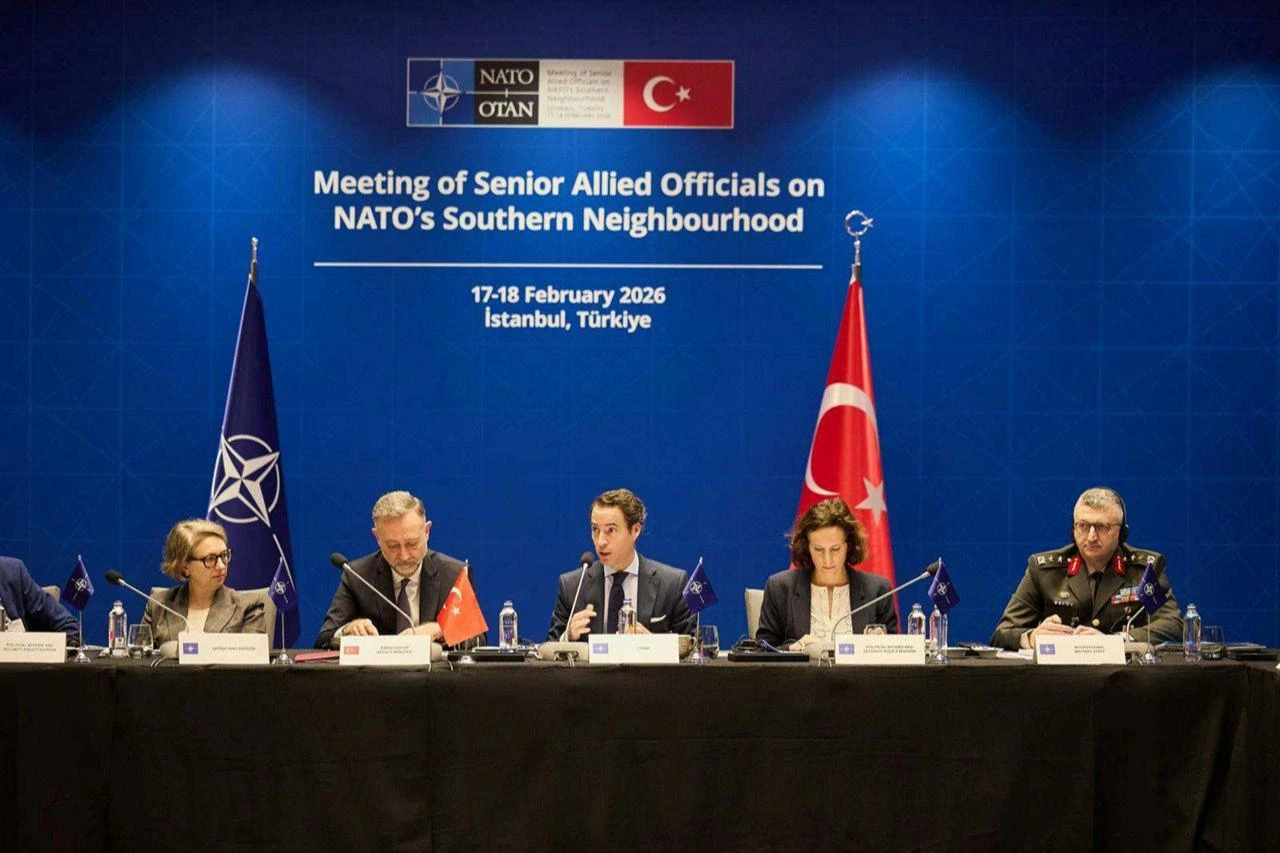

On paper, the alliance maintains formal partnerships in Central Asia with Kazakhstan, the Kyrgyz Republic, Tajikistan, Turkmenistan, and Uzbekistan.
In fact, following the June 2004 Istanbul Summit, NATO allies created the post of Special Representative for the Caucasus and Central Asia on an ad-hoc basis to signal a dedicated pivot toward these geostrategic arenas.
That seat is currently held by Ambassador Kevin Hamilton, appointed by the secretary general in March 2026 after a tour as Canada’s ambassador to Türkiye from August 2023 to March 2026.
Yet, despite Hamilton's deep regional resume and fresh appointment, his office didn’t yield a single breakthrough appearance from the Central Asian partners at this table for a reason.
Instead, another similar output of the last NATO summit Türkiye hosted in 2004, Istanbul Cooperation Initiative’s (ICI) Gulf delegation will complete the picture.
Bahrain, Kuwait, Qatar, and the UAE come through the Istanbul Cooperation Initiative; Saudi Arabia comes through a bilateral track that Ankara has spent the last few years rebuilding almost from scratch.
Their presence answers three questions NATO can no longer avoid asking allies and non-allies to help with.
First, how to keep shipping moving through the Red Sea, Bab el-Mandeb, and the Strait of Hormuz when all three sit under active threat.
Second, how to close the gap in drone production and joint air-defense ventures—a shift already visible on the sidelines at Ankara's parallel Defense Industry Forum.
Third, how to keep intelligence flowing on proxy networks tied to Iran and Yemen, a line Washington in particular wants open.
Türkiye did not invite the Gulf states to Ankara so much as it made itself the only credible bridge between the North Atlantic Council and the Gulf Cooperation Council, and then let geography do the rest of the persuading.
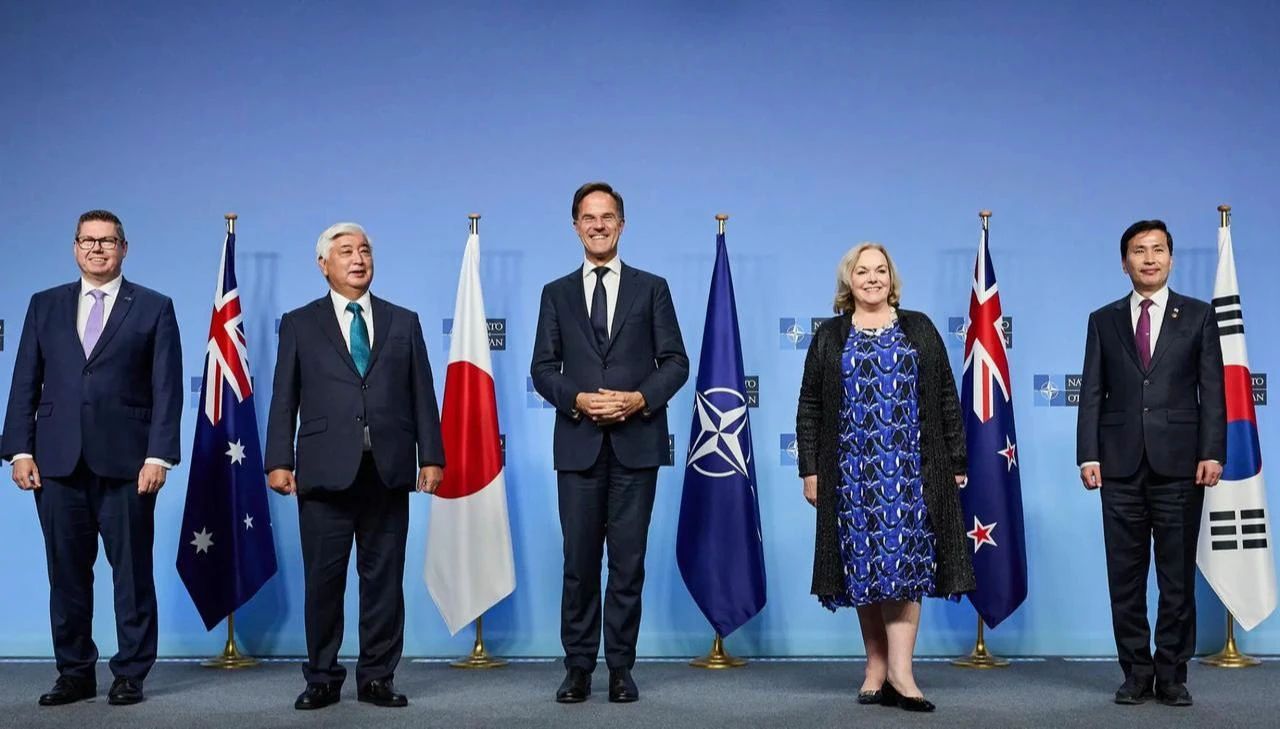
The Ankara summit’s invitation list jumps continents. Sanae Takaichi, Lee Jae Myung, Anthony Albanese, and Christopher Luxon flew to show the Indo-Pacific Four (IP4) framework’s close engagement with the alliance in the face of big opportunities and risks.
As national security adviser to the South Korean President, Wi Sung-lac noted on the eve of the president’s trip, South Korea must advance partnerships matching NATO standards to streamline hardware exports, driven by the grim realization that Euro-Atlantic and Asian security are now explicitly fused, underlined by North Korean troops actively deployed on Ukrainian frontlines.
According to him, South Korean President Lee Jae Myung will land in Ankara with a focus on embedding Seoul's high-velocity manufacturing directly into the alliance’s defense supply chains.
Japan has mirrored this pragmatic pivot; with Prime Minister Sanae Takaichi held back by parliamentary business, Tokyo dispatched Defense Minister Shinjiro Koizumi to anchor the IP4 unity track, aiming to lock in direct consultations with Turkish Defense Minister Yasar Guler and British Defense Secretary Dan Jarvis on the sidelines.
For experts like Sara Gianesello and Giacomo Arosio, Pacific convergence faces a steep coordination hurdle. The analysts warn that EU-NATO engagement across the Indo-Pacific remains fragmented rather than strategic, with both institutions routinely burning scarce political capital by running parallel, uncoordinated dialogues with identical partners.
For Australia’s Anthony Albanese and the rest of the IP4, this institutional redundancy creates intense coordination fatigue and leaves dangerous security blind spots unfilled. The real test for the Ankara summit isn’t just welcoming the Pacific partners to the table, but finally streamlining the Western offer into a unified, lasting architecture.
Closer to home, the summit's geography does the explaining. Ilham Aliyev's presence traces directly back to the tightness between Ankara and Baku, a relationship built on shared language as much as shared borders.
With Europe still working through its exit from Russian gas, Azerbaijan has become one of the few alternative energy corridors the West actually has, running through the Southern Gas Corridor. Protecting that corridor, and the wider Caspian, is now a conversation NATO has to have directly with Baku rather than about it.
A legal scholar and professor of politics at Yale University, Oona A. Hathaway underscored a structural reality in her New York Times column last month, bluntly noting that "You Can’t Be a Superpower Without Allies."
Thus, while every capital harbors its own distinct calculus for showing up or staying home, one can clearly sense why a Washington currently smarting from a lack of widespread backing in its war with Iran would be eager to welcome these non-alliance heavyweights to the table.


 Set as preferred source
 Set as preferred source


 1 min read
 1 min read