Newsletters


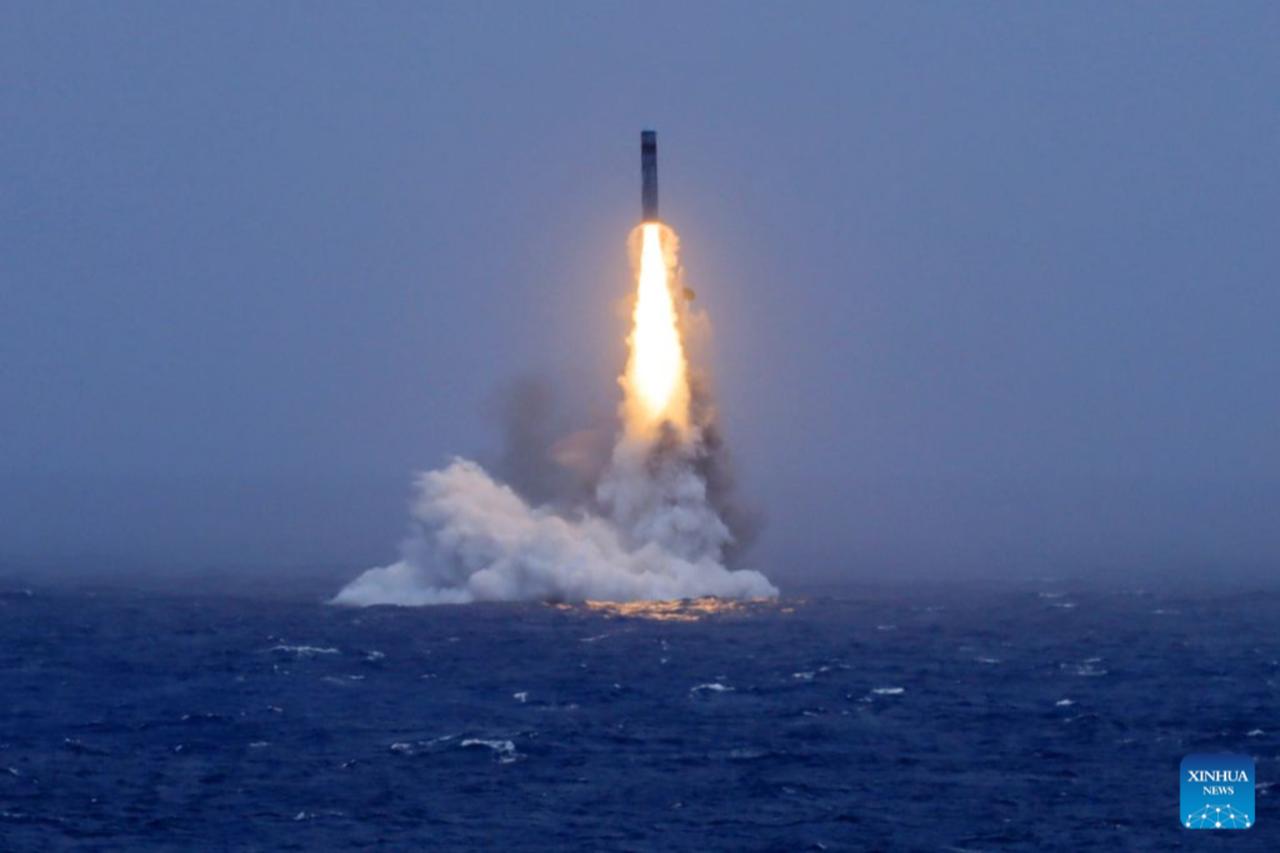


China's submarine-fired ballistic missile test into the southern Pacific on Monday gave its military leadership a chance to examine some of the most complex and sensitive operations behind its evolving nuclear deterrent, analysts and diplomats said, according to Reuters.
They said commanding, controlling and communicating with nuclear-armed submarines attempting to operate undetected pose major challenges, particularly for a Chinese Communist Party leadership where the military's political loyalty is central.
"This aspect is certainly something that would have been very much evaluated, besides looking at the actual technical capabilities of the missile and submarine," said Collin Koh, a security scholar at Singapore's S. Rajaratnam School of International Studies.
"There are still challenges ahead but it would seem they are getting close to an operational strike capability here," Koh said, adding that China was likely trying to show that even if it could not get into position to hit the continental U.S., it could still target Guam and Hawaii.
China's test firing of the missile, armed with a dummy warhead, drew criticism from regional powers.
The U.S. said the missile was an intercontinental ballistic missile that landed in the southern Pacific Ocean.
Chinese state media and officials described the test as a "routine" military drill that was not directed at a specific target or country and was handled professionally.
Responding to Reuters' questions on Friday, China's Defense Ministry dismissed some reports as "pure distortion and hype" and said the test was carried out in accordance with international law and practice.
"It should be emphasized that China's efforts to modernize its nuclear forces are intended to safeguard national strategic security and maintain global strategic stability," the ministry said.
It was China's most significant long-range ballistic missile test since September 2024, when the People's Liberation Army fired a weapon into the southern Pacific Ocean from a mobile launcher on Hainan Island in the South China Sea.
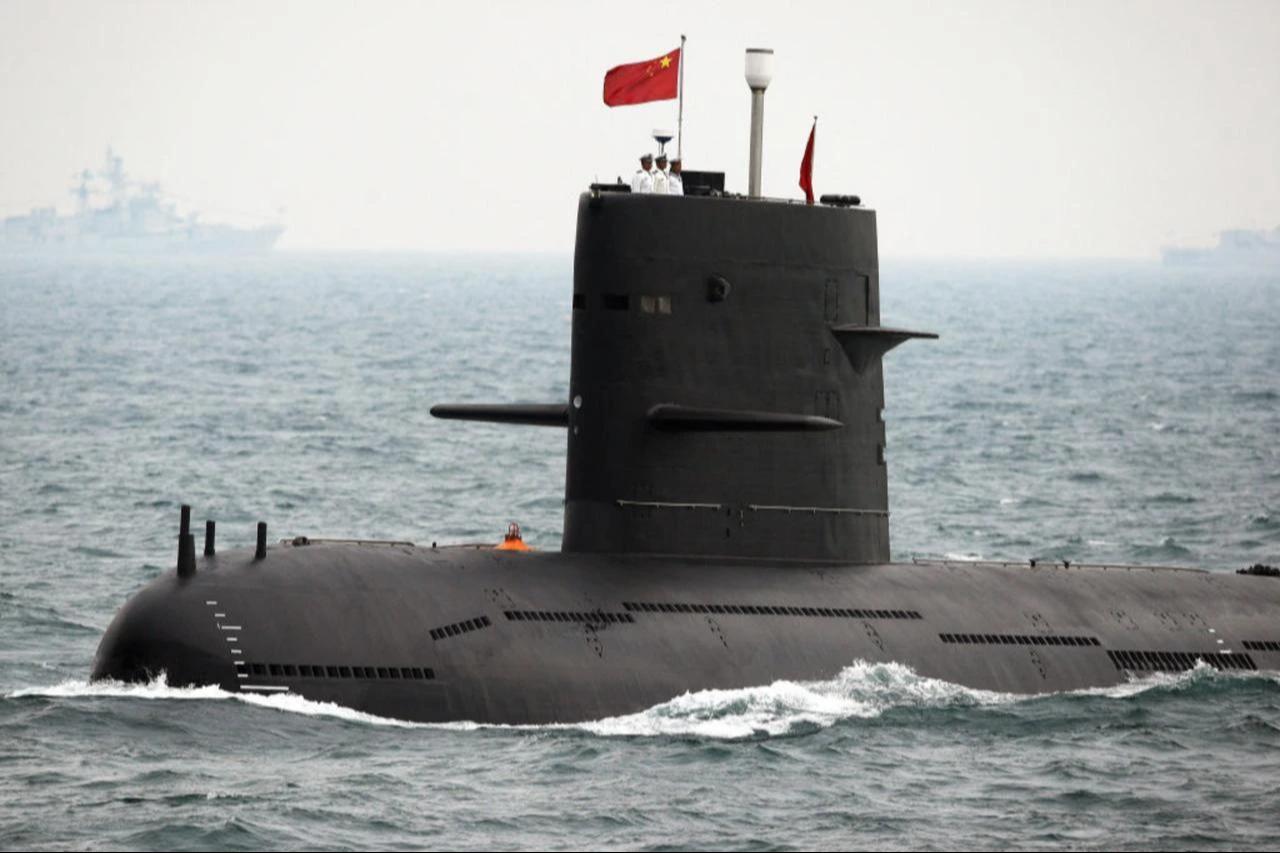

Analysts and academics said Monday's missile was fired from one of China's six Type-094 nuclear-powered submarines, known as SSBNs.
State media said the launch involved a strategic missile submarine, or SSBN, but did not identify the class. An SSBN is a large nuclear-powered submarine designed to launch nuclear-armed intercontinental ballistic missiles.
Regional military attaches and analysts said China's SSBN operations, based out of Hainan Island, are among the most closely watched parts of its military modernization because of their importance to China's nuclear deterrent and second-strike capability.
If China's nuclear-armed submarines can operate undetected, Beijing can strike back if its larger land-based arsenal is destroyed in a first strike by an adversary.
That capability is widely seen as especially important for Beijing, which maintains an official policy that it would not be the first to use nuclear weapons in a conflict.
The U.S. and its allies sometimes attempt to track Chinese submarines through naval vessels, underwater sensor networks in key chokepoints and air patrols using P-8 Poseidon aircraft equipped with advanced maritime surveillance systems, military attaches and analysts said.
Such operations are expected to increase as China's capabilities grow.
A Pentagon report in 2022 stated that China had begun operating near-continuous deterrence patrols with its SSBNs.
The U.S., Russia, France and Britain have routinely deployed such a nuclear strike capability for decades, while India is developing its own SSBNs.
A study on China's nuclear weapons released this week by the Bulletin of the Atomic Scientists, a Chicago-based research organization, said U.S. officials have not publicly stated that China's SSBNs were actually armed with nuclear weapons on such patrols.
However, the study said some U.S. officials had privately told the authors that this was the case.
The study also noted the lack of official confirmation and said Chinese President Xi Jinping's purge of military officials, including leaders of the People's Liberation Army's rocket force, made it seem unlikely that nuclear warheads would be handed over to the military under normal circumstances.
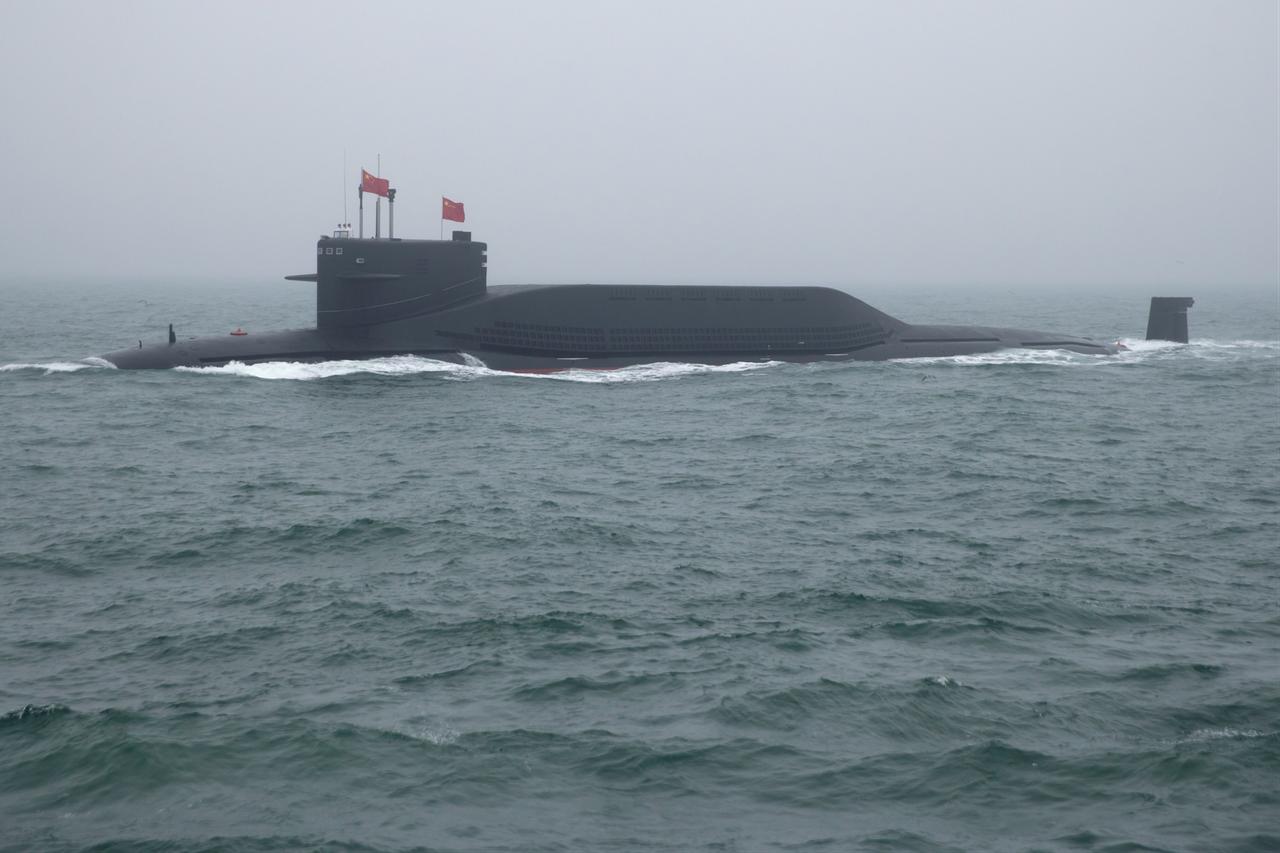
The exact location of Monday's submarine missile launch and the precise missile used have not been confirmed.
Analysts said the ability of China's SSBNs to move undetected beyond its coasts is likely to be closely examined.
The Type-094 submarine is expected to eventually be replaced by a more advanced and quieter version now under development, analysts said.
To reach the continental U.S. with its most advanced submarine missile, the JL-3, a submarine would have to move beyond the South China Sea into the western Pacific, potentially risking exposure to rival navies.
The JL-3, believed to be armed with multiple warheads, was displayed at a military parade in Beijing in September 2025 and has a range of 10,000 kilometers, or 6,214 miles.
Despite the unknowns, China's Global Times newspaper said the missile launch showed how China was continuously strengthening its "nuclear triad" of strategic forces, referring to the ability to fire nuclear weapons from land, sea and air.
"This will compel external powers and their followers to abandon attempts aimed at forcing Chinese concessions through maximum military pressure or pre-emptive strikes, thereby fundamentally reducing the risk of large-scale conflict," the Global Times said in an editorial.


 Set as preferred source
 Set as preferred source


 2 min read
 1 min read