Newsletters




China is building more than 80 launch pads, armored bunkers, and communications nodes across thousands of square kilometers of remote desert near its nuclear missile silos, satellite imagery reviewed by Reuters shows. Security analysts say the infrastructure is likely designed to ensure no U.S. first strike could reliably eliminate Beijing's ability to retaliate.
"I've never seen anything quite like it," said Hans Kristensen, director of the Federation of American Scientists' Nuclear Information Project.
"It's an extraordinary effort," Kristensen noted.
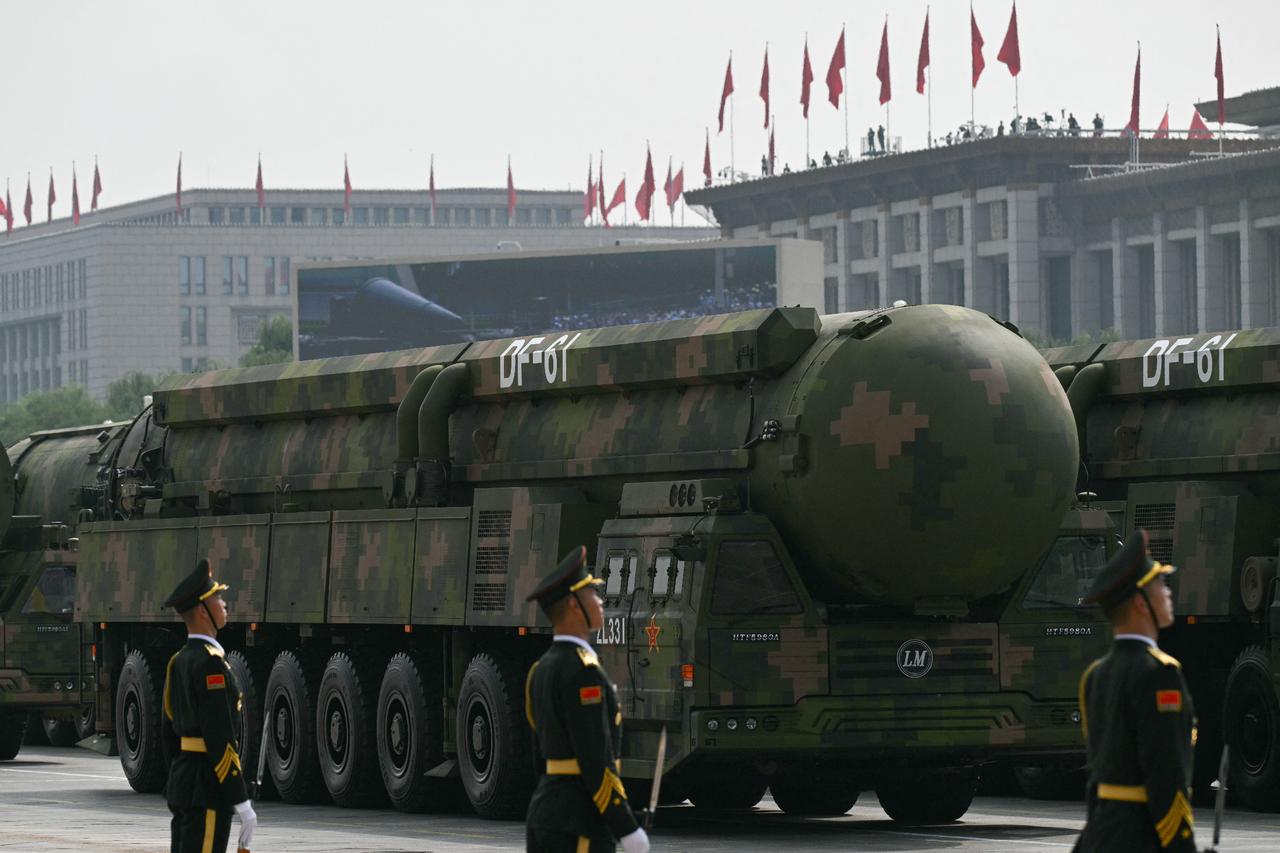
China's nuclear missiles can already reach any city in the United States.
The construction, reported by Reuters, reveals a sweeping effort to fortify and diversify the survivability of Beijing's land-based nuclear forces, signaling a significant upgrade in second-strike capability at a moment of intensifying nuclear competition with Washington.

The new infrastructure is centered on two octagon-shaped installations in eastern Xinjiang, built over the past six years, southwest of the Hami nuclear silo field, one approximately 140 kilometers away, the other about 230 kilometers.
Satellite images show the octagon structures contain housing for personnel and large military vehicles. They are flanked by armored bunkers and fortified weapons-storage areas, as well as airfields and railheads linking the octagons to the Hami silos. Each octagon sits at the core of a network of dirt roads and conduits stretching far into the desert, connecting to the concrete launch pads nestled among rocky outcrops and dry creekbeds.
Exercises involving large military vehicles occurred around the northern octagon this month and in April, the images show. Recent imagery also reveals large tents and what two analysts described as camouflaged launch sites cut into the desert, some of which have air-defense missile batteries.
At the northern octagon, a possible space or microwave communications facility is under construction, with satellite dishes and two large towers visible, three analysts said. The conduits connecting the pads to the octagon structures may contain fiber-optic cables for communications, according to Kristensen and Alexander Neill, an adjunct fellow at Hawaii's Pacific Forum think tank.
"Taken together, I think there is a real possibility that the octagonal structures and the strange towers are linked to C3, command, control, and communications, as well as maintenance and storage activities related to China's nuclear operations at the Hami ICBM silo site," said Tong Zhao, a senior fellow in nuclear policy at the Carnegie Endowment for International Peace.
The pads could be used to deploy mobile air-defense missiles, electronic warfare nodes, or, from larger ones, road-mobile intercontinental ballistic missile (ICBM) launchers, three security scholars said.
A third octagon-shaped installation, south of the Lop Nur nuclear test facilities, appears less developed and is being used as a target range. Images show pockmarked earth, damaged buildings and what analysts at Vantor, a commercial satellite imagery provider, identified as mock-ups of Western jet fighters.
Five security scholars interviewed by Reuters agreed the infrastructure broadly supports China's nuclear program, though key details remain unknown, including which weapons China might deploy at the launch pads and whether the octagon structures house truck-mounted ballistic missiles or facilities for fitting nuclear warheads.
Neill said the scale was unambiguous.
"We can see this infrastructure is being built on a grand scale, covering thousands of square kilometers of desert beyond the silo fields," he said.
"Depending on the precise capabilities, we're looking at a very considerable enhancement and diversification of China's strategic nuclear deterrent," Neill added.
Kristensen said it was "hard to rule anything out" given the scale in such a hostile environment.
U.S. officials and arms-control analysts say China is expanding its nuclear capabilities faster than any other nation. The latest Pentagon report on China's military said warhead production has slowed, but China is on track to field 1,000 warheads by 2030.
The December report estimated China is likely to have loaded 100 ICBMs across its three main silo fields.
China has also been strengthening its early-warning system. Its Huoyan-1 satellites can detect an incoming ICBM within 90 seconds of launch and alert a command center within three to four minutes, sufficient time for China to fire its silo-based weapons before they are hit, according to the Pentagon.
A cornerstone of China's doctrine is its "no first use" policy, meaning its forces would not initiate a nuclear exchange. But some senior Western diplomats and analysts say China would possibly resort to nuclear coercion to limit outside involvement in a conflict over Taiwan.
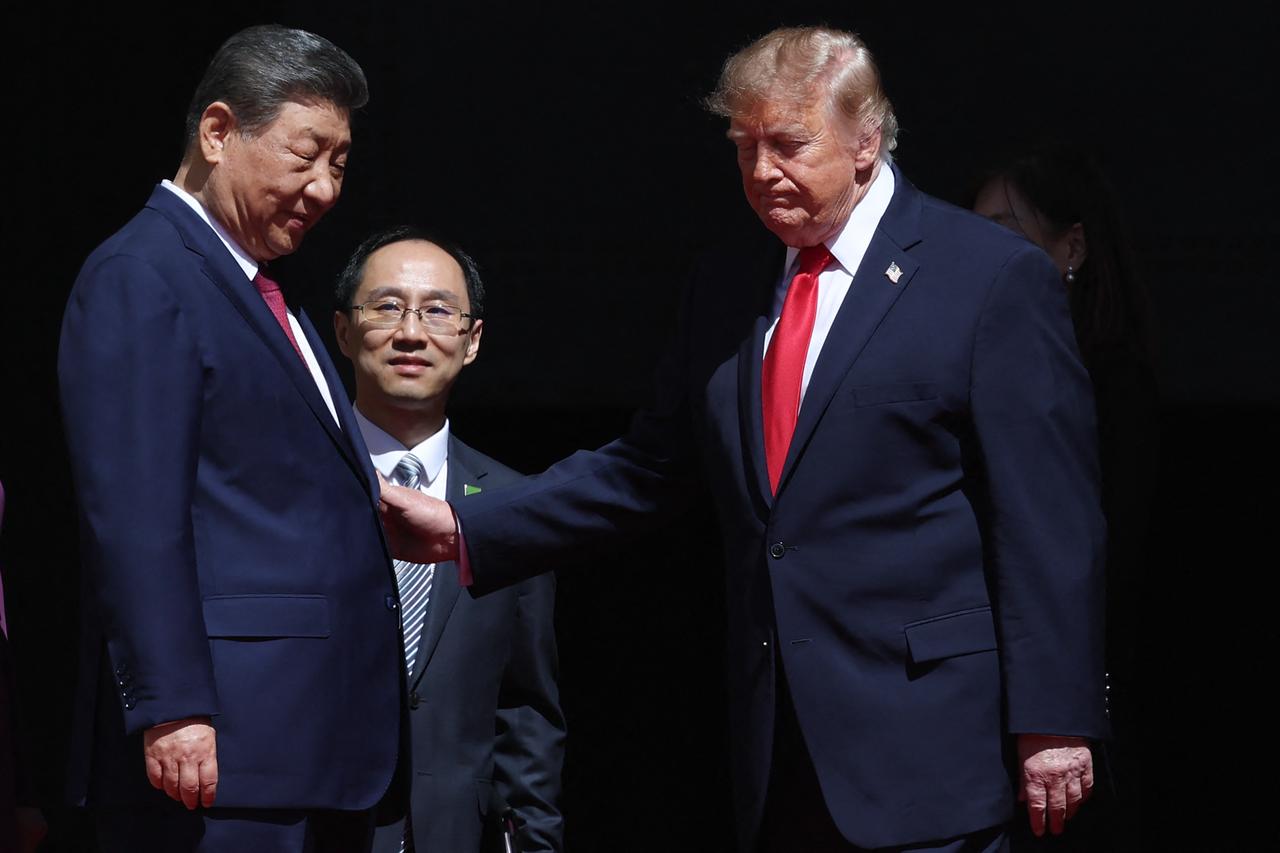
President Xi Jinping this month warned U.S. President Donald Trump that mishandling disagreements over Taiwan could lead them to a "dangerous place."
The silo fields in northwestern Xinjiang and Gansu province are the core of China's nuclear forces, though it can also fire nuclear weapons from submarines and aircraft.
"The United States and Russia, whose warhead stockpiles far exceed Beijing's, rely on sheer numbers of silos, their relative isolation and hardened construction to deter a first strike, rather than extensive missile defense," Kristensen said.


 Set as preferred source
 Set as preferred source



 4 min read