Newsletters


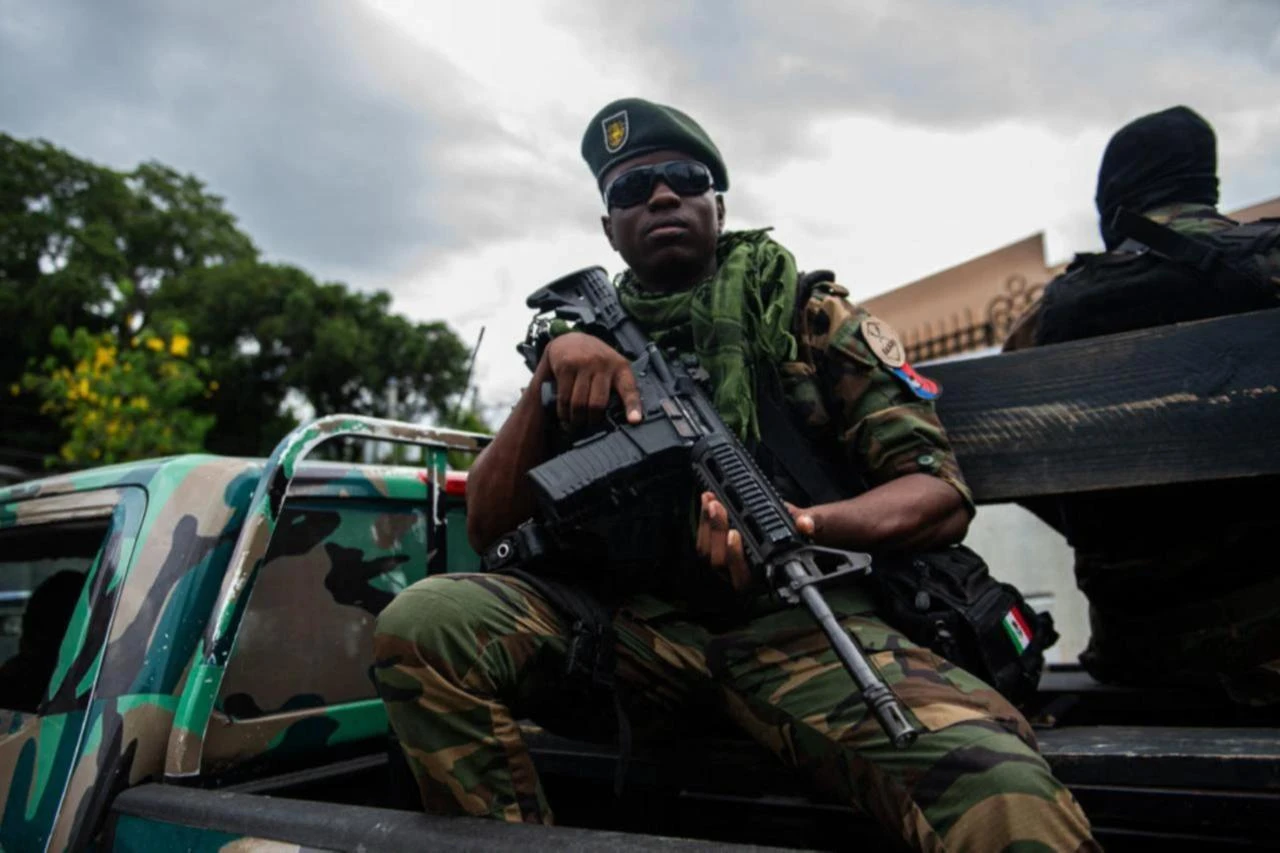


Colombian illegal armed groups have sought to send members to Ukraine to gain advanced drone warfare skills that could later be used against Colombia’s military, as inexpensive attack drones increasingly reshape the country’s decades-long internal conflict.
A Colombian serving with Ukraine’s military discovered that some compatriots seeking to fight for Kyiv had links to organized crime in Colombia, according to a Financial Times (FT) report.
Those men were identified and “sent home,” said Taras Palianytsia, an officer at the Foreign Recruiting Centre of Ukraine’s Ministry of Defence.
The incident was not isolated. Reports have repeatedly emerged over the past year of Colombian armed groups attempting to send members to Ukraine to acquire expertise in drone warfare.
“The recruitment schemes are very complex, but what worries me most is the level of specialisation they’re acquiring,” a Colombian aid worker in Ukraine told the FT on condition of anonymity.
“Former paramilitaries, former guerrillas and former soldiers are fighting and learning together here how to operate drones,” the aid worker said.
Drones have transformed warfare in Ukraine and are also changing Colombia’s conflict with leftist guerrillas and drug trafficking groups.
The Colombian government had previously been able to rely on control of the skies during operations against guerrillas in jungle regions, but officials say that advantage is increasingly being challenged.
“The drone industry has exploded and criminals have adapted the technology for attacks, which is a major challenge to battlefield aerial supremacy,” outgoing Colombian Defense Minister Pedro Sanchez, an air force general, told the FT.
Colombia’s Defense Ministry estimates that illegal groups carried out 264 drone attacks during 2024 and 2025, mostly using inexpensive commercial drones modified to drop explosives.
In May, one soldier was killed and six others wounded during a patrol in a coca-growing region.
In April, drones killed three soldiers near the Ecuadorian border and struck a military radar system in Cauca province.
Drone attacks on a military base in December killed seven people.
“It’s a dramatic change that has affected mobility and survival on the battlefield,” Sanchez said.
Colombia’s military neutralized 96% of attempted drone attacks last year, either by jamming radio frequencies or destroying the aircraft, according to Sanchez.
Illegal armed groups, however, are trying to learn methods developed during the Russia-Ukraine war to overcome those defenses.
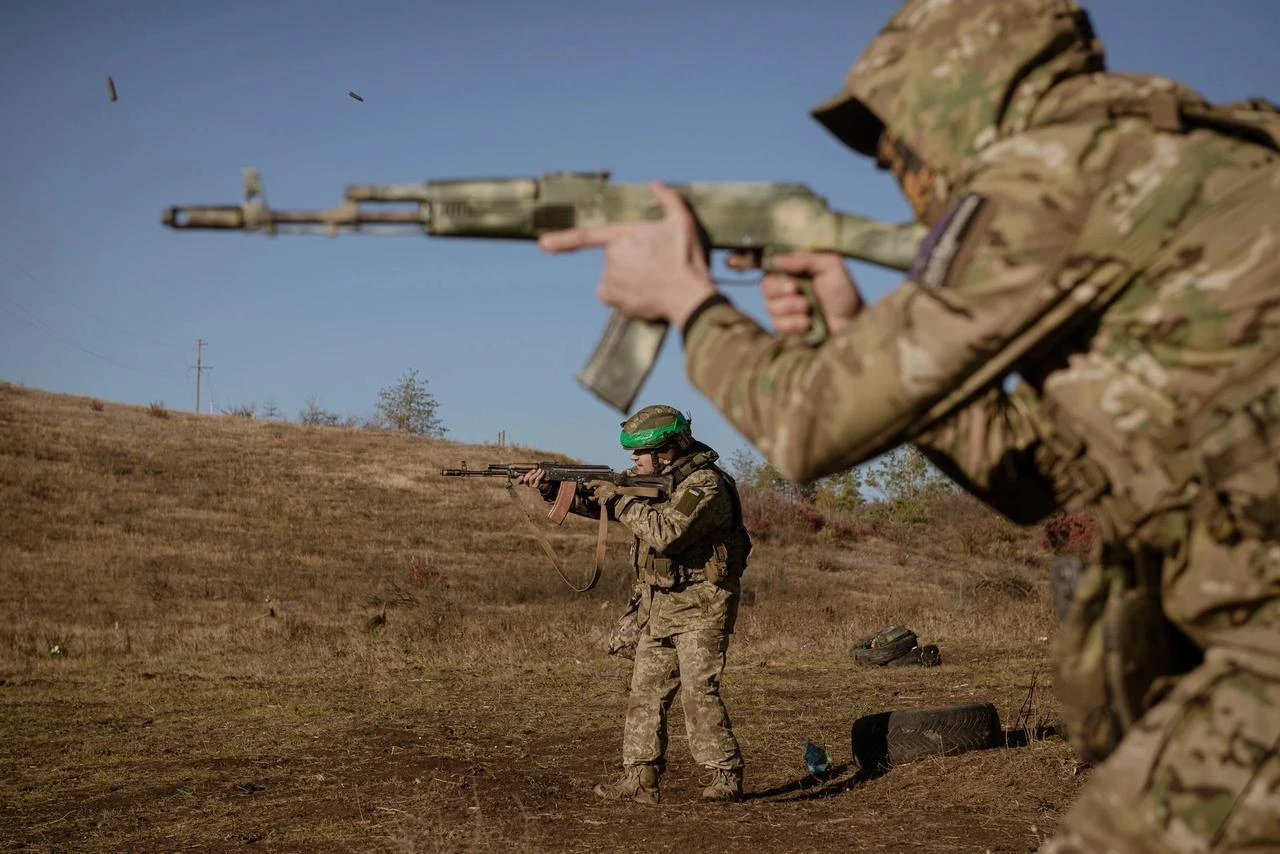

A Colombian drone pilot serving in Ukraine said cartel recruiters had sought training in assembling and operating first-person-view, or FPV, drones.
FPV attack drones are highly maneuverable and more difficult to shoot down. They are generally flown directly into a target and detonate on impact.
“FPV drones are already starting to be used in Colombia, but what they don’t yet know is how to encrypt the communication between the drone and the person piloting it, or how to set up the explosive charge the way they do here in Ukraine,” the pilot told the FT from the southern front in Ukraine’s Zaporizhzhia region.
Authorities also say armed groups are seeking to circumvent military jamming systems by acquiring drones that use ultra-thin fiber-optic cables linking them to ground-based operators over long distances.
The technology was pioneered during the Russia-Ukraine war and has also been adopted by Hezbollah in its conflict with Israel.
Colombia has imposed strict import restrictions on all drones in an effort to prevent such acquisitions.
The government is also strengthening its defenses. In January, it announced plans for a $1.6 billion “anti-drone shield” that includes frequency-jamming equipment and fixed and vehicle-mounted detection systems.
Analysts say preventing Colombian members returning from Ukraine from transferring battlefield knowledge should also be a priority.
Colombian military veterans, shaped by decades of internal conflict, have previously fought in foreign wars including those in South Sudan, Yemen and Ukraine.
As many as 500 Colombians have been killed in Ukraine during the four years since Russia launched its full-scale invasion, according to the report.
“The Colombians can learn and adapt really quickly and withstand the difficult conditions of service,” Palianytsia said.
“They have proven themselves to commanders, who really like these guys,” he added.
The issue has generated controversy in Colombia.
President Gustavo Petro said in October that “Ukrainians treat Colombians as an inferior race” and urged Colombian nationals whom he said were being treated as “cannon fodder” to return home.
His government also raised military salaries and ratified a 1989 U.N. convention on mercenaries in an effort to reduce incentives for Colombians to join foreign armed forces.
Sanchez said Colombians joining wars abroad was a “sad reality” driven by salaries that are substantially higher than their military pensions at home.
Colombia’s armed forces have spent decades fighting cartels and guerrilla organizations in a conflict estimated to have killed 450,000 people between 1958 and 2016.
The Revolutionary Armed Forces of Colombia, or FARC, the country’s largest rebel organization, demobilized in 2016, but several dissident factions continued fighting the state.
All Colombian armed groups participate in illicit economies including drug trafficking, illegal mining and racketeering.
Their activities increased during Petro’s presidency as his government spent three years pursuing negotiations with armed groups under its “Total Peace” strategy before shifting toward a more confrontational security policy near the end of his single four-year term.
Petro is scheduled to hand the presidency to Abelardo de la Espriella on Friday.
De la Espriella, described as a hardline security hawk who has promised to build prisons in jungle areas, said after a recent drone attack on the military that he would prioritize “re-establishing the state’s authority in regions hardest hit by violence.”
Some experts say the incoming government will face a weaker security position than recent administrations.
“The volume of drones that these groups have can very easily overwhelm any military or civilian target,” said Elizabeth Dickinson, deputy director for Latin America at the International Crisis Group.
“(The armed forces) have completely lost their monopoly on airspace and that is actually a huge strategic shift,” she said.


 Set as preferred source
 Set as preferred source


 2 min read
 1 min read