Newsletters





"These crazy little mini-Mamdanis who are popping up all around the country," House Speaker Mike Johnson warned last month, casting a rising wave of Democratic Socialist candidates as a threat to "ordinary families."
The line was not idle campaign noise. It came as a direct response to a platform the Democratic Socialists of America published in mid-July, one that calls for the abolition of ICE, the police, prisons, and the Electoral College. That document has set the terms for an ideological fight both parties are now fighting in public, on primary stages from New York to Michigan.
The timing carries its own irony. Some Republican strategists spent much of the past year arguing that the party lost in 2024 because its progressive wing ran too far ahead of the electorate on ideology.
The current crop of Democratic Socialists of America (DSA) candidates has absorbed that lesson better than the party that taught it, leading not with abolition but with Medicare for All and free tuition, while saving the platform's harder edges for after the votes are counted.
Yet Republicans are not the only ones uneasy about them; so are their fellow partisans within the Democratic Party. Those uneasy observers recognize that the DSA represents the single greatest trump card, and the key method, to overcome America's tightly locked two-party system. Rather than attempting to form a third party, the DSA is choosing an existing party, ascending from within, and seeking to shape its core decisions.
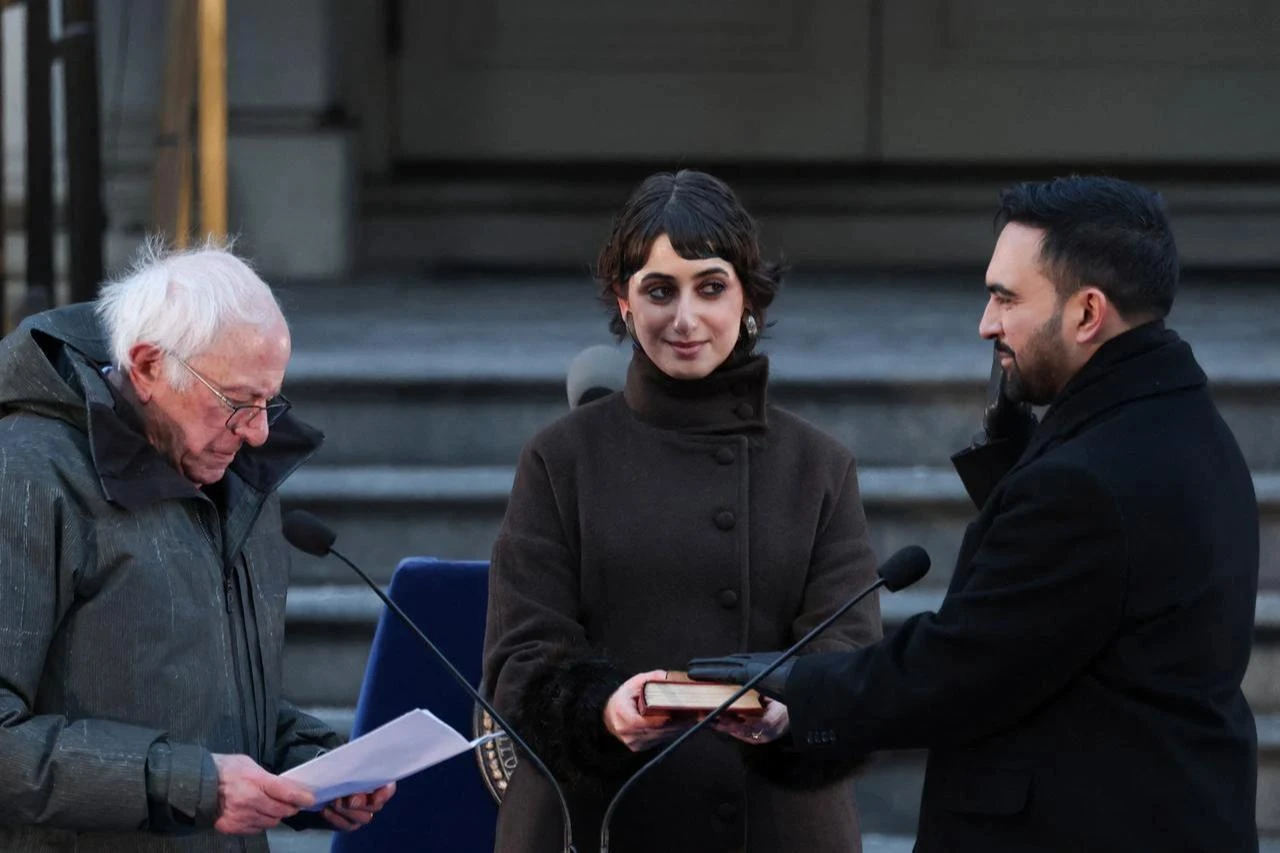

Karl Marx wrote of a specter haunting Europe nearly two centuries ago. In 2026, the American political establishment has decided the specter has taken up residence in Congress.
The numbers explain the alarm. The DSA counted fewer than 6,000 members in 2016, the year of Bernie Sanders' first presidential run. The organization now reports more than 120,000, a surge accelerated by President Donald Trump's return to the White House and by voter anger over the war in Gaza.
The growth has come with a strategy, not just a slogan for people of the left. The DSA has concentrated its energy on solidly Democratic seats rather than competitive swing districts, treating the primary, not the general election, as the real contest.
That focus has already produced results: incumbent Democrats unseated in New York, Colorado, and Pennsylvania, each time by a DSA-backed challenger running from the left rather than the center. The platform's more contested planks, such as abolishing Immigration and Customs Enforcement (ICE) and defunding police departments, rarely open the pitch. Candidates lead instead with Medicare for All, universal childcare, and free tuition—popular issues that let the harder ideology ride in on the back of kitchen-table promises.
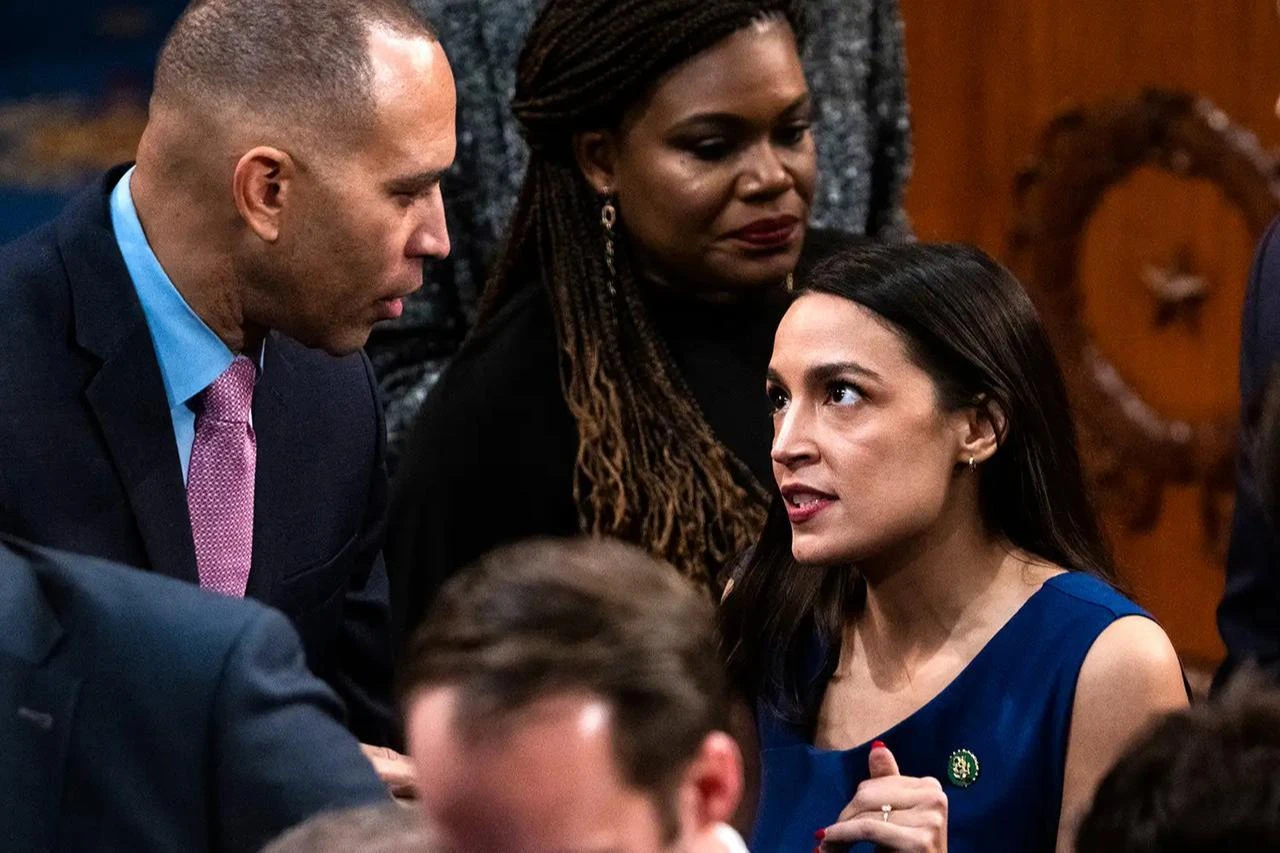
None of this sits well with Democratic leadership, and the discomfort is not really about losing seats to Republicans. It is about losing control of votes the party already holds. The DSA has tapped into a documented erosion of trust in the Democratic establishment itself, the sense among primary voters that the party talks about fighting for working people without doing much of it.
The arithmetic is what turns that discomfort into a genuine problem. If Democrats retake the House with a narrow majority, a small, disciplined bloc of DSA-aligned members could stall legislation or force concessions the same way conservative holdouts have done to Republican speakers for a decade.
The first test comes immediately, with the vote for speaker. Alexandria Ocasio-Cortez, the movement's most established figure in Washington, has already said she will back Hakeem Jeffries. Newer members are not there yet. DSA member Melat Kiros put the dividing line plainly: "I'm not supporting anybody who takes corporate PAC money."
Although they do not appear to have formulated a strategy regarding internal party balances, there are certain issues on which they all agree.
For Republican leadership, the objection reaches past ordinary policy disagreement. Johnson's language treats these candidates as something closer to a threat to the constitutional order than a rival party bloc. This framing depends on a distinction from the socialism Americans associate with Western Europe.
European social democracy, in the GOP telling, argues over healthcare and housing. The DSA's current platform, built around dismantling ICE and police departments, is presented as a break from that tradition rather than a variation on it, which is precisely what turns policy disagreement into the language of danger.
What stands out, however, is that the rise of the DSA is in many ways far more than a mere electoral strategy. Most of the fundamental differences can be understood through a simple summary of the old-school versus new-school left.
As demonstrated in Mamdani's national headline-grabbing campaign, the DSA's struggle focuses on materialism and class structure rather than intersectionality and cultural rights. It is also significantly less identity-conscious in its coalition strategy. Its target audience is a broad, populist worker solidarity spanning diverse social backgrounds, rather than a diverse coalition of historically underrepresented or marginalized groups.
This explains their core goal: universal economic safety nets—healthcare, housing, and living wages—rather than the decentering of dominant cultural norms.
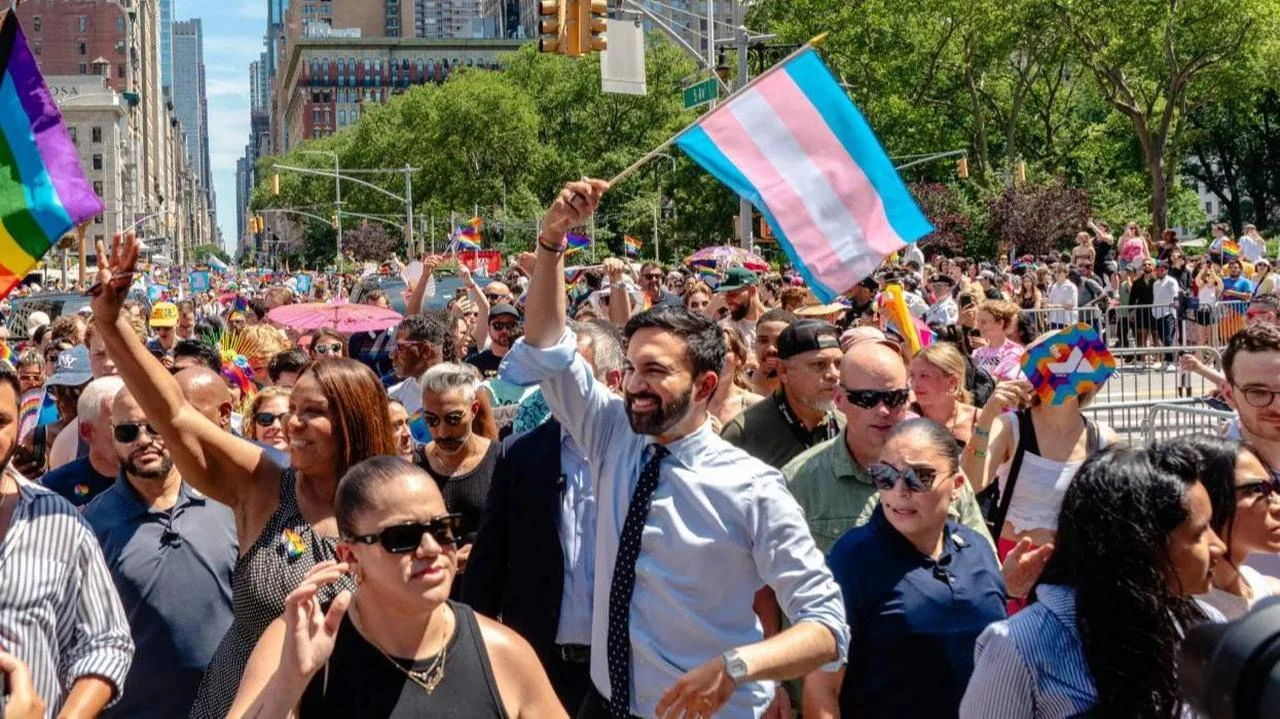
Still, when it comes to transgender rights, racial justice, reproductive freedom, and building inclusive institutions, they will not break from the new school. This is precisely why all of their opponents will try to frame them as the radical "new left," and as of yet, no other effective counter-strategy has been developed to oppose them.
The map so far is narrower than the rhetoric around it. The DSA's wins remain concentrated in territory Democrats already held, though the organization now has challengers active in Missouri and Florida, with a Democratic Socialist positioned for a competitive run at the Wisconsin governorship. No major competitive seat has flipped to a DSA candidate yet.
That is not really the metric that matters. A string of safe-seat primary wins can pull an entire party's platform leftward faster than a single swing-district victory ever could, and Washington's two-party establishment now answers for a wing it can no longer simply outvote. The mini-Mamdanis remain a small group. They have already made themselves impossible to ignore.


 Set as preferred source
 Set as preferred source


 1 min read
 1 min read