Newsletters


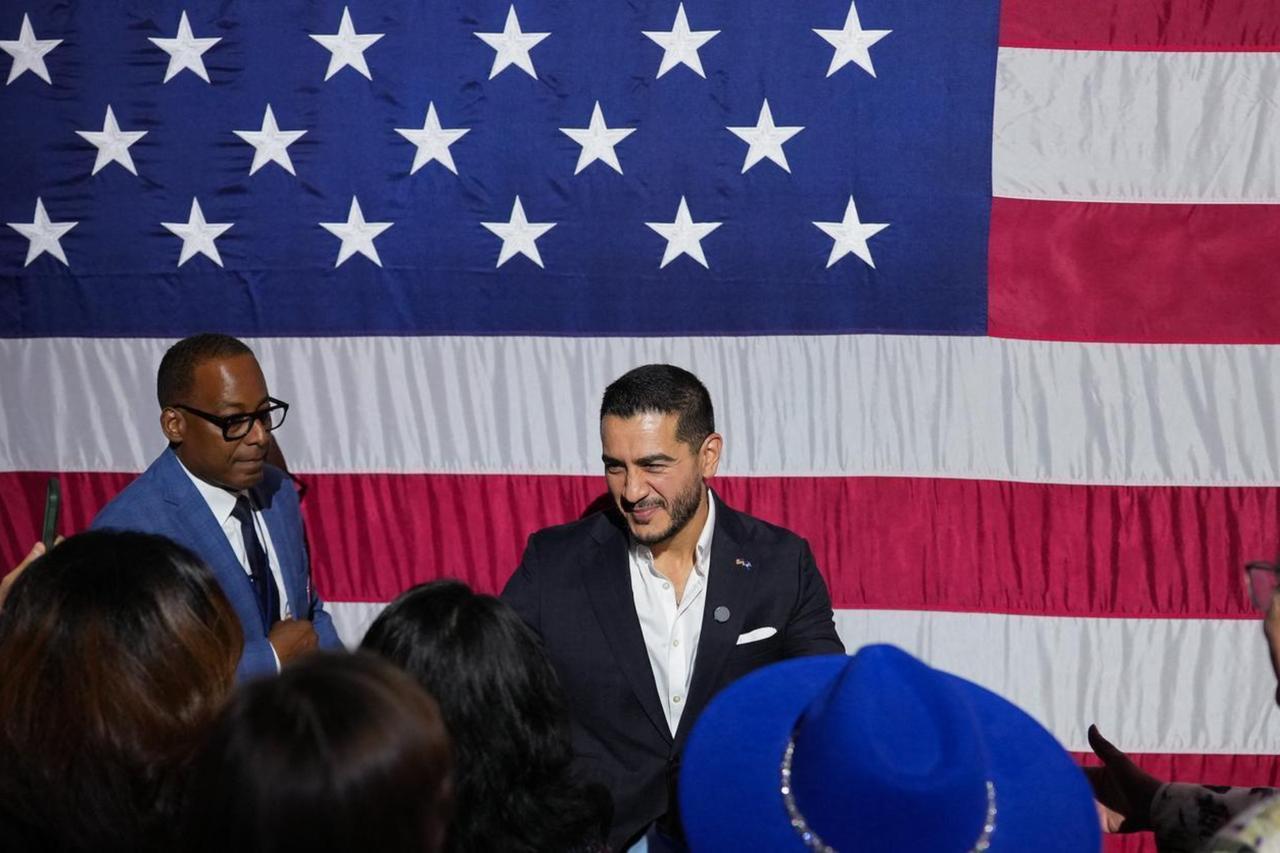


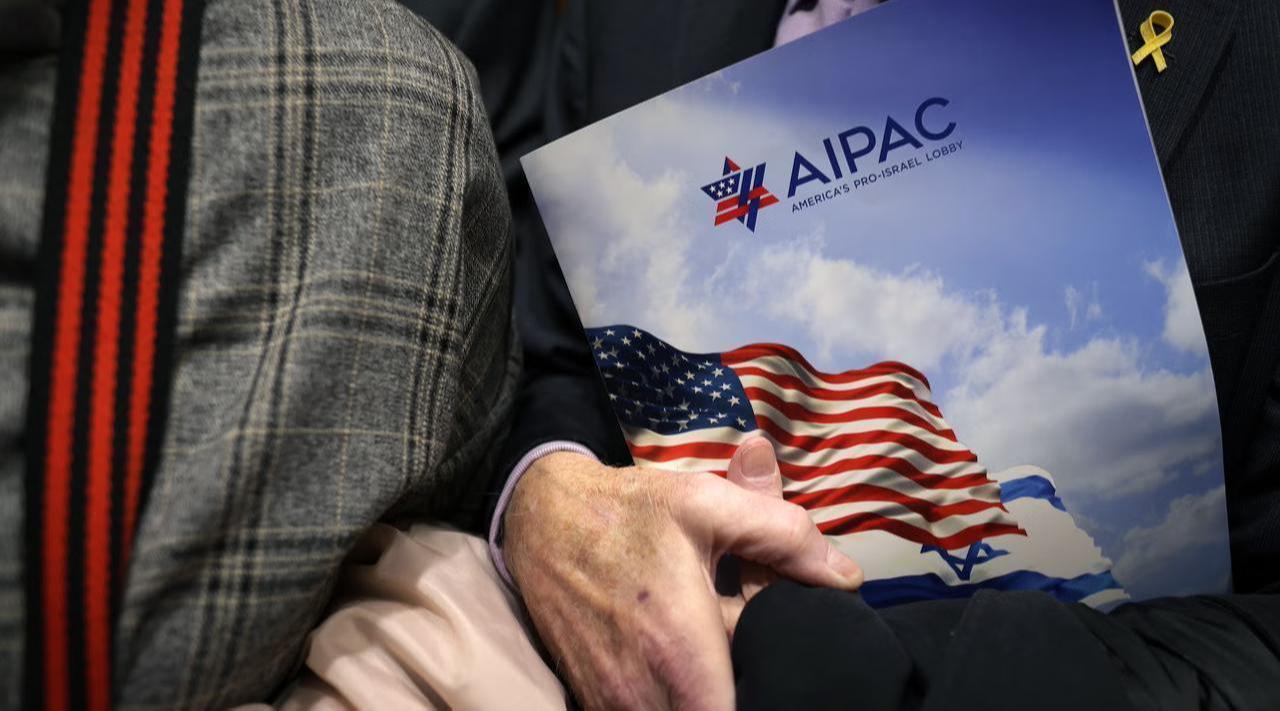
Wednesday morning, with ballots still being counted, AIPAC posted a congratulation on X. It saluted Chuck Schumer and Hakeem Jeffries for “resounding victories” and said more than 234 candidates supported by its members had already won, “with many additional races still too close to call.”
Yair Lapid, one of the Israeli opposition leaders, read the same map and reached for reassurance. “America is not lost,” he said, repeating the line “Jeffries will run the House, Schumer the Senate.”
The anti-Israel core in the House has grown, he conceded, but even after the election he put them at about 25 of 435 members. In the Senate, “a few hostile voices arrived, yet the hard core doesn’t reach 10 percent,” he posted.
The count is, if anything, better than AIPAC’s own post suggests. According to Who Funds My Rep, a tracker built on FEC filings, the candidate that AIPAC and other pro-Israel PACs backed most won 344 of 376 called races, or 91%. AIPAC’s 234 is a floor.
It is the other column that deserves a longer look, and it starts in Michigan.
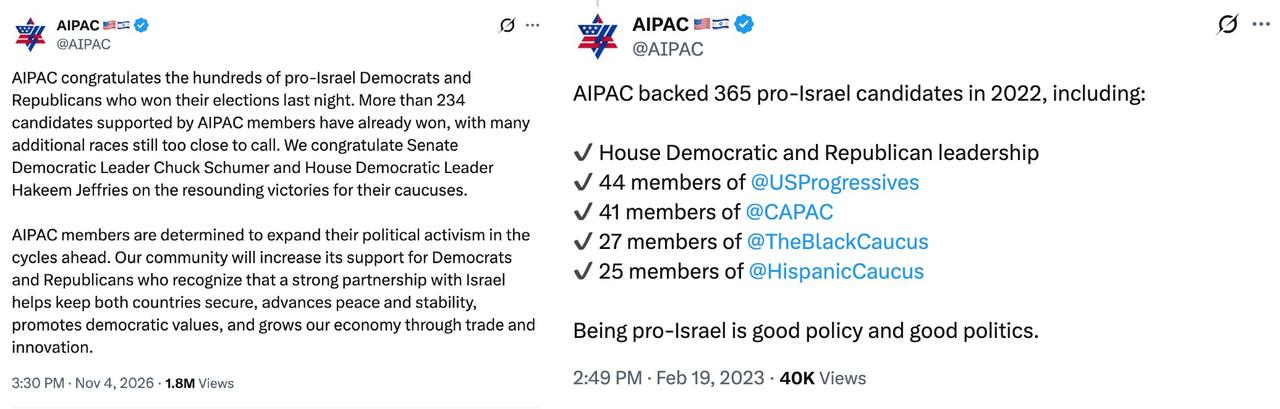

Abdul El-Sayed ran for the Senate under the heaviest opposition spending of any candidate this cycle.
The senator-elect addressed AIPAC directly during his speech, saying: “To AIPAC, who spent $42 million against us, thank you for giving me the opportunity to beat you twice,” referencing both his primary and general election victories.
Michigan is where a question that sounds academic becomes specific. Does heavy PAC backing guarantee a win, or does it make a candidate the most visible name on a hit list?
The donation figures explain why candidates who defend the special status of the relationship with Israel still win in most places, despite the backlash in the comment sections under AIPAC’s posts across social media. But they also explain El-Sayed’s win, to a degree.
AIPAC’s donations have grown at a pace not seen since 2021, and only since then, its victories and endorsements have been announced openly. But in a decision made this cycle, the organization went back to its old strategy and removed its own logo from its endorsements.
That is why El-Sayed’s win and AIPAC’s decision to reshape its image are connected. According to FEC figures, El-Sayed did not write a David and Goliath story. He raised record sums himself as well: $47 million in total.
The makeup of those donations, though, was very different from that of his primary and general election opponents. On Nov. 1, for example, after Haley Stevens announced her support for the Republican candidate, he broke the single-day record, raising nearly $3 million in one day.
The money came from 65,000 different donors, which proved it was grassroots. That means AIPAC can still win in many places, but it cannot win everywhere it sets its mind to. When it insists, it draws backlash and builds up the other side.
El-Sayed’s win still does not help understanding the extremely high AIPAC win rate alone, because that rate rests largely on the strength AIPAC carries over from the past. The organization places its bets on incumbents in many places where its candidates won.
A big part of PAC victories: incumbents on the ballot won 91% of called races, 320 of 352. The network put over $87 million behind candidates in 422 races, and most of it goes to people already favored from the previous cycles. A win rate that matches the incumbent rate mostly counts the safe seats the money landed on.
In November, the losses cluster per the tracker. Susan Collins, backed with $4 million, lost Maine’s Senate seat to Troy Jackson, the largest sum behind any general-election loser. Mike Lawler at $959,000 lost New York’s 17th to Cait Conley. Jon Husted at $843,000 lost Ohio’s Senate seat to Sherrod Brown. Brian Fitzpatrick at $530,000 lost Pennsylvania’s 1st to Bob Harvie.
Of the 32 backed candidates who have lost, 30 are Republicans, and most are incumbents. That points to the night’s partisan current more than to any single PAC. The tally cannot say why voters chose as they did; it records money and outcomes.
The primaries cost the network more per race. Melissa Conyers-Ervin took $5.1 million in Illinois’ seventh and lost. Laura Fine took $4.9 million in Illinois’ ninth and lost. Adriano Espaillat had $2.1 million behind him in New York’s 13th and lost his primary. Most of this cycle’s pro-Israel PAC money went into primaries, and these were its largest bets.
The PACs spent $50 million against candidates across 35 races. Seven underdogs stared down millions in hostile PAC money and won anyway. In New York’s 13th, Darializa Avila Chevalier stood firm against a $1.5 million blitz, while Daniel Biss survived a fierce $1.4 million onslaught in Illinois’s 9th.
The counteroffensive spread to California’s 22nd, where Randy Villegas neutralized a half-million offensive, and Pennsylvania’s first, where Bob Harvie overcame a similar barrage to unseat an incumbent.
Rounding out the defensive front, Melat Kiros weathered attacks in Colorado, Brad Lander deflected a late push in New York. Instead of burying these campaigns, the massive outside spending gave them the perfect hometown foil to prove their independence.
The obvious reading is that outside money hands an underdog a foil. A campaign attacked by out-of-district groups can name its attacker, and a $22 million ad buy is hard to miss. Whether AIPAC’s support became a liability in these races is a question the filings cannot settle. They show where money went and who won, not who persuaded whom.
They also show the limit of the pattern. Laurie Buckhout drew $5 million against her in North Carolina’s 1st and lost to Don Davis. Seven of 28 is a quarter of the called races: a real share, not a rule.
Lapid’s count of the hostile core, about 25 House members and under 10% of the Senate, describes the people who now hold seats. The campaign finance record describes something else: where the money was spent and where it failed. AIPAC says its members are “determined to expand their political activism in the cycles ahead.”
PACs can keep funding safe seats and protecting their win percentage. For now, Michigan looks like what happens when they spend where the seat isn’t safe.


 Set as preferred source
 Set as preferred source


 2 min read
 1 min read