Newsletters


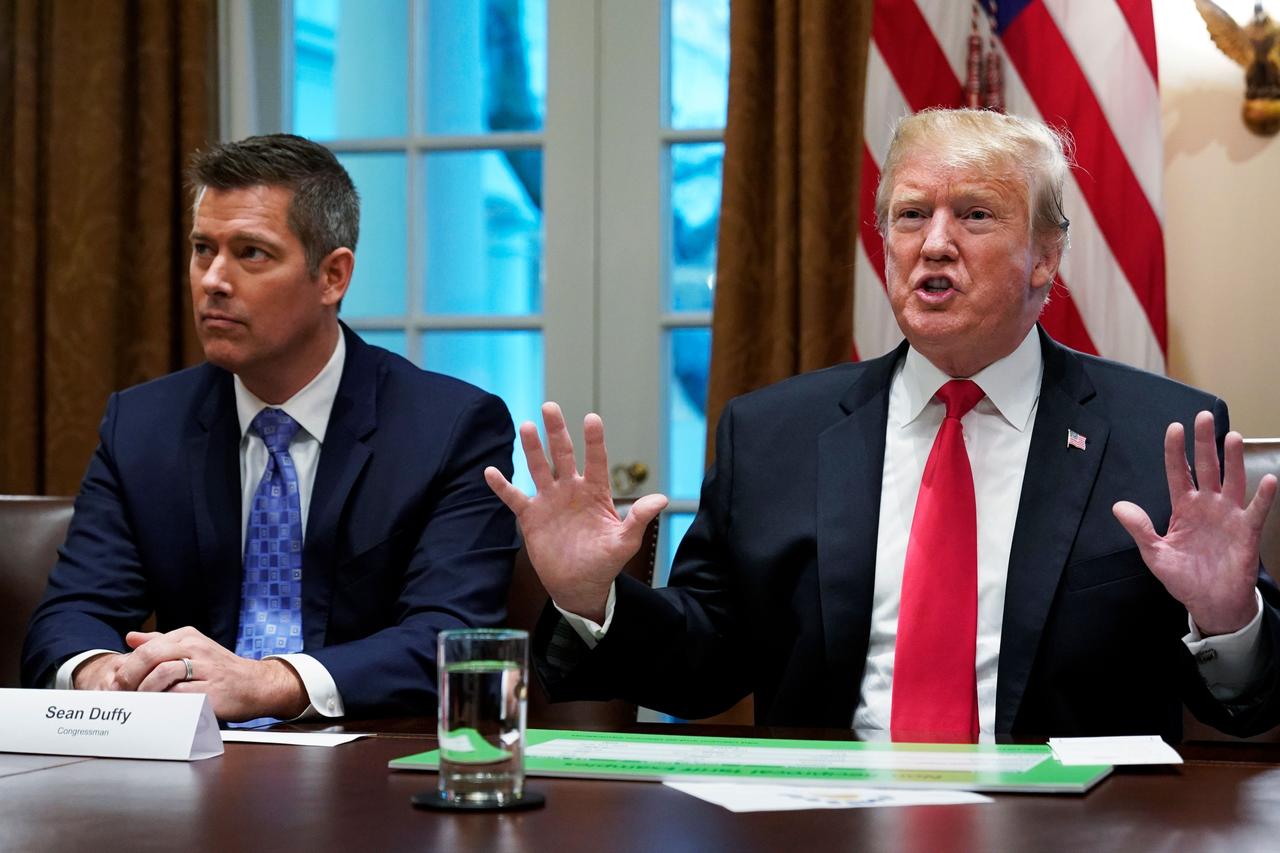


Eighteen years. That is how long it took one American road project to move from a straight line on a planner's map to the crooked, guardrail-heavy stretch that finally opened, a "dangerous roadway," in Trump's own description, that cost tens of times its original estimate.
“They have trains that go 300 miles per hour,” the then-Republican frontrunner Donald Trump exclaimed, “We have trains that go chug … chug … chug.”
He has told the story often enough that it has settled into a stump-speech rhythm. He told it again in 2020, a year before his first term ended, addressing an infrastructure conference titled "Rebuilding of America's Infrastructure: Faster, Better, Stronger." His diagnosis was that permitting, which once dragged on for up to twenty years, needed to be resolved in two years or less.
That speech was the public face of a formal policy: the One Federal Decision framework, established by an Executive Order in 2017, which assigned each infrastructure project a single lead agency and ran environmental reviews concurrently rather than sequentially, with a two-year permitting target. It didn't get the chance to prove itself. President Biden revoked that order upon taking office in January 2021, pausing the formal framework before its results could compound.
America's Great Corridors of Commerce (AGCC) inherits the shared DNA of that unfinished project, and with it, three overlapping stories. First, it is a reaction to China's ability to build transmission lines the way the United States can no longer manage to build roads, and serves as the primary answer for why AGCC is needed on the administration's own account.
Second, there is the ideological one: a presidency drawn to the speed of top-down execution, working within a constitutional system built to slow exactly that kind of speed down. And finally, there is the specifically American workaround against the system, a public-private leasing model dressed as a real-estate transaction rather than a decree.

AGCC itself is a Transportation Department plan built around a simple idea: treat the shoulders of highways and the margins of rail lines as multi-use utility corridors, capable of carrying transmission wire, fiber, and water pipe alongside the traffic already running through them.
The department is pitching it as a voluntary opportunity rather than a mandate, framed around bringing down energy costs, with state transportation agencies and railroads leasing that adjacent land to private developers who build the infrastructure themselves.
It is also an answer for affordability. Yet, at the heart of the "America's Great Corridors of Commerce" push is a deep fascination with authoritarian efficiency—the sheer political desire to point at a map, say "build a power line here," and see it finished immediately.
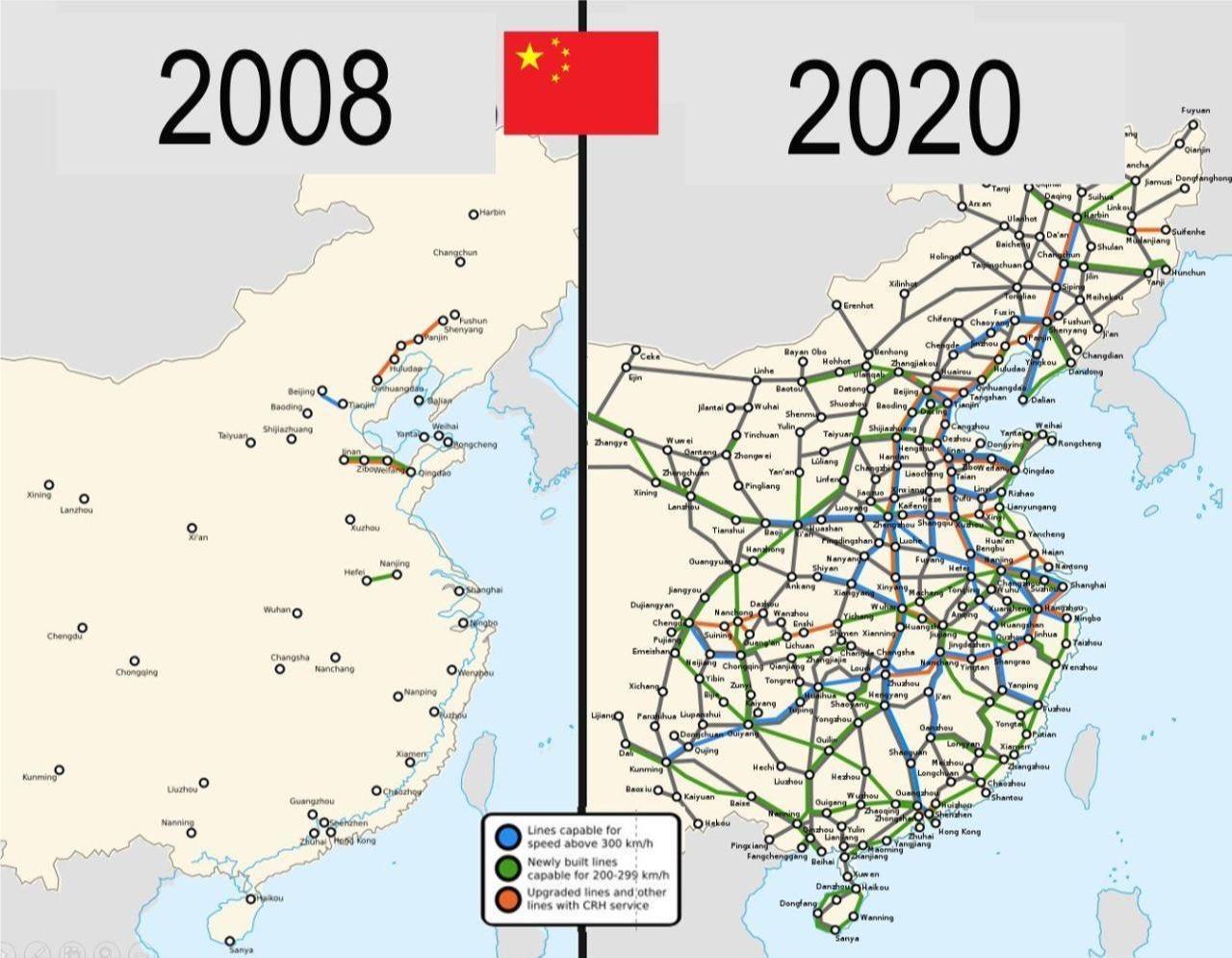
China, in that story, is not only to be caught up with, but also serves as the geopolitical driver of that urgency, since Beijing has built more high-voltage transmission lines in the last 15 years than the U.S. has in its entire history.
What the administration lands on is a public-private partnership dressed up as a real-estate transaction. States and railroads don't build anything themselves under AGCC; they lease the land alongside existing highways and tracks to private developers, who then build the transmission wires, fiber lines, and pipelines.
Transportation Secretary Sean Duffy frames the appeal as removing the state from the equation as much as leasing the land, arguing the U.S. will "lose the race" on next-generation technology if it can't cut costs and get the government out of the way.
Beijing's transmission build-out runs through a single central actor, State Grid Corporation, which sites, finances, and builds lines under national planning targets. AGCC, on the other hand, will attempt to use the strength of America via an opposite architecture: no central builder at all, just a lease and a set of exemptions.
The government supplies the land and the paperwork; private developers supply the capital and take on the project risk themselves. It's a centrally planned outcome pursued through an entirely privately financed process.
The billing, in Duffy's words, is that faster corridors mean cheaper power for households and industry, at a moment when data-center electricity demand has become an unusually live issue in the midterms as Republican candidates are visibly trying to back build-outs without alienating voters who live near the substations. Routing new capacity through existing highway and rail corridors sidesteps the siting fights that have slowed comparable projects elsewhere.
The paradox is that this same administration has spent the past year cancelling transmission projects that didn't come wrapped in a highway easement. The Energy Department pulled an almost $5 billion conditional loan for one major transmission project and scrapped three additional transmission corridor proposals within weeks of unveiling AGCC.
President Trump has no other terms left, and in that sense, One Federal Decision looks like the procedural fix: force the agencies to stop working one after another, write a hard two-year cap into the process, and collapse a decade of sign-offs into a single approval.
Then AGCC is the spatial fix: rather than take on private property rights, local zoning boards, and the eminent domain fights a brand-new corridor would invite, it buries the wire, fiber, and pipe inside transportation land the federal and state governments already control outright.


 Set as preferred source
 Set as preferred source


 4 min read