Newsletters




Former Latvian Defense Minister Artis Pabriks urged NATO allies to increase Türkiye's presence and influence within the alliance as leaders prepare to gather in Ankara for what analysts described as one of the most consequential summits in NATO's modern history.
"We have to keep Americans in. We have to increase the Turkish presence and influence," Pabriks said during a high-level online discussion hosted by the Nordic Baltic Institute in Istanbul ahead of the July 7-8 NATO Heads of State and Government Summit.
Opening the event, Nordic Baltic Institute founder Dr. Esra Ozturk highlighted that the security concerns and strategic sensitivities of Northern European countries particularly the Baltic states have increasingly moved to the forefront of NATO's agenda amid Russia's full-scale invasion of Ukraine and the rapidly changing European security environment.
Dr. Ozturk noted that the discussion would examine not only expectations surrounding the Ankara Summit but also the broader transformation of the Alliance and the evolving security priorities shared by Türkiye and the Nordic-Baltic region.
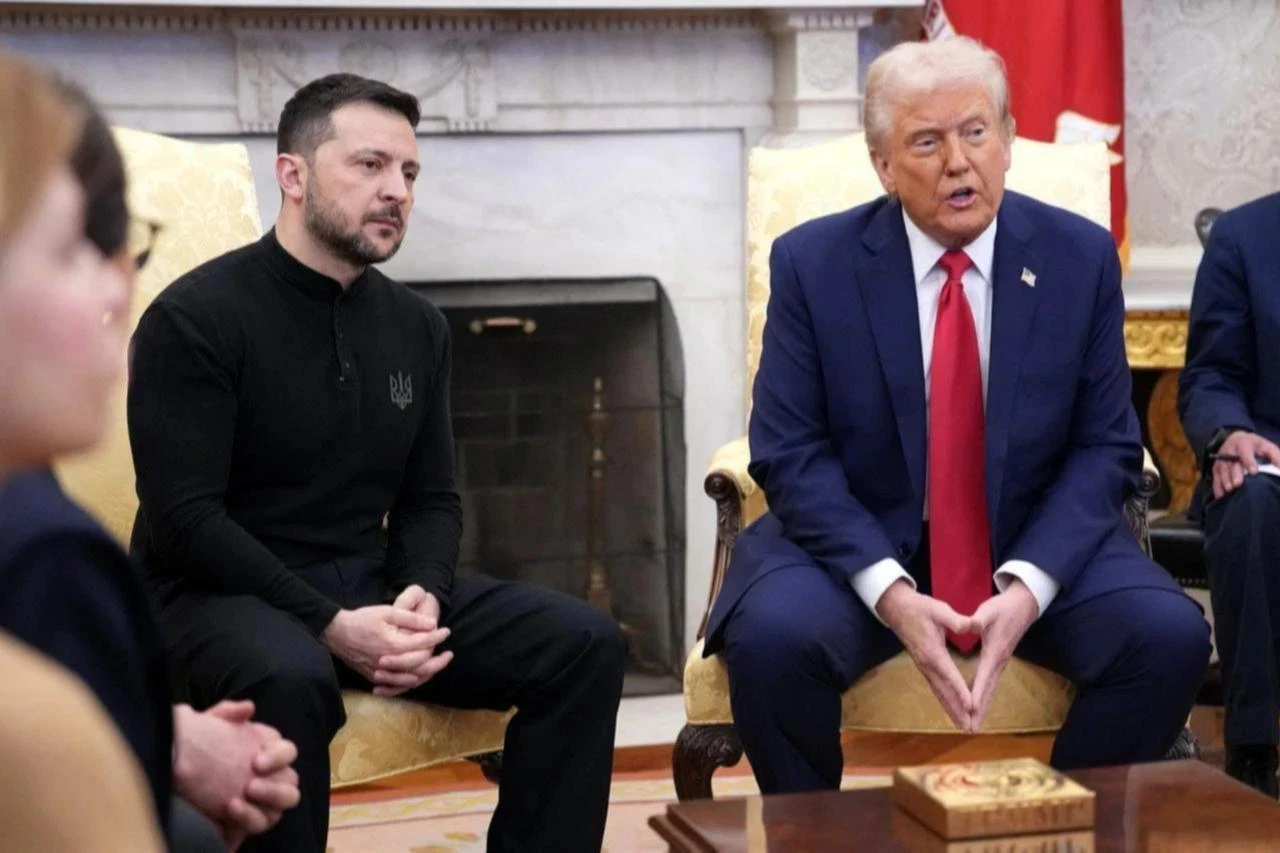
Dr. Ozturk also drew attention to the Greenland crisis, describing it as one of the most significant intra-alliance disputes in recent years. She noted that tensions between the United States and the Kingdom of Denmark over President Donald Trump's repeated ambitions regarding Greenland had raised concerns across Europe and tested trust between two long-standing NATO allies.
Referring to the issue as an example of the complex political challenges confronting the Alliance, she invited participants to discuss how NATO could preserve cohesion while addressing growing geopolitical competition in the Arctic.
Former Latvian Defense Minister Pabriks, who also served as the country's foreign affairs minister, said Russia's full-scale invasion of Ukraine had validated years of warnings from countries on NATO's northeastern flank.
"For a decade or so we were frequently described even by some of our allies as troublemakers because we were telling how things really were," he said, adding, "Unfortunately, 2022 made it clear that most of what we had been saying was correct."
Recalling Türkiye's early contribution to NATO's Baltic Air Policing mission after Latvia joined the alliance, Pabriks described Türkiye as a longstanding and reliable security partner for the Baltic states.
"The Baltic Sea region has become one of Europe's strongest strategic regions since Finland and Sweden joined NATO, and this makes us a very natural partner for Türkiye," he said.
Former U.S. Deputy Assistant Secretary of State Matthew Bryza rejected suggestions that Türkiye's balanced diplomacy toward Russia reflects any weakening of its commitment to the alliance.
"Türkiye, NATO's second-largest military, remains a steadfast NATO ally with extraordinary capabilities," Bryza said, noting, "Anyone questioning Türkiye's commitment to NATO should simply look at its contributions to the Alliance and at the remarkable development of its defense industry."
Bryza argued that Ankara occupies a unique strategic position because it combines deterrence with diplomacy, pointing to Türkiye's mediation efforts during the Russia-Ukraine war.
On Arctic security, Bryza said the High North can no longer be separated from NATO's wider agenda. "Anything that brings Türkiye's strategic vision and capabilities into the Arctic is positive for NATO," he said.
"Türkiye has much more to contribute than many people assume," he noted.

Professor Huseyin Bagci of Middle East Technical University (METU) made the bluntest assessment of the day.
"Without Turkish participation there will be no European security," Bagci said.
He described Türkiye as a security-producing country rather than a security-consuming one, saying, "If Europe wants a stronger security architecture, it has to include Türkiye as a strategic partner."
Bagci predicted historians may ultimately view the Ankara Summit as the most significant NATO summit since the end of the Cold War, given the decisions expected on burden sharing, deterrence, and Europe's long-term security posture.
Dr. Kristi Raik, Director of the International Center for Defense and Security in Estonia, said NATO's future depends on Europe assuming greater responsibility within the alliance.
"The only way for NATO to survive as an alliance from now on is to become more European," Raik said.
She stressed, however, that a stronger European pillar cannot be built without Türkiye.
"We need Türkiye fully on board in European security architecture," she said, adding, "NATO remains the main framework for European defense, and everything the European Union does in defense should ultimately strengthen NATO."
Former Turkish Defense Minister Hulusi Akar, now chair of the National Defense Committee of the Grand National Assembly of Türkiye (GNAT), described the Ankara Summit as "one of the most consequential gatherings in NATO's modern history."
"The Ankara Summit represents more than an ordinary diplomatic meeting bringing together heads of state, ministers, diplomats, and military leaders," Akar said.
"It represents a strategic inflection point for the Alliance. NATO's future security architecture is being redefined through military deterrence, economic resilience, technological security, energy security, protection of critical infrastructure, and defense industrial capacity," he noted.
Akar argued that security can no longer be measured solely by military strength.
"Political solidarity, economic resilience, technological competitiveness, and strategic coordination have become equally essential pillars," he said, adding, "Cyberattacks, hybrid warfare, disinformation, artificial intelligence, and energy insecurity have emerged as defining challenges of our century."
He said NATO is now entering what he described as "NATO 3.0," an era centered on resilience, innovation, strategic connectivity, and defense industrial cooperation.
Türkiye is hosting the 36th NATO Heads of State and Government Summit in Ankara, 22 years after hosting the alliance's 2004 summit in Istanbul. That Istanbul summit marked NATO's largest enlargement wave, admitting Bulgaria, Estonia, Latvia, Lithuania, Romania, Slovakia, and Slovenia.
The Ankara summit will be attended by leaders from all 32 NATO member states as well as Indo-Pacific partners from Australia, Japan, New Zealand and South Korea.
Approximately 100 ministers and thousands of foreign guests are expected.
Nearly 3,000 journalists and media representatives applied for accreditation.
The summit will also feature NATO's Defense Industry Forum as part of the official program for the first time. Side events include a NATO-Istanbul Cooperation Initiative foreign ministers meeting and the SETA-MSC "Allies at Ankara" conference.
A total of 56,288 security personnel will be deployed, including 48,841 police and 7,447 gendarmerie, according to the governor's office.


 Set as preferred source
 Set as preferred source


 1 min read
 1 min read