Newsletters


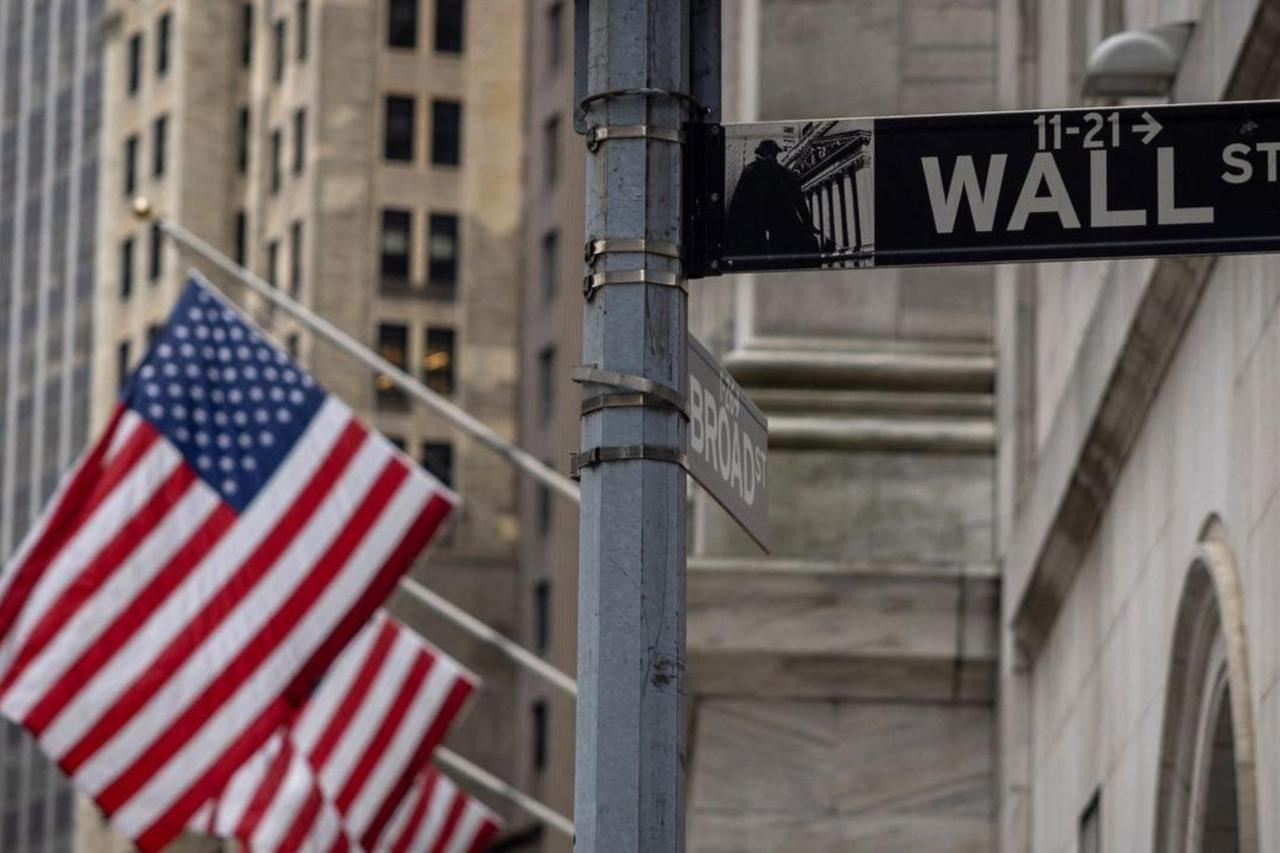


Faced with the uncomfortable reality of $4.5-a-gallon gasoline, President Donald Trump has turned to a specific brand of political arithmetic to balance the books.
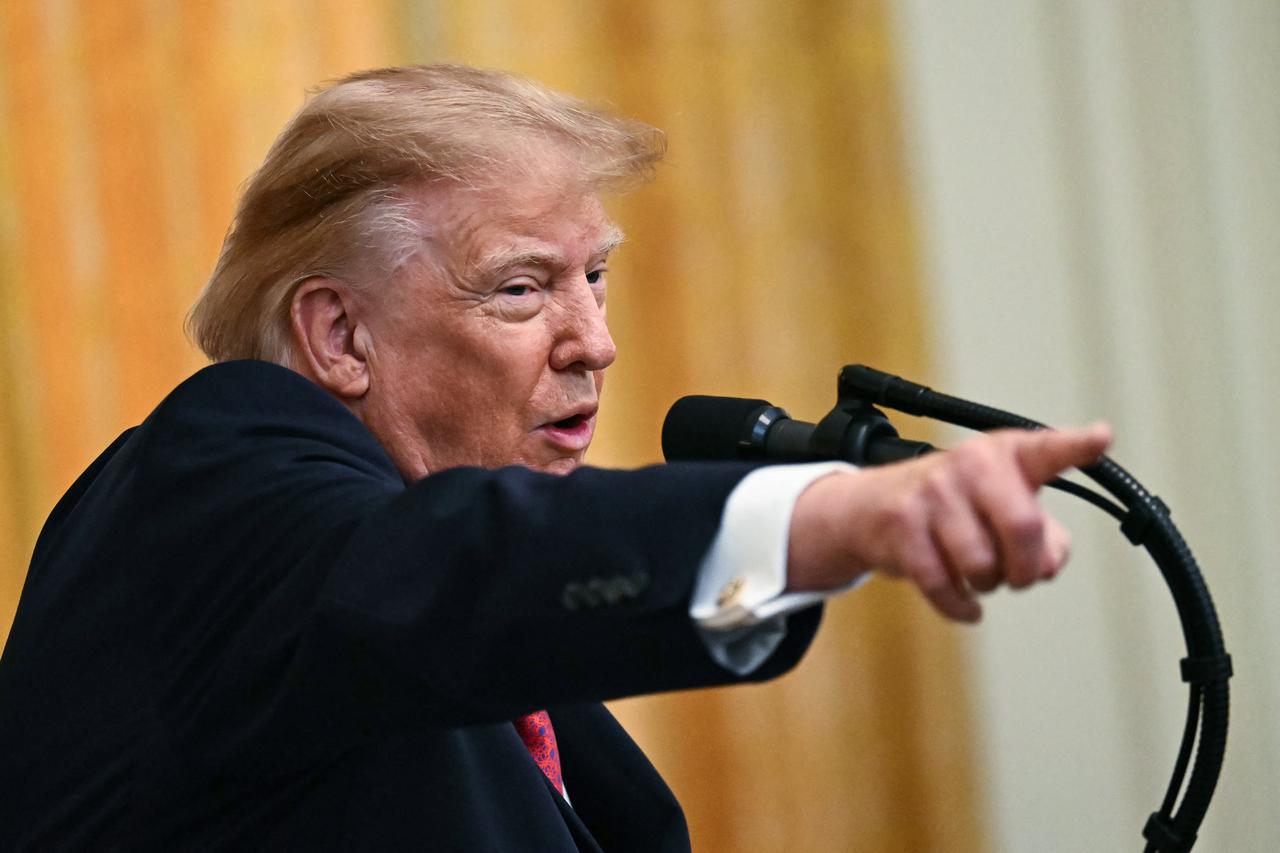
"Gas prices have come down today," Trump told reporters on May 7, when asked whether he was reconsidering Project Freedom given the surge in prices. "Have you looked? They came down very substantially today. The stock market is way up."
The selective use of numbers became the new rhetorical point of the president as he employed it every time he was asked about the gas prices.
This arrangement of technically accurate data suggests a prosperity that the reality at the pump flatly contradicts. It is a rhetorical shield that deserves a closer look, because the stock market that is "way up" is not the one most Americans recognize—and the "peace" allegedly driving it was, at that moment, almost entirely fictional.


On Feb. 28, the United States and Israel launched joint airstrikes on Iran. Supreme Leader Ali Khamenei was killed. Iran shut down the Strait of Hormuz, and over the following five weeks, the S&P fell nearly 9%.
Hedge funds, according to Goldman Sachs's prime brokerage desk, which services most of the major players on Wall Street and therefore sees exactly what they are buying, selling, and how leveraged they are, were selling at the fastest pace in 13 years. Gross leverage sat above 300%, near an all-time high. Short exposure to macro ETFs hit levels not seen since the pandemic.
The street’s mood wasn't just bearish; it was apocalyptic. As commodity analyst Rory Johnston—a man known for his restraint—put it, "recession" was far too mild a word for the looming crisis. He warned that a sustained closure of the Strait without a pipeline buffer would force the world to shed 15 million barrels of demand a day. His price target for that nightmare scenario: a staggering $250 to $300 a barrel for Brent crude.
It was into this volatile environment that the president’s Truth Social post landed on April 7. The mere announcement of a ceasefire sent shockwaves through the exchange. By the next morning, the Dow saw its best single day in nearly a year, surging 1,300 points, while the S&P and Nasdaq followed suit with significant gains of 2.5% and 3%, respectively.
Traditional financial media, performing its appointed function, called it a relief rally. The market, the anchors explained, was celebrating peace.
By the following morning, the reality on the water remained a stark contrast to the stock market’s optimism. According to maritime intelligence firm Windward, only about five outbound carriers were spotted moving through the Strait by midday. To put that in perspective, the pre-war baseline averaged around 130 transits per day. Despite the headlines, the waterway responsible for moving a third of the world's oil was still, for all practical purposes, closed.
The "peace" that the relief rally was supposedly celebrating represented, in physical terms, a 96% reduction in Strait activity compared to normal operations.
There is a striking contradiction running through global finance right now that the "stock market is way up" framing conveniently obscures. On Wall Street—the world of equity indices and ticker symbols—prices are at record highs. On Main Street—the world of growth forecasts, consumer spending, and hiring — the projections are being revised downward. These two things are happening simultaneously, and the gap between them is not an anomaly. It is the story.
Part of the explanation has nothing to do with the Iran war at all. U.S., Japanese, and South Korean markets have been climbing on the back of an artificial intelligence boom that has proven largely indifferent to geopolitical disruption.
The indices in Seoul and Taipei are dominated by the semiconductor and memory chip manufacturers that form the backbone of the modern digital economy, companies whose order books are being driven by data center buildouts and AI infrastructure investment that continues regardless of what is happening in the Strait of Hormuz. When those stocks rise, the broader indices follow, and the headline number climbs whether or not a drop of additional oil has moved through the Persian Gulf.
But the April 8 surge was something more specific than a tech rally. By early April, Wall Street had positioned itself so heavily against the market—borrowing and selling on the expectation of further declines—that it had essentially loaded a spring. Trump's Truth Social post was the release.
Goldman Sachs estimated that systematic trading firms alone bought back $86 billion worth of stocks across five sessions, one of the fastest mechanical buying events on record, as algorithms flipped automatically and dealers scrambled to rebalance their books. The Strait of Hormuz was still registering 96% below its normal daily traffic. The market wasn't pricing peace. It was pricing its own unraveling.
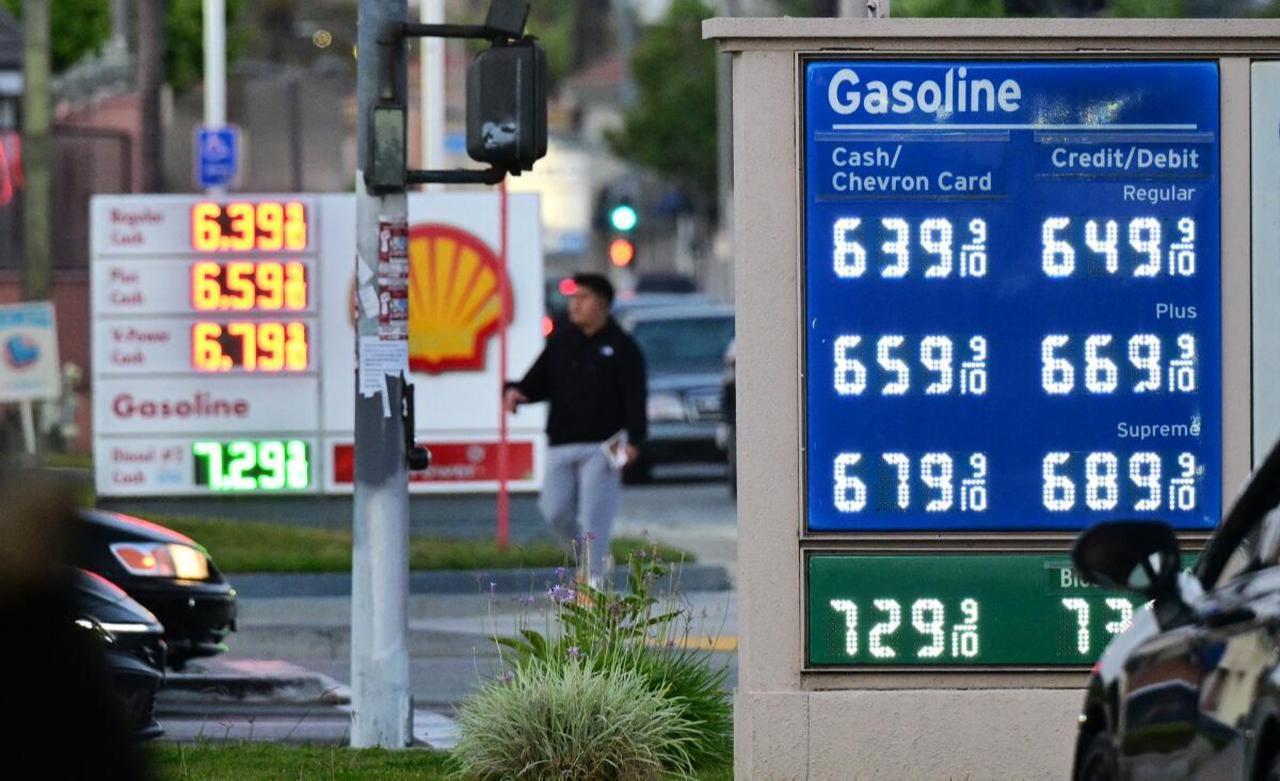
What makes this politically durable is that the market Trump points to has quietly become something most Americans don't recognize as the institution they grew up trusting.
The stock market of a generation ago acted, at least in theory, as a collective judgment on the health of the broader economy. Today, that market has been largely replaced by a system where more than $13 trillion moves on autopilot through passive index funds. In this new landscape, giant trading firms buy and sell based on programmed numerical thresholds rather than fundamental economic analysis.
Perhaps most importantly, the AI and semiconductor giants that now dominate the indices operate on a growth cycle that is structurally decoupled from traditional indicators like energy prices, consumer confidence, or the cost of filling a tank. When a company like Nvidia has a good quarter, the S&P 500 climbs—and that remains true whether gas costs $2.5 or $4.5.
This decoupling is precisely what makes the stock market so useful as a political instrument right now. A president standing at a podium can point to a number that reflects the health of the AI economy, the mechanical unwinding of a short position, and the momentum of Asian semiconductor stocks—and present it as evidence that his handling of a Middle Eastern war is working.
This realization brings us back to that Thursday press briefing and the answer that deserves far more scrutiny than it received.
The pump and the portfolio are currently telling two different stories to two very different groups of Americans. While a record-high stock market is technically "good news," that benefit is strictly limited. It serves the roughly 58% of Americans who own equities, and it disproportionately favors the wealthiest households, who hold the overwhelming majority of that wealth.
The $4.5 gallon of gasoline is news for everyone, but it lands hardest on the Americans who spend the largest share of their income on transportation and energy, the ones least likely to have a brokerage account that absorbed the upside of an $86 billion mechanical buying spree.
Trump's May 7 answer is his new point that he will repeat many more times to not let people talk about gas prices. He will try to shift the attention from the number that is squeezing his voters at the pump toward the number that flatters his legacy on the ticker.
The honest answer to the reporter's question would have required a level of transparency the administration wasn't willing to provide. It would have meant admitting that gas prices remain high because the Strait of Hormuz is still functionally closed and the Strategic Petroleum Reserve has been drained to historic lows.
More importantly, it would have required acknowledging that the stock market’s record highs weren't driven by faith in a resolution to the Iran crisis. Instead, they were the result of a mechanical "short squeeze"—the aggressive unwinding of the most extreme bets Wall Street had placed against the market since the pandemic.
That answer was never given. At this particular moment, that gap—the space between what was said and what is actually true—is the most important economic story in Washington.


 Set as preferred source
 Set as preferred source


 4 min read