Newsletters


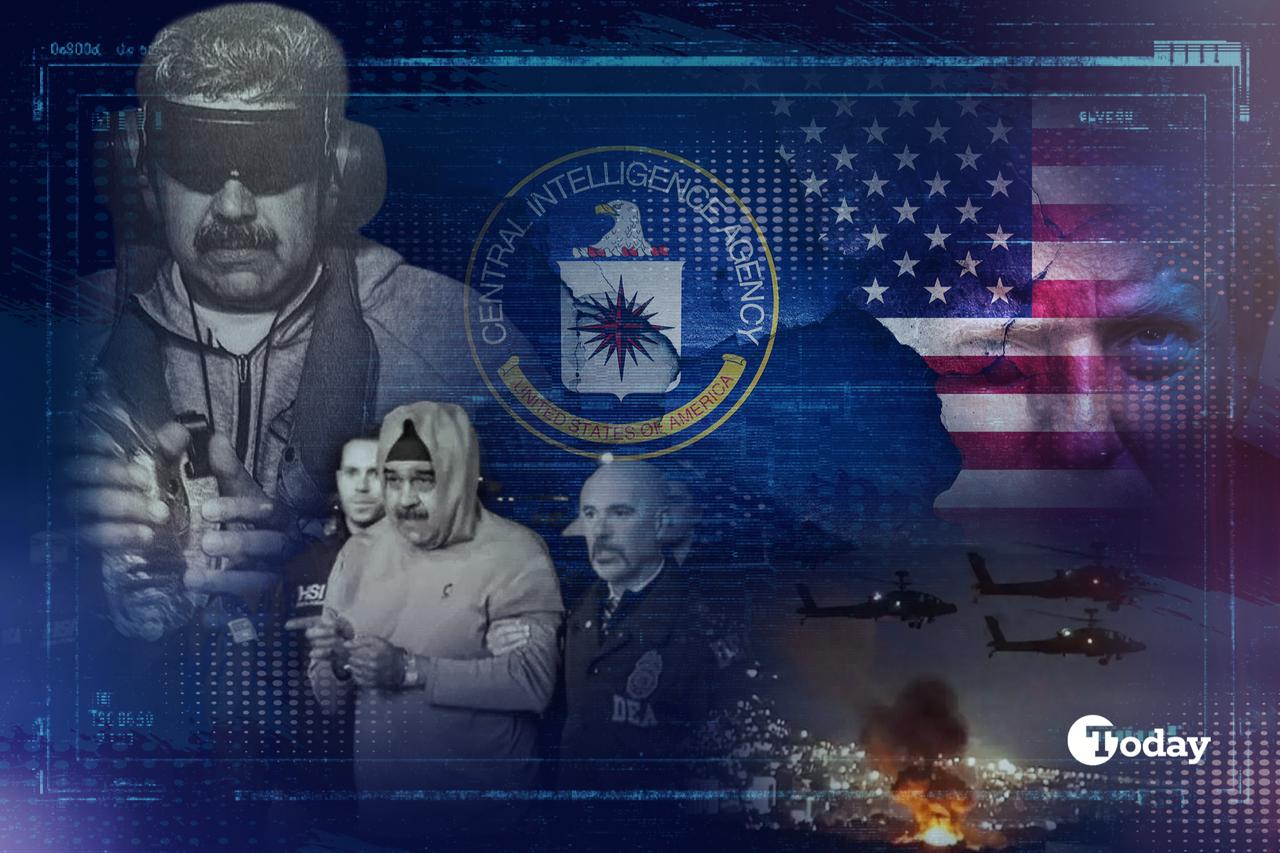


U.S. special forces abducted Venezuelan President Nicolas Maduro on Jan. 4 and transported him to the United States. Media reports on how the operation was carried out indicate that the CIA sent a small team into Venezuela starting in August.
Another critical element highlighted in these reports is that the CIA had an asset within Maduro’s inner circle, and this individual played a key role in the process of capturing him. For intelligence agencies, infiltrating the inner circle of target heads of state has always been a primary priority. These individuals may sometimes be political actors at the center of the decision-making process, while at other times they may be invisible figures, such as staff members with direct access to the president. Such target selection constitutes an operational response to the question of who possesses the information required by the intelligence service or who has access to it.
In this context, the question “Who or who might be the CIA asset within Maduro’s inner circle?” becomes particularly important. According to a report in Havana Times, there is strong evidence regarding the identity of this person. The report claims that Delcy and Jorge Rodriguez met with U.S. officials in Qatar to discuss a Venezuela scenario without Maduro. It also alleges that Delcy Rodriguez, who reportedly holds a significant portion of her wealth in Qatar, was contacted through Qatari intelligence. At this point, it is necessary to examine how intelligence agencies recruit assets.


Human thoughts, actions, and behaviors do not occur in isolation. A person’s family background, social class, regional traditions, the ethics, morality, and discipline instilled during childhood, and the cultural ecosystem in which they are raised all shape this process. These factors are often invisible, yet they form the foundation of decision-making processes, determining ethical choices, emotional responses, and perceptions of the legitimacy of actions. To truly understand how and under what conditions a target can be engaged, an intelligence officer must accurately interpret these motivations and emotional structures.
At this stage, cultural background plays a decisive role. It functions as an internal compass, guiding not only how a person defines themselves but also how they interpret the external world. Individuals whose family histories include oppression, displacement, or experiences of violence develop a subtle but strong sensitivity toward authority; this may manifest as cautious respect or profound distrust. In contrast, individuals from families with a long history of state service perceive betrayal not as a pragmatic political choice but as an existential rupture that undermines personal integrity.
In this context, the recruitment process often begins long before the intelligence officer’s first direct contact with the target. It unfolds through quiet, unnoticed negotiations within the target’s internal world, shaped by accumulated frustrations. Motivation cannot be reduced to a single factor; it emerges from a combination of upbringing, disappointments, suppressed desires, and emotional residues from past decisions. For example, generalized frameworks in the academic literature, such as money, ideology, coercion and ego (MICE), are insufficient to explain the complex motivations of targets. Loyalty is not static; it fluctuates and shifts depending on which aspects of identity are prominent at a given moment.
The target’s breaking point, or the moment they become amenable to engagement, emerges when the life narrative they present conflicts with an internal reality that they can no longer suppress externally. This is not a sign of weakness but an indication that the psychological structure sustaining their identity has entered a process of reorganization. People engage in intelligence relationships not to deny or destroy themselves, but to restore an internal balance that existing circumstances cannot provide. Once this stage is reached, the individual perceives the process not as betrayal but as a consistent effort to preserve their own integrity.

A high-profile politician like Delcy Rodriguez does not become open to collaboration through an abrupt break or simple erosion of loyalty. For such a profile, the critical factor is not ideological-cognitive disruption but the loss of internal identity consistency. When this consistency is challenged, the resulting tension may not always be observable externally. These inconsistencies often develop over time into cognitive and emotional fissures, sometimes manifesting as stress on the surface.
Delcy Rodriguez’s personal biography provides key insights into this process. In 1976, her father was detained in connection with the kidnapping of a high-ranking U.S. official and died under suspicious police custody. This event elevated him as a “hero” within the leftist movement and constituted a formative experience shaping Delcy and Jorge’s political careers. This loss led her to perceive the world as a permanent field of threat and struggle, while simultaneously fostering a strong need for control, low tolerance for uncertainty, and a desire to restore disrupted order. Public displays of firmness and determination should thus be read less as an ideological choice and more as an expression of effort to preserve identity and internal consistency.
Her experience representing Venezuela internationally during her tenure at the Foreign Ministry likely challenged this internal consistency. The increasingly slogan-like public discourse, persistent defensive posture, and systematic perception of Venezuela’s international discrediting exerted an erosive effect not only at the foreign policy level but also on her self-perception. This dynamic widened the gap between the state’s representation and the individual’s own sense of justice and consistency.
A potential breaking point would thus stem not from feelings of betrayal but from the perception that existing loyalty could no longer sustain identity. Honor, respect, and equality are pivotal psychological axes for profiles like Delcy Rodríguez. While perceived humiliation undermines identity, recognition and acknowledgment do not dissolve loyalty but allow it to be reinterpreted.
The Maduro administration’s increasingly rigid and repetitive discourse, which continuously positioned Venezuela defensively on the international stage, reinforced a collective sense of humiliation. This created conditions at the individual level that strained the balance between loyalty and reputation. In such an environment, the CIA’s approach likely relied less on ideological persuasion or material incentives, and more on interactions that restored a sense of international respect, equality, and intellectual acknowledgment.
The early search for justice resulting from personal loss, combined with a normatively reinforced educational framework and a career-long internalized state identity, may have guided change along a gradual, internally legitimized, and reasoned path. In such a process, the individual perceives themselves not as serving an external power, but as an actor following a course consistent with their own historical narrative.


 Set as preferred source
 Set as preferred source


 1 min read
 1 min read