Newsletters


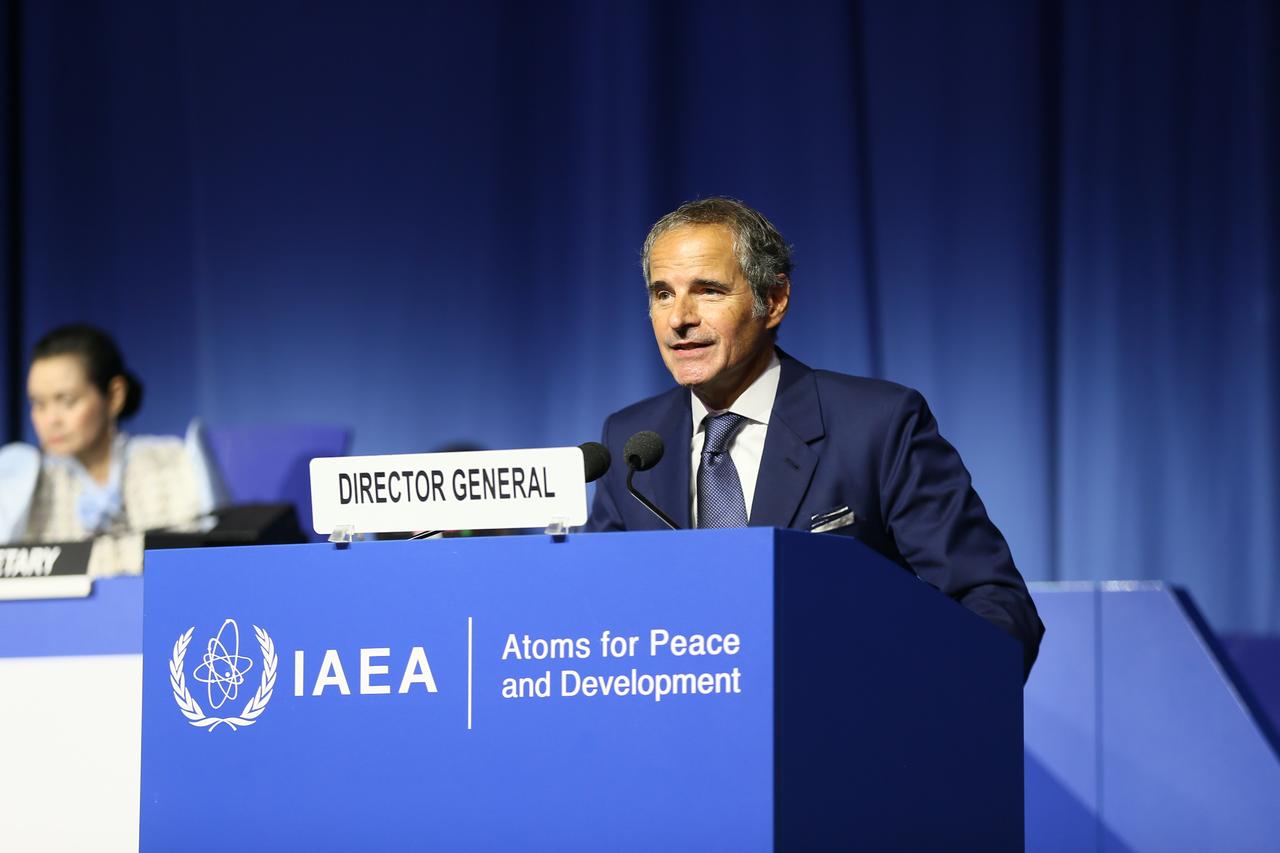


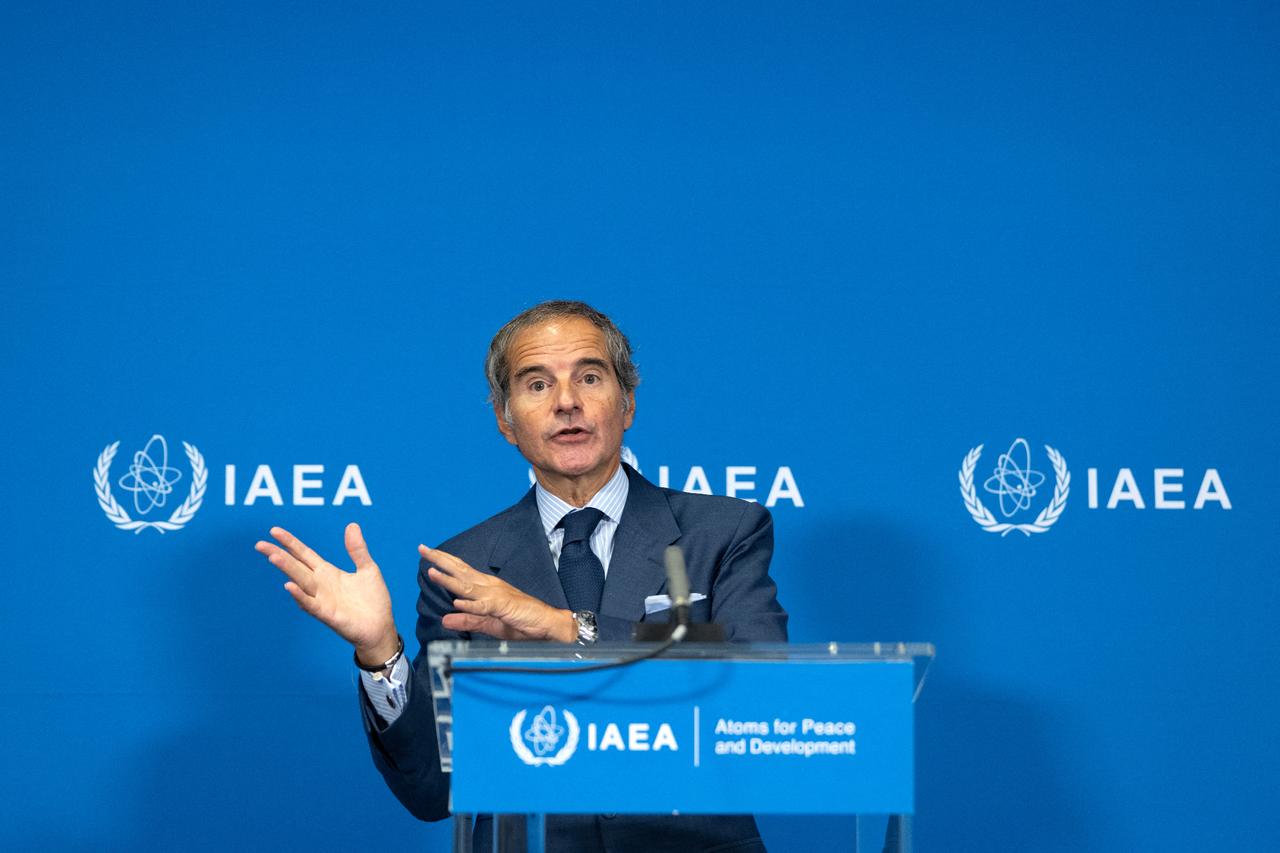
International Atomic Energy Agency Director General Rafael Mariano Grossi warned Monday that a world with more nuclear weapons and more nuclear-armed countries would not be safer, as he called for renewed diplomacy and stronger safeguards amid concerns over Iran’s nuclear program.
Grossi spoke at the IAEA’s 70th General Conference in Vienna alongside U.S. Energy Secretary Chris Wright and Rosatom Director General Alexey Likhachev.
Grossi said the Treaty on the Non-Proliferation of Nuclear Weapons, or NPT, remains the cornerstone of the global nuclear nonproliferation regime.
“A world with more nuclear weapons and more countries possessing nuclear weapons is not a safer world,” he said.

Grossi said the agency’s monitoring of Iran’s nuclear program deteriorated in 2026 after inspectors had to be withdrawn.
He said that, apart from an inspection conducted at the Bushehr Nuclear Power Plant in June, the IAEA had carried out no verification activities on the ground in Iran for more than six months.
Grossi also reiterated that the agency has been unable for more than a year to maintain continuity of knowledge regarding Iran’s stockpile of uranium enriched to up to 60%.
He said the IAEA’s lack of information about nuclear material and its inability to access facilities for verification were creating serious nuclear proliferation concerns, and called for a return to diplomacy and negotiations.
Grossi also said outstanding safeguards issues related to nuclear activities dating from the rule of Syria’s ousted Assad regime had been resolved.
He said that progress had been made possible by Syria’s transparency and cooperation.
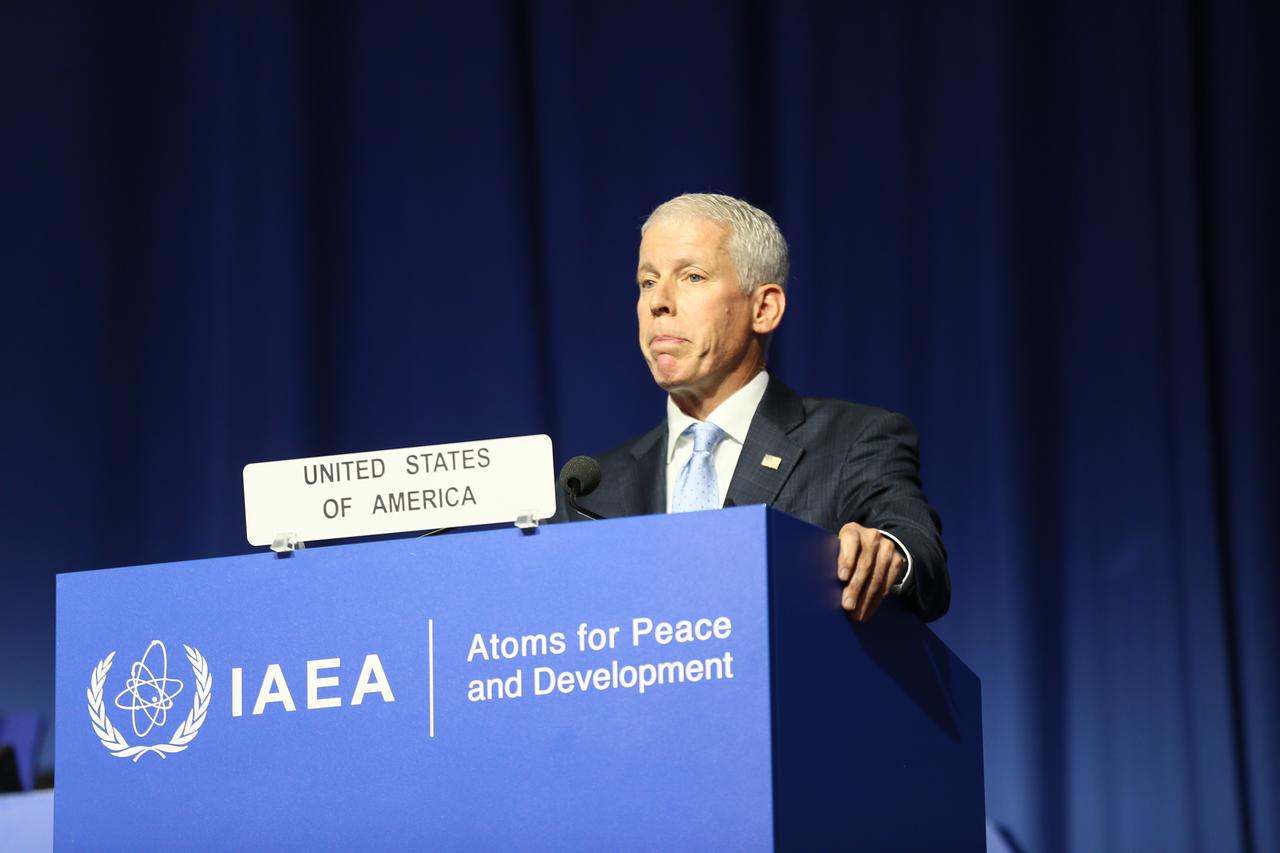
Wright said Iran’s lack of transparency toward the IAEA was “unacceptable” and argued that Tehran had been given sufficient time to meet its obligations.
He recalled that the IAEA Board of Governors had taken the necessary step to report Iran’s failure to meet its obligations to the U.N. Security Council.
“Iran must never develop or acquire a nuclear weapon,” Wright said. “Iran must fully cooperate with the IAEA, fulfill its safeguards obligations and provide the access necessary for the agency to do its job.”
Wright also outlined Washington’s nuclear energy goals, saying the U.S. was launching what he called an “American nuclear renaissance” under President Donald Trump.
“Thanks to President Trump’s leadership, the U.S. is launching an American nuclear renaissance,” he said.
Wright said the Trump administration aims to add 300 gigawatts of nuclear energy capacity in the U.S. by 2050.
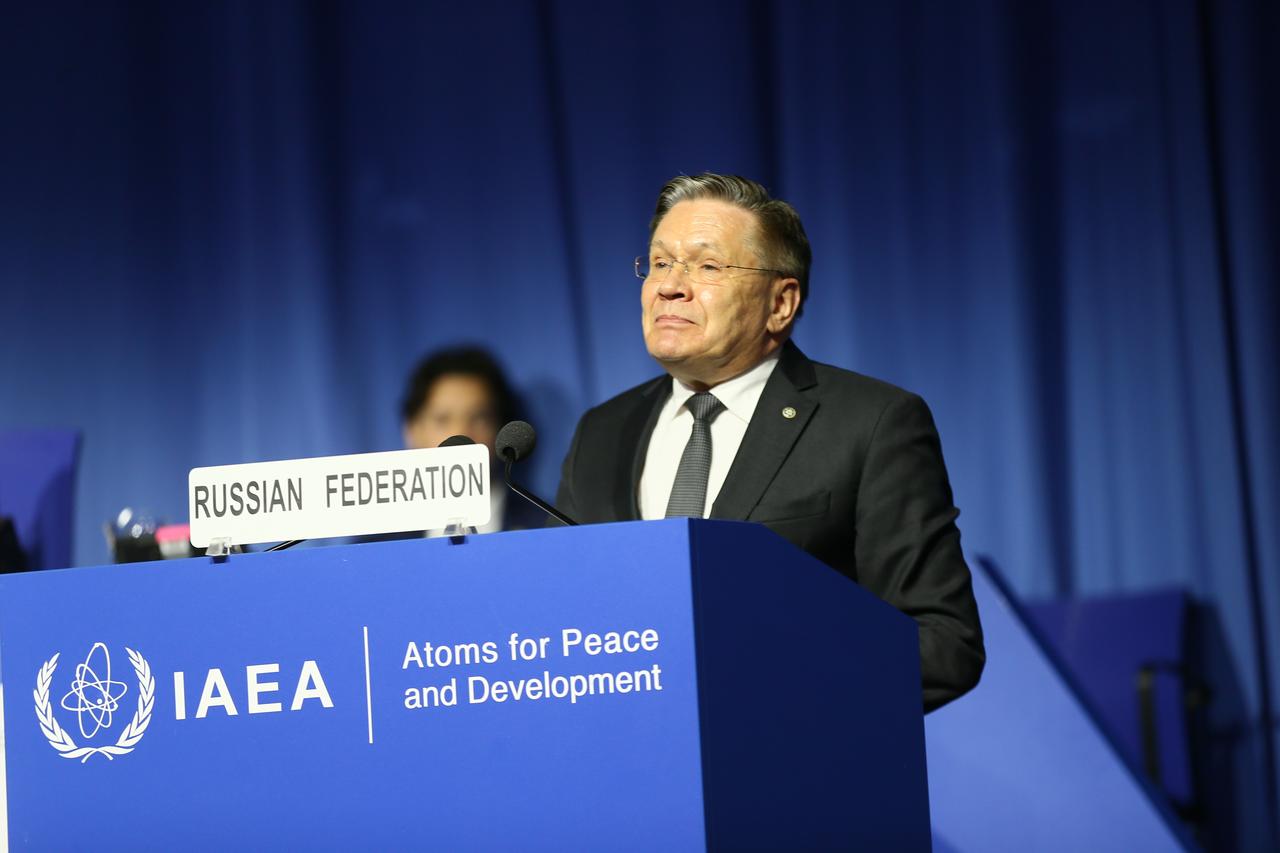
Likhachev said nuclear facilities around the world were being attacked almost daily and argued that their safety must be treated as an absolute priority regardless of their location.
He claimed that the Ukrainian military regularly attacks Russian nuclear power plants and said attacks on the Russian-controlled Zaporizhzhia Nuclear Power Plant and the surrounding area had increased in recent months.
Likhachev said tankers carrying diesel fuel needed to ensure the plant’s nuclear safety were attacked last Friday.
He argued that the IAEA should not limit itself to recording such incidents.
“In this dramatic situation, we believe the agency should not merely record these attacks,” Likhachev said. “Instead, it should clearly state who is responsible for committing these crimes.”


 Set as preferred source
 Set as preferred source


 1 min read
 1 min read