Newsletters


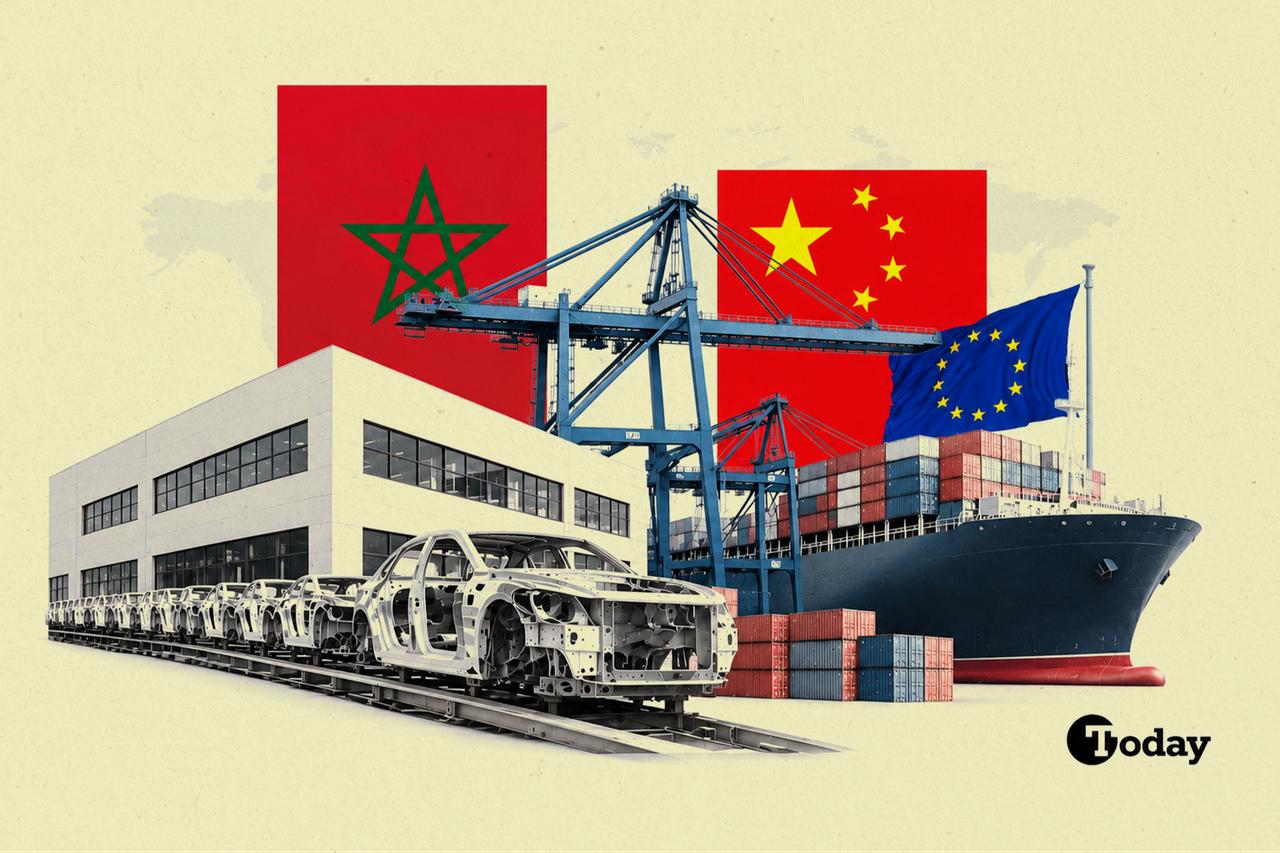


In August 2022, the United States passed the Inflation Reduction Act, designed partly to reduce Chinese involvement in America’s electric-vehicle supply chain. Its consumer tax credit favored critical minerals processed in the United States or a free-trade partner such as Morocco.
Within two years, at least eight Chinese battery companies had announced investments in the kingdom, unwilling, as one Wood Mackenzie analyst put it, “to miss this big party.”
The invitation, however, came with conditions. Ownership restrictions and sourcing rules meant that a Moroccan address alone could not secure eligibility. Nor was every investment aimed at the American market.
The direction of the incentive was nonetheless clear: barriers in one market pushed Chinese manufacturers abroad, and trade agreements helped decide where they went.
All this complicates a familiar account in which Beijing arrives with a strategy and African governments negotiate their place within it. In Morocco’s case, American subsidy rules, European trade defenses, the purchasing decisions of European carmakers and Rabat’s own trade agreements have helped decide where Chinese factories go.
Meanwhile, the old lending model has shrunk. Boston University’s Chinese Loans to Africa Database records commitments of $28.8 billion in 2016 and just under $2.1 billion in 2024. Its researchers read that as Beijing retooling, shifting from mega-loans to governments and toward smaller projects and direct investment, a strategy of its own. Trade has gone the other way.
Chinese exports to Africa rose 25.8% in 2025, to about $225 billion, while African exports to China rose 5.4%, to $123 billion, leaving Africa with a deficit of $102 billion. The surge coincided with renewed American restrictions on Chinese goods, though how much of it they caused is harder to say.
Solar is a key test. Chinese panel exports to Africa reached 23 gigawatts in the 12 months to June 2026, up 53%. Joel Nana, research director at the African Tech Futures Lab, is wary of calling this trade diversion. The data shows no sign of the panels leaving Africa again, and “the African market can comfortably absorb these volumes.” He sees “genuine African demand responding to cheap panels, high electricity costs, expensive diesel and unreliable grids.” And the arithmetic supports him.
Ember and the African Tech Futures Lab calculate that the Chinese panels imported during that period cost $2.4 billion. Generating the same electricity from diesel would burn through that sum every three months.
Cells and wafers, however, tell a different story. Nana estimates that Africa’s imports of them this year amount to roughly 10 times the continent’s solar-manufacturing capacity, which is itself expected to nearly quadruple by year's end. But “even after accounting for that, the gap remains very large,” he says, and at least part of the imports “may ultimately be intended for re-export.” Finished panels look like an African market, even while some of the parts may be destined for another.
Morocco provides a clearer case of production aimed beyond the host country. It has preferential access to European and American markets and a car industry established long before the latest Chinese wave. In June 2024, Gotion High-Tech signed an agreement for a battery project at Kenitra worth roughly $1.3 billion.
Thierry Pairault, emeritus research director at CNRS, considers it arguable that the Chinese are following a path cut by Europeans. European companies, he says, “initially brought in their Chinese subcontractors” and are “also opening up the European market to these Chinese companies.”
Renault and Peugeot are his most striking examples. Volkswagen has since gone further. In September, its battery arm, PowerCo, announced plans to take 49% of a €480 million cathode venture with Gotion at Kenitra, pending approvals. The material is intended for two European cell plants the partners plan in Spain and Slovakia. Volkswagen is already a major Gotion shareholder.
Europe’s regulators take a sterner view of the same traffic. In March 2025, the European Commission imposed countervailing duties of 5.6% to 31.4% on Moroccan aluminum wheels, on top of anti-dumping duties in place since 2023, after finding subsidies from Rabat and, for one producer, Belt and Road financing from Beijing. Renault and the carmakers’ lobby ACEA were among the parties heard. Wolfsburg buys a share of the door while Brussels inspects what comes through it. The interests of a European company and those of a European industrial strategy need not coincide.
Washington, for its part, has left the party. The American clean-vehicle credit ended for vehicles acquired after Sept. 30, 2025, showing that Congress could withdraw a subsidy far faster than a manufacturer could finish a plant.
None of this makes China Morocco’s dominant investor. Pairault measures Chinese investment against all foreign investment in Morocco. By that measure, it was “very substantial” in 2023 and 2024, he says, but its relative importance fell in 2025, and over 2017–2025 it made up just 4% of the total. Morocco’s share of Chinese investment in Africa nonetheless rose from 1% to 8%. China has “an increased role in Morocco, albeit not a dominant one.”
Rhodium Group counts Chinese projects instead, and its figures show a pipeline still filling. Armand Meyer counts about $8 billion announced over the past decade, of which $4.7 billion had been completed by mid-2026, before the new Gotion–Volkswagen venture. Completions reached $1.6 billion in 2025 and $1.2 billion in the first half of 2026 alone. The largest projects, mostly in autos and batteries, remain pending or under construction.
Pairault resists talk of a single Western trade policy, and Morocco shows why. Washington and Brussels pursue different ends, and European governments and companies have ends of their own. A factory can be invited by one jurisdiction’s subsidies and threatened by another’s trade defenses.
Morocco’s achievement is to have made itself useful amid these competing arrangements. Preferential access helped, but so did an existing manufacturing base and customers willing to bring their suppliers with them.
The harder question is whether those factories leave capabilities that outlast the rules.


 Set as preferred source
 Set as preferred source


 2 min read