Newsletters


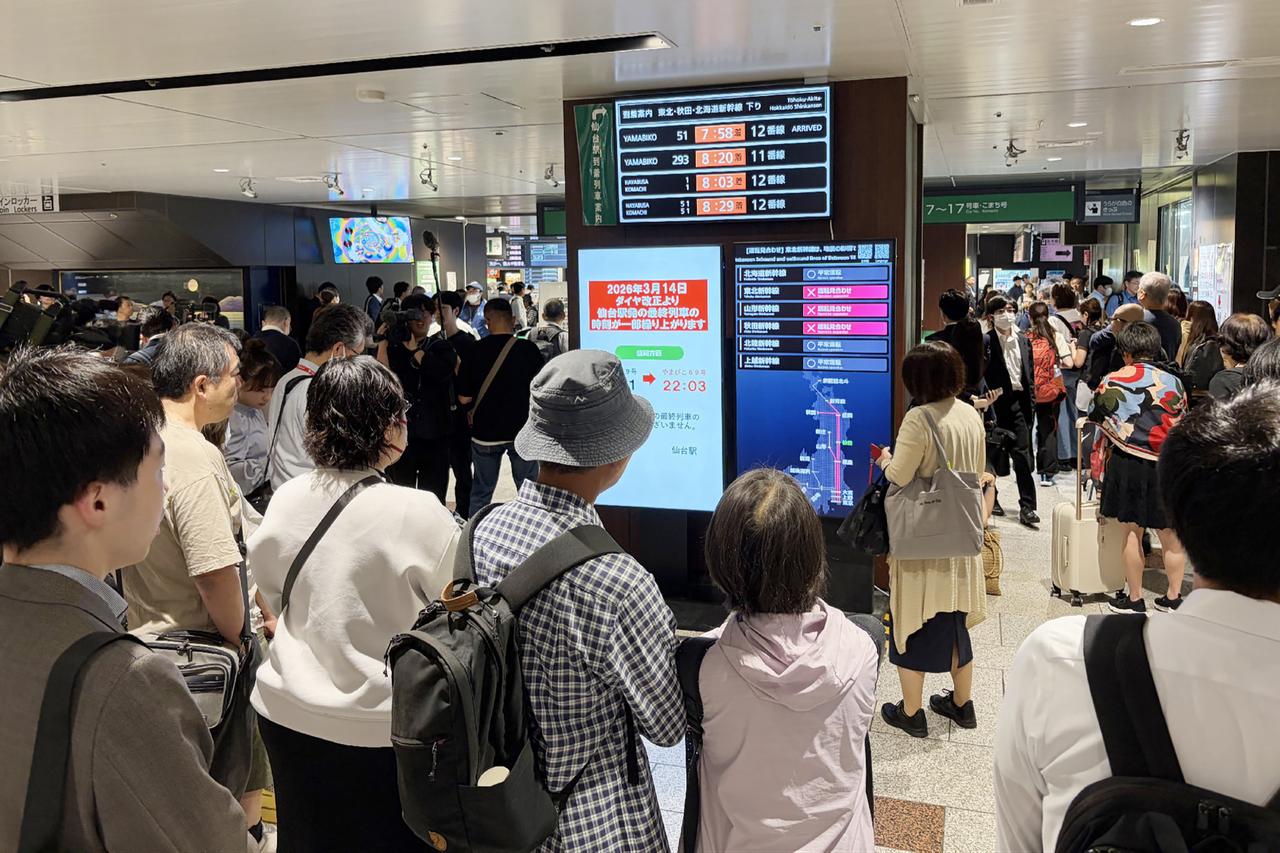


At least six people were injured after a magnitude 6.9 earthquake struck northern Japan on Thursday morning, with officials saying there was no tsunami warning but urging residents to stay alert for another strong tremor.
The quake was centered off the coast of Iwate Prefecture at a depth of 50 kilometers (4.2 miles), according to the Japan Meteorological Agency.
The town of Hashikami in Aomori Prefecture registered an upper 6 on Japan's seismic intensity scale of 7, a rare and dangerous level of shaking.
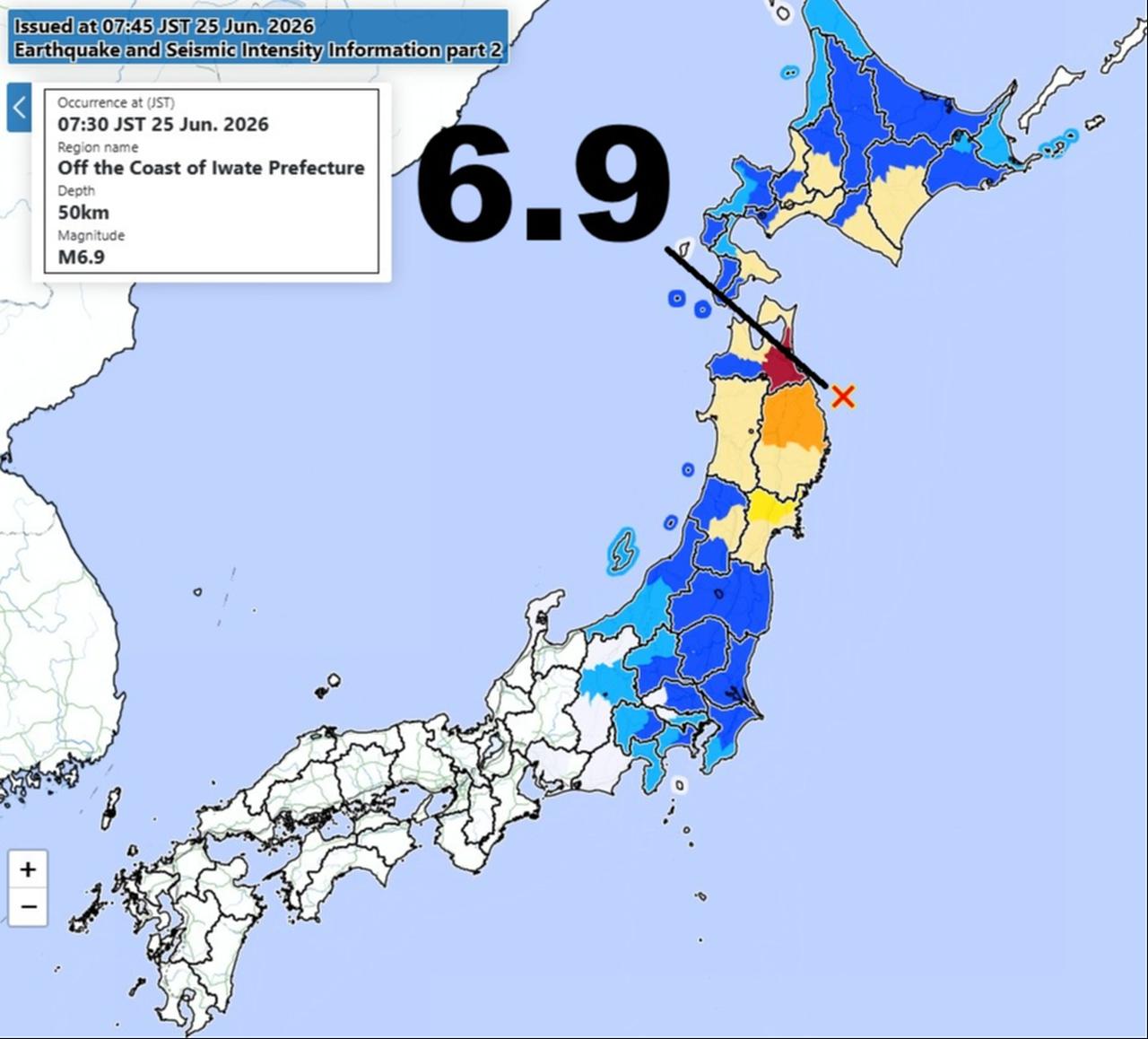

An upper 6 means people may be unable to walk and can only crawl during an earthquake, while unsecured furniture is likely to topple over, according to the agency.
The city of Hachinohe in Aomori recorded a lower 6, while several areas in Iwate registered an upper 5. The shaking was also felt mildly in Tokyo.
Aomori Prefecture reported five injuries, while Iwate Prefecture said a woman in her 90s sustained a minor injury after falling.
The Tohoku Shinkansen high-speed rail line was temporarily halted after the quake, though most services had resumed by early afternoon. Several local train lines in Iwate and Aomori remained suspended, with no clear timeline for service to resume.
The Prime Minister's Office set up a task force to respond to the quake. Prime Minister Sanae Takaichi said there was "no tsunami concern" and called on residents in affected areas to "remain vigilant for the possibility of another earthquake of similar magnitude."
Chief Cabinet Secretary Minoru Kihara said there were no reports of damage to nuclear power facilities in the region. Defense Minister Shinjiro Koizumi also ordered the Self-Defense Forces to carry out aerial intelligence-gathering operations over the affected areas.
Japan Meteorological Agency officials warned people in the hardest-hit areas, especially those near the Japan Trench and Kuril Trench, to remain on alert for up to a week.
The agency said that after a large earthquake, there is a 10% to 20% chance that another major quake may occur in the same area, particularly within the next two to three days.
Northern Japan has experienced several earthquakes in recent months. A magnitude 6.3 quake struck the Tohoku region in May, while a magnitude 7.7 quake hit the same area in April, prompting authorities at the time to issue a special advisory.
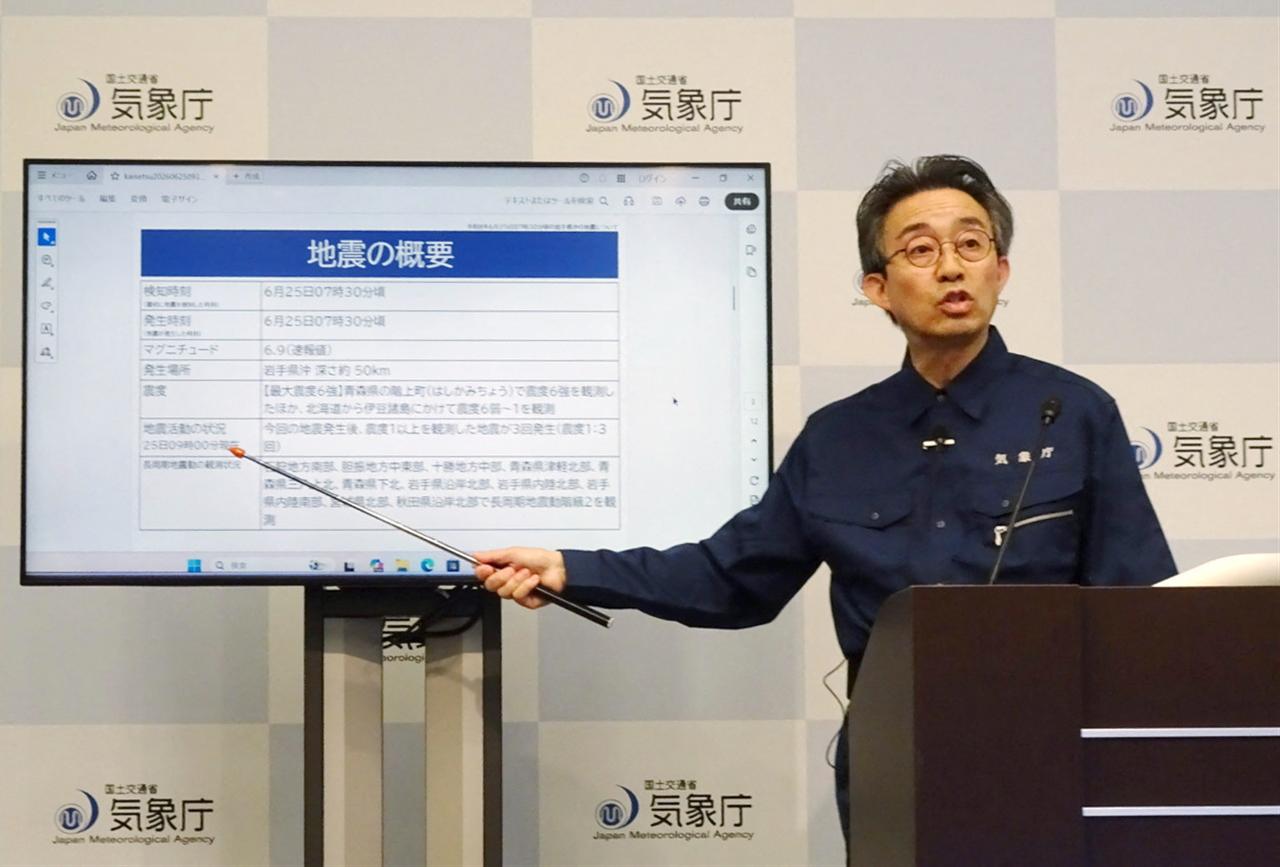
Ayataka Ebita, head of the agency's earthquake and tsunami monitoring division, said the area is prone to earthquakes, with major quakes of magnitude 7 or above typically occurring there every 10 to 20 years.
The government's earthquake research headquarters said earlier this month that multiple quakes had been occurring in the region after a magnitude 7.7 quake on Nov. 4, likely due to post-seismic deformation in Iwate Prefecture.
Fumiaki Tomita, a geodesy expert at Tohoku University, said Thursday's quake occurred near an area affected by afterslip, a slow movement that can follow a large earthquake.
He noted that it is possible this movement placed stress on the area, though he stressed that this had not been verified.
Tomita also warned that a quake similar to the 1994 offshore Sanriku earthquake, or even a magnitude 8-class event, could be one possible scenario. However, he added that "Current science cannot say exactly when such large-scale earthquakes will happen."


 Set as preferred source
 Set as preferred source


 1 min read