Newsletters


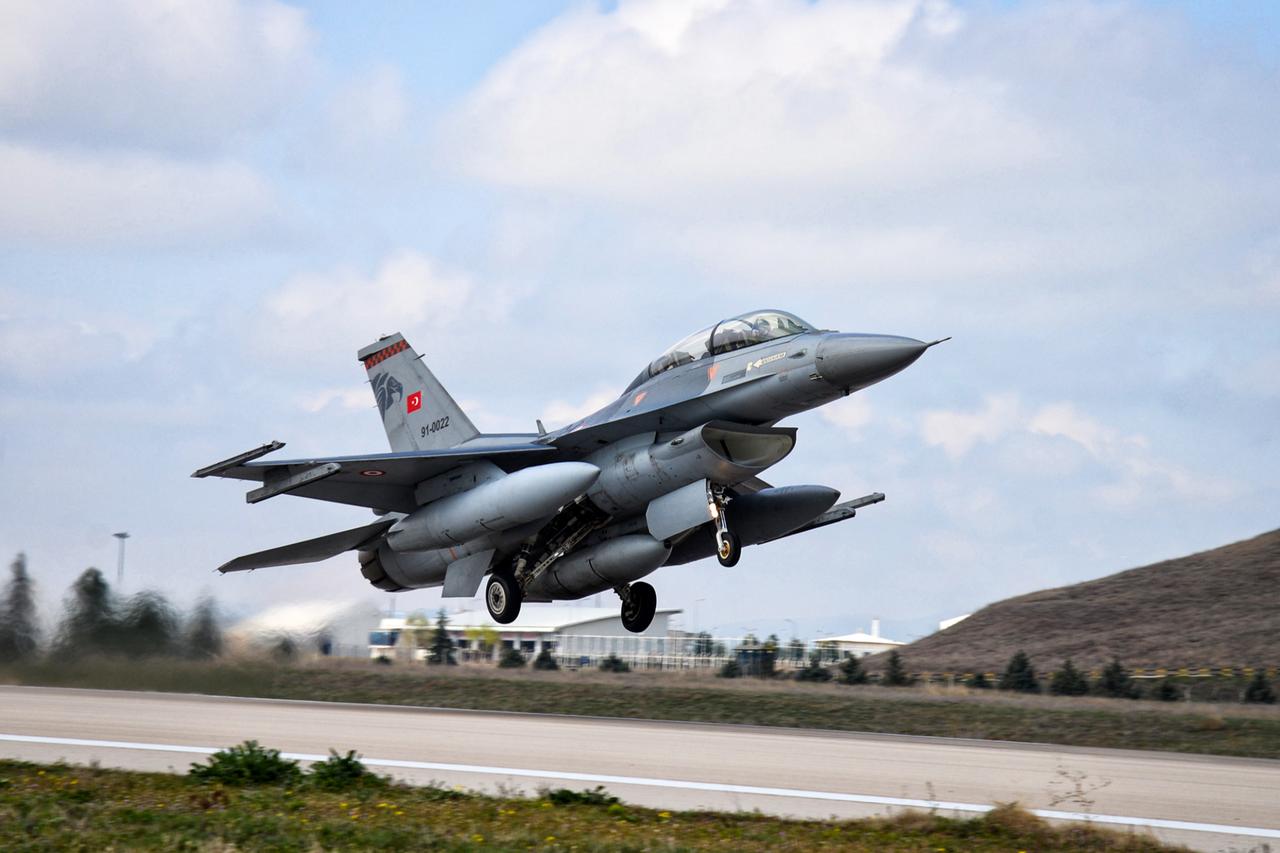


NATO has asked Türkiye to contribute F-16 fighters to the alliance's Baltic Air Policing mission in 2026, several months ahead of schedule, according to people familiar with the matter who spoke to Bloomberg.
The proposed four-month rotation in Estonia from August to December comes as NATO steps up defenses following Russian violations of its airspace, with Ankara already set to deploy warplanes in Romania from December 2026 through March 2027, according to a report.
Ankara has not yet decided how it will respond to the request. Turkish jets last carried out patrols under the mission in early 2025.
Turkish Air Force elements returned home in September 2021 after completing NATO's Enhanced Air Policing mission in Poland, marking their first such deployment in 15 years, according to the Defense Ministry.
Four F-16 aircraft and military personnel were stationed at Malbork Air Base from July 6 through September 15, 2021. During the two-month-nine-day mission, the jets conducted approximately 30 sorties, each lasting 1-1.5 hours, while performing alert reaction duties and joint training with Polish forces.
Turkish Air Force (TurAF) elements also participated in NATO's Enhanced Air Policing bilateral training mission in the Western Black Sea in 2024, deploying two F-16 aircraft from the 1st Main Jet Base Command.
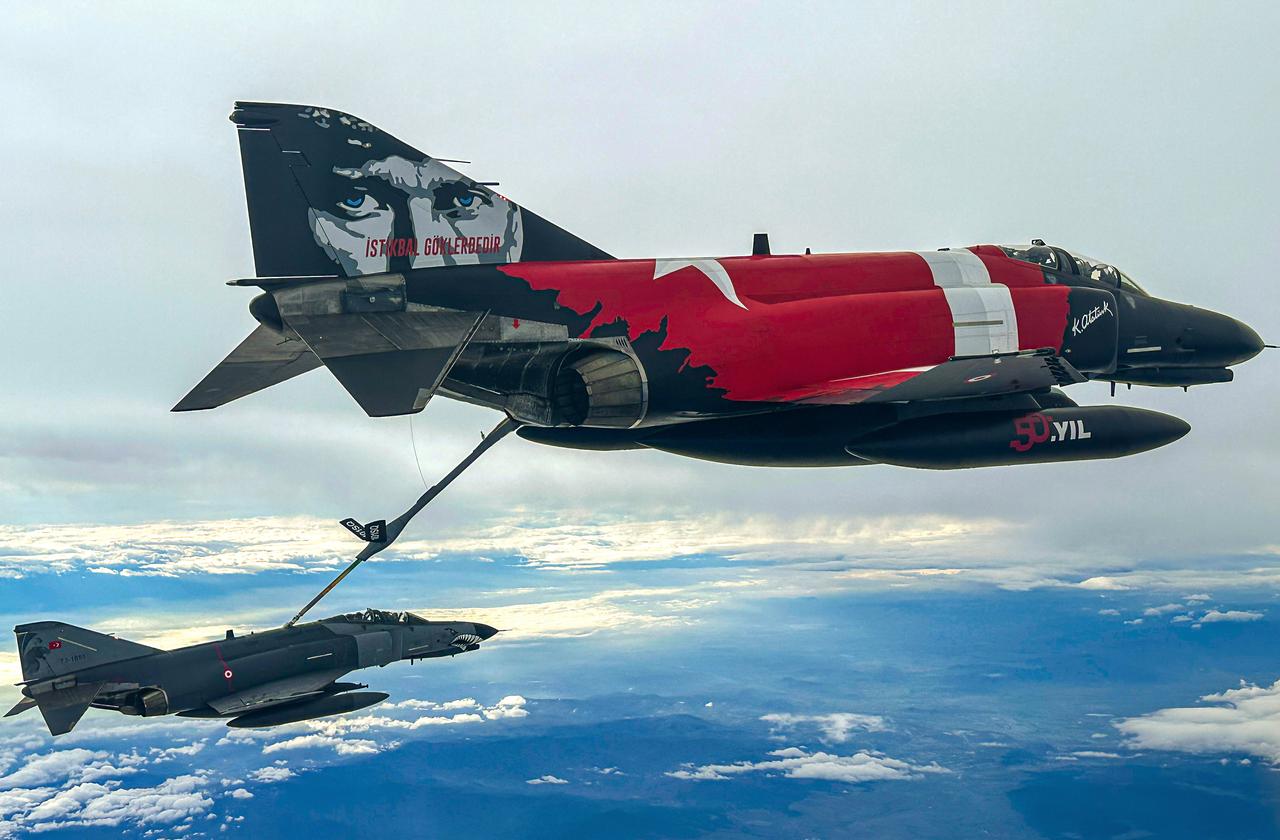

NATO Air Policing is a permanent peacetime mission established in 1961 during the Cold War. The mission maintains a continuous 24-hour, 365-day presence of fighter aircraft and crews ready to intercept airspace violations and support civilian aircraft in distress.
Allied air forces continuously monitor all air traffic in and around Europe, detecting and responding to unusual activity, including potentially hostile aircraft. The mission also provides support to civilian aircraft that have lost communication with air traffic control.
The Supreme Allied Commander Europe (SACEUR) holds overall responsibility for the mission. Allied Air Command (AIRCOM), headquartered in Ramstein, Germany, oversees operations with 24/7 command and control from three Combined Air Operations Centres (CAOCs).
The Torrejón CAOC in Spain covers airspace south of the Alps. The Uedem CAOC in Germany covers airspace north of the Alps. The Bodø CAOC in Norway covers the Nordic region and Arctic airspace.
These overlapping areas of responsibility provide critical redundancy for continuous command and control.
"Together, the CAOCs monitor up to 30,000 air movements across European NATO airspace daily, planning and coordinating NATO Air Force activities," according to NATO.
"When interception is required—for airspace violations, suspicious activity near Alliance borders, or unsafe air traffic—the relevant CAOC determines which air base will scramble fighters based on incident location," NATO notes.


 Set as preferred source
 Set as preferred source



 1 min read