Newsletters


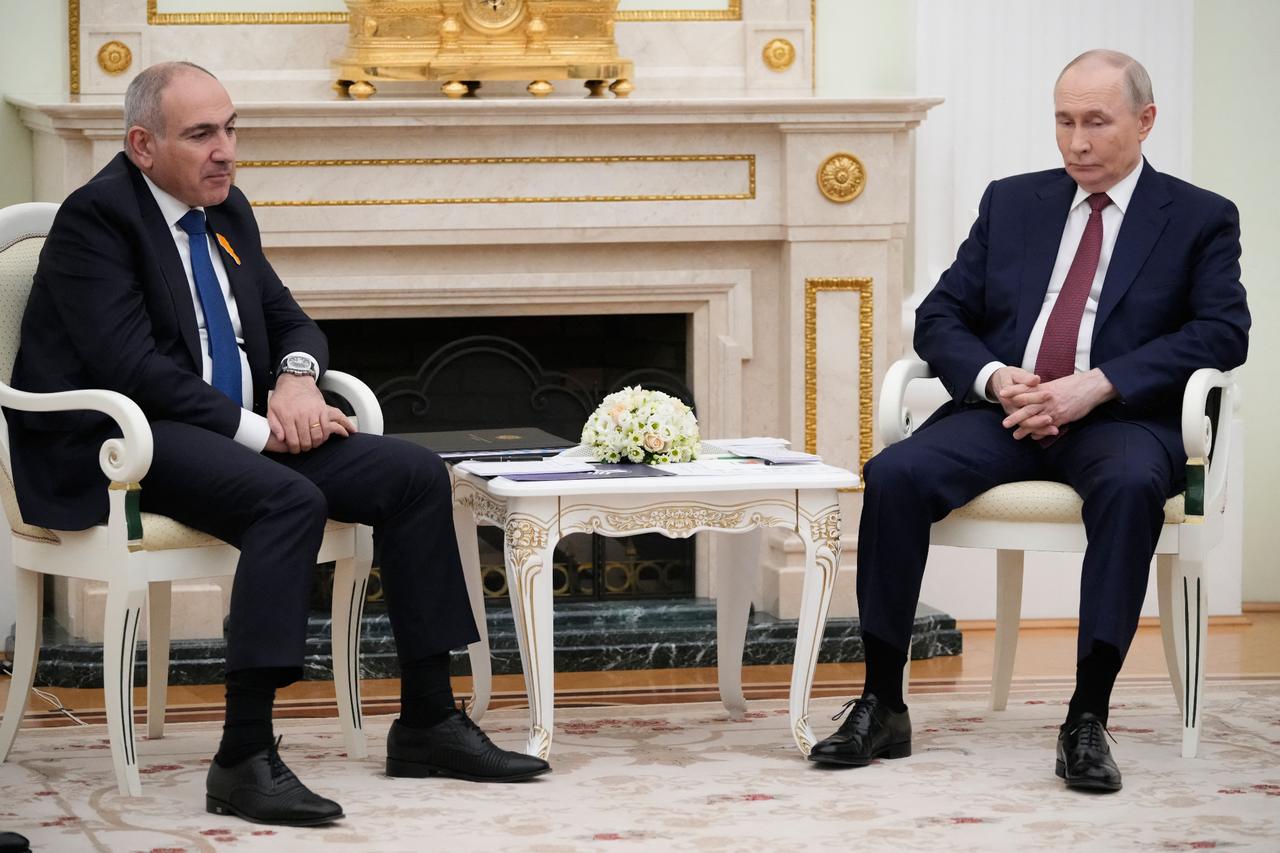


Russian President Vladimir Putin and Armenian Prime Minister Nikol Pashinyan met at the Kremlin on Wednesday to discuss bilateral relations, regional connectivity and Armenia's growing ties with the European Union, in a wide-ranging exchange that also surfaced unresolved tensions over Armenia's relationship with the Russia-led Collective Security Treaty Organization.
The meeting addressed strategic partnership, Eurasian integration, the development of economic transport links in the South Caucasus, and a series of regional questions, with both leaders speaking candidly about the limits and the future of their countries' alignment.
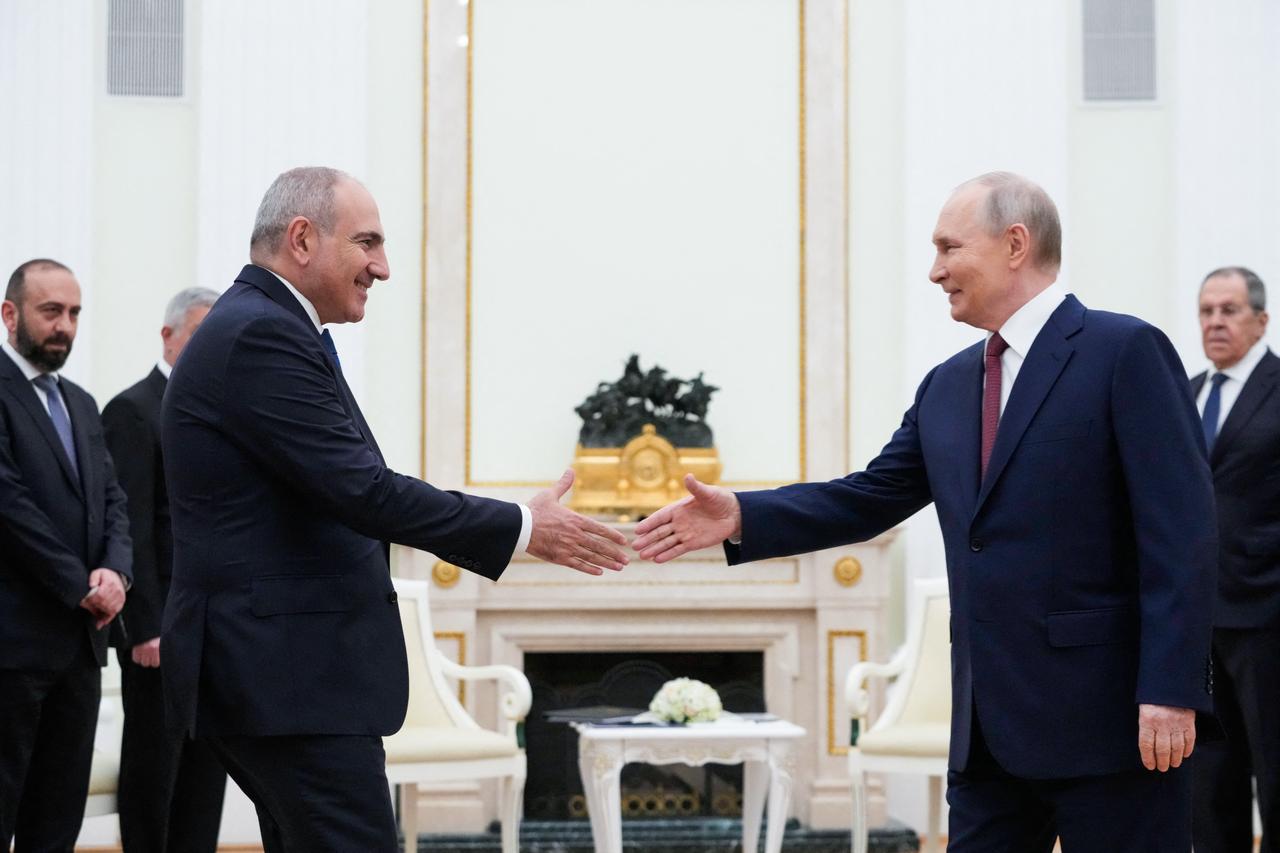

Putin opened by pointing to the scale of economic ties between the two countries. Bilateral trade reached 11 billion dollars the previous year, he said, before easing to 6.4 billion dollars in 2025, and he noted that Armenia's exports to the Eurasian Economic Union had grown tenfold in recent years. He contrasted the Russia-Armenia trade figure with the 4.9 billion dollars recorded between Russia and neighboring Azerbaijan, calling the comparison instructive.
Putin said Moscow viewed Armenia's deepening engagement with the EU with equanimity, but drew a clear structural line. "The issue here is not political, it is economic," he said, adding that simultaneous membership in both the EU and the EEU's Customs Union was not possible given incompatible phytosanitary standards and a range of other regulatory divergences. He expressed hope that the two blocs would eventually resolve those differences, while acknowledging that earlier Russian attempts to coordinate with Europe had produced no results. "Europeans take a tough stance on everything," he said.
Pashinyan acknowledged the structural incompatibility directly but declined to treat it as an immediate dilemma. "What we are doing and our agenda are compatible with each other for now," he said, adding that when the process reaches a point requiring a definitive choice, "I am confident that the citizens of Armenia will make that decision." He said Armenia continued to cooperate with Russia in the energy sector and that discussions on constructing a nuclear power plant were ongoing with Moscow and with other partners, as Yerevan sought the most advantageous option.
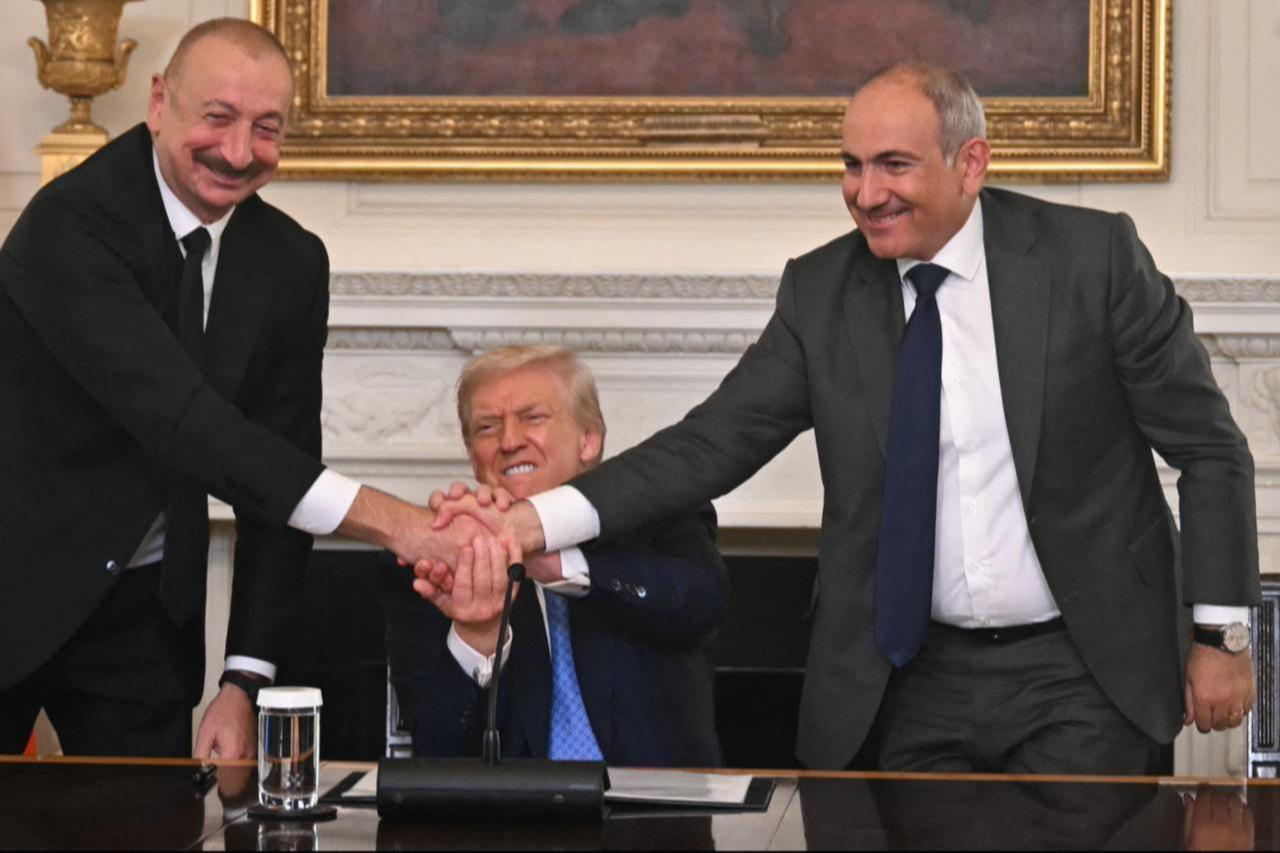
The Armenian prime minister also confirmed that peace had been established between Armenia and Azerbaijan and acknowledged Trump's contribution to that process, a point Putin echoed. Pashinyan noted that Armenia had recognized Karabakh as part of Azerbaijan, but specified that the move came after Russia's senior leadership had raised the issue publicly on two separate occasions.
The most pointed exchanges concerned the CSTO, the Russian-led security alliance Armenia has effectively suspended participation in. Putin pushed back against Armenian criticism that the organization had failed to intervene during the Karabakh conflict, arguing that Armenia itself had recognized Karabakh as Azerbaijani territory at talks in Prague in 2022, making CSTO intervention categorically inappropriate. He called for the matter to be closed, particularly as Armenia prepares for parliamentary elections, and said it would be undesirable for the CSTO dispute to become a fixture of the domestic campaign.
Putin also raised the situation of pro-Russian politicians in Armenia, noting that more than two million Armenian nationals live in Russia and that some Russian-passport-holding politicians in Armenia are currently imprisoned. He said Moscow was not interfering in those decisions but wanted all political forces to participate in the electoral process, and expressed hope that whatever the outcome, the two countries' shared commitment to building and strengthening ties would endure.
Pashinyan was direct in response. He said Armenia had never concealed its difficulties with the CSTO, and that in 2022 the organization's mechanisms had simply failed to function. "We still could not explain to our people why, despite CSTO obligations, there was no response," he said, describing this failure as the reason for Armenia's current posture toward the alliance. He pushed back on Putin's remarks about imprisoned politicians, saying Armenia is a democracy with no banned social media platforms and relatively few jailed political figures, and pointing out that under the Armenian constitution, holders of Russian passports are ineligible to stand as parliamentary or prime ministerial candidates.
Both leaders closed by affirming that bilateral relations would continue to develop regardless of electoral outcomes.


 Set as preferred source
 Set as preferred source


 2 min read
 1 min read