Newsletters





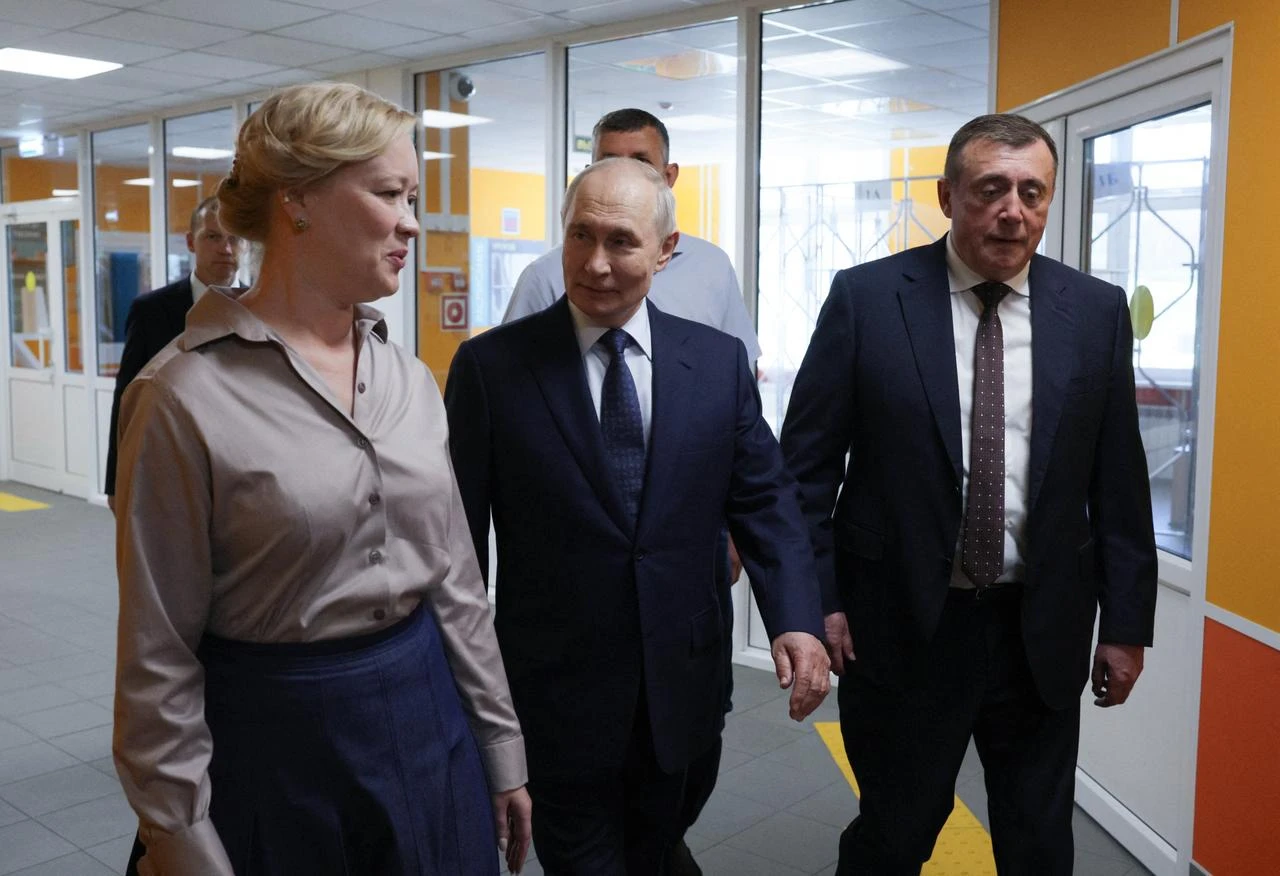
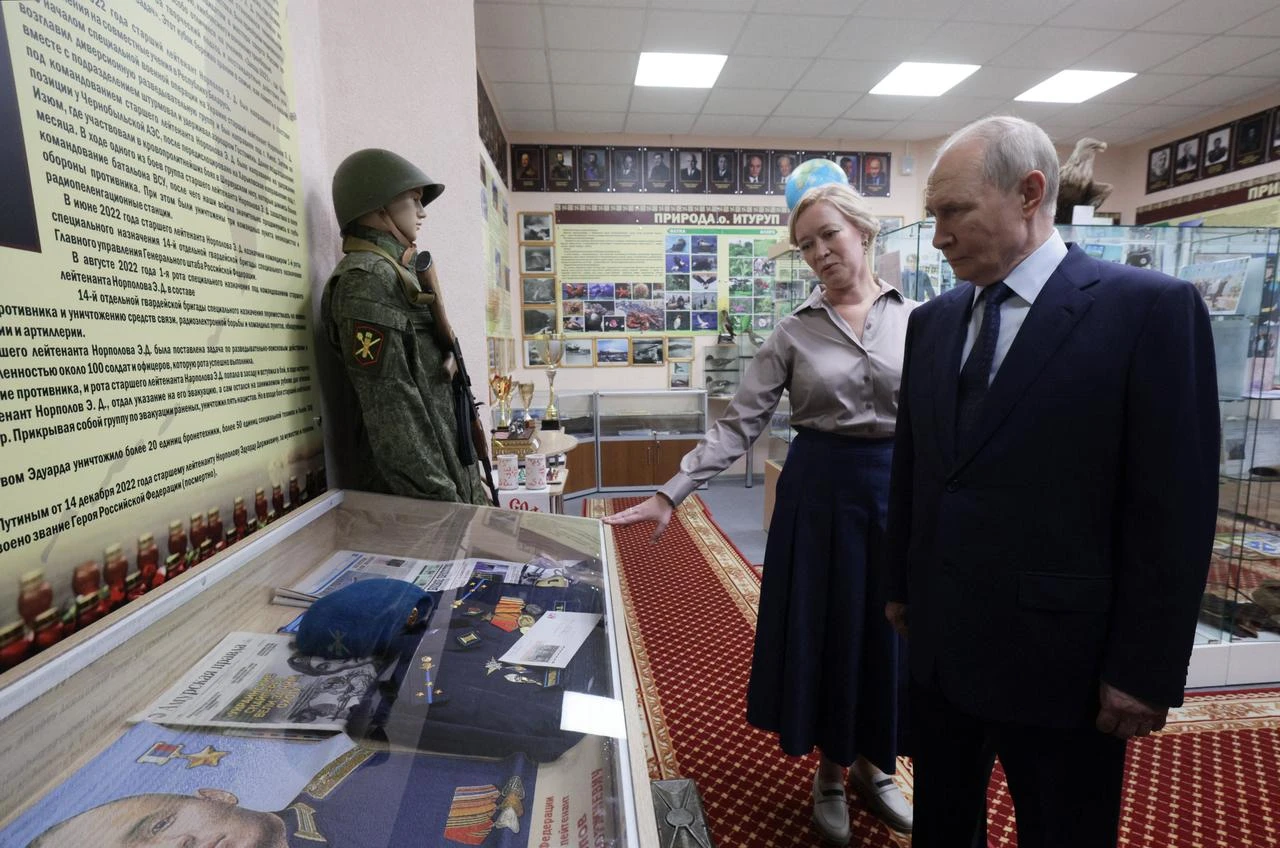
Russian President Vladimir Putin on Thursday visited Iturup, one of four islands disputed between Russia and Japan in the southern chain of the Kuril Islands archipelago, prompting a strong protest from Tokyo.
According to a statement released by the Kremlin press service, Putin visited a fish processing complex and a local hospital on the island with Sakhalin Governor Valery Limarenko.
The statement said Putin also visited a local school and held a meeting with Limarenko at the end of his trip.
Russian state news agency Tass described the visit as Putin's first personal trip to the Kuril Islands archipelago.
The archipelago, made up of multiple volcanic islands, is administered by Russia and lies north of Japan's northernmost main island, Hokkaido.
Moscow and Tokyo remain locked in a territorial dispute over the four southernmost Kuril islands—Iturup, Kunashir, Shikotan and the Habomai islets—which Japan calls the Northern Territories.
The dispute has prevented the two countries from signing a peace treaty since World War II.

Japan on Thursday strongly protested Putin's visit to Etorofu Island, the Japanese name for Iturup, according to local media.
Japanese Foreign Minister Toshimitsu Motegi said the islands are "inherently Japanese territory both historically and under international law," Kyodo News reported.
"The government of Japan strongly protests this visit," he said.
Japanese Prime Minister Sanae Takaichi also criticized the trip.
"The Northern Territories are an inherent part of Japan's territory, both historically and under international law," Takaichi told reporters.
She said Putin's visit "offends the sentiments of the Japanese people and is absolutely unacceptable," adding that it "made it more difficult to restore relations in the medium to long term."
Russia, which calls the islands the Southern Kurils, argues that its control over them is legitimate.
A day earlier, Putin said Japan continued to maintain territorial claims against Russia over the southernmost Kuril islands.
He said Moscow had constructive relations with Tokyo on the issue during the administration of former Japanese Prime Minister Shinzo Abe.
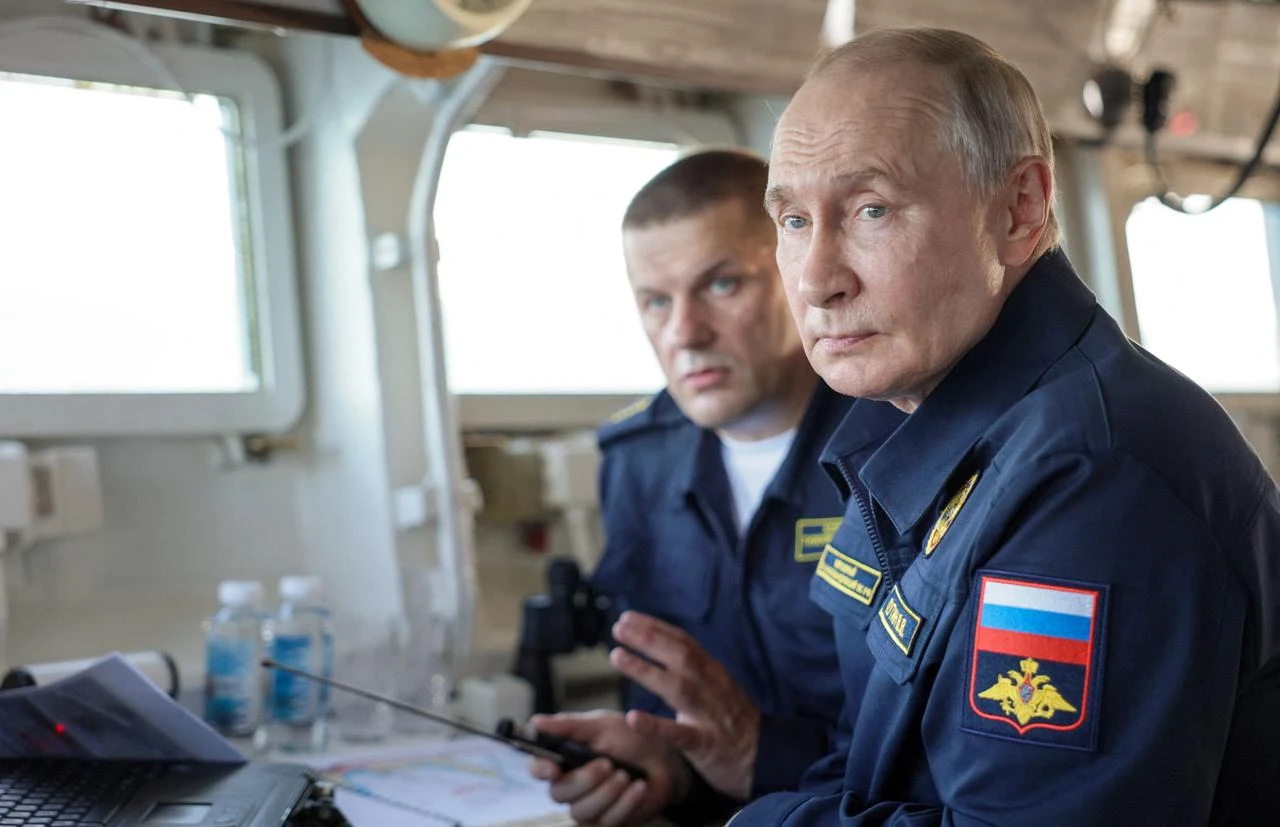
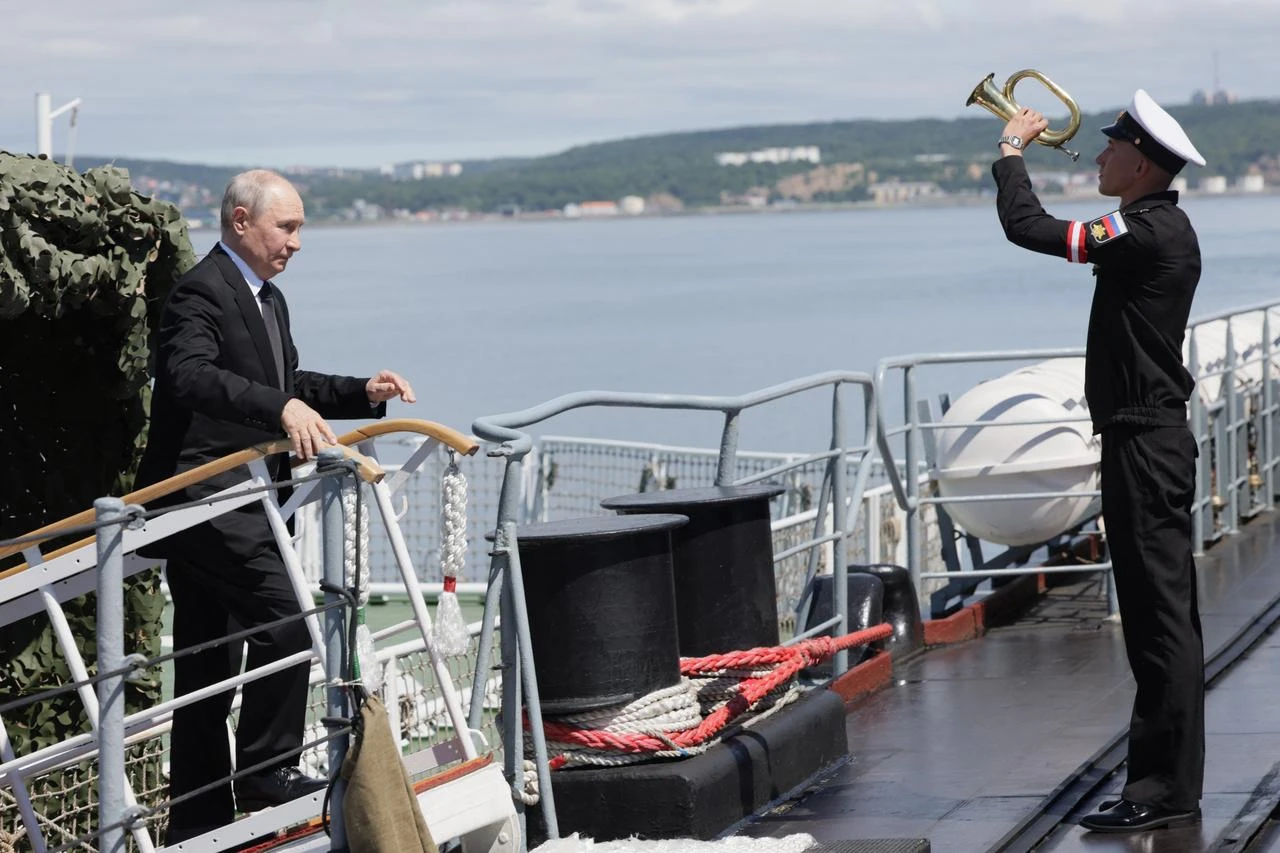
"Now we see, unfortunately, changes in positions which, I emphasize, were not provoked in any way on our part," Putin said while addressing servicemen of Russia's Pacific Fleet aboard the cruiser Varyag, the fleet's flagship vessel.
Putin made those remarks during a visit to Sakhalin island, where Russia's navy was conducting drills.
He also criticized Japan's sanctions over the war in Ukraine, calling them "unprovoked."
"Japan has identified Russia as a main source of threats. I would like to point out that we are not threatening Japan," Putin said.
"On the contrary, it has territorial claims against our country," he added.
Relations between Japan and Russia have worsened since the full-scale war in Ukraine began in 2022.
Japan has joined other Group of Seven (G7) countries in sanctioning Russia and providing money and non-lethal defense aid to Kyiv.
Russia and China have also moved closer, with their navies and air forces conducting joint exercises in areas around Japan, prompting frequent scrambles by Japanese jets.
North Korea, which this month described Japan's military buildup as a "transformation into a war state," has also sent troops and artillery shells to support Russia's war against Ukraine.
Japan's latest defense white paper again highlighted growing risks from Russia, China and North Korea.
The New York Times reported in July that Russia had turned Japan into a "den of spies" and a key source of dual-use technology needed for its war in Ukraine.
The Soviet Union seized the strategically located volcanic archipelago north of Hokkaido in the final days of World War II and has maintained a military presence there since.
Tokyo says the islands were illegally seized after Japan's surrender on Aug. 15, 1945.
Russia says the seizure was legitimate.
In 2010, then-President Dmitry Medvedev became the first Russian leader to visit the disputed territory. He later visited the islands several times as prime minister.
The four contested islands are part of the wider Kuril archipelago, which runs in an arc from Russia's Kamchatka Peninsula to Hokkaido.
The Soviet Union declared war on Japan on Aug. 8, 1945, after the atomic bombing of Hiroshima and six days before the end of the conflict.
The islands' names are similar in both countries: Kunashir, Habomai, Shikotan and Iturup in Russian, and Kunashiri, Habomai, Shikotan and Etorofu in Japanese.
Their population of about 20,000 Russian citizens lives in a harsh climate, while the islands also have mineral deposits, including gold and silver, as well as rich fishing grounds.
After the islands were occupied in 1945, Moscow deported the islands' Japanese population of about 17,000 people.
The islands later acquired strategic importance, providing air and sea bases during the Cold War as the Soviet Union confronted the United States and Japan, Washington's closest ally in the Pacific.


 Set as preferred source
 Set as preferred source


 1 min read
 1 min read