Newsletters


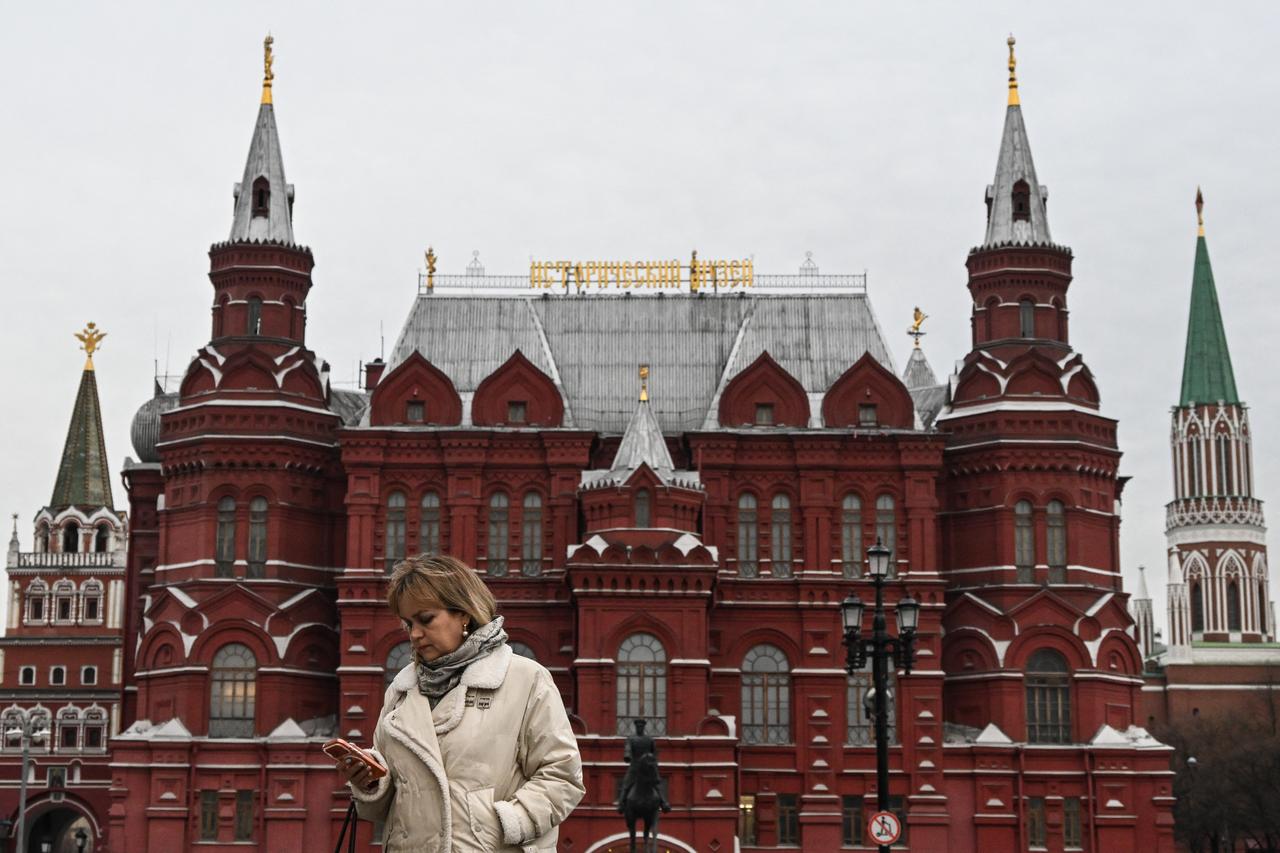


Russia said Monday it had arrested a German woman in the Caucasus city of Pyatigorsk after authorities found a homemade bomb in her backpack, alleging she was involved in a Ukraine-hatched plot to blow up a law enforcement facility in the southern Stavropol region.
The FSB security agency said the woman, born in 1969, had been drawn into the alleged plot by a citizen of a Central Asian country who, it said, was acting on orders from Ukraine.
The agency said the explosive device was to be detonated remotely and that the blast was prevented by electronic jamming.
In a statement, the FSB said it had "prevented a terrorist attack planned by the Kyiv regime against a law enforcement facility in the Stavropol region, involving a German citizen born in 1969".
The agency said the woman was detained in Pyatigorsk and found carrying an improvised explosive device in her bag.
According to the FSB, the device contained an explosive charge equivalent to 1.5 kilograms, or about three pounds, of TNT.
Russian authorities said the bomb was intended to be detonated remotely and that the German woman was expected to be killed in the blast.
The FSB said a man from an unidentified Central Asian state, born in 1997, was also arrested near the targeted site.
It described him as "a supporter of radical ideology".
According to the agency, he had been working on orders from Ukraine and was involved in the alleged plan alongside the German woman.
The FSB said both suspects face life imprisonment on terrorism charges.
Video footage published by state media showed armed Russian security agents approaching the woman as she lay face down dressed in black in a parking area.
Another video showed masked plainclothes agents pulling a man into a station.
The footage also showed a controlled explosion of the backpack.
Russia has arrested dozens of people during the four-year war on allegations of working for Ukraine to carry out sabotage attacks, most of them Russian citizens.
The report said there has also been a series of high-profile arrests of Western citizens since Moscow sent troops into Ukraine, usually on espionage charges widely seen as baseless, with some later exchanged for Russians jailed abroad.
It said detentions of Western citizens for carrying out or preparing actual attacks are much rarer.
There was no immediate reaction to the allegations from Kyiv or Berlin.
Russia has previously accused Ukraine of working with Islamist fundamentalists to carry out attacks inside Russia without providing evidence.
Officials initially alleged that the perpetrators of a 2024 massacre at a concert hall on the outskirts of Moscow that killed 150 people were Daesh members acting in coordination with Ukraine.
Daesh claimed responsibility for that attack and made no reference to any Ukrainian involvement. Moscow presented no evidence for that allegation, and Kyiv denied it.


 Set as preferred source
 Set as preferred source


 4 min read