Newsletters


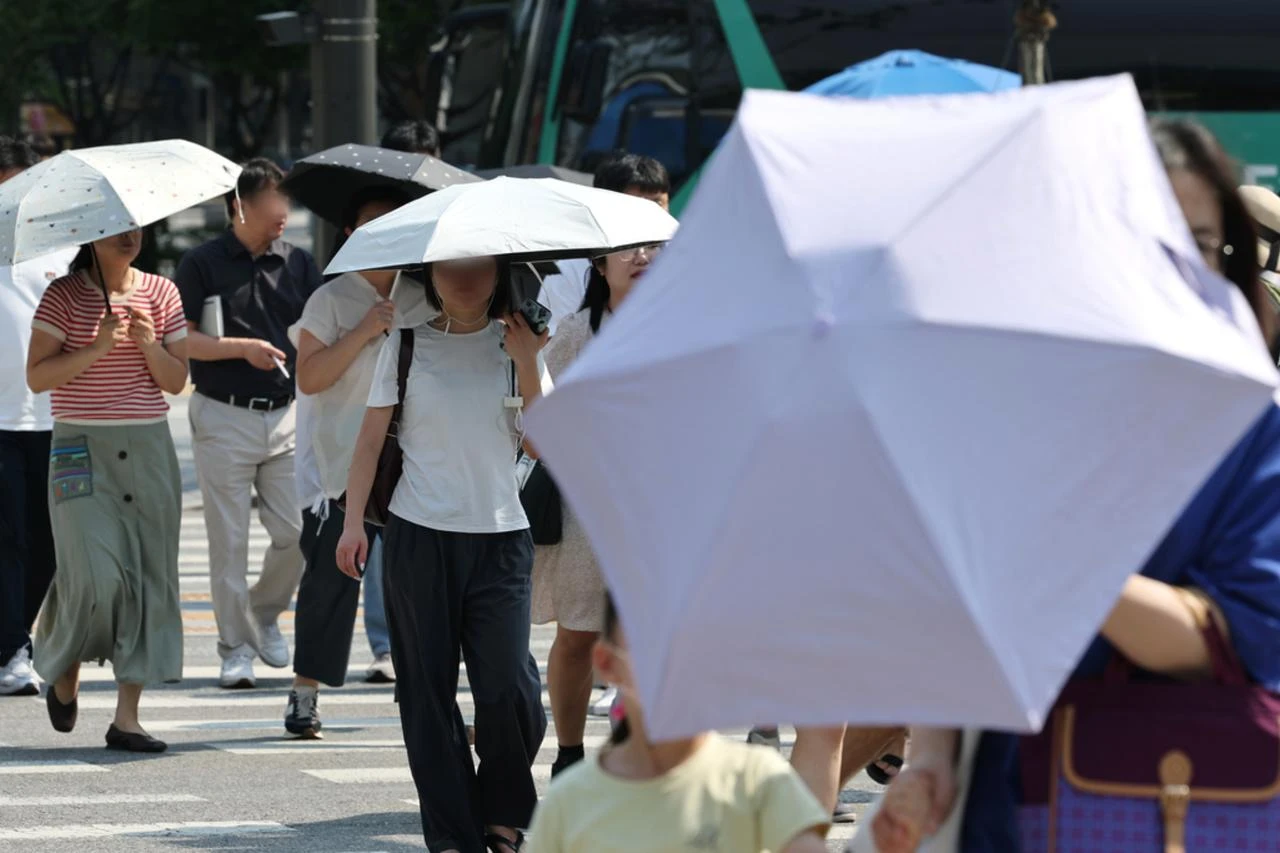


South Korea issued its highest-level heat wave warnings for 17 southern areas on Monday as temperatures climbed toward life-threatening levels, while Japan and China dealt with a wider pattern of extreme heat, heavy rain and flooding.
The Korea Meteorological Administration raised the warnings for Daegu, several districts in South and North Gyeongsang provinces, and Gwangyang in South Jeolla Province.
The country's highest heat warning is issued when the apparent temperature, which reflects how hot conditions feel to the human body, reaches 38 degrees Celsius (100.4 degrees Fahrenheit), or when the daily high reaches 39 degrees Celsius.
Temperatures had already approached those levels by early Monday afternoon, reaching 37.4°C in Yangsan and 37.3°C in Gwangyang. The weather agency warned that the heat could intensify further later in the day.
South Gyeongsang Province issued its first top-level heat warnings of the summer for Yangsan and Uiryeong on Saturday. A day later, Yangsan recorded 39.3°C, while Miryang reached 39.1°C, marking the highest temperatures reported in the country this year.
The province also recorded six additional heat-related illness cases on Saturday, taking the total since May 15 to 112.
The prolonged heat has also hit farms, with more than 10,000 livestock deaths reported across the province, mostly involving poultry, alongside thousands of pigs.
Authorities urged residents to cut back on strenuous outdoor activity and drink water regularly to lower the risk of heat-related illness.
Japan, meanwhile, warned residents about both heatstroke and landslides as scorching conditions settled over western and central parts of the country while heavy rain moved into other regions.
Temperatures reached 37.4°C in Tanabe, Wakayama Prefecture, and 37.3°C in Shimanto, Kochi Prefecture, before midday, according to public broadcaster NHK. Officials expected the heat to rise further to dangerous levels.
Heatstroke alerts were put in place across 23 of Japan's 47 prefectures.
At the same time, authorities warned that heavy rain could bring flooding, swollen rivers and landslides, together with lightning, strong winds and possible tornadoes in several areas.
China maintained emergency flood responses in several regions as heavy rain continued to raise risks.
The Ministry of Water Resources kept a Level III emergency response in place for Jiangxi, Hunan and Guangdong provinces. A lower Level IV response remained active in Fujian, Henan and Hubei provinces, as well as the Guangxi region.
China uses a four-tier flood-control emergency system, with Level I representing the most severe response.


 Set as preferred source
 Set as preferred source


 2 min read