Newsletters


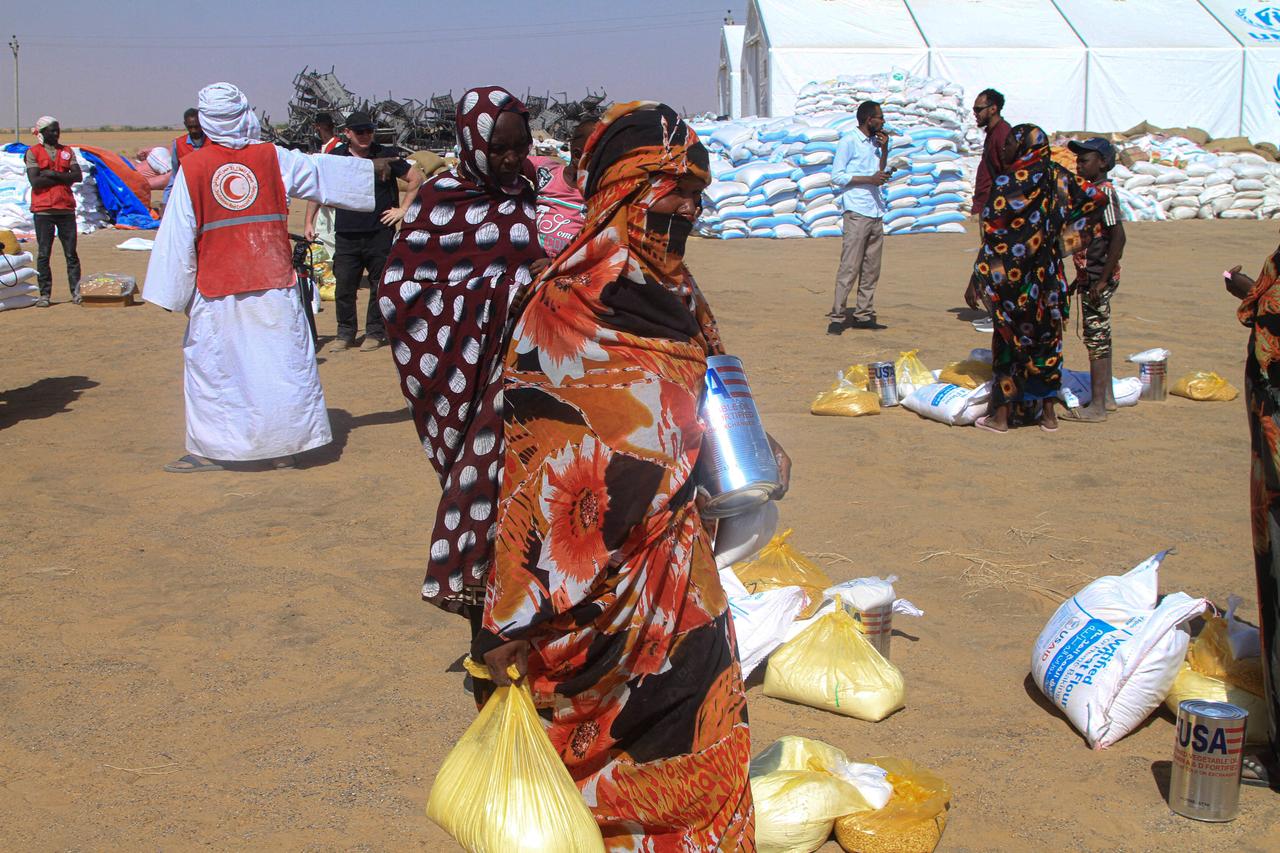


A few days ago, the forces of the renegade general Mohamed Hamdan Dagalo (Hemetti) expanded further and captured the city of Babnousa, located in the strategically important West Kordofan region, which separates central Sudan from Darfur.
Much like the fall of el-Fasher, the city collapsed after months of siege and indiscriminate rocket attacks that caused extensive damage and losses. Army soldiers stationed inside the city, who had held out for months, eventually found themselves in an impossible situation—surrounded from almost all directions, cut off from supply lines, and deprived even of the option to withdraw.
Decision-makers also had few viable choices. Internal political calculations and power balances forced them to insist on holding the area and to reject any proposal for withdrawal, as such proposals would be interpreted as conceding territory to the rebel forces. Yet this insistence on remaining in an isolated land, cut off not only from military support but also from civilian populations that still believe in the state, inevitably meant the loss of both territory and men. And this is exactly what happened, tragically.
The geography, the vast distances separating the city from the army’s nearest logistical point, and the demographic composition of the region, where many from the region’s main tribes openly lean toward Hemetti’s project and find it closer to them than that of the army, the representative of the state, made the situation resemble a quagmire. The saddest part is that such a trap naturally attracts the bravest and most devoted fighters, those willing to confront the rebellion at any cost.
All this recalls an idea I discussed in an article published in the London-based Arabic daily Al-Araby Al-Jadeed in early August, titled “On Jihadists and the Meaning of the Magnet Theory”. There, I suggested that perhaps one of the aims behind creating chaos in Sudan was to eliminate the “hard core” of fighters who view this war as a 'jihad', and whose religious zeal drove thousands to the frontlines, willing to sacrifice their lives.
This is not the first time that the enthusiastic have been lured into a furnace. During the Afghan war against the Soviet occupation, the United States famously supported the mujahideen—providing media coverage, political backing, and encouraging mobilization from Arab and Muslim countries. Many Muslim leaders embraced the message and urged their populations to join the “jihad” against the communists.
The rhetoric, amplified by propaganda and moving sermons, succeeded in sending thousands of volunteers who believed they were defending a noble cause and Afghanistan from falling into the hands of “atheists.” This rhetoric also served certain leaders who wanted to win the sympathy of their own populations, who momentarily believed that their governments were genuinely committed to defending the “Ummah.” It took time before people realized that this was, in reality, a U.S. effort to exploit the enthusiasm of millions of Muslims, who donated their money and even their lives, not for a sacred cause, but to defeat the Soviet project, which threatened American interests.
The truth is that the war was useful to the Americans in another way: it proved that religion-oriented narratives are powerful and that large numbers of Muslims could be easily mobilized to fight, even when victory seemed unlikely. For such fighters, defeat or death was not a negative outcome, but martyrdom and a gateway to a better life.
Very soon, however, the Americans realized that the ideology they had nurtured for tactical purposes during the Cold War was dangerous on a strategic level. Those who survived the war and gained combat experience could turn into ticking bombs, threatening the U.S. itself. This led to what might be called the “Magnet Theory”—the idea of gathering as many zealous jihadists as possible in one place, like Afghanistan, and pushing them into battle with minimal preparation so that as many as possible would be killed.
 1 min read
This “magnet” also helped build an extensive database of all dangerous religious fighter volunteers. Such information was useful to the Americans, and to the countries the fighters came from, which later treated them with suspicion—or persecuted them—to mitigate potential threats.
The U.S. occupations of Iraq and Afghanistan exposed the hypocrisy of earlier narratives. Although the occupations resembled the Soviet invasion in many ways, local and international media—which once celebrated 'jihadists' as heroic defenders—began describing those carrying out the same resistance operations as “terrorists.” The term “jihadist” itself came to carry overwhelmingly negative connotations.
The magnet concept may go back even further. In the mid-20th century, large numbers of Arab volunteers gathered to resist the Zionist occupation of Palestine. Supported by Arab states, their deployment was supposed to coincide with coordinated attacks by regular armies. Instead, they were abandoned without adequate protection and faced well-trained, heavily armed Israeli forces, resulting in what was effectively a collective suicide.
During the 2003 invasion of Iraq, as an armed, religion-oriented resistance intensified, the Americans revived the magnet logic, designing what came to be known in U.S. defense literature as the “flypaper strategy.” Right-wing conservatives such as Donald Rumsfeld hinted that it was better to draw terrorists to Iraq and keep them occupied there rather than allow them to target Western countries. RAND Corporation analysts proposed similar ideas, opening channels that attract jihadists, allowing their numbers to grow, and then letting them “bleed slowly” until they could be eliminated.
This prolonged bleeding could be achieved simply by enabling long, open-ended conflicts, wars vast enough to drain both material and human resources. Today, echoes of the magnet theory can be seen in Syria, Iraq, Mali, and other regions that attract individuals seeking “religious war of liberation” or pursuing a 'religious' utopia similar to what DAESH once promised.
The theory also helps explain why Western powers often appear to ignore the rise of such groups—as was evident in both Iraq and Syria—where U.S. and other forces appeared uninterested in preventing their expansion.
In places like the African Sahel, the presence of these chaotic armed groups locked in endless battles with national armies can be useful: they help get rid of dangerous extremists while also weakening local armies and states, keeping them perpetually dependent on Western backers.
Sudan’s war is not far removed from this logic. The role of the Sudanese Islamic Movement in mobilizing young armed volunteers to fight alongside the army, and in forming auxiliary brigades is undeniable.
Throughout the war, large numbers of these enthusiastic fighters have been killed, many of whom rushed to the frontlines without sufficient experience or preparation.
When we add to them the loss of officers and soldiers driven by religious fervor, who also threw themselves into the flames of battle without considering the consequences, we can begin to understand the larger picture. Especially when we remember that dismantling the Sudanese army and eliminating its brave and distinguished officers, whether by accusing them of loyalty to the previous regime, has been an openly declared goal for many actors since the beginning of the transitional period.


 Set as preferred source
 Set as preferred source



 1 min read