Newsletters


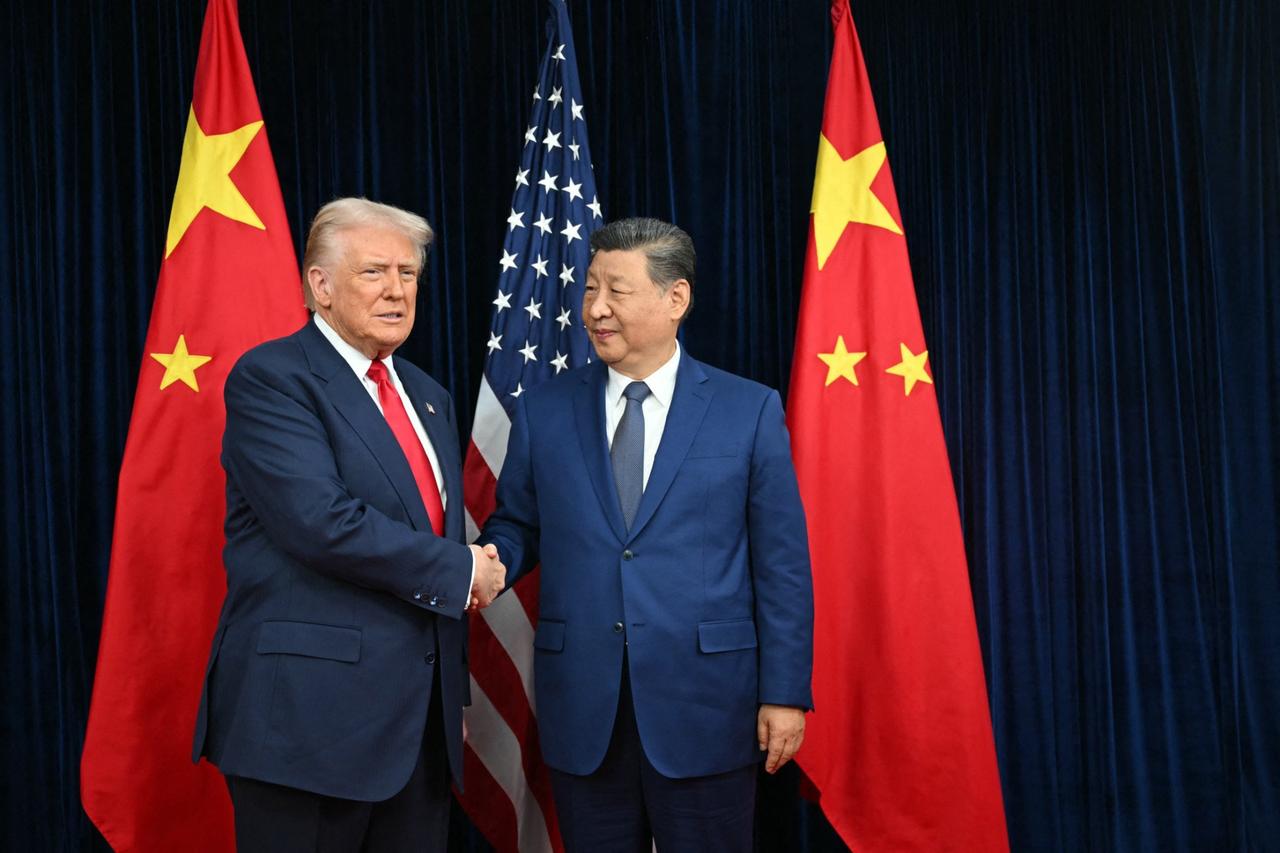


President Trump has spent the better part of a decade constructing a consensus that China represents the defining strategic threat of the twenty-first century. That consensus now faces its most unusual test, not from Beijing's pressure, but from his movement itself.
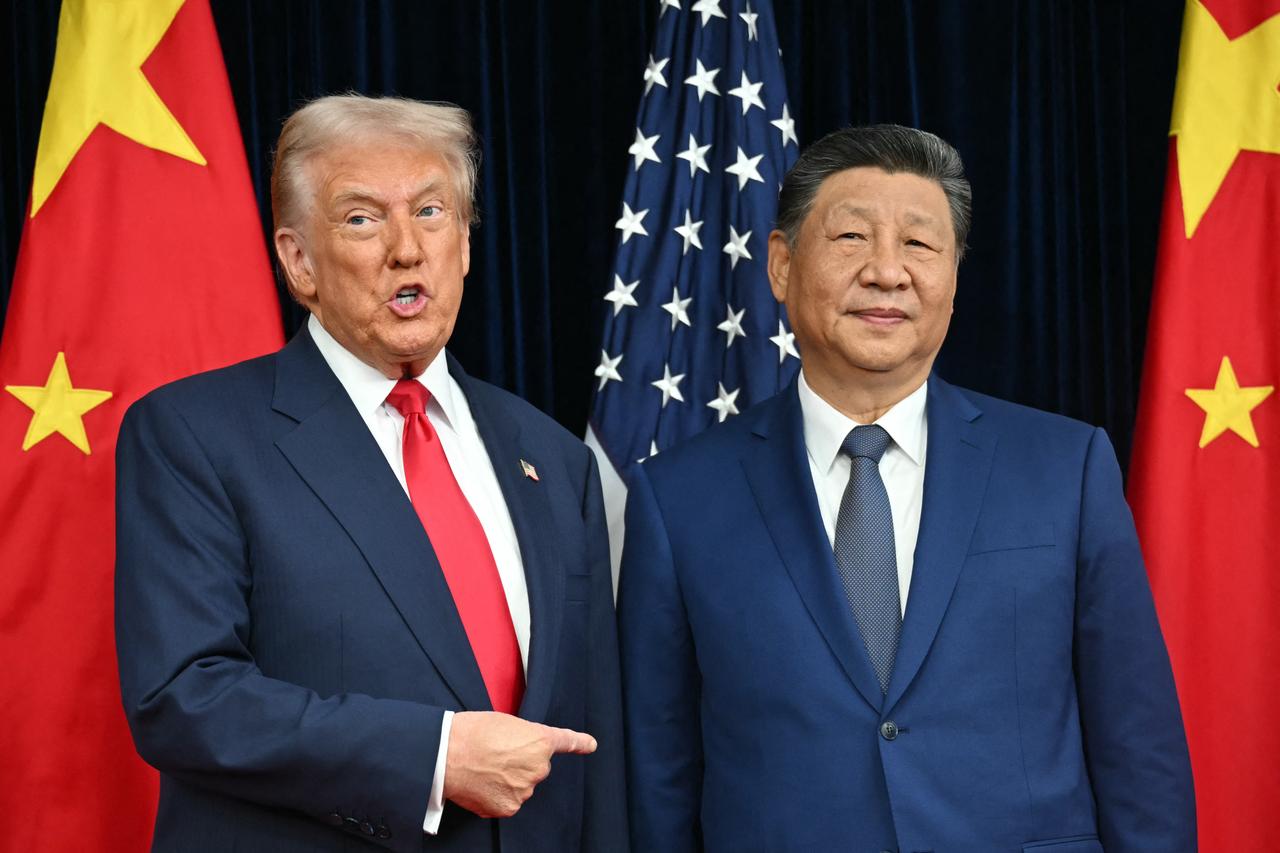
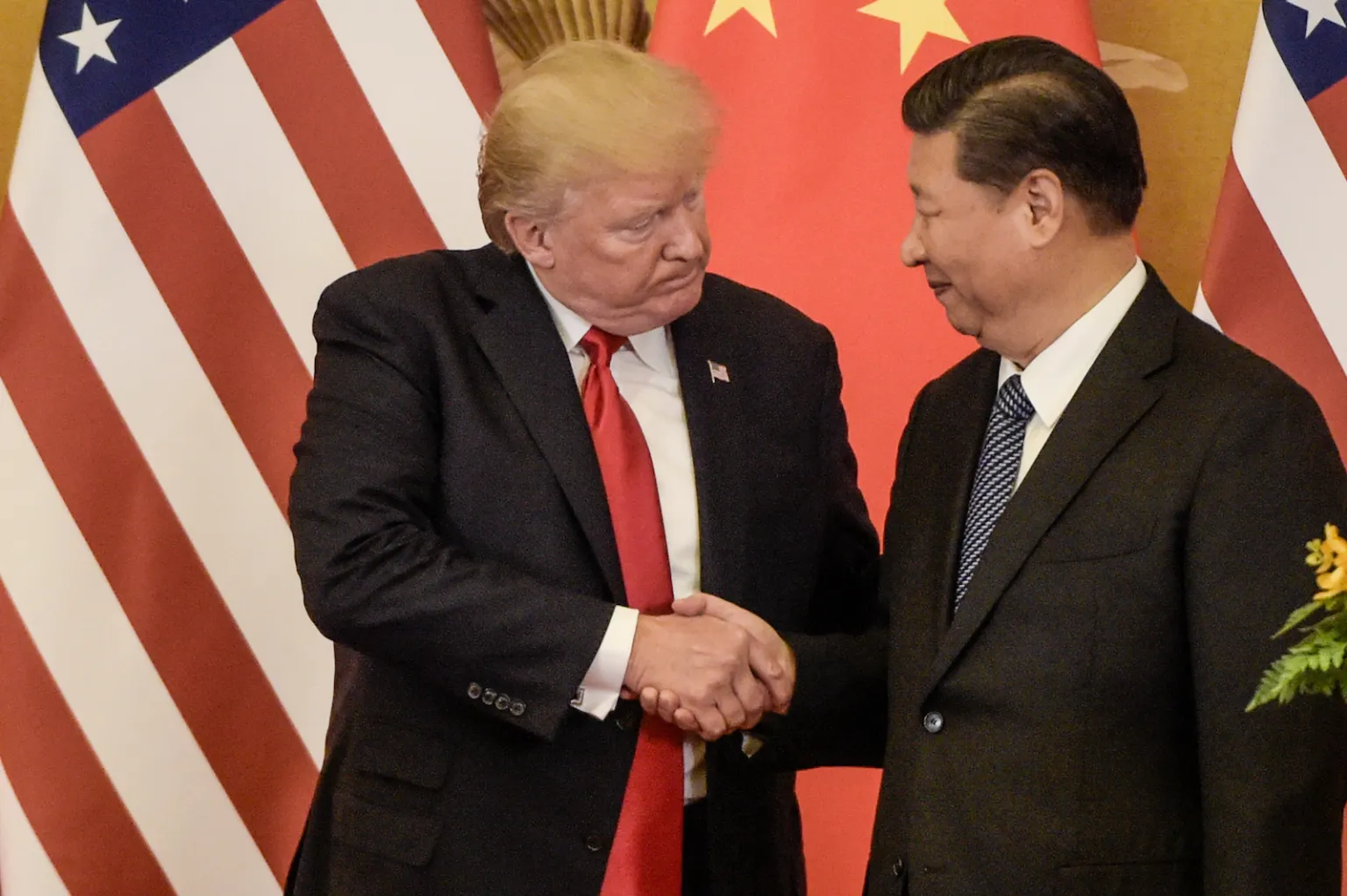
Writing for the New York Times, Oren Cass—founder and chief economist of the conservative think tank American Compass—argues that the president may be on the verge of "tying the United States to China irrevocably." Cass reports that "(Donald) Trump and Xi Jinping are reportedly considering a deal to allow China to invest $1 trillion in the United States, largely to build factories on American soil.” He characterizes the potential agreement as a "world-historic" blunder.
Representative John Moolenaar, Republican chairman of the House Select Committee on China, has voiced strong opposition to loosening investment restrictions. "China has weaponized its own market and companies against us for decades," Moolenaar warned, "and we cannot allow those companies to have more access to our economy."
The backlash to the potential deal has bridged the political spectrum. Fox News host Laura Ingraham signaled her alarm by posting "!!" alongside a report from the progressive outlet Raw Story regarding the $1 trillion proposal.
However, for someone who sees himself as a dealmaker, there are many aspects of a $1 trillion deal that could be viewed as “America First.” In a speech he gave at the Detroit Economic Club in January, Trump said it would be “great” if Chinese automakers wanted to build factories in the U.S. and hire Americans.


According to Bloomberg's reporting, the story dates back to October 2025. The proposal surfaced during negotiations in Madrid, where Chinese officials raised the investment card during talks with Treasury Secretary Scott Bessent and other U.S. negotiators.
The terms required two concessions from the American side: a relaxation of national security scrutiny on Chinese-origin investments and tariff relief for inputs imported for Chinese-owned factories built on American soil.
The tactical logic behind the offer is not difficult to read. As Bloomberg's Shawn Donnan observed, CEOs across industries had already discovered that pledging major U.S. investment before Oval Office cameras—accompanied by flattery—reliably softened the president's negotiating posture. Beijing, watching that pattern develop, eventually arrived at the same playbook.
What gave the offer additional traction was the parallel influence of the technology sector. Matt Pottinger, who served as Trump's deputy national security adviser during the first term and now leads Garnaut Global, told Bloomberg that Nvidia CEO Jensen Huang had become "perhaps the most influential voice in the White House and Congress when it comes to the AI competition with China." Given Nvidia's commercial interest in maintaining chip sales to Chinese buyers, Pottinger added, there was "more than a small conflict of interest present in that arrangement."
Not everyone reads the $1 trillion offer as a trap and there are reasons they can count.
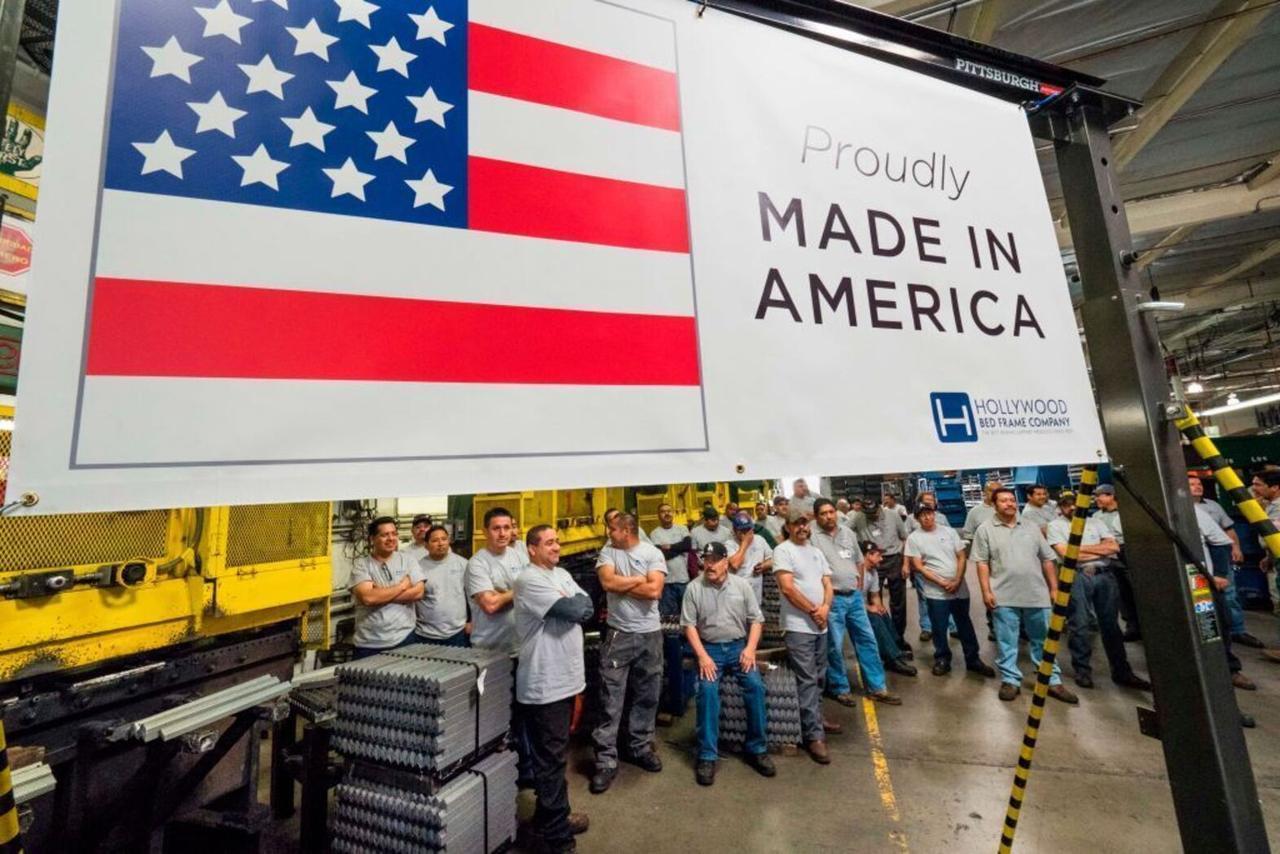
The "America First" sentiment feeds the strongest pillar of that argument. If Chinese automakers or technology firms build factories in Michigan, Ohio or Tennessee, the jobs created are American jobs, the wages paid are American wages, and the supply chains anchored are on American soil.
From this vantage point, the nationality of the capital matters less than the location of the production. The White House has not entirely abandoned this framing: spokesperson Kush Desai, while rejecting any suggestion of national security compromise, acknowledged that "the administration is always seeking more investment into America's industrial resurgence."
A trillion-dollar capital infusion would also represent a lever for modernizing U.S. manufacturing infrastructure at a moment when the federal government's own fiscal capacity to do so is severely constrained. Proponents argue that the investment would accomplish, at no direct cost to the American taxpayer, what successive industrial policy programs have struggled to deliver through subsidies and legislative mandates.
There is a strategic dimension to this argument as well. If Chinese capital becomes deeply embedded in American industrial capacity, Beijing acquires a corresponding stake in the stability of that relationship —and, in theory, a structural disincentive to escalation. The logic resembles the financial interdependence argument once made about trade integration: that countries with deeply interlocked economies do not go to war.
After all, if any Chinese investment were to be deemed as dangerous, the government could deploy the same regulatory "hammer" used in the TikTok saga.
Cass framed the stakes as follows: "a $1 trillion infusion of Chinese capital would exceed the total direct investment in the United States made by any other country since the Declaration of Independence."
Even a fraction of that figure, he wrote, would "blow apart what remains of our economic defenses, weakening national security and supply-chain resilience, handing the Chinese Communist Party a powerful tool with which to subvert our market, undermining the basic logic of the president's own trade agenda and kneecapping our efforts at rebuilding domestic industry."
The objection is not to foreign investment as a category. Cass noted that comparable pressure on Japan, South Korea and Taiwan to build U.S. factories had yielded productive outcomes—companies that operated on market principles, created supply chains, opened research centers, and competed by conventional commercial logic.
The distinction is systemic. This distinction is systematic in nature. Those who argue that this investment should not proceed point out that Chinese companies operate under China’s 2017 National Intelligence Law. This law not only permits intelligence services to access private-sector data; it also imposes a positive obligation on “any organization or citizen” to cooperate with the state’s intelligence activities.
Almost a decade ago, Tesla had a reverse but similar story. Beijing used a combination of domestic tariffs, subsidies and streamlined approvals to attract the billionaire Elon Musk-led company to Shanghai in 2017. Chinese engineers gained access to the company's manufacturing processes. When that transfer was complete, the subsidies disappeared, competitors scaled up, and by 2025 Tesla's Chinese market share had fallen below 5%.
Elizabeth Krear, chief executive of the Center for Automotive Research, said that the existential risk to U.S. industry is "the combination of sustained government support, vertically integrated supply chains and speed."
The tension at the center of this debate is not simply about China. It is about two fundamentally different frameworks for understanding economic relationships.
Trump has been consistent, across decades, in viewing international commerce through the lens of deal quality. In 2017, addressing business leaders in Beijing, he said: "I don't blame China. After all, who can blame a country for being able to take advantage of another country for the benefit of its citizens? I give China great credit."
Campaigning in 2024 and again in January 2026 in Detroit, he expressed openness to Chinese automakers building U.S. factories: "If they want to come in and build the plant and hire you and hire your friends and your neighbors, that's great. I love that. Let China come in."
That framing treats the problem as a pricing problem, a bad deal that a better deal can fix. The structural objection treats it as a systems problem: that the asymmetry between a market economy and a party-directed economy makes genuine reciprocity impossible.
Treasury Secretary Bessent warned European leaders in April that choosing to align with China rather than the United States "would be cutting your own throat." The stakes of the hypothetical deal between China and the U.S., in that sense, extend beyond the bilateral relationship.
If the United States abandons its posture of limiting Chinese economic access, the broader pressure campaign on allied trading partners loses its coherence. That threat becomes difficult to sustain if Washington simultaneously welcomes a trillion dollars in Chinese factory investment.
What this moment ultimately tests is whether the decadelong hawkish campaign on China was a durable strategic orientation or a political mood that could be dissolved by a sufficiently large number on a term sheet.


 Set as preferred source
 Set as preferred source


 1 min read
 1 min read