Newsletters


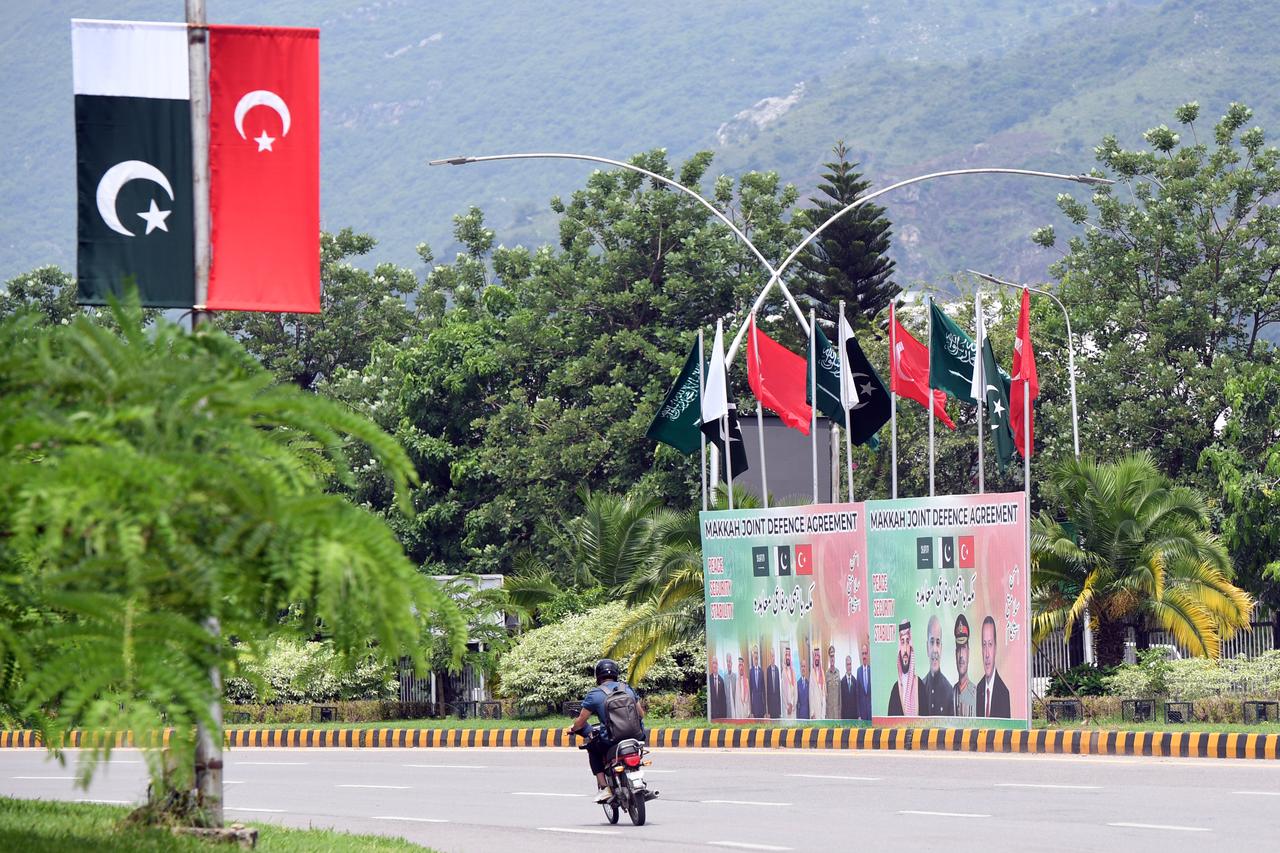


Pakistani Defense Minister Khawaja Asif said the situation created by Iran-backed Houthi attacks in Yemen has reached a point where the Mecca Joint Defense Agreement must be applied, as Pakistan's army chief separately pressed Iran's top diplomat to rein in the group.
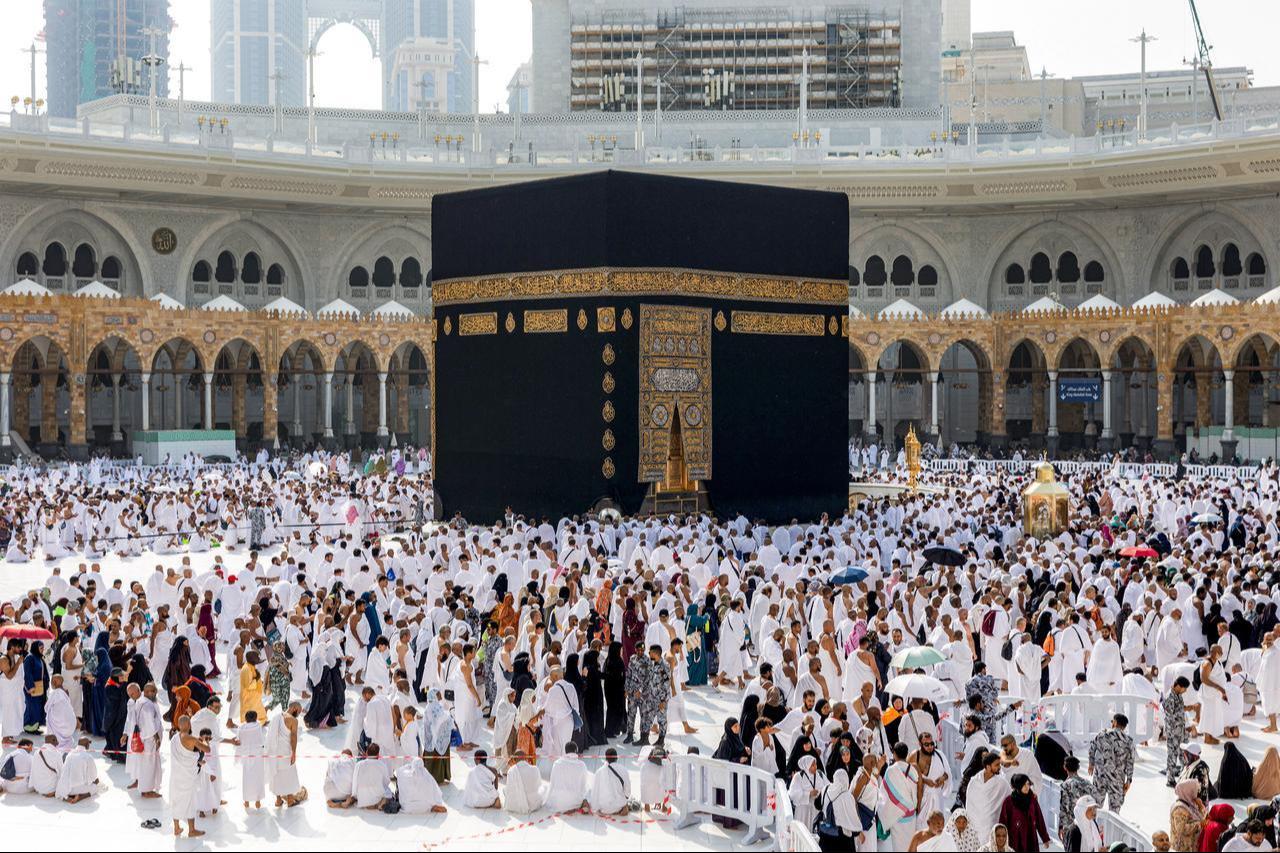
Speaking on Geo News program "Aaj Shahzeb Khanzada Kay Sath," Asif said the Houthis' attempted drone attack on Islam's holy city of Mecca had pushed the situation to a threshold requiring implementation of the trilateral pact.
"The Mecca agreement applies to us as well, and we will fulfill our duty," Asif said.
Asif said Pakistan did not need a treaty to justify defending holy sites, saying protecting them would be "a duty" even without the Mecca agreement.
"If there is an attack on Mecca, there is no need for an agreement to protect it," he said.
Asif said the Mecca Joint Defense Agreement provides for mutual defense in the event any of the three signatory countries' territorial integrity or geographic borders are violated, saying there was "absolutely no ambiguity" about its implementation.
He said Pakistan would not disclose details of any defense or military strategy publicly, reiterating that Islamabad remains committed to the agreement and will fulfill its obligations.
Asked about Pakistan's diplomatic contacts, Asif said Islamabad had conveyed Saudi Arabia's concerns over Houthi attacks to Iran, noting that he did not believe Iran as a state would support Houthis in a way that would open a new front in the region, noting Tehran was already engaged in a conflict of its own.
The Pakistani minister noted that such groups could act without formal approval or backing from governments, adding that the likelihood of Iran opening another front was minimal and that further escalation must be prevented.
He said Pakistan would continue its efforts to prevent the conflict from spreading to other areas.
Saudi Arabia said it had intercepted and destroyed a Houthi drone before it could enter restricted airspace over the holy city, south of Mecca.
The Houthis denied targeting Mecca, with spokesman Yahya Saree saying their operations "target (Saudi Arabia's) oil facilities and military bases, which are far from the holy sites."

Separately, Pakistani Field Marshal Asim Munir, the country's army chief, urged Iran to persuade the Houthis to halt attacks on Saudi Arabia's energy infrastructure, according to Pakistani government sources who spoke to Türkiye's state-run Anadolu Agency (AA).
In a phone call Wednesday with Iranian Foreign Minister Abbas Araghchi, who was visiting China at the time, Munir urged Tehran to "use its influence" on the Houthis to stop the strikes on Saudi oil and economic facilities.
"The army chief discussed the overall regional situation, with special focus on Houthis' attacks and revival of stalled direct talks between the U.S. and Iran," a source said, describing Araghchi's response as "hopeful" without elaborating further.
Iranian Foreign Ministry spokesman Esmail Baghaei has said Tehran does not interfere in Yemeni affairs, describing the Houthis as independent actors "pursuing their own interests."
Pakistan's Foreign Ministry reiterated Thursday its commitment to implementing both its bilateral defense agreement with Saudi Arabia and the trilateral Mecca pact.
"However, when, how, where and what force will be used against what objectives, in which modes and matters ... operational confidentiality requires us to be discreet at this stage," Foreign Ministry spokesman Sajjad Haider Khan told reporters, according to Dawn newspaper.
"Pakistan has for a long time ... shared the perspective that we would like to have peace and stability because this is not only in the interest of Pakistan and Iran, but also the entire region and beyond," Khan said, describing the situation in the Bab el-Mandeb area as "exceptionally serious" and urging the Houthis to "stop their activities."
He said Pakistan's discussions "basically revolve around bringing peace and stability through dialogue and diplomacy and not through coercive measures."
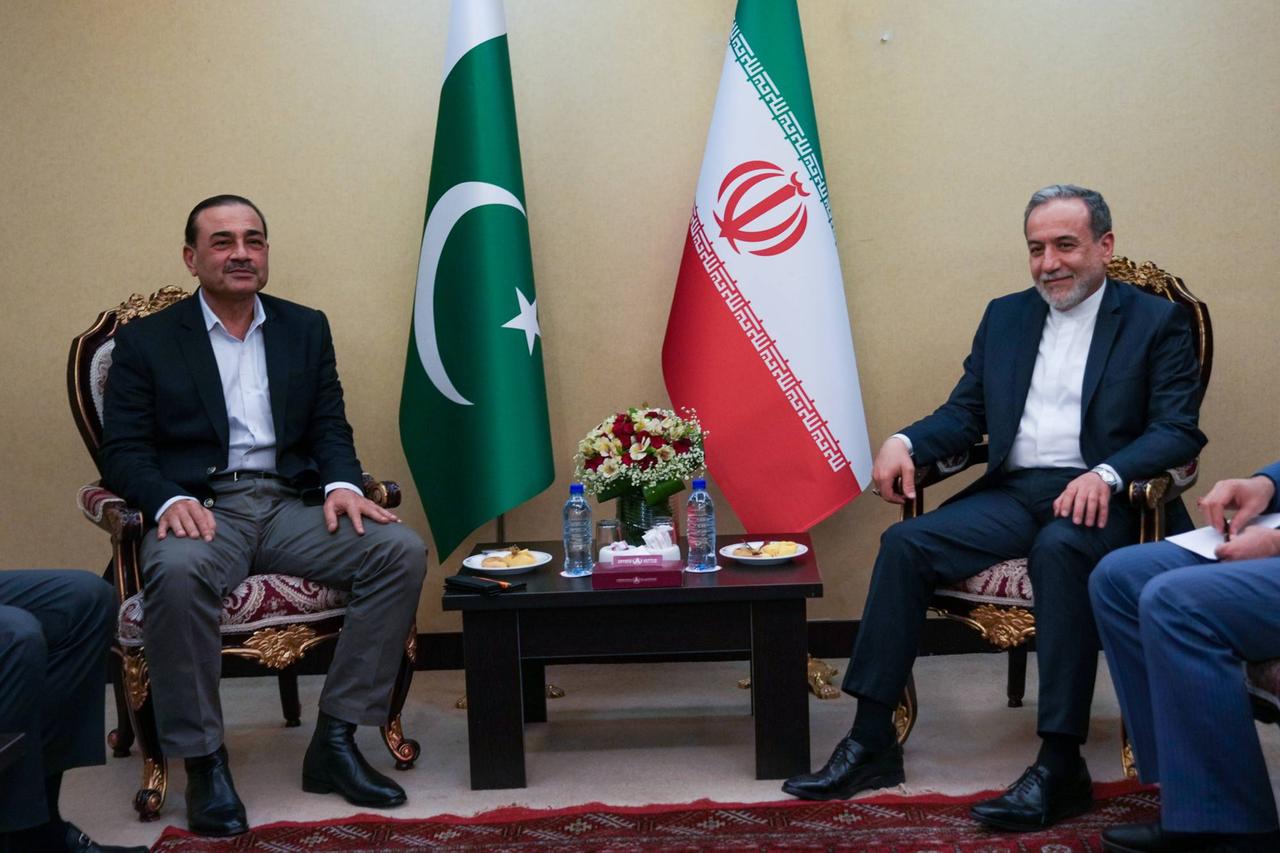
Sources told AA that Munir and Araghchi also discussed reviving direct talks between the U.S. and Iran to end their months-long war.
Araghchi reportedly said Iran is ready to return to negotiations once the U.S. halts hostilities in the Strait of Hormuz and "abides by the Islamabad memorandum."
China is also assisting Pakistan's mediation efforts, according to a source, who said Beijing "is equally worried about the raging hostilities because it's getting its oil bill heavier."
In a separate meeting with Araghchi in Beijing on Wednesday, Chinese Foreign Minister Wang Yi encouraged Iran and the U.S. to "remain rational, exercise restraint, return to the Islamabad Memorandum of Understanding (MoU), and engage in substantive consultations," adding that China "does not want to see regional tensions spill over further into Yemen and the Red Sea."
Chinese President Xi Jinping is expected to meet Trump in Washington next week, where the two are likely to discuss the regional conflict alongside other bilateral issues.

Pakistan and Saudi Arabia signed a bilateral defense pact last year, which led to the trilateral Mecca Joint Defense Agreement signed last month with Türkiye. Under its terms, an attack on any one of the three countries is to be treated as an attack on all three.
Yemen has been at war since the Houthis seized the capital, Sanaa, in 2014, prompting a Saudi-led coalition to intervene in 2015 in support of the internationally recognized government.
The group has been engaged in renewed fighting with government forces since July, when it declared a maritime blockade on Riyadh, and has since claimed advances along the Red Sea coast and the Bab el-Mandeb Strait while targeting Saudi oil infrastructure, contributing to a rise in global oil prices.
Pakistan has served as the main mediator between Iran and the U.S. throughout the war, which began Feb. 28.
The U.S. and Iran signed the Islamabad MoU on June 18, but talks toward a final agreement later stalled over disagreements on security guarantees and freedom of navigation through the Strait of Hormuz. Between July 8 and July 24, the two countries exchanged military strikes, with Iran hitting U.S. bases and assets in Jordan, Bahrain and Kuwait.
The Pentagon has confirmed more than a dozen U.S. fatalities and dozens of injuries, while more than 3,500 people have been killed in Iran since the war began.


 Set as preferred source
 Set as preferred source


 4 min read