Newsletters


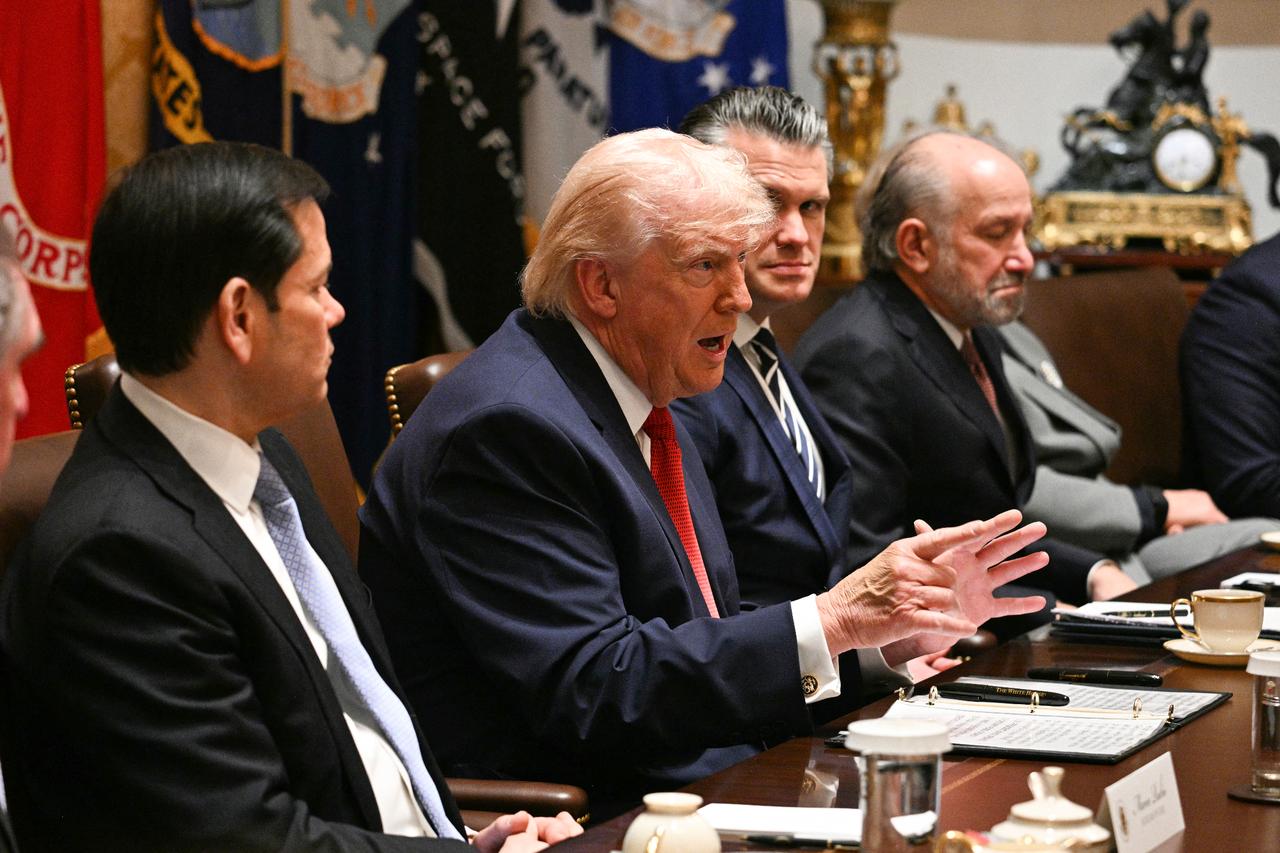


President Donald Trump convened his second cabinet meeting of 2026 on Thursday, the first since the United States launched its war against Iran, using the session to project confidence about the military campaign even as Iranian missile strikes on Israel continued and diplomatic efforts to end the conflict showed only tentative signs of progress.
Trump repeated his assertion that Iran's military had been "obliterated" and that the war was progressing "ahead of schedule," while pushing back against reports that Tehran was uninterested in cease-fire negotiations. "They'll tell you, 'we're not negotiating,'" he said. "Of course, they're negotiating. They've been obliterated."
He warned that Iran still had a window to abandon its nuclear ambitions, but added: "In the meantime, we'll just keep blowing them away, unimpeded, unstopped."
The battlefield picture, however, told a more complicated story. Reporting from Tel Aviv indicated that Iranian missile launches toward Israel continued unabated on Thursday, with the Israeli military announcing at least eight separate launches since midnight.
At least seven people were injured in central Israel from missile barrages, according to the country's emergency service. Fighting on a second front also escalated, as a man was killed in the northern Israeli city of Nahariya by rockets fired from Lebanon by Hezbollah, the Iran-backed militant group.
The Israeli military said it would deploy a third division to southern Lebanon as part of what Israel has described as a limited ground operation.
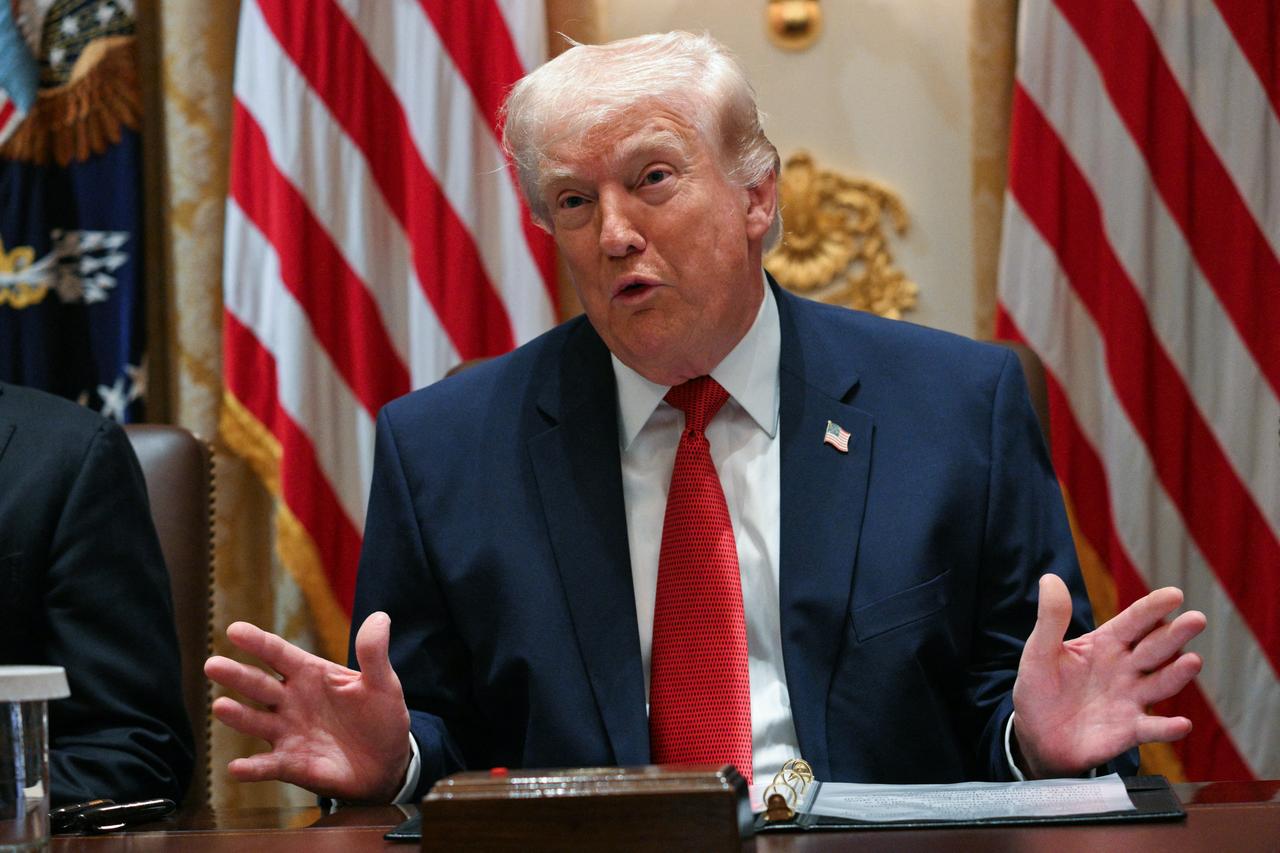

Steve Witkoff, the White House special envoy who alongside Jared Kushner, the president's son-in-law, is leading negotiations with Iran, told the cabinet that the pair were focused on convincing Tehran "that this is the inflection point with no good alternatives for them other than more death and destruction."
Witkoff said there were "strong signs" that peace remained possible and that Iran was seeking an exit from the conflict following Trump's threat over the weekend to destroy Iranian power plants within 48 hours. Trump ultimately did not follow through on that deadline, instead looking for a path to de-escalation himself.
Trump revealed what he called a "surprise," saying that Iran had allowed eight Pakistan-flagged oil tankers to pass through the Strait of Hormuz as a gesture of sincerity ahead of talks. Two additional vessels were also permitted through, bringing the total to 10.
Secretary of State Marco Rubio reinforced the administration's framing of the conflict, claiming that Iran had effectively been at war with the United States for 47 years and that "every president should have done this."
The remark glossed over the fact that multiple administrations, including that of former President Barack Obama, pursued diplomatic channels to address Iran's nuclear program.
It also omitted that Trump himself chose not to strike Iran during his first term, most notably in 2019 when he called off a retaliatory attack after Iran downed a U.S. drone in international airspace. With planes already airborne, Trump reversed the order, citing concern over potential Iranian casualties.
The economic fallout from the war also surfaced during the meeting. Trump said he was open to suspending the federal gas tax to ease rising fuel costs linked to the conflict, describing it as "something we have in our pocket if we think it's necessary." Asked whether the United States might seize Iranian oil, he did not rule it out, saying, "I mean, I wouldn't talk about it, but it's an option."
Trump also used the meeting to lash out at NATO allies for declining to join the war effort. He singled out Germany, saying that when its leader called the Iran conflict "not our war," he responded by suggesting he could adopt the same stance toward Ukraine. "That's why, when I heard the head of Germany say 'this is not our war,' about Iran, I said, 'Well, Ukraine's not our war,'" Trump stated.
Asked about reports that the administration was considering diverting munitions from Ukraine to the Middle East, he did not confirm or deny the plan but said, "We do that all the time," adding that the U.S. still hoped to resolve the Ukraine conflict but noted it was "thousands of miles away" and did not directly affect the United States.
Beyond the war, Trump used his social media posts earlier Thursday to pressure congressional Republicans to eliminate the Senate filibuster and to blame Democrats for an ongoing partial government shutdown affecting the Department of Homeland Security.


 Set as preferred source
 Set as preferred source


 2 min read

 1 min read