Newsletters


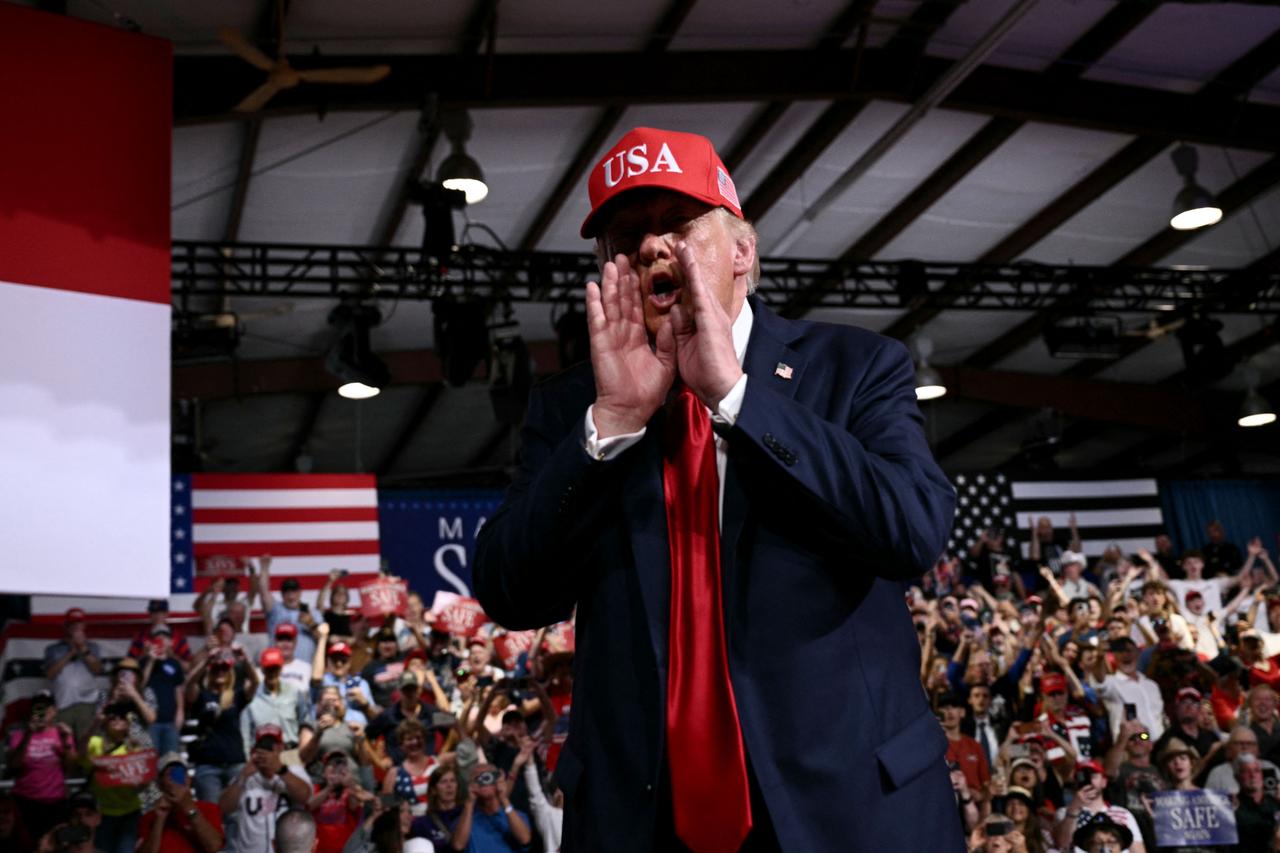
U.S. President Donald Trump threatened to impose heavy tariffs on the European Union or halt trade with the bloc entirely if it proceeds with a plan to make Canada its first-ever "associate member," a day before Canadian Prime Minister Mark Carney was set to address the European Parliament.
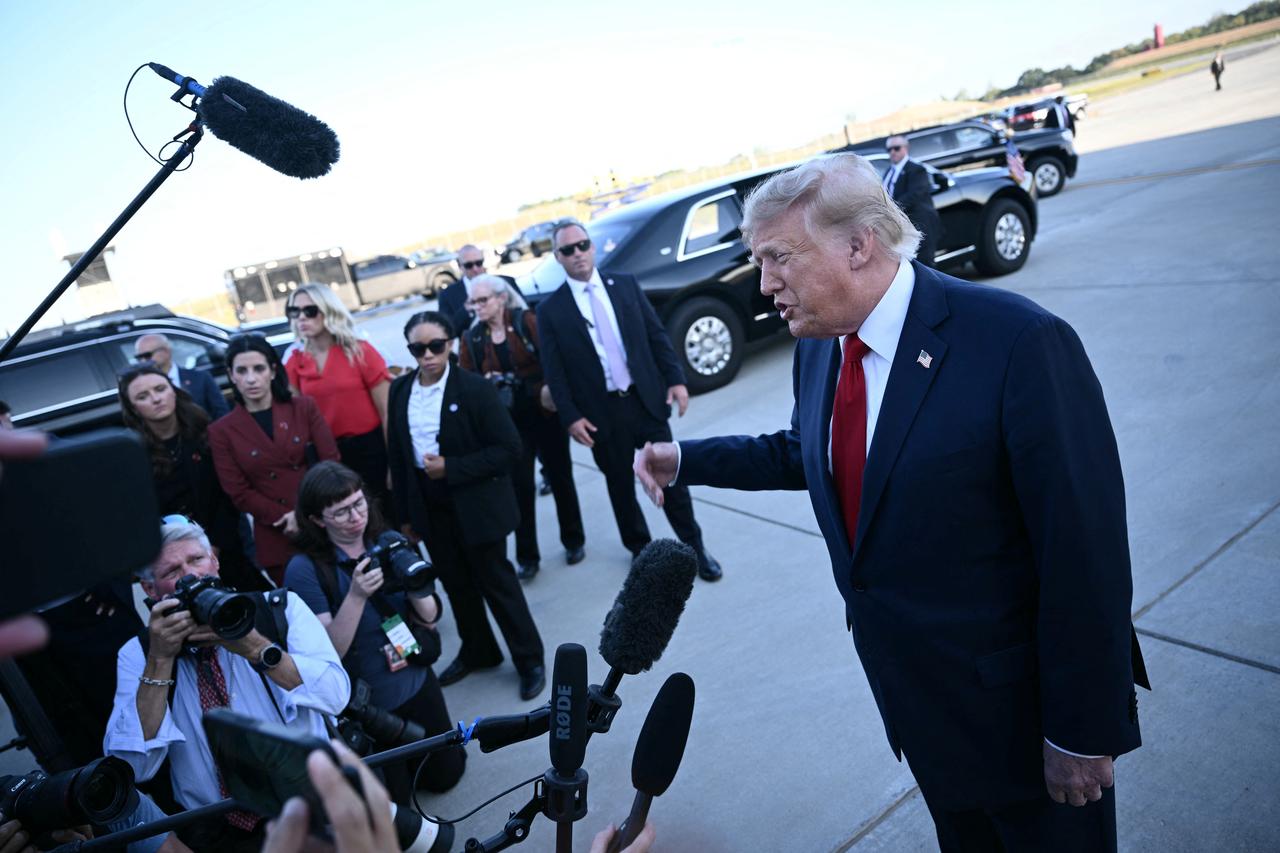
"I think it's laughable ... Canada has been a terrible trade partner," Trump told reporters after landing in North Carolina.
"If I think it's at all a hostile act, I will put very serious tariffs or stop trading with Europe on many things," he added.
Trump left open the possibility of accepting the arrangement depending on its intent.
"If it's a good intention, that's fine. If it's a bad intention, we'll put very heavy tariffs on Europe, which is a possibility," he said.

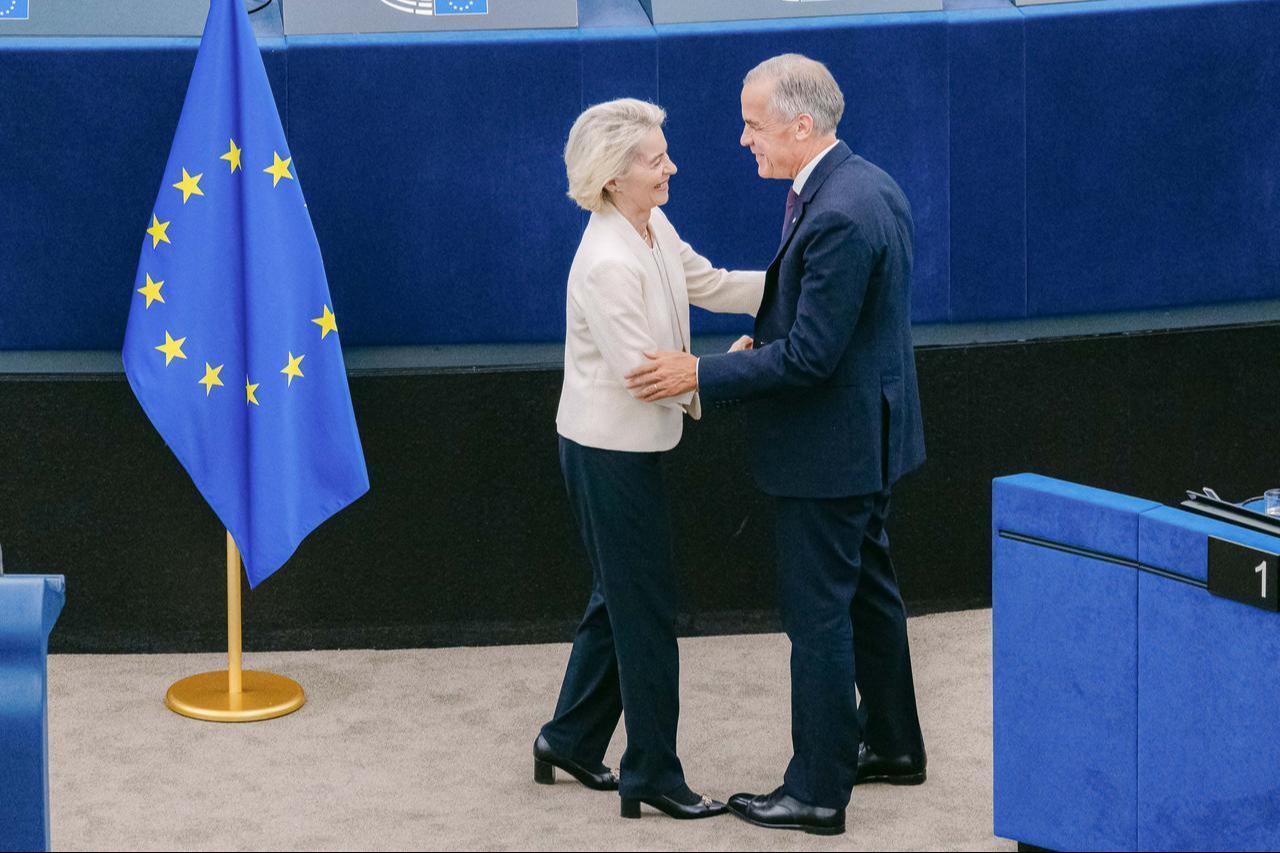
The threat came hours after European Commission President Ursula von der Leyen proposed the associate membership during her annual State of the European Union address in Strasbourg, France, with Carney in attendance as the first non-European head of government to attend the speech.
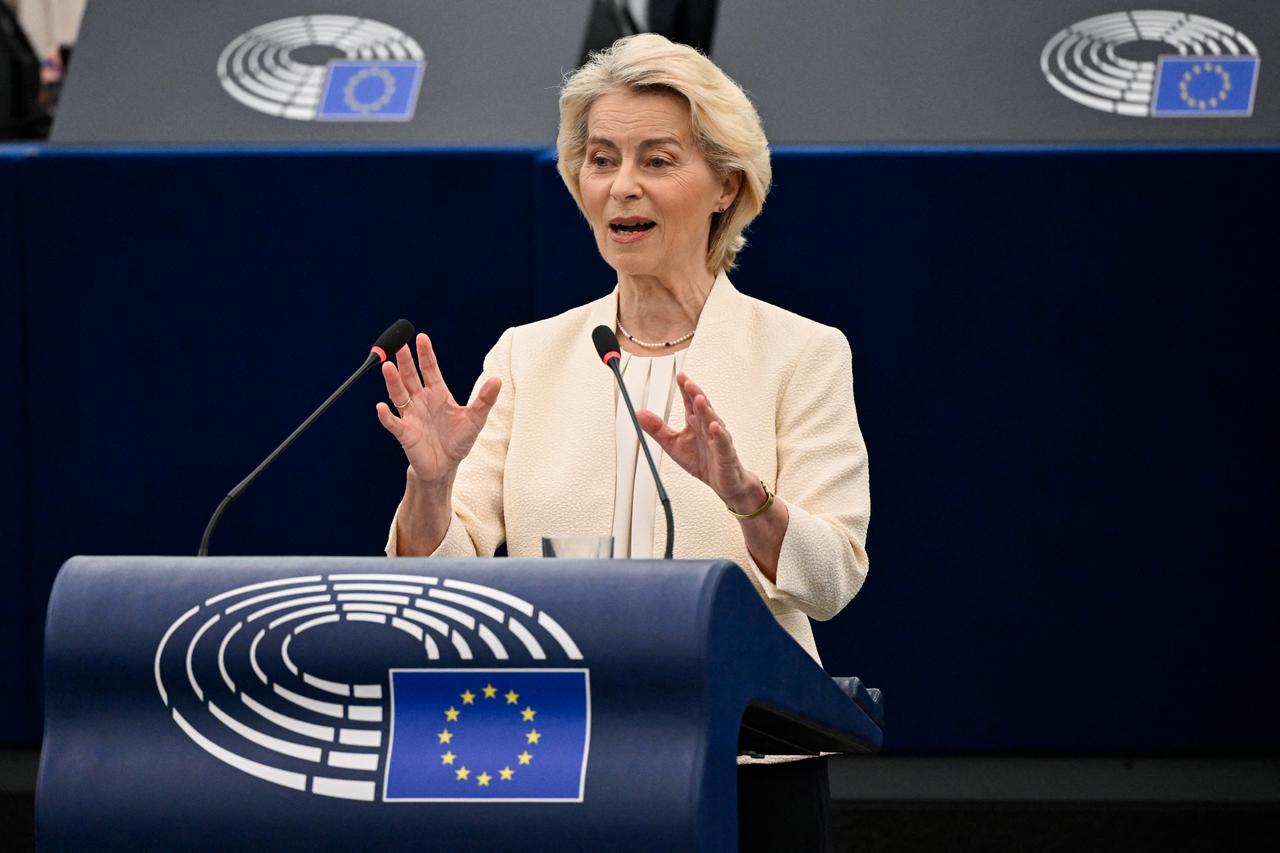
"I would like to work with you on opening the door for Canada to be the first associate member of the EU," von der Leyen told Carney, drawing a standing ovation in the chamber.
She said Brussels and Ottawa needed to pull closer together as democracies face "a fracture in the international rules-based system," framing the pitch as part of Europe's response to "an openly hostile world."
"We share one ocean, one set of values, one way of seeing the world. And we will now build our shared future as well," von der Leyen said, describing the goal as moving beyond trade cooperation toward a broader "alliance for the future."
She outlined plans for joint work on intelligent manufacturing, a technology alliance, integration of defense-industrial bases, a joint Arctic project, and cooperation on energy, critical minerals, batteries, AI, cyber and economic security.
"This is a partnership not against anyone else, but for our common strength," she said.
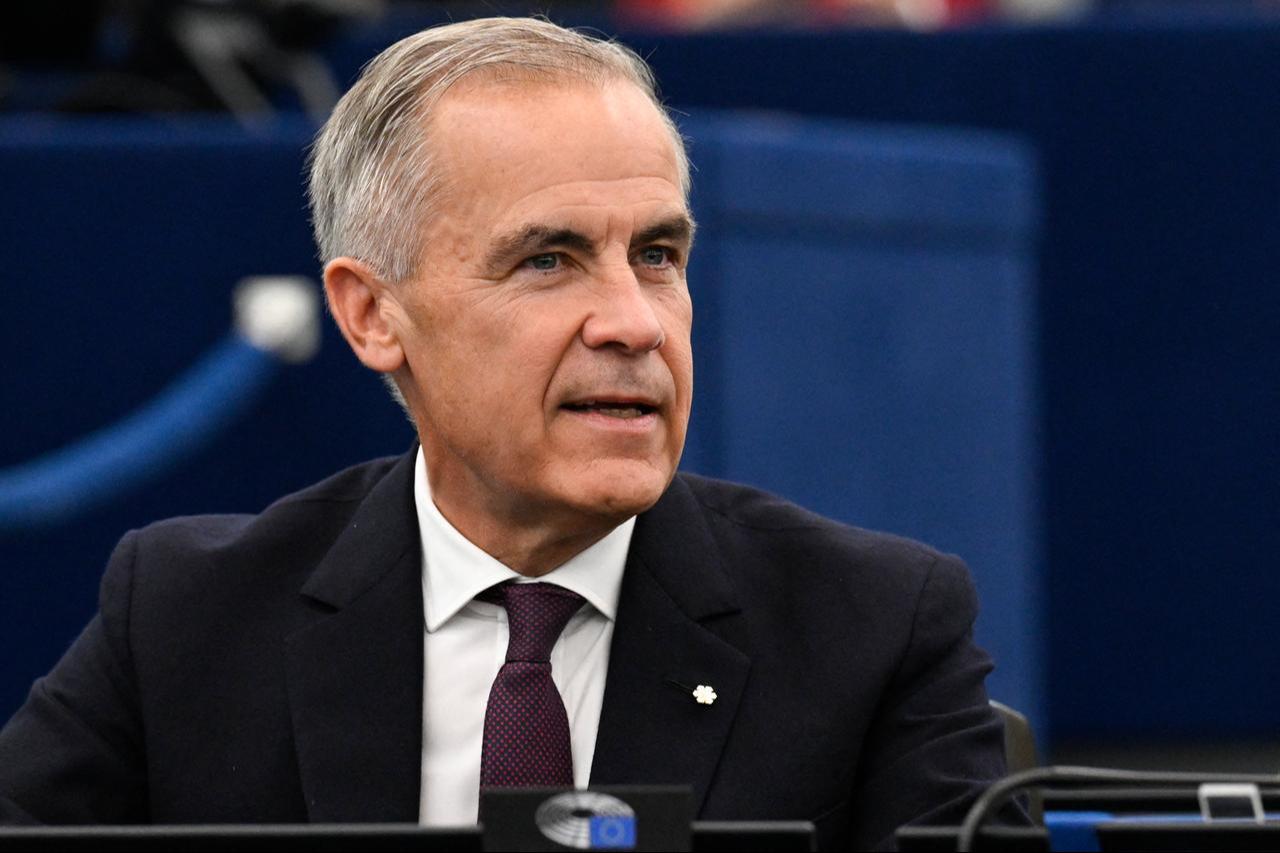
Carney has stopped short of endorsing full associate membership, telling reporters at the Toronto International Film Festival before his European trip: "We're not looking to become a member of the European Union. What we are looking for, and will begin discussions for, is a unique alliance between Canada and the European Union. We share the same values, we have the same priorities and we have very complementary strengths."
Canada's incoming ambassador to the EU, Jonathan Wilkinson, similarly downplayed the prospect when asked by reporters in Strasbourg: "We're not there. What we're focused on is actually driving results."
Carney's office said in a statement: "In a more dangerous and divided world, Canada is forging stronger relationships with trusted partners."
EU treaties do not currently envision an "associate member" category, meaning any such status would need to be created and ratified by member states.
The idea was first floated earlier this year by German Chancellor Friedrich Merz for Ukraine, under a plan, met coolly by Kyiv, which is pushing for full membership, that would have allowed Ukraine to attend EU summits and have a representative in the European Commission while accessing parts of the EU budget without full voting rights.
An EU spokesperson told Axios the bloc wants "to create a new form of partnership that has not existed until now," describing the goal as "the closest imaginable form of association with a partner outside Europe."
Tobias Cremer, a German center-left European lawmaker and the main sponsor of a resolution urging closer EU-Canada cooperation, said after von der Leyen's announcement: "We don't really know yet what it means."
The proposal reportedly caught several EU capitals off guard, and it remains unclear how much support it will receive from member states, which must individually approve any partnership arrangement with a third country.
Brussels and Ottawa already cooperate extensively.
The CETA free-trade agreement, which eliminated tariffs on roughly 99% of goods, has been credited with boosting trade in goods and services by more than 80% since 2016, though the deal still requires ratification by 10 EU member states.
Canada also became the first non-EU country to join the bloc's SAFE defense procurement program this year, giving Canadian firms preferential access to EU defense contracts.
The proposal comes as Canada seeks to reduce its economic dependence on the U.S. following months of escalating trade tensions.
Trump has imposed a 50% tariff on Canadian goods and plans to block certain Canadian dairy, alcohol and auto imports later this month, prompting retaliation from Ottawa.
Canadian exports to the US fell 5.8% last year while exports elsewhere rose 17.2%, according to the Canadian government, though the U.S. still purchased 71.7% of Canada's exports.
Canada brings significant strategic assets to any deeper EU partnership.
Ottawa is the world's fourth-largest oil producer, supplying the U.S. with more oil than all other foreign suppliers combined, and ranked among the world's top five producers of 11 critical minerals last year, according to Natural Resources Canada. Nearly half the country lies within the Arctic, giving it strategic relevance as melting ice opens new routes amid growing Russian and Chinese activity in the region.
Any new U.S. tariffs on the EU would test the trade framework Washington and Brussels reached last year, which set a 15% tariff ceiling on most EU exports to the U.S.


 Set as preferred source
 Set as preferred source


 1 min read
 1 min read