Newsletters




It was just past 1 a.m. when the president of the United States sat down to weigh in on what he called one of the greatest political scams in American history.
The Southern Poverty Law Center, a civil rights organization that has spent over five decades cataloguing hate groups, tracking white supremacists, and feeding intelligence to the very Justice Department now charging it with fraud, had just been indicted.
President Donald Trump, posting on Truth Social in the small hours of a Friday morning, declared the charges proof that the 2020 election should be erased from the record books.
There was no legal theory offered. But the post captured something real about the stakes.
Either the federal government has uncovered a genuine financial fraud at one of the most prominent liberal watchdog organizations in the country, or it has turned the criminal justice system into a political instrument against civil society.
Both readings are being argued, loudly, and neither has been settled.
What is clear is that the SPLC indictment has opened a conflict whose consequences will extend well beyond the courtroom and well beyond the SPLC itself.
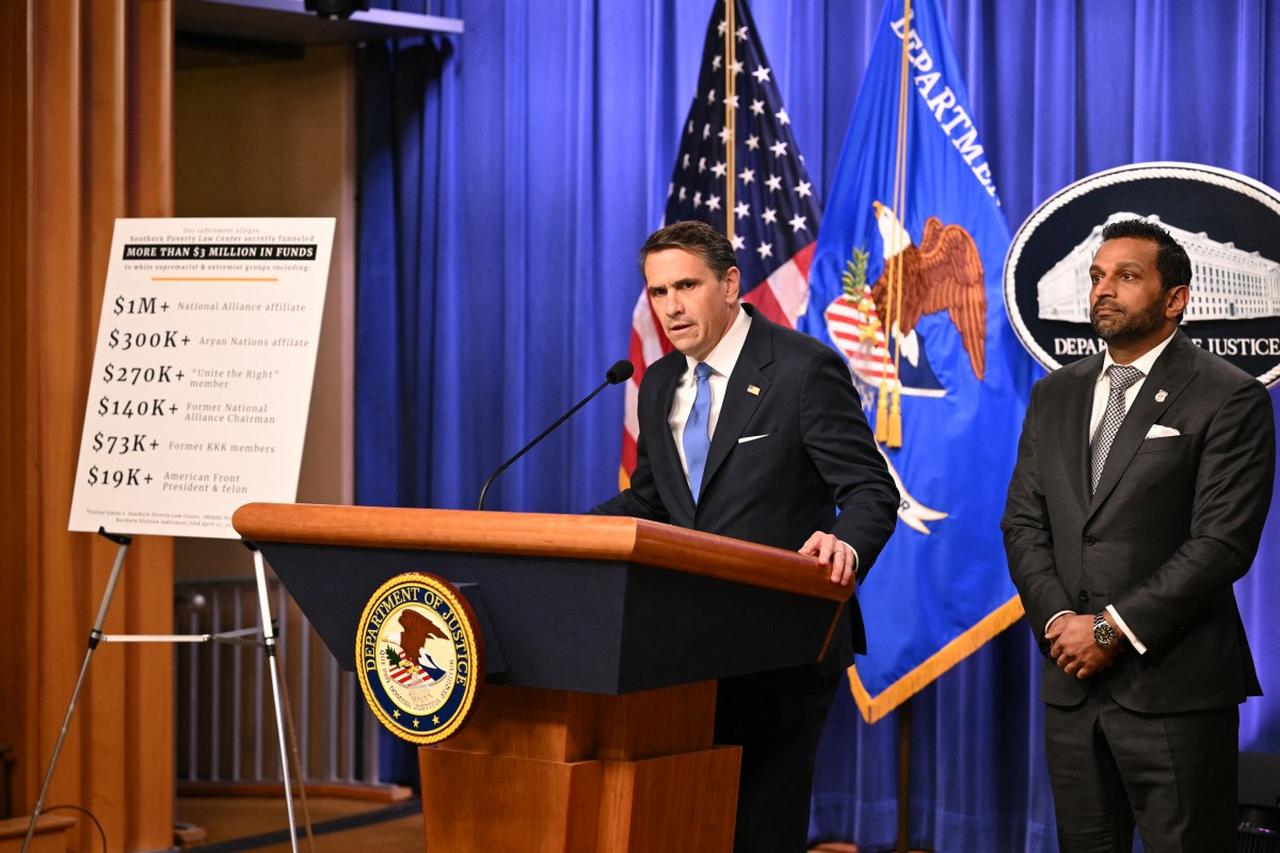

The U.S. Department of Justice this week filed criminal charges against the Southern Poverty Law Center, a decades-old civil rights organization based in Montgomery, Alabama.
The charges allege that the SPLC defrauded its own donors by secretly funneling large sums of money to informants embedded within hate groups, payments that prosecutors framed not as standard investigative expenditures but as financial misconduct.
Acting Attorney General Todd Blanche issued a statement claiming that the SPLC had been "manufacturing racism to justify its existence."
FBI Director Kash Patel went further, describing what he called a "massive fraud operation" designed to deceive donors, enrich the organization, and conceal its methods from public scrutiny.
The indictment rests primarily on wire fraud allegations, the claim that the SPLC misrepresented to donors how their contributions were being used.
Whether payments to undercover informants inside hate groups constitute legitimate operational costs or deliberate donor deception is now the central legal question. The case will likely take years to resolve in court.
Federal prosecutors, backed by Blanche and Patel, are presenting a straightforward narrative: the SPLC told donors it was monitoring extremism while secretly paying individuals inside those groups, conduct they characterize as hidden and fraudulent.
The implication embedded in the government's framing is that the SPLC was not a watchdog at all but a self-serving organization exploiting fear of hate groups for financial gain.
The SPLC, its donors, and supporters reject this framing entirely. Legal experts and civil liberties advocates across the political spectrum, including some who have been openly critical of the SPLC in the past, have expressed skepticism about the strength of the DOJ's case.
Paying informants to gather intelligence on violent extremist organizations is a broadly accepted investigative practice, used routinely by law enforcement and civil society organizations alike.
Democratic lawmakers and the SPLC's donor base have rallied in response, arguing that the prosecution is politically motivated.
The SPLC has long shared data with the DOJ on far-right groups, white supremacist organizations, and domestic extremist movements, making it a natural institutional target for an administration whose political coalition overlaps with the groups the SPLC monitors.
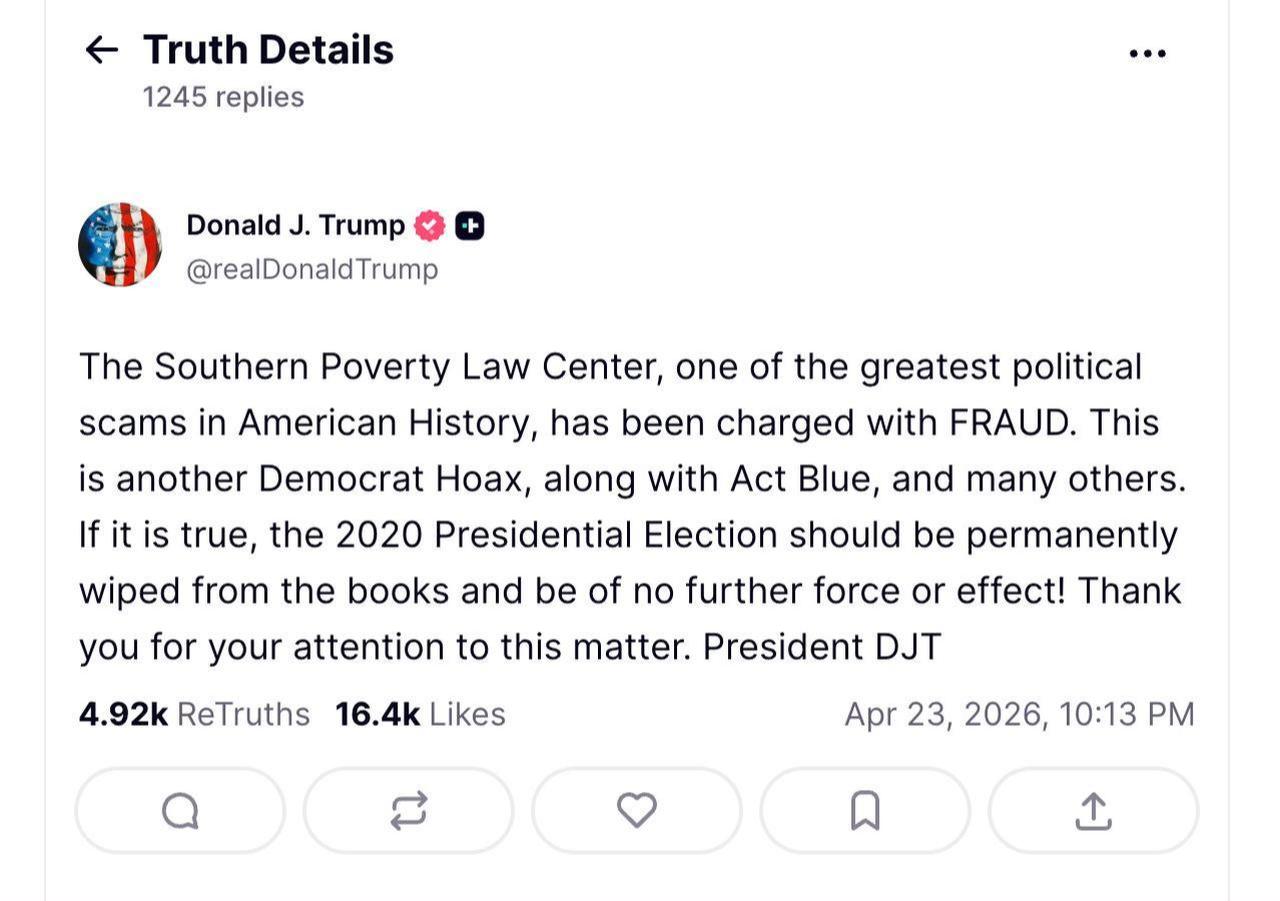
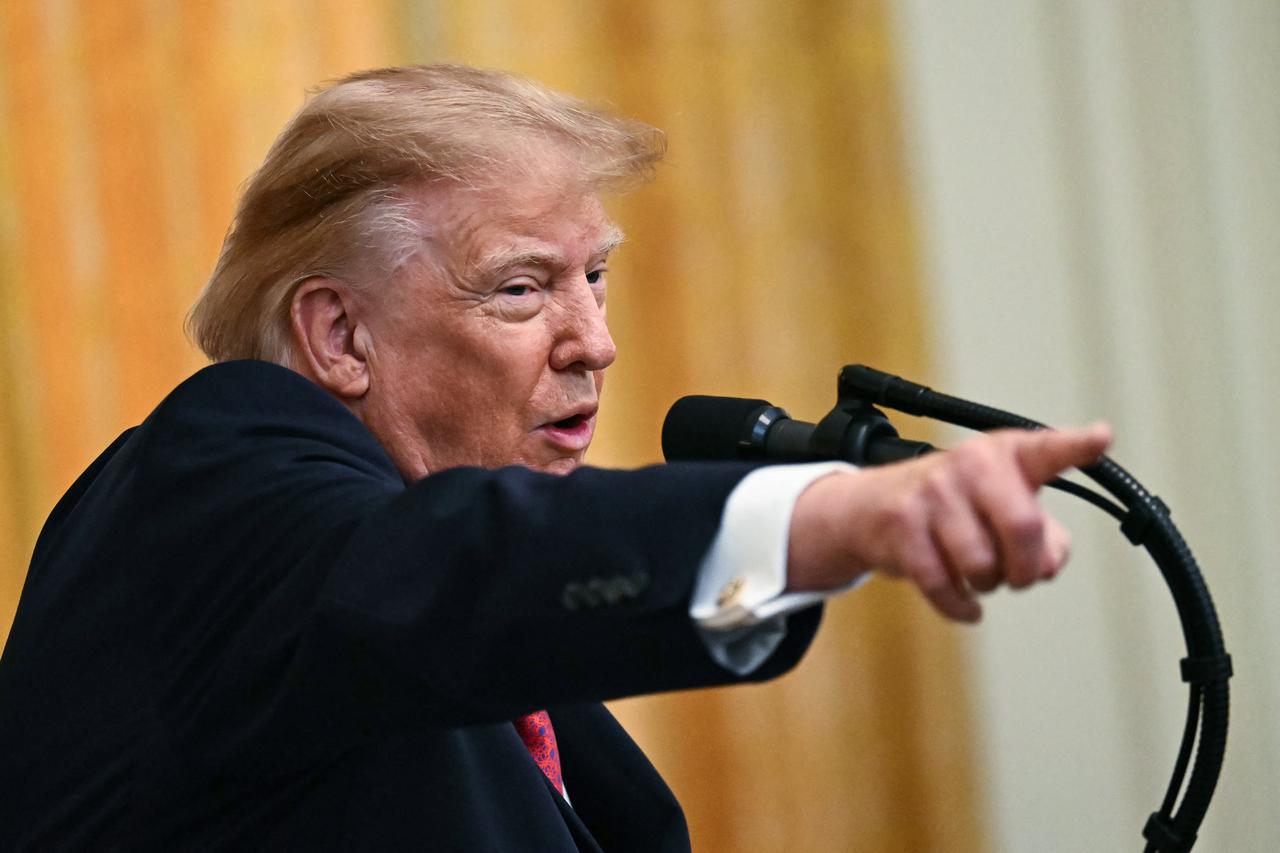
Shortly after 1 a.m. on Friday, President Trump posted on Truth Social, calling the SPLC "one of the greatest political scams in American history."
He tied the indictment directly to ActBlue, the Democratic fundraising platform, labeling both organizations as part of a broader "Democrat Hoax." Most strikingly, Trump suggested that if the fraud allegations are true, the results of the 2020 presidential election should be "permanently wiped from the books."
There is no established legal mechanism by which a nonprofit fraud case could retroactively nullify a presidential election, and legal scholars have noted the absence of any coherent theory connecting the two.
Even so, the post was widely read as a political signal, a message to supporters that the prosecution of the SPLC is not simply a legal matter but part of a larger political project of delegitimization.
The SPLC prosecution fits within a recognizable sequence. In his first months back in office, Trump moved aggressively against certain media companies, pressuring ownership structures, challenging the composition of press pools, and using regulatory levers against broadcasters he deemed hostile.
Having established that pattern in the media space, the administration now appears to be applying similar tactics to nonprofit civil society organizations.
The logic is consistent: identify institutions perceived as adversarial to the administration's base, attach a legal or regulatory mechanism to them, and use the resulting pressure to constrain or discredit their operations without necessarily winning in court.
This approach does not require convictions to be effective.
The announcement of an investigation or indictment alone can dry up donor funding, distract organizational leadership, and generate reputational damage that persists regardless of legal outcomes. For organizations that depend on public trust and philanthropic support, that deterrent effect can be as powerful as a verdict.
The administration has deployed at least three distinct tools against organizations it considers ideologically opposed.
The first is direct federal defunding, cutting off access to government grants and contracts. Planned Parenthood has faced this repeatedly, most recently through provisions in the "One Big Beautiful Bill Act" and regulatory changes to the Title X family planning program that effectively exclude certain providers.
The second tool is threatening an organization's tax-exempt status. Earlier this year, the IRS was directed to scrutinize foundations that allegedly "finance political violence or terrorism," a deliberately broad standard that placed groups like George Soros's Open Society Foundations and the Ford Foundation under formal review.
The designation of donor-funded foundations as potential national security concerns represents a significant expansion of executive pressure on civil society.
The third tool—illustrated most clearly by the SPLC case—is criminal framing.
By characterizing an organization's internal expenditures as donor fraud rather than legitimate operational costs, the DOJ can insert the criminal justice system into the governance of nonprofit organizations.
If informant payments can be prosecuted as wire fraud, the chilling effect on any nongovernment organizations (NGOs) that conduct covert monitoring or investigative work could be severe.
The timing of the SPLC prosecution is not incidental. For years, the organization has served as one of the primary institutional mechanisms for tracking far-right extremist groups, sharing intelligence with the DOJ and other federal agencies.
Dismantling that monitoring infrastructure—or at minimum discrediting it—serves a clear political purpose for an administration whose base includes movements the SPLC has documented and classified.
The wire fraud framing carries an additional layer of strategic utility. If informant payments can be retroactively characterized as fraudulent misuse of donor funds, it creates a legal precedent that could be applied to a wide range of civil society organizations engaged in any form of undercover research, community organizing, or political advocacy.
That prospect alone may be sufficient to induce many organizations to scale back activities they would otherwise consider routine.
The broader message being sent to democratic-leaning organizations is that no aspect of their internal operations is beyond federal scrutiny.
Legal exposure under a sufficiently creative charging theory represents a form of structural pressure that does not require a courtroom victory to produce its intended effect.
Whatever the ultimate legal outcome of the SPLC case, its function as a deterrent is already operational.
Other civil society organizations with liberal or government-critical orientations are now evaluating their own financial disclosures, informant arrangements, and donor communications against the standard implied by the DOJ's theory of the case.
Public invitations to crowdsource additional targets, combined with Trump's explicit linkage of the SPLC to ActBlue and 2020 election grievances, suggest that the administration and its allies view this prosecution as the beginning of a campaign rather than a one-off event.
The SPLC case marks a meaningful threshold in the relationship between the federal government and organized civil society in the United States.
It represents the application of criminal law, rather than regulatory adjustment or defunding alone, as a tool for managing the nonprofit sector.


 Set as preferred source
 Set as preferred source


 4 min read