Sign in
 Newsletters




The US Army destroyed the country's entire stockpile of lead azide in a controlled detonation at the Iowa Army Ammunition Plant on Wednesday. Officials said the nearly five tons of degraded explosive were too unstable to move, and that air monitors detected no airborne lead afterward.
The 68 drums of lead azide had been stored at the plant for more than 15 years. The Army said the material had become "extremely unstable and sensitive to even slight friction or movement," which meant it could explode spontaneously if left in place or handled.
Army Maj. Gen. Eric Shirley said the operation "wildly exceeded my expectations" and called it "tremendously successful." He said the Army had reduced the risk to people in Middletown and across Iowa "as close to zero as it's absolutely humanly possible."
The Environmental Protection Agency said all of its real-time air monitors were "reporting zero detection of airborne lead throughout the region." Adam Telle, the acting Army secretary, called the operation a "HUGE success" in a post on X. He said the threat of an uncontrolled spontaneous detonation "has been eliminated."
Reporters at the scene said the detonation sounded like two rounds of gunfire in quick succession. Television footage showed two plumes of smoke rising just above the tree line, and birds flew off en masse. A New York Times reporter said the blast could be heard about 10 miles (15 kilometers) away.
Reactions among residents varied. Linda Ross, who lives about a mile from the site, told the Times: "It just went, boom, boom! The windows rattled, and the dogs started barking." Tim Brandt told the Associated Press the explosion "was nothing," adding that it "seemed like government put fear in a lot of people over nothing." Liz Schultz, a reporter for KCRG-TV who was also about a mile away, said she did not hear or feel anything at first.
Two NASA research aircraft were seen flying low over the area after the blast. CNN reported they had been deployed to monitor air pollution and collect data.
Lead azide is a primary explosive, a class of material used in detonators because it is extremely sensitive to shock and friction. Like other lead compounds, it is toxic, and lead exposure is especially dangerous to young children.
Col. Aaron Teller, who led the explosives experts, said the last major disposal of lead azide came in 1977, when about 7,000 pounds were destroyed in an open-air blast in Colorado. Even without mitigation measures, he said, 75 percent of the lead particulate stayed at that site. He said additional steps were taken in Iowa to contain more of it.
Teller said the two bunkers holding the material were ringed by earthen barriers rising well above the tops of the magazines. A vent in the barriers was designed to channel material from the blast into an uninhabited part of the plant grounds. Crews also installed large water tanks to keep lead particulate out of the atmosphere, and flooded the exterior of the magazines with foam to dampen the blast.
The EPA had granted an emergency permit for the detonation. It said a controlled blast in optimal weather with robust mitigation measures sharply reduces the potential reach and concentration of lead dust on surfaces such as homes and windows, compared with an uncontrolled explosion.
The Army released two maps on Wednesday morning. One showed potential exposure to lead dust in the air across an area extending more than 75 miles (120 kilometers) southwest of the site. The other showed possible surface exposure in a more limited area. The maps advised people to consider avoiding the highlighted areas or to stay indoors with windows and doors closed, and warned that children under 6 are especially vulnerable. They also identified pregnant women as particularly vulnerable.
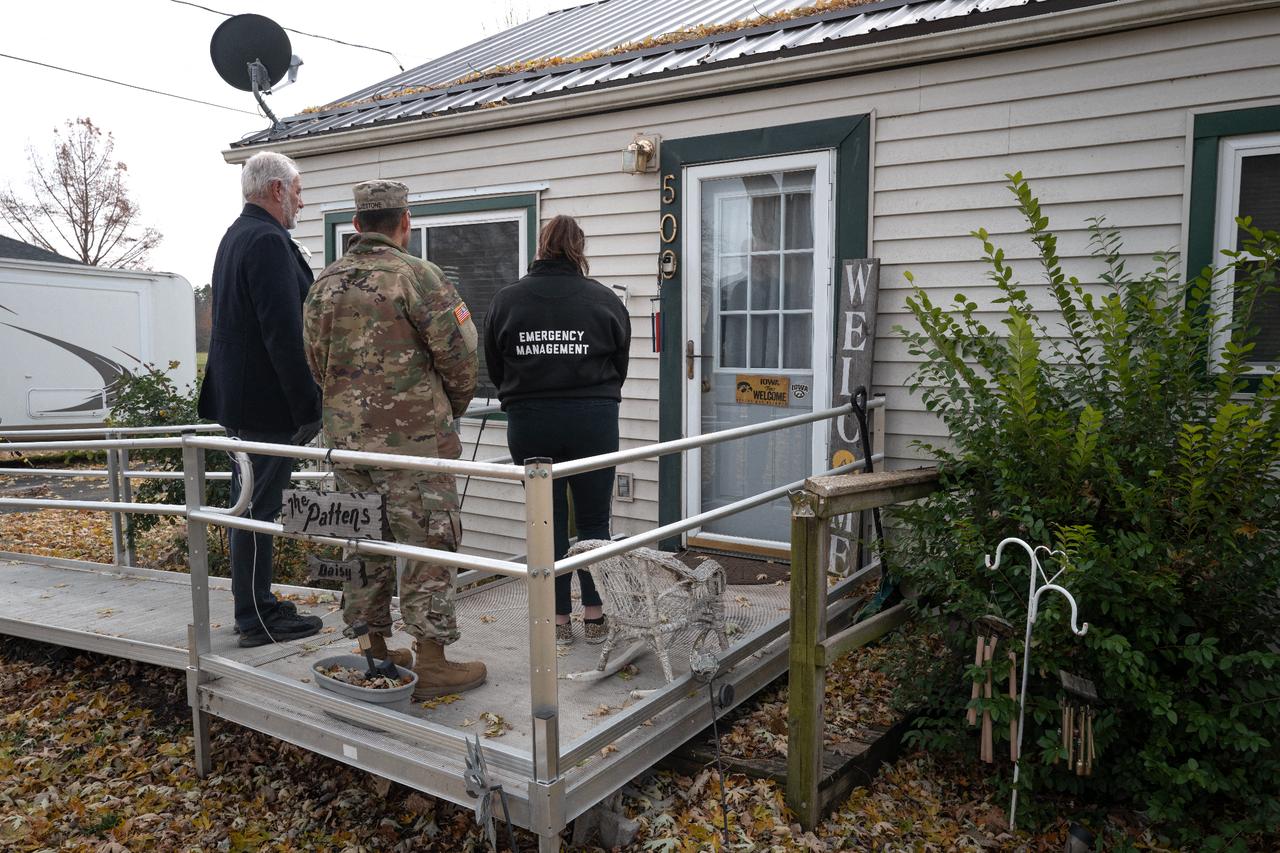
The Federal Emergency Management Agency supported relocating all residents of Middletown and the immediately surrounding areas before the blast. At 8 a.m. local time it issued an emergency alert urging residents within 20 miles (32 kilometers) to shelter in place, and it repeated that advice after the detonation. Residents had spent more than a week preparing, and some taped their windows to keep them from shattering.
Gov. Kim Reynolds had issued a disaster emergency proclamation for Des Moines, Lee and Van Buren counties ahead of the operation. After the blast, she said initial feedback from state experts and federal partners was that it had been successful. Officials in Missouri and Illinois also monitored the situation. Missouri Gov. Mike Kehoe said initial analysis indicated the mitigation measures "appear to have been successful and the explosion was well-contained."
The detonation was first scheduled for November 20 but was postponed for three days. President Donald Trump then paused the operation again before allowing it to go ahead. The blast also followed a legal challenge over the potential health and environmental effects of the dust. An appeals court found that adequate safeguards were in place to protect the community.
Trump wrote on Truth Social that early reports showed the Army's mitigation efforts had "far exceeded expectations." White House communications director Steven Cheung credited Stephen Miller, the president's new chief of staff, with convening "a historic, all-of-government response."
Iowa Gov.-elect Rob Sand, a Democrat, thanked the experts on the ground "who did all they could to make this detonation as safe as possible." But he said the lead-up "should never have been so chaotic and unclear." He called for immediate transparency and for full care of any Iowans affected.
Hakeem Jeffries, the speaker-designate of the US House, was more pointed. He said the Trump administration "has repeatedly proven that they cannot be trusted to guard the health, safety and well-being of everyday Americans." He added that people "need transparent information, not vague assurances of safety being made by a Defense Department led by a grossly incompetent secretary."


 Set as preferred source
 Set as preferred source


 3 min read