Newsletters


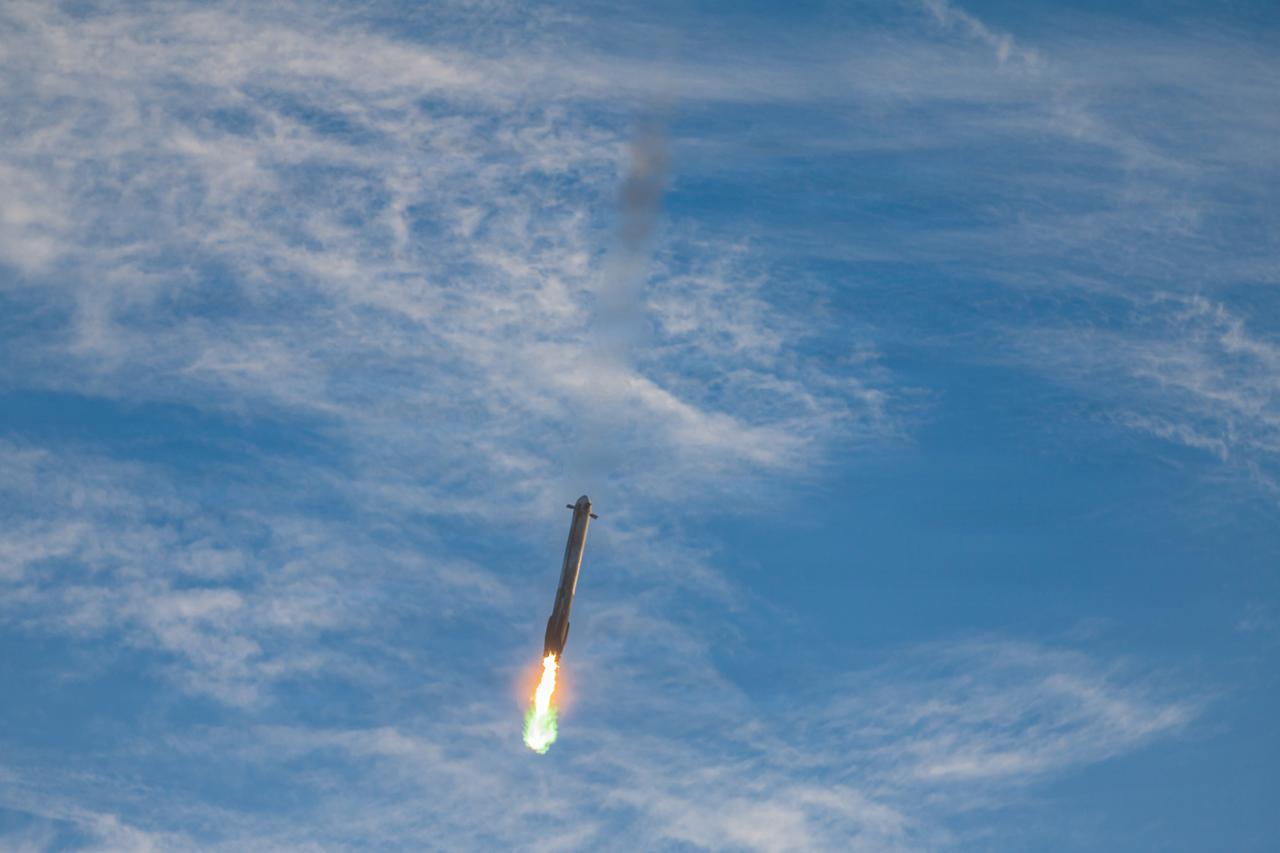


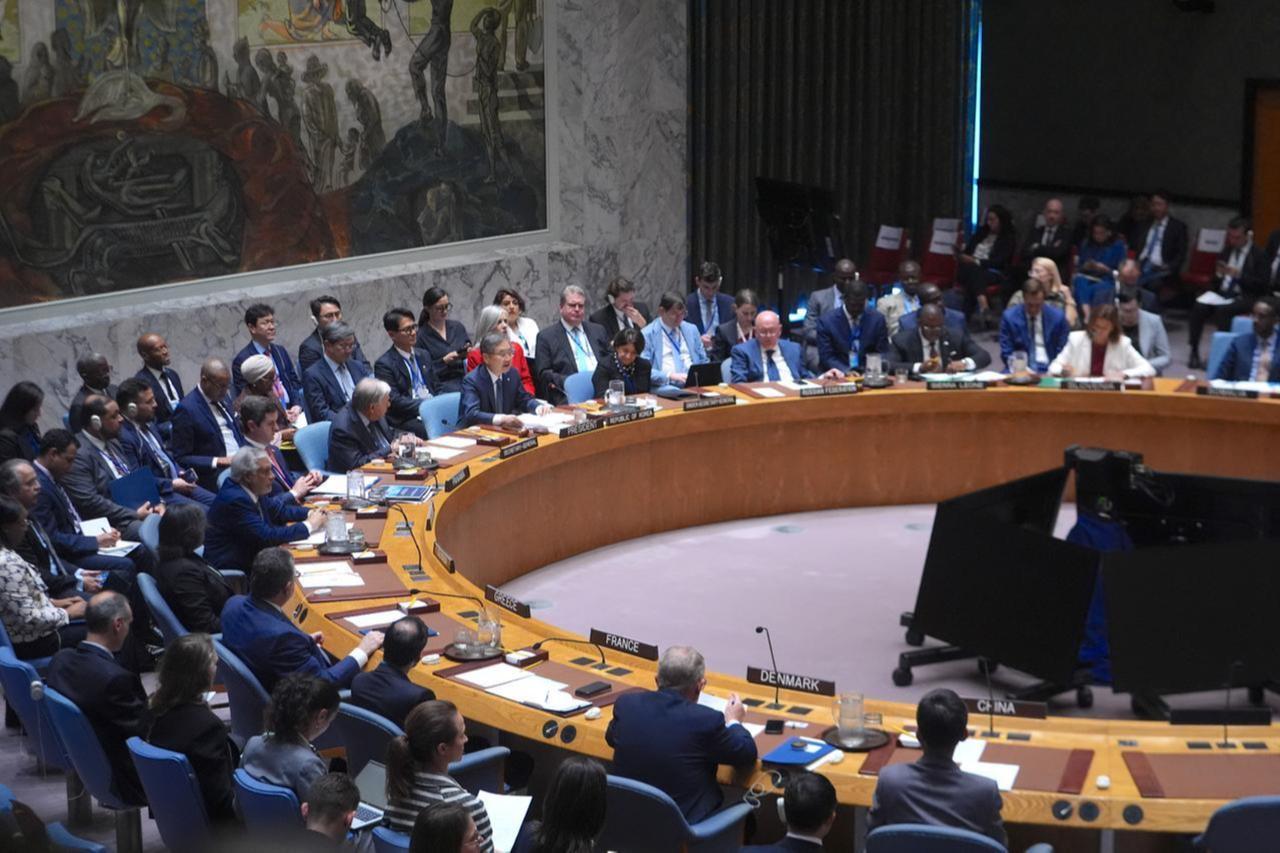
China warned Tuesday against turning outer space into a "battlefield," and Russia called for the domain to remain "free from any weapon," after the United States confirmed for the first time that it has deployed weapons in orbit above the Earth.
"The U.S. has on-orbit space control weapons capable of defending the Joint Force against hostile adversary action," a U.S. Space Force spokesperson said in a statement that did not provide specifics on the weapons involved.
Analysts said the disclosure confirmed what had long been an open secret, but that its timing risked exacerbating tensions with Beijing and raising the risk of an orbital arms race.
U.S. Air Force Secretary Troy Meink made the announcement Monday at the Air, Space and Cyber Conference in Maryland.
"Today, we continue to ensure we remain ready to meet the challenge of evolving threats wherever they exist. This is why the Space Force now has on-orbit space control weapons capable of defending the joint force against hostile adversary action," Meink said.
Meink, whose department oversees both the Air Force and Space Force, declined to disclose when the weapons became operational, their specific capabilities, or whether they rely on kinetic impactors, directed energy, or electronic and cyber warfare mechanisms.
He told reporters afterward that the disclosure was deliberate.
"Talking about the details of what we're doing would actually not benefit that deterrence," Meink said, adding, "We're not going to talk about the specifics of what we're doing, whether we've tested, not tested, or anything else. I would just say that the space environment is critical for military and economic security, and we need to make sure that the U.S. can operate freely there. It is critically important that we maintain our dominance, not only in the air but in space. So we've had to take steps to make sure that when we're threatened, we can take care of that."
The Space Force's written statement said, "Space control encapsulates the mission areas required to contest and control the space domain, employing kinetic and non-kinetic means to affect adversary capabilities. These capabilities can be employed for offensive and defensive purposes."
Non-kinetic means could include lasers to blind satellites or electromagnetic and cyber jamming of their data links.

China's Foreign Ministry opposed the disclosure, warning against "the weaponization of outer space, turning it into a battlefield, as well as an arms race there."
Spokesperson Guo Jiakun told a briefing in Beijing: "China has long been committed to the peaceful use of outer space and safeguarding the security in space. We oppose any arms race in outer space or any attempts to weaponize it or turn it into a war zone. We urge the U.S. to stop expanding military buildup in outer space and safeguard global strategic stability with concrete actions."
Song Zhongping, an independent military commentator based in Hong Kong and a former Chinese army instructor, told Agence France-Presse (AFP) the announcement was "no surprise at all," since the fact that the U.S. possesses such weapons "has long been an open secret."
"The only difference is that the U.S. used to keep it ambiguous, whereas now it has gone public, which shows that Washington is no longer trying to hide it. China will not stand by and do nothing," he added, noting Beijing already operates its own space station in orbit.
"Whether China deploys weapons in space will depend entirely on whether the United States moves in that direction," he said.
Kremlin spokesman Dmitry Peskov echoed China's concerns.
"We believe that space must be free of any weapon," Peskov told reporters.
"We are counting on broad international consolidation to continue working toward the complete demilitarization of space," he added.
According to the U.S. Space Force, both Russia and China pose potential threats to U.S. interests in space.
China "develops and operates space and counterspace capabilities as part of a military modernization strategy," while Russia "views space as a warfighting domain and believes space supremacy will be a decisive factor in future conflicts," the Space Force said.
The militarization of space dates to the launch of the Soviet Union's Sputnik satellite in 1957, after which Washington and Moscow began exploring ways to both arm and destroy satellites.
India said in March 2019 that it had destroyed a low-orbiting satellite in a missile test, following Russia, China, and the U.S. in demonstrating the capability.
The 1967 Outer Space Treaty, to which the U.S., Russia, and China are all parties, bans the deployment of nuclear weapons and other weapons of mass destruction in orbit but does not explicitly prohibit conventional weapons in space.
Space law expert Laetitia Cesari said a regulatory gap remains because the treaty's Article 4 addresses only weapons of mass destruction.
"Moscow and Beijing have been wanting to work for about twenty years on a treaty to prevent the placement of weapons in space," she said, while "Western states are trying instead to work on the notion of responsible behavior."
She said the U.S. disclosure "will likely give impetus to the restrictive approach that Moscow and Beijing are pushing for," and that the topic would likely be on the agenda at the next UN disarmament meeting in November.
Security experts have warned that publicly confirming the deployment of orbital weapons could prompt rival powers to expand their own capabilities, accelerating an arms race in a domain increasingly critical to communications, navigation, intelligence gathering, and military operations.


 Set as preferred source
 Set as preferred source


 2 min read