Newsletters





US Secretary of State Marco Rubio said Monday that an infection and death at a Russian biological research facility was not "cause for alarm," though he confirmed American authorities are closely monitoring the situation as Moscow moved to contain fallout from the case.
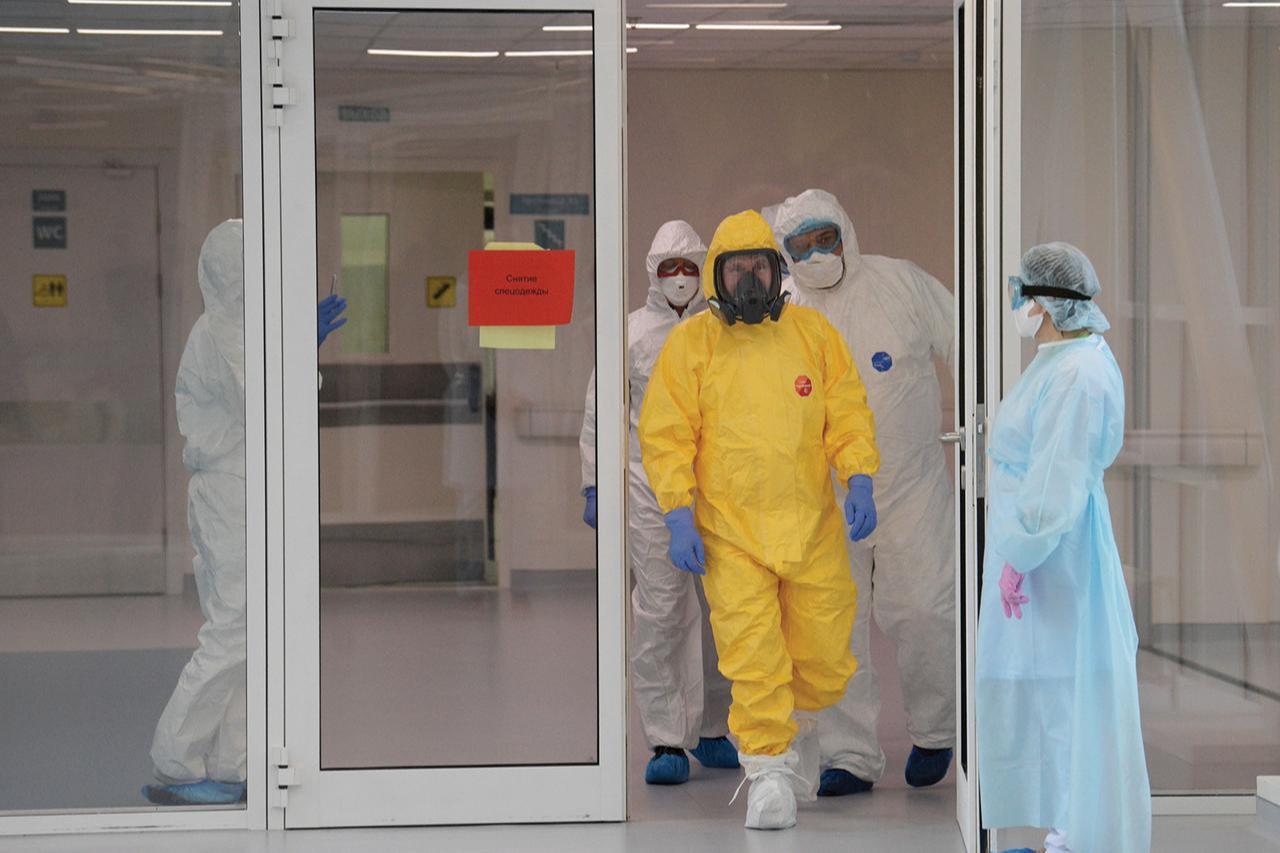
A 28-year-old laboratory technician identified as Darya Shipilova, who worked at the Irkutsk Anti-Plague Research Institute of Siberia and the Far East, died last week in a hospital in Shelekhov, a town near Irkutsk in southeastern Siberia, according to Russian officials and state media.
Authorities have attributed her death to "pneumonia of unknown etiology" and say testing found no link to pathogens she handled professionally, but unconfirmed local media reports suggesting she contracted pneumonic plague from a broken test tube have fueled public concern.


Speaking to reporters before departing for a diplomatic tour of Europe that includes stops in Iceland, Greece and Portugal, Rubio said Washington's assessment was based on information provided by Moscow indicating that a research worker had contracted an infection, prompting local authorities to impose a quarantine to prevent potential transmission.
"I do not think it is cause for alarm, but it is cause for focus and a cause to just keep an eye on," Rubio said.
He noted that travel between the United States and Russia remains heavily restricted but cautioned that pathogens escaping containment can spread quickly. "So we are watching and monitoring it closely," he said.

The hospital in Shelekhov where the woman died has been placed under quarantine, no longer admitting or discharging patients, and its laboratory has suspended routine testing, Shelekhov Mayor Maxim Modin said. The hospital's outpatient clinic has continued operating as usual, he said.
Anna Popova, head of Russia's public health watchdog Rospotrebnadzor, traveled to Irkutsk to meet with regional Gov. Igor Kobzev, who said everyone who had contact with the woman is under medical supervision.
Kobzev described the case as a suspected instance of "a particularly dangerous infection" without specifying it further, and said Rospotrebnadzor was carrying out a full range of anti-epidemic measures.
Rospotrebnadzor said extensive testing found no microorganisms associated with the woman's professional work and no evidence of any incident at the institute involving pathogenic microorganisms. The agency said two people who had contact with her tested positive for a common cold virus and two others for COVID-19, while all other contacts tested negative.
Kobzev said Monday that a special expert commission had confirmed the cause of death as pneumonia of undetermined origin and that no new cases involving institute staff seeking medical attention had been reported since the woman's death. He described the sanitary-epidemiological situation in the Irkutsk region as stable.
Kremlin spokesman Dmitry Peskov told reporters Monday that the public should rely on Rospotrebnadzor's official statements rather than "rumors or speculation."
Independent outlet Lyudi Baikala, citing unnamed sources, reported that the woman died of pneumonic plague and that several Irkutsk hospitals had been placed under quarantine. The Irkutsk Aluminum Plant in Shelekhov required staff to wear masks as a precaution, its director, Artyom Fominykh, said, urging calm while adding it was "better safe than sorry."
Rubio also addressed separate warnings from Moscow urging foreign missions to evacuate the Ukrainian capital, saying the US Embassy in Kyiv remains operational and subject to daily security reviews.
He said Russia's warning broke no new ground given that Kyiv remains under attack, characterizing it as a continuation of rhetoric Russian officials have repeated for months.
The administration evaluates the safety of diplomatic posts worldwide daily, he said, and will adjust its posture if necessary, though it has not done so to date.
Pneumonic plague is a severe but less common form of plague, a disease caused by the bacterium Yersinia pestis, which is typically found in small mammals and their fleas, according to the World Health Organization.
It is considered the most contagious form of the disease and can be fatal if not treated promptly.
Dr. Malick Gibani, a clinical associate professor in bacterial vaccinology at Imperial College London, said to Associated Press that in the event of a potential laboratory exposure, it would be standard practice to identify individuals who may have been exposed and monitor them according to the assessed level of risk, with the scope of any monitoring program depending on the circumstances of the exposure and the number of people potentially affected.


 Set as preferred source
 Set as preferred source


 1 min read

 1 min read