Newsletters


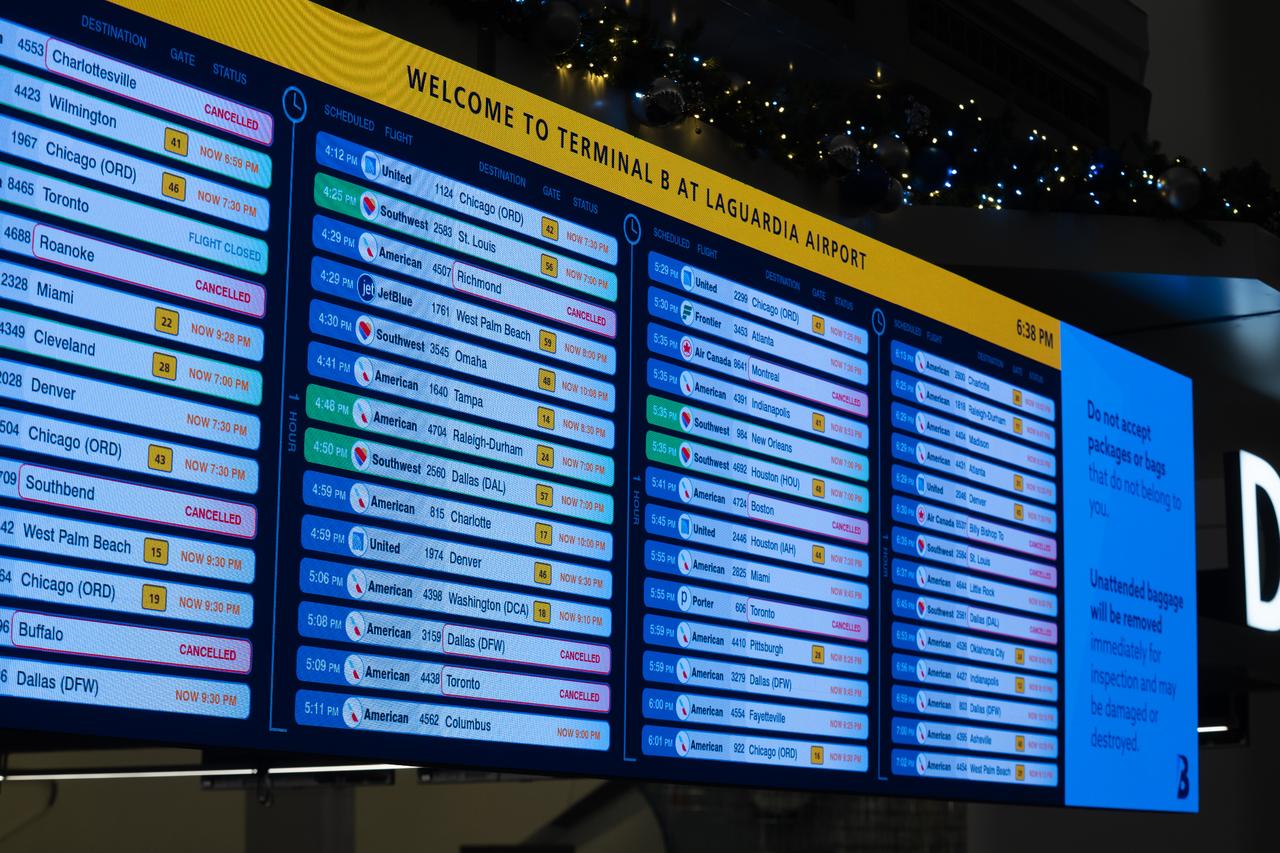


The United States lifted a nationwide flight ground stop Friday night after an air traffic control communications failure disrupted thousands of flights, with officials blaming aging infrastructure while saying they had found no evidence of a cyberattack.
Transportation Secretary Sean Duffy announced that the Federal Aviation Administration (FAA) had reopened U.S. airspace following the hourslong suspension, but warned that flight operations would take time to return to normal.
"At 8:15 tonight Eastern Time, we've opened up the airspace," Duffy said during a late-night White House briefing. "Now does that mean every flight is going to fly right now? It's going to be slow."
The FAA had ordered the nationwide ground stop Friday evening after a telecommunications outage, suspending flights as a precaution while authorities worked to address the disruption.
Homeland Security Secretary Markwayne Mullin said passengers and aircraft had not been endangered.
"I just want to reiterate this: the public was never at danger through this process," Mullin told reporters.
"There was no flights at risk. FAA was able to handle it. We did it out of an abundance of caution," he added.
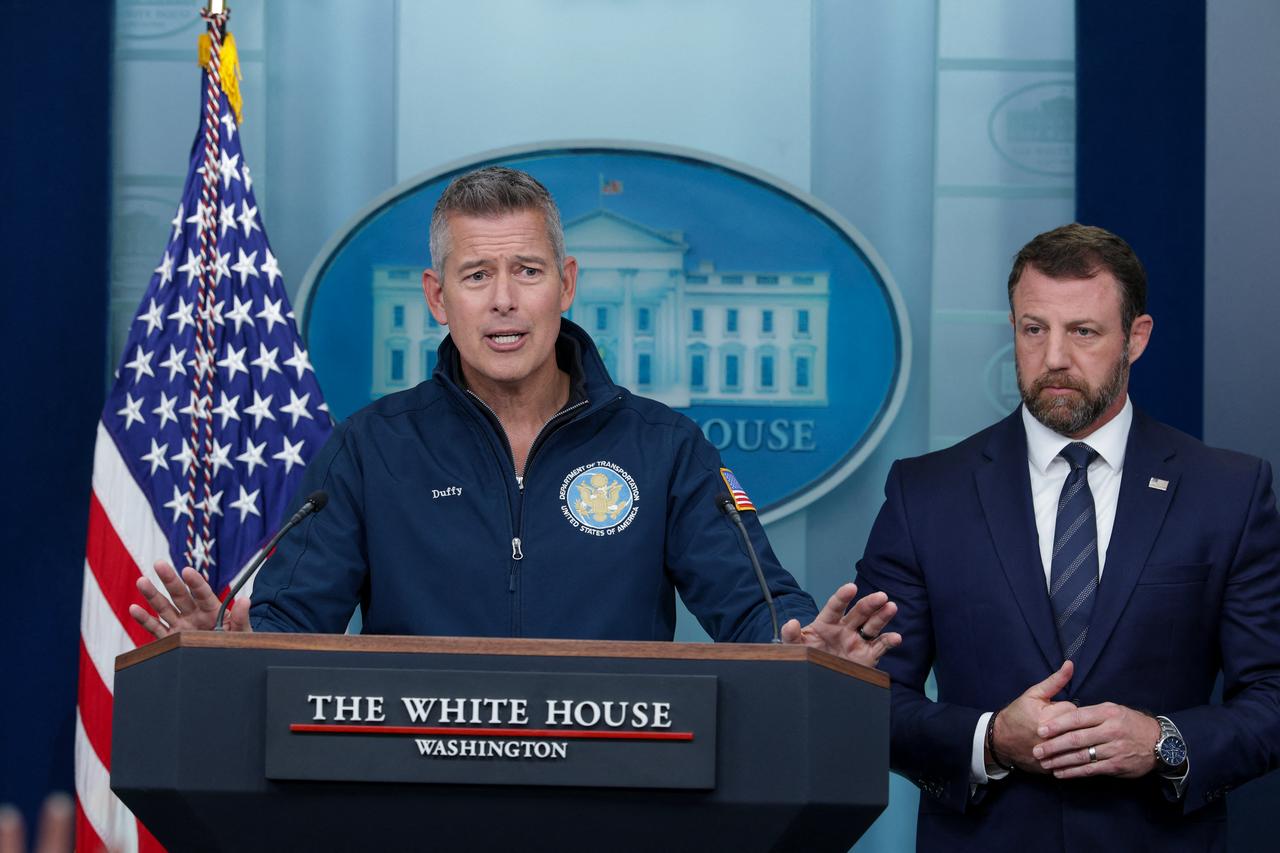

Duffy attributed the failure to outdated hardware in the country's air traffic control network, saying switches and routers had become overloaded.
"Our switches, our routers actually got overloaded with data, and they went down," Duffy said. "It's the old hardware that went down, and I think the question for the American people is: Do you want your Congress to fund this?"
Mullin suggested that the outage may have resulted from new technology overwhelming older systems during ongoing upgrades.
"What it appears to be right now is, as Secretary Duffy and FAA was going in and putting patches into the system, they were putting new equipment and new technology, and that new technology was overwhelming the older system," he said.
Duffy described the incident as "an emergency" and acknowledged that smaller technical failures had occurred previously, although he had not anticipated an outage of this magnitude.
He warned that similar disruptions could occur unless the country's aging aviation infrastructure was modernized.
"You will have more of them unless the American people and the Congress tell us to build," he said.
Mullin rejected suggestions that the disruption was connected to a separate Microsoft outage that affected services worldwide.
"Welcome to Friday the 13th, right? You know, I want to make sure everybody understands that there is no connection between this and Microsoft. I know a lot of people are making that jump," he said.
The homeland security secretary also said authorities had found no indications of a coordinated cyberattack.
"When we start looking at cyber threats, cyber attacks, typically some people are going to raise their hand up and say, 'Hey, we did that.' There's no chatter.' We haven't seen any footprints," Mullin said.
However, he stressed that security and law enforcement agencies were continuing to examine the incident and had not ruled out any potential cause.
"We're still looking at it. We're not ruling out anything," he said.
The nationwide disruption occurred just one day after Duffy and the White House formally requested $30 billion from Congress to modernize the U.S. air traffic control system.
Duffy argued that the outage demonstrated the urgency of replacing aging equipment, warning that further failures were likely without substantial investment.
He called for a "complete overhaul of the system," estimating that the broader modernization project would cost approximately $50 billion.
"President Trump is a builder," Duffy said, emphasizing that the administration needed congressional funding to proceed with the overhaul.
Officials also defended Trump's response to the crisis after the president had not publicly commented several hours into the disruption.
"President Trump immediately had people in his office," Mullin said. "We were communicating."
Despite the nationwide shutdown, Duffy insisted that commercial aviation remained safe.
Mullin separately addressed a collision between a cruise ship and a tanker on the Mississippi River in New Orleans on Friday, rejecting any connection to the nationwide aviation disruption.
He said all 195 people involved in the incident had been accounted for, while 32 were hospitalized.
"All 195 souls are accounted for. 32 are at the hospital," Mullin said, adding that none of those hospitalized were in critical condition.
He described the outcome as "a miracle."
The homeland security secretary emphasized that the two incidents were "not connected at all."


 Set as preferred source
 Set as preferred source


 1 min read
 1 min read