Newsletters


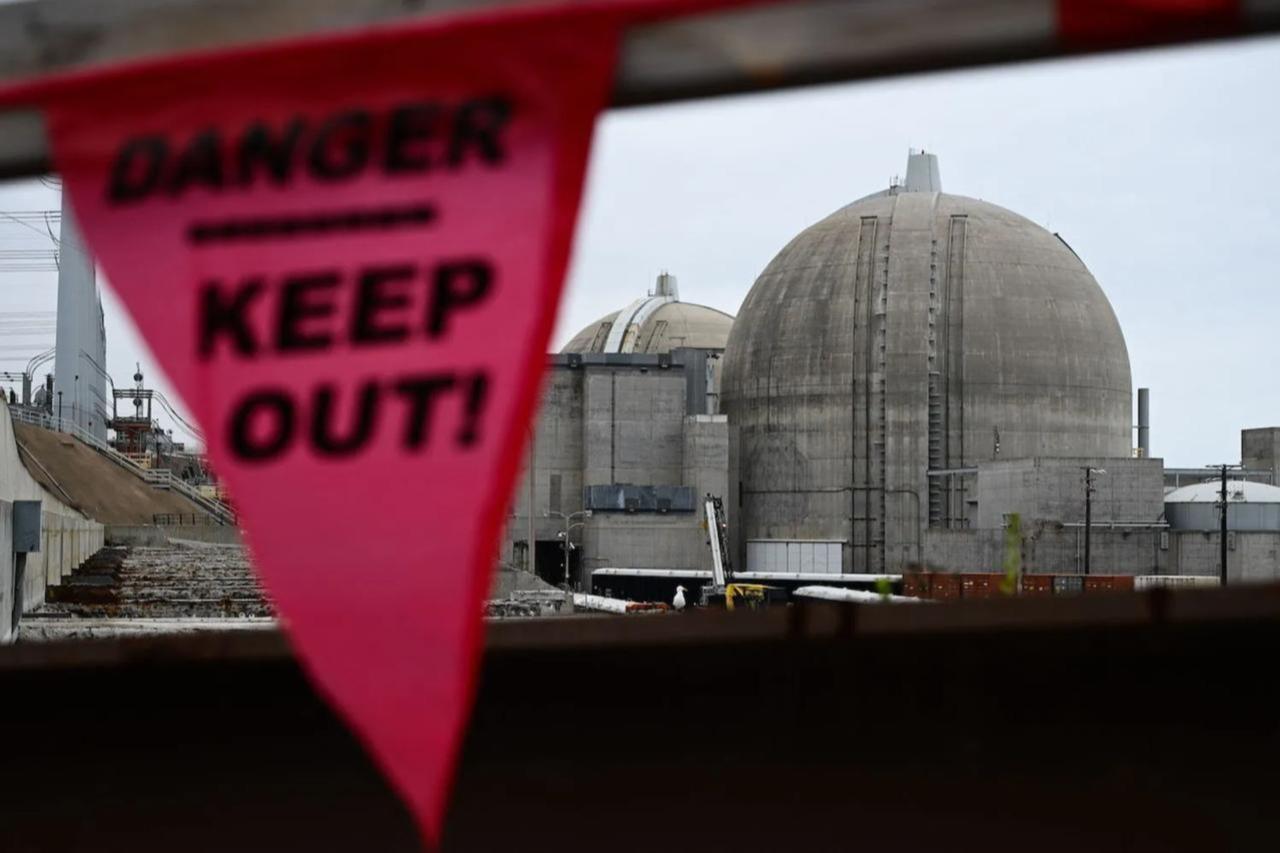


The United States moved Wednesday to establish a regulatory pathway for deploying nuclear reactors in federal ocean waters, as the Trump administration advances an ambitious agenda to dramatically expand the country's atomic energy capacity.
The Department of the Interior's Marine Minerals Administration and the Nuclear Regulatory Commission signed a memorandum of understanding to coordinate oversight of potential reactor deployments in the Outer Continental Shelf, a vast federal jurisdiction covering roughly 3.2 billion acres off American coastlines.
No commercial project has been planned or approved.
MMA Acting Director Matt Giacona said submerged reactor systems had been safely used in naval applications for decades, and that extending them to offshore civilian use could "greatly strengthen America's energy security in the future."
Jeremy Bowen, director of the NRC's Office of Advanced Reactors, said the agreement established a "clear framework" for interagency cooperation and would deliver "clarity and confidence to potential future applicants."
Floating nuclear power plants, known as FNPPs, generate electricity from reactors mounted on barges, semi-submersible platforms, or ships.
They can be moored offshore or positioned near shore, transmitting power to the grid through undersea cables or direct connections. Proponents argue they offer flexibility, reduced construction costs compared to land-based plants, and the ability to serve remote or energy-poor coastal regions.
Russia remains the only country with an operational floating plant. Its Akademik Lomonosov, deployed in the remote Arctic port of Pevek, draws on decades of reactor technology developed for nuclear-powered icebreakers.
Canada, China, Denmark, South Korea, Russia and the United States are all developing marine small modular reactor designs, according to the International Atomic Energy Agency, though none outside Russia has yet reached commercial operation. Analysts tracking the sector count more than 100 FNPP reactor designs or prototypes globally at various stages of development.
Wednesday's announcement fits within the administration's broader energy agenda. The White House has said it aims to quadruple U.S. nuclear energy capacity by 2050, a target that would require a sweeping transformation of the country's power sector.
Nuclear energy has long powered naval vessels and submarines, and interest has grown in adapting that technology for civilian offshore use, including powering offshore oil and gas platforms and providing electricity to coastal grids.
The IAEA has noted increasing global interest in how floating nuclear could contribute to decarbonizing energy systems, though that dimension carries little weight in the current administration's framing. The Trump administration has made halting offshore wind development a signature energy policy move, an approach that puts it at odds with the climate rationale frequently cited by proponents of marine nuclear technology elsewhere in the world.
Environmental groups were swift to condemn the move. Nick Katkevich, an oceans campaigner at the Center for Biological Diversity, said the administration appeared to have a limitless supply of harmful ideas for ocean ecosystems, calling nuclear reactors on "rusty old oil platforms" among its worst. The agreement's scope, covering the entire Outer Continental Shelf, drew particular concern from conservationists already battling the administration over offshore drilling and the dismantling of offshore wind policy.


 Set as preferred source
 Set as preferred source


 1 min read

 1 min read