

 Newsletters


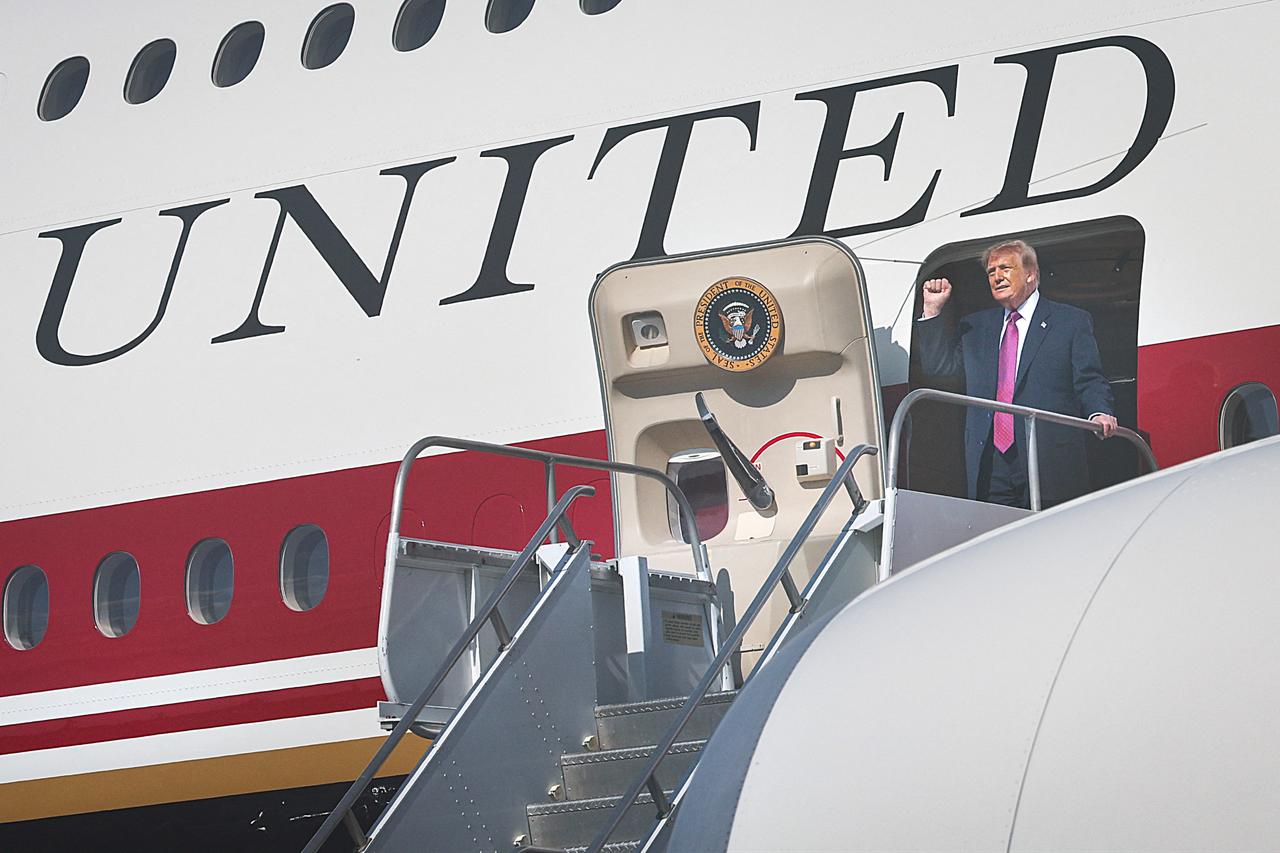


Ongoing construction at the White House played a role in the U.S. presidential helicopter flying too close to a passenger plane over the skies of Washington earlier this month, investigators said Thursday.
The close pass happened on Aug. 4 after President Donald Trump took off on Marine One from a temporary site on the Ellipse, a park south of the White House, during construction of a permanent helipad inside the White House grounds.
The White House and the U.S. Federal Aviation Administration (FAA) have both said that Trump was never in danger.
In their preliminary report, investigators at the U.S. National Transportation Safety Board (NTSB) cited FAA estimates that the presidential helicopter and an Envoy Air passenger plane were separated by 0.82 miles (1.3 kilometers) horizontally and 700 feet (213 meters) vertically when the incident happened, less than the required minimum separation of 1.5 miles and 500 feet. The NTSB is working to "calculate and confirm" those distances and is continuing its investigation.
Investigators found that air traffic controllers at Ronald Reagan Washington National Airport did not receive the first radio transmission signaling the presidential helicopter's imminent departure and that "the second attempt was broken and completely unreadable."
"There was not adequate line of sight to ensure communications between the radio transmitter/receiver sight and The Ellipse, where (Marine One) was temporarily operating from while construction was ongoing at the White House," the report said.
In January, a collision between a passenger plane approaching the same airport and a U.S. Army Black Hawk helicopter killed 67 people.


 Set as preferred source
 Set as preferred source


 1 min read

 1 min read


