Newsletters


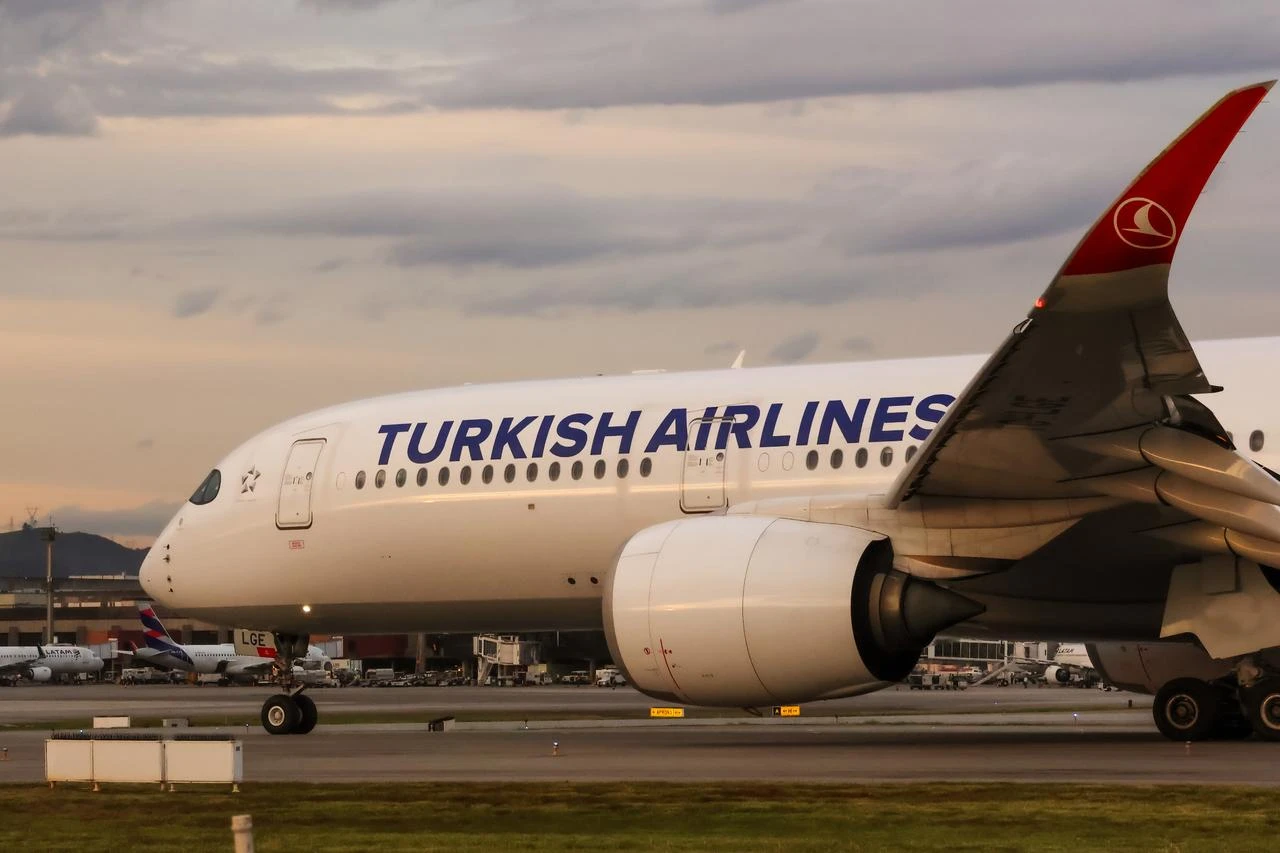


Turkish Airlines plans to increase flights to East Asia, Southeast Asia and Oceania by 15% to 20% over the next few years, with China and Australia among its main targets as it seeks to compete with Gulf airlines on Asia-Europe routes.
Chairman Murat Seker told Nikkei Asia that Turkish Airlines aims to build a "second corridor" between Asia and Europe through Istanbul, challenging Emirates, Etihad Airways and Qatar Airways.
"They are going to be big competitors; we have to be ready to face the competition," Seker said.
Turkish Airlines shifted capacity away from some Middle Eastern routes and the Americas as the regional conflict disrupted travel. The airline added 58 weekly passenger flight frequencies and 61 cargo frequencies on routes with particularly strong demand, according to second-quarter figures.
Narrow-body aircraft were redirected to destinations in Central Asia, Africa and parts of Europe, including Kazakhstan, Uzbekistan and Mauritius, while wide-body passenger and cargo aircraft were deployed to stronger markets such as Japan, China, Australia, Thailand, Singapore and Vietnam.
Since the U.S. and Israel attacked Iran at the end of February, the carrier has added 10 weekly flights to China, bringing the total to 42. It is due to begin flights to Chengdu in November and Urumqi soon, while reciprocal arrangements give it capacity for up to 49 weekly flights to China.
Seker said the airline had originally planned to add the extra China capacity in 2027 but brought the expansion forward as disruptions at Gulf hubs opened opportunities.
"This war was a little bit of an opportunity for us," Seker said. "Our initial planning was to put this capacity probably in 2027. We kind of took it forward and then started to increase the frequencies to Beijing, Shanghai, Guangzhou earlier than anticipated. It is definitely an important market for us."

The chairman expects Turkish Airlines to add 15% to 20% more frequencies across East Asia, Southeast Asia and Oceania, which he considers the airline's most profitable region.
The carrier has 30 wide-body aircraft due for delivery by the end of 2029 and expects around 420 Boeing and Airbus aircraft to arrive over the next decade, taking its fleet to around 800.
Turkish Airlines is also set to start direct services to Australia in 2028, focusing on Sydney and Melbourne. From that year, the carrier will introduce premium economy seats on long-haul routes.
"The premium economy segment will provide a big contribution to our bottom line," Seker said.
Seker expects future growth to increasingly come from long-haul routes, saying there is little room for further expansion in the narrow-body flight range. Turkish Airlines intends to add second and third flights to some cities as it builds connections between Europe, Africa, Latin America and the Far East.
The airline also wants to add to its 25 weekly flights to Japan, while recently secured traffic rights in Singapore and Vietnam are expected to support further expansion.
Beyond its route network, Turkish Airlines is pursuing joint ventures and investments in airline operations, maintenance, repair and overhaul, and cargo businesses in Asia and South America, with stakes of 30% to 50% in those ventures, Seker added.


 Set as preferred source
 Set as preferred source


 1 min read
 1 min read