Newsletters


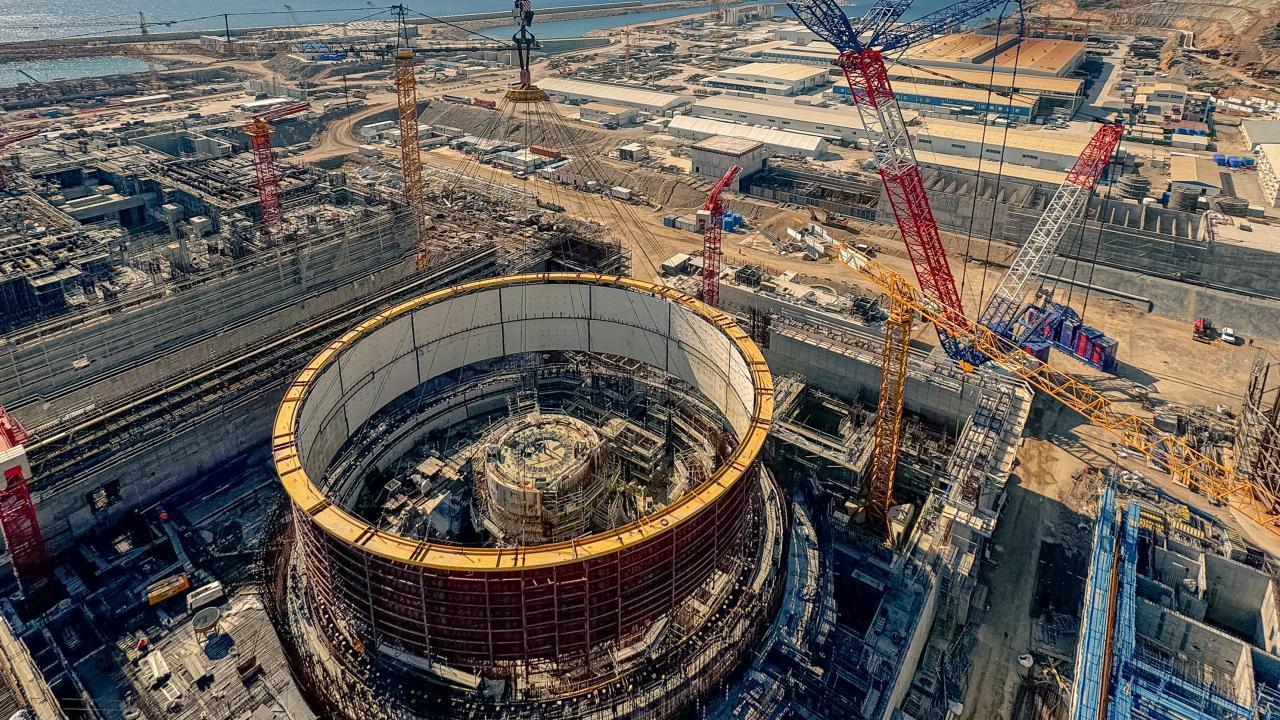
Türkiye expects to begin the physical startup of its first nuclear power reactor at the Akkuyu Nuclear Power Plant within the next few weeks, Energy and Natural Resources Minister Alparslan Bayraktar said at the World Nuclear Days event held during COP31 in Antalya.
Bayraktar said nuclear power would be essential for Türkiye to meet its climate and electrification goals, including a target of 35% electrification by 2035.
“Within the next few weeks, we will carry out the physical startup of Türkiye’s first nuclear power reactor at Akkuyu,” he said.
Türkiye began working with Russian state nuclear corporation Rosatom on the project in 2010.

Bayraktar said Türkiye aims to reach 10 gigawatts (GW) of nuclear capacity by 2040 and at least 20 GW by 2050.
According to remarks reported by Russian state news agency TASS, at least 15 GW of that capacity is expected to come from conventional reactors, with another 5 GW potentially coming from small modular reactors.
Akkuyu, under construction in Mersin, consists of four VVER-1200 reactors with a combined capacity of 4.8 GW.
Bayraktar said Türkiye also plans to continue nuclear projects in Sinop and Thrace.
He said achieving the country’s nuclear goals would require qualified personnel, major investment and strong political commitment, crediting President Recep Tayyip Erdogan and Russian President Vladimir Putin with supporting the Akkuyu project.
Anil Bekir Bolme, head of the Nuclear Installations Department at Türkiye’s Nuclear Regulatory Authority, told TASS that pre-commissioning tests at Akkuyu’s first unit were continuing.
He said the regulator was overseeing the process and that all tests must be completed before the plant’s safety can be confirmed.
Bolme did not give a firm completion date but said testing could finish by the end of the year if work continued intensively.
Rosatom Director General Alexey Likhachev, meanwhile, said nuclear power would play a major role in shaping the global energy system over the next 20 to 30 years, alongside developments in advanced reactors, energy storage and artificial intelligence.


 Set as preferred source
 Set as preferred source


 1 min read

 1 min read