Newsletters


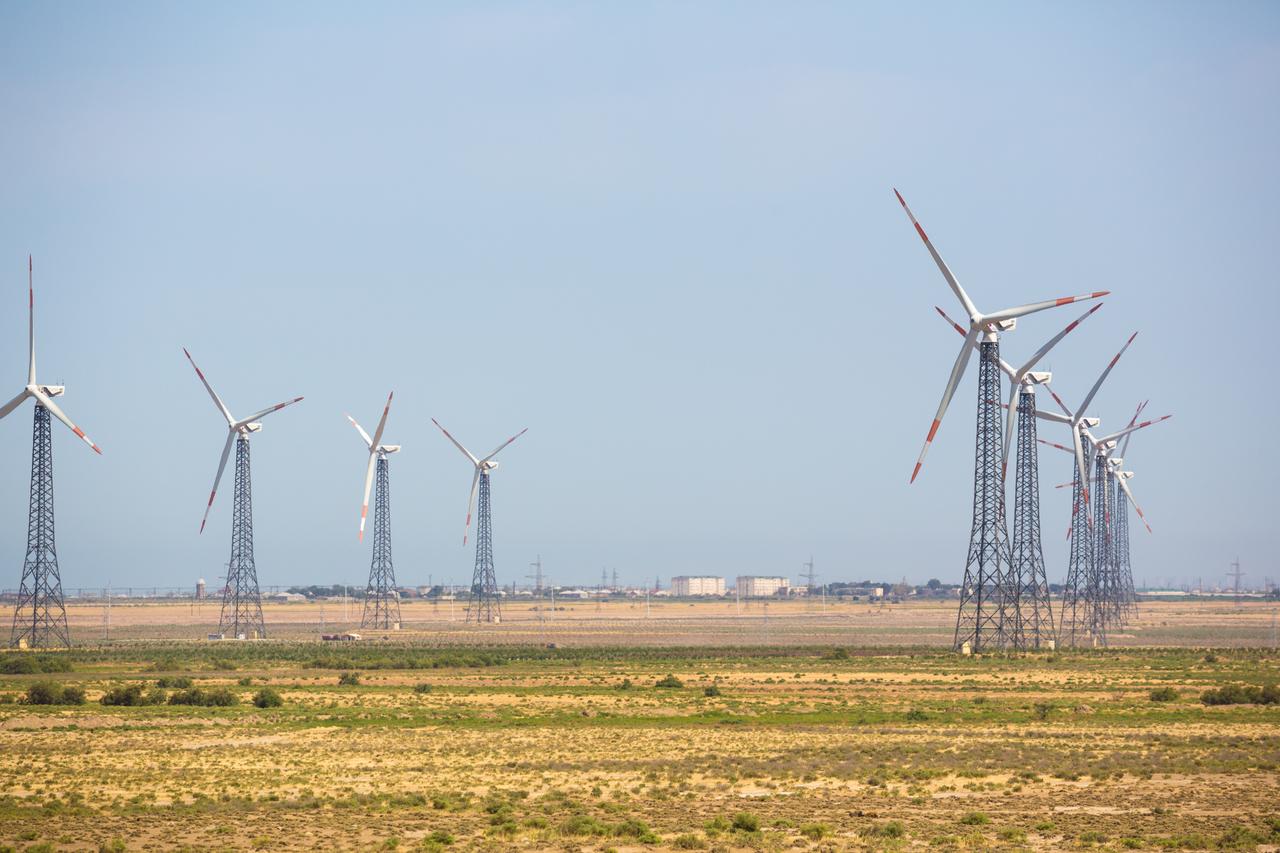


The Black Sea Energy corridor linking Azerbaijan to European markets is estimated to cost €22.1 billion ($24.8 billion), with three high-voltage transmission lines scheduled to come online in stages between 2032 and 2040.
The project, known as the Caspian-Black Sea-Europe Green Energy Corridor, aims to transport renewable electricity generated in Azerbaijan to European Union markets through Georgia and an undersea cable crossing the Black Sea.
The Green Energy Corridor Power Company (GECO), established by the electricity grid operators of Azerbaijan, Georgia, Romania, and Hungary, outlined the investment estimate in a presentation on its website.
The project’s total cost includes €14.3 billion for transmission infrastructure and €7.8 billion for renewable energy generation capacity.
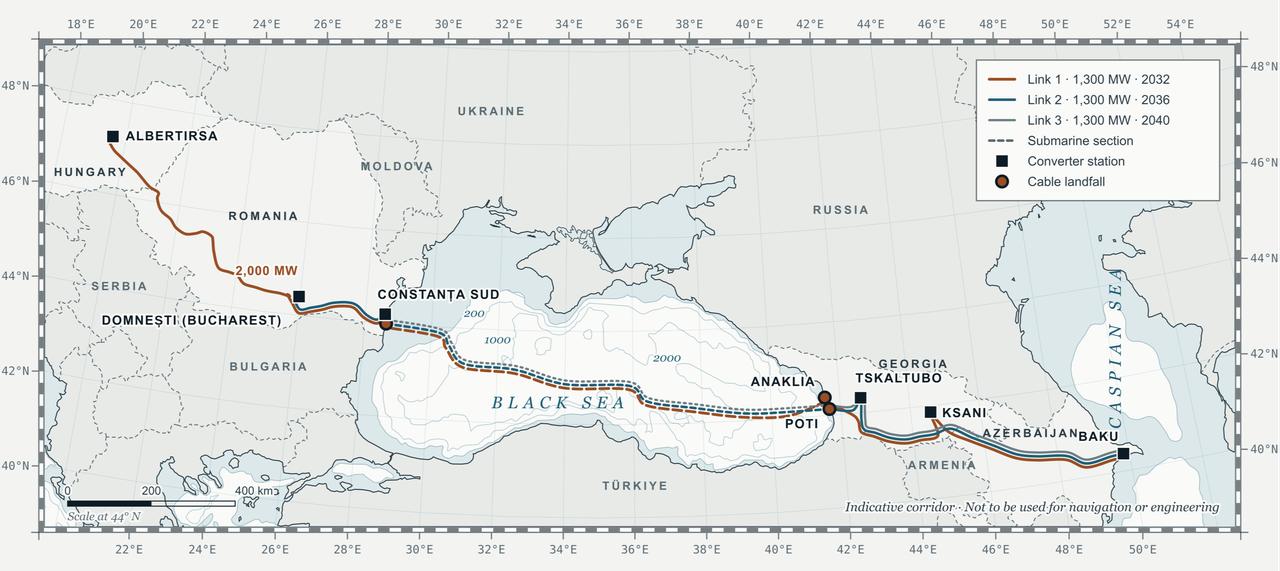
The corridor will comprise three high-voltage direct current transmission lines, each with a capacity of 1.3 gigawatts (GW), bringing total capacity to 3.9 GW by 2040.
The first line, scheduled for 2032, will span 3,040 kilometers from Baku through Ksani and Anaklia in Georgia, then Constanta Sud in Romania, to Albertirsa in Hungary. The Romania-Hungary section will have a capacity of 2 GW.
A second, 2,340-kilometer line will connect Baku through Tskaltubo and Poti in Georgia to Constanta Sud and Domnesti in Romania, with operations planned for 2036. The third line, spanning 2,020 kilometers from Baku through Tskaltubo and Poti to Constanta Sud, is scheduled for 2040.
Each line will include an approximately 1,120-kilometer subsea cable crossing the Black Sea at depths of up to 2,200 meters.
According to a feasibility study by Italian consultancy CESI, annual renewable electricity exports to the European Union could reach 8 billion kilowatt-hours in 2032 and rise to 20 billion by 2040.
The project's annual economic benefits are projected at €860 million after the first line launches in 2032 and €1.8 billion after the second comes online in 2036. Following the third line's launch in 2040, the figure is expected to exceed €3 billion, including approximately €1.7 billion from reduced carbon dioxide emissions.
The project is also expected to cut annual carbon dioxide emissions by approximately 1.7 million tonnes from 2032 and 3.6 million tonnes by 2040.

Azerbaijan's offshore wind potential in the Caspian Sea, estimated at 25 GW, could generate about 96 billion kilowatt-hours of electricity annually. Another 19 GW of solar and onshore wind capacity is expected to supplement supply.
GECO is preparing tender documents and a roadmap toward a final investment decision, while seeking expressions of interest from strategic partners and potential investors.
The project is considering a hybrid financing model combining public and private capital. Each 1.3 GW transmission line will include a 500-megawatt regulated segment and an 800-megawatt commercial segment.
The proposed funding mix includes long-term loans from international financial institutions, export credit agencies and commercial banks, alongside potential European Union grants through the Connecting Europe Facility. The financial model assumes grants will cover 25% of capital expenditures, although the funding has not been confirmed.
The governments of Azerbaijan, Georgia, Romania and Hungary approved the project's feasibility study in July 2026. Their national grid operators established GECO, with Azerbaijan's Azerenerji, Georgia's Georgian State Electrosystem, Romania's Transelectrica and Hungary's MVM each holding a 25% stake.
The four countries signed a strategic partnership agreement to develop and transmit green energy on Dec. 17, 2022.
Türkiye has also expressed interest in joining the Black Sea Energy project at Azerbaijan's invitation, Energy and Natural Resources Minister Alparslan Bayraktar said in September 2026.
Ankara is separately developing plans for a green electricity corridor linking Azerbaijan, Georgia, Türkiye and Bulgaria, alongside an interconnection project with Azerbaijan's Nakhchivan exclave.


 Set as preferred source
 Set as preferred source


 1 min read

 1 min read