Newsletters


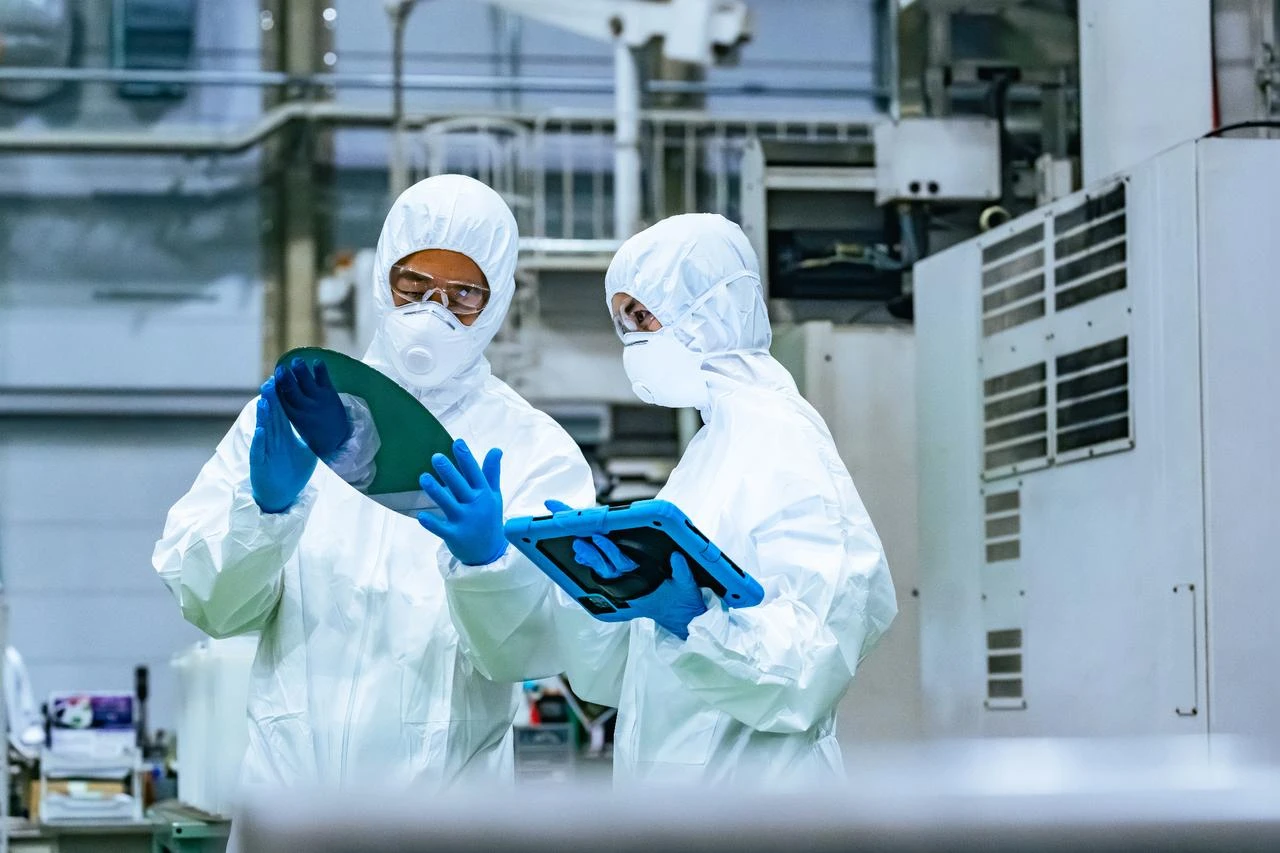


Major tech-weighted markets extended their losses on Wednesday, led by a deepening sell-off in semiconductor stocks, as reports said China has begun producing a technology crucial to advanced chipmaking that may threaten the leading role of other global industry titans.
The immersion deep-ultraviolet (DUV) lithography machines, which use deep-ultraviolet light and a thin layer of water between the lens and silicon wafer to etch microscopic circuit patterns with greater precision, are the most advanced chipmaking tools available to Chinese manufacturers after U.S.-led export controls cut off access to more powerful extreme ultraviolet (EUV) systems.
China has reportedly begun mass-producing the domestically developed machines as part of its push to reduce reliance on foreign technology, igniting fears that Beijing is closing the gap with established chipmaking leaders and could erode the dominance of companies such as Dutch supplier ASML.
The project is led by Shanghai Aishengna Electronic Technology Group, Reuters reported. An earlier report by The Information suggested that five machines will be produced this year and roughly 20 in 2027.
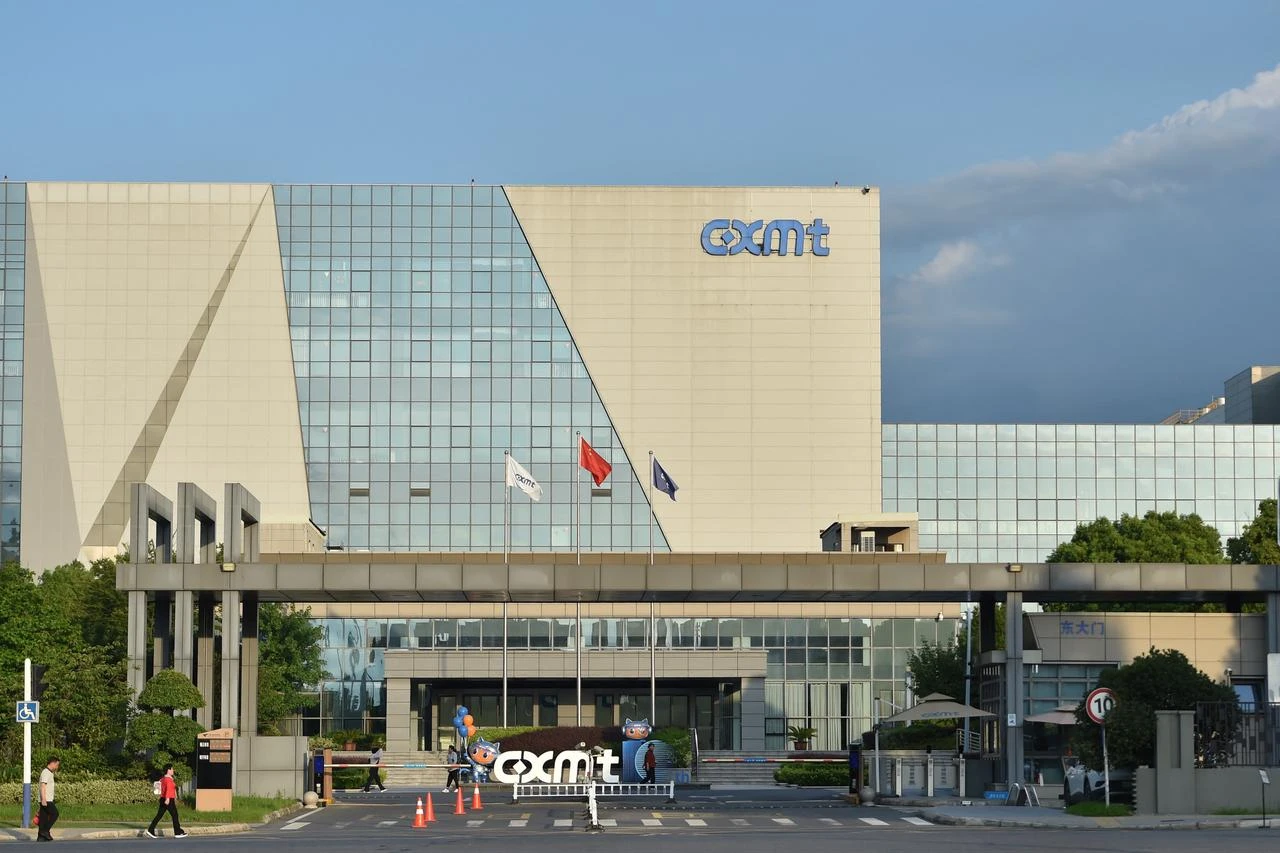
The machines are expected to be delivered this year to Chinese chipmakers including Semiconductor Manufacturing International Corp. (SMIC), Hua Hong Semiconductor and memory chipmaker ChangXin Memory Technologies (CXMT).

Although the development is seen as a breakthrough for the country, the machines remain well behind the world's most advanced EUV lithography systems in capability and efficiency, Reuters added.
The reports also reflected growing concerns that China's rapidly advancing semiconductor ecosystem could increase competitive pressure on established chipmakers in Japan and South Korea.
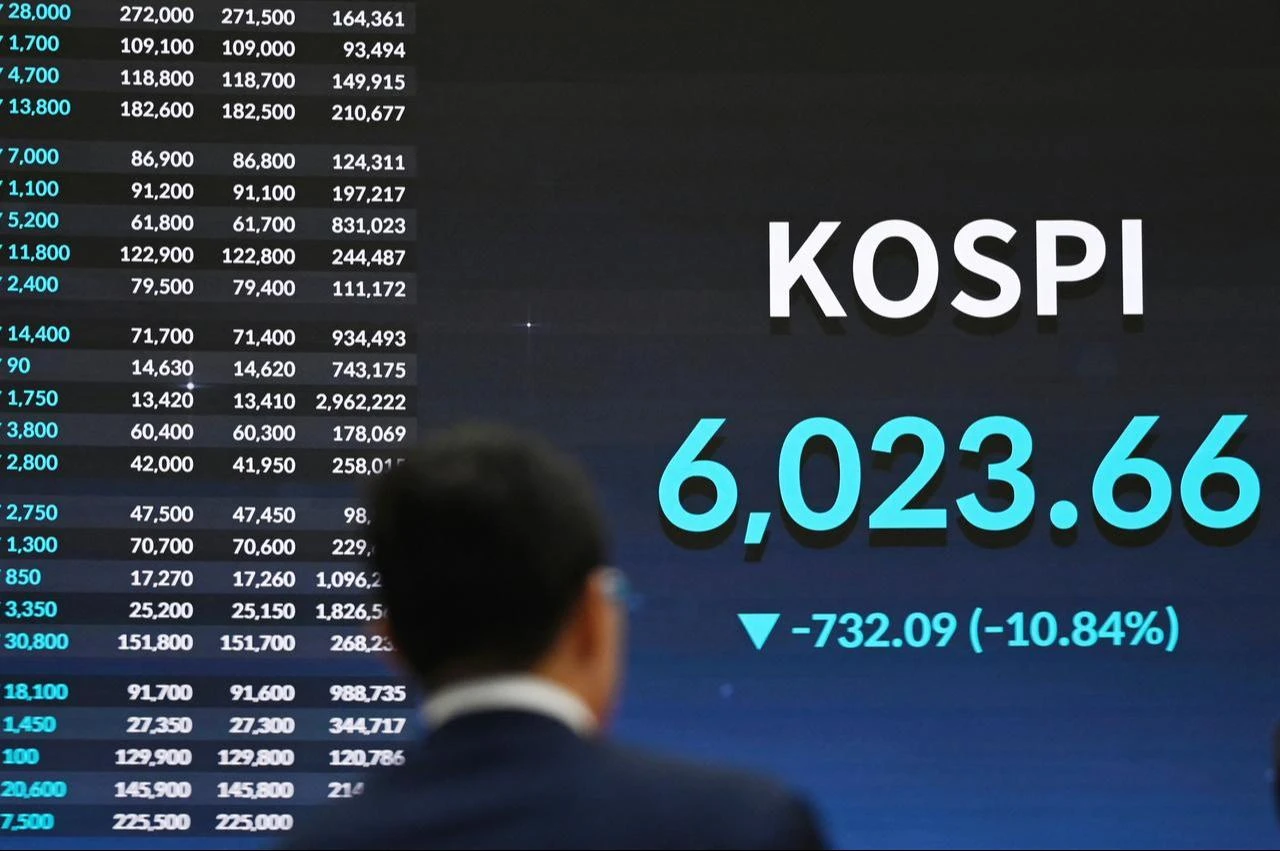
Japan's Nikkei 225 fell more than 3% during Tuesday's session before trimming losses to close 1.5% lower, while South Korea's Kospi plunged as much as 12% before ending the day down 6%.
Among individual stocks, Japan's Kioxia Holdings and Murata Manufacturing each slumped more than 15% at their session lows. South Korea's SK Hynix tumbled more than 20% before paring some of its losses, while Samsung Electronics fell more than 8% and LG Innotek dropped about 13%.
Elsewhere in the markets, China's Shanghai Composite increased 0.4%, while Hong Kong's Hang Seng jumped 1.9%.
The pan-European Stoxx Europe 600 index rose 0.2% after the opening bell, Germany's DAX 30 gained 0.3%, Britain's FTSE 100 advanced 0.5%, France's CAC 40 climbed 0.3%, while Spain's IBEX 35 traded little changed.
Futures tied to major U.S. stock indexes were flat after a mixed Wall Street session on Monday, when the Nasdaq Composite slipped 0.2%, while the Philadelphia Semiconductor Index tumbled 4.5%.
Among chipmakers, Micron Technology dropped nearly 9%, AMD lost more than 8%, Marvell Technology slid 7.8%, Applied Materials fell about 6.5%, Intel shed roughly 6%, while Sandisk and Western Digital each plunged more than 12%. ASML fell 4.2%, extending its losses over the past week to more than 10%.
Reports of Nvidia's $750 billion AI infrastructure deals are also fueling renewed concerns about circular financing and the sustainability of heavy spending on artificial intelligence.
Oil prices rebounded by nearly 4% after U.S.-Saudi joint attacks targeting Iran-backed militias in Iraq and Tehran's announcement that it had launched new drones and missiles at U.S. military bases in Jordan.
International benchmark Brent crude traded around $87.2 per barrel, while U.S. benchmark WTI stood at $82.1 as of 7:25 a.m. GMT.
Gold traded around $4,050 an ounce, up 0.5% on the day, while silver gained 2% to $58.2 per ounce. Palladium inched up 0.4% to $1,255, while platinum added 0.3% to around $1,600 per ounce.
Bitcoin rose 1.5% to $64,400, ethereum gained 1.7% to $1,910, and the total cryptocurrency market capitalization increased 1.2% to $2.2 trillion.


 Set as preferred source
 Set as preferred source


 2 min read

 1 min read