Newsletters


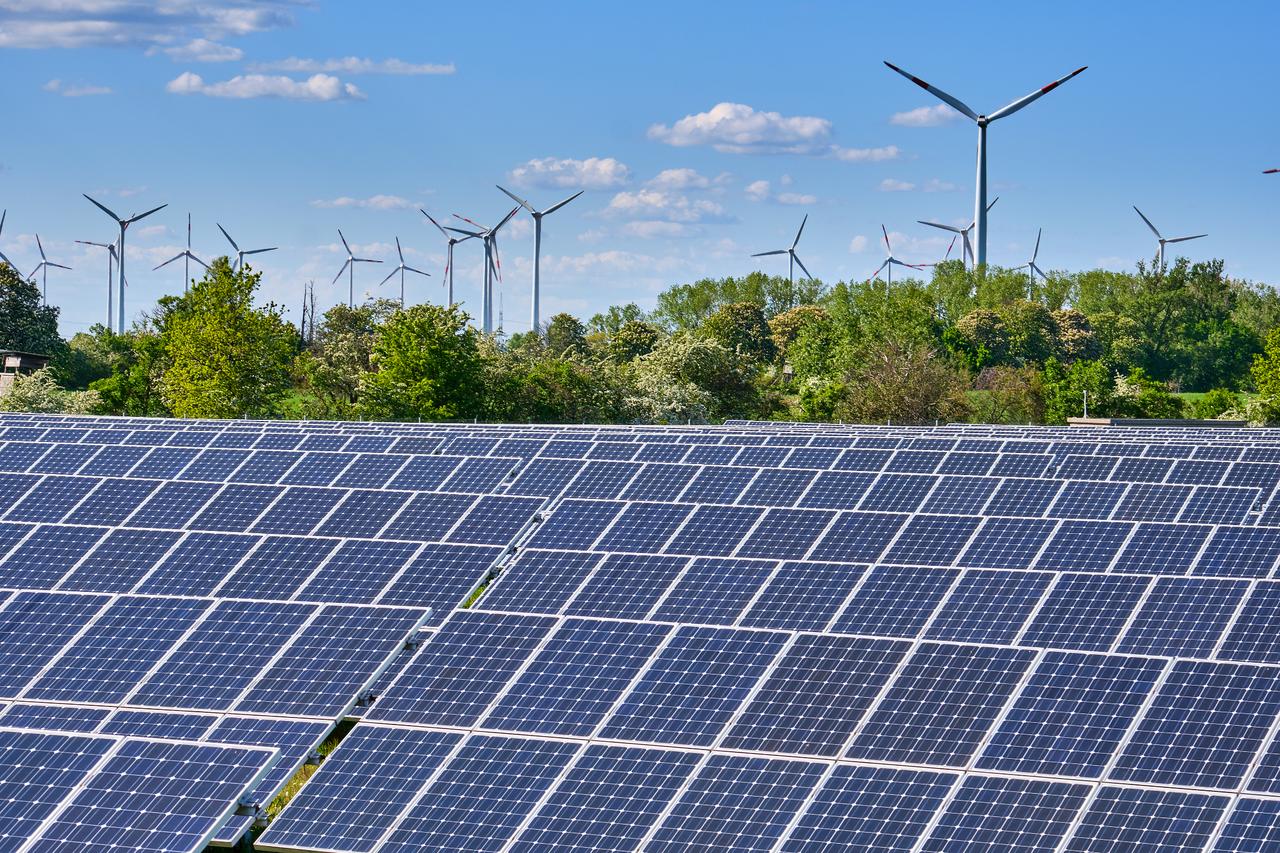


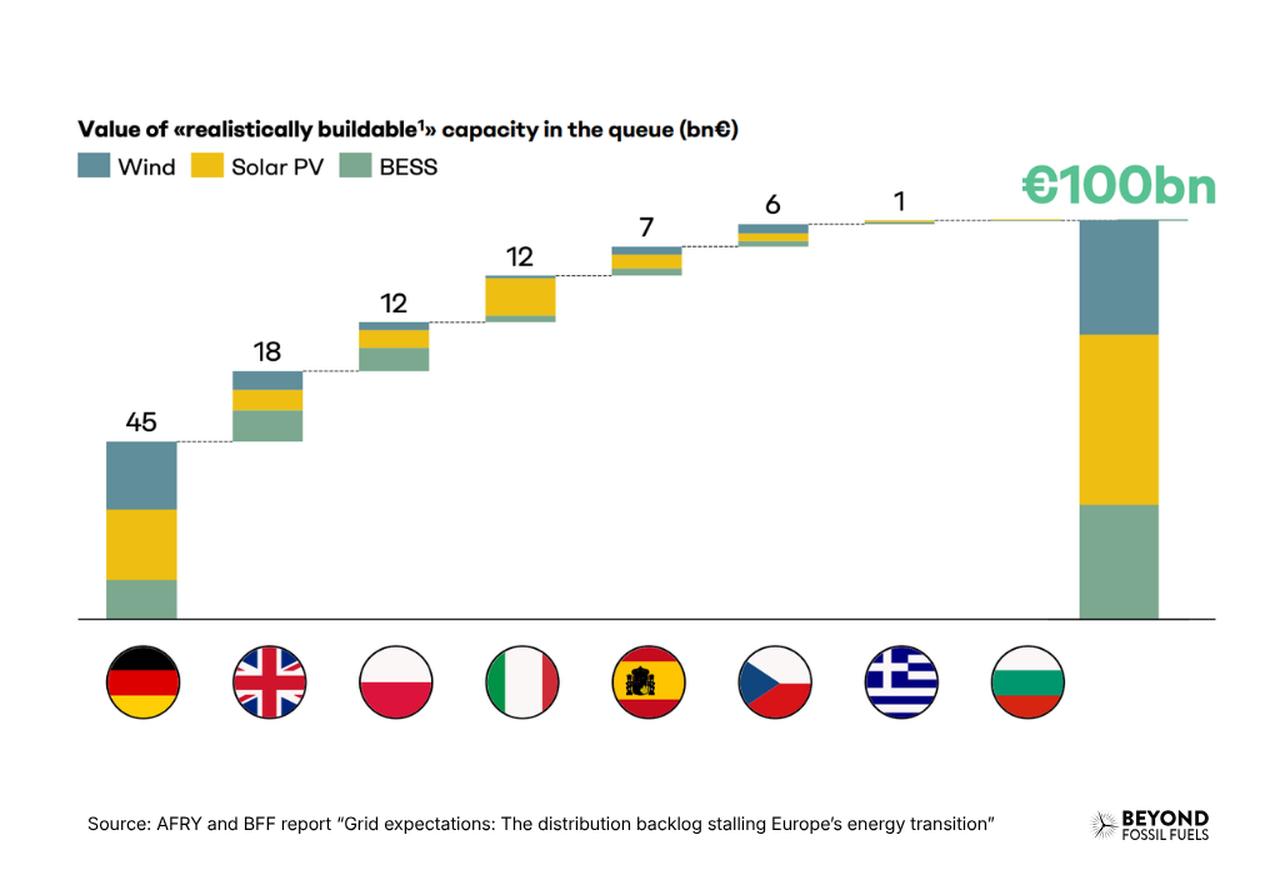
Nearly 830 gigawatts of renewable energy and storage projects worth €100 billion ($116.5 billion) are stuck waiting for grid connections across eight European countries, exposing a growing bottleneck in the region's energy transition, a new report found.
The analysis prepared by consulting firm AFRY for the European advocacy group Beyond Fossil Fuels found that 375 gigawatts of renewable energy projects and 455 gigawatts of storage projects are currently stuck in grid connection queues in Bulgaria, Czechia, Germany, Greece, Italy, Poland, Spain and the United Kingdom.
The backlog includes renewable capacity roughly equal to 98% of Europe's existing coal- and gas-fired power generation fleet, according to the report.
Distribution system operators are struggling to connect new renewable and storage projects quickly enough to keep up with demand, the analysis found. Researchers pointed to grid digitalization, stronger planning, and regulatory reforms as key measures to ease bottlenecks at the local level.
The delays are also holding back the expansion of battery storage systems, which are increasingly viewed as essential for balancing electricity networks powered by wind and solar energy.
The report identified battery energy storage systems as a critical tool for easing pressure on Europe's electricity networks by storing excess renewable power that might otherwise be curtailed.
Although the European Union's battery fleet has expanded 10-fold since 2021 to more than 77 gigawatt-hours, significant capacity remains trapped in grid connection queues.
According to Beyond Fossil Fuels, battery storage projects awaiting connection in Germany, the U.K., and Poland already exceed more than double those countries' 2030 battery storage targets.

Beyond Fossil Fuels campaigner Duygu Kutluay said growing grid bottlenecks are slowing the shift to clean energy, raising costs for consumers and undermining Europe's energy security.
"Without governance and operational reforms, Europe's renewable potential will be stifled, not for lack of ambition or investment, but due to constraints in the very networks meant to deliver it."
Kutluay also pointed to similar challenges in Türkiye, where regulatory and technical uncertainties, along with limited connection capacity, are slowing renewable energy and battery storage projects despite the country's strong clean energy potential.
"Regulatory and technical uncertainties, along with the inability of distribution companies to provide connections for renewable and battery storage projects, are slowing this process," she stressed.
AFRY Senior Consultant Chiara Natalicchio described transmission and distribution networks as a critical enabler of Europe's energy transition, arguing that the value of new renewable capacity increasingly depends on the ability to connect, transport and balance it across the system.
"Networks—across both transmission and distribution—are the critical enabler: they ultimately decide whether new resources translate into usable value in a power system that is becoming more electrified, more distributed, and more volatile."


 Set as preferred source
 Set as preferred source


 1 min read
 1 min read