Newsletters




International credit rating agency Fitch Ratings kept Türkiye's long-term sovereign credit rating unchanged at "BB-" with a stable outlook on Friday.
The agency cited the country's low public debt, which stood at around 23.8% of GDP in 2025, and a resilient banking sector as continuing to support its credit profile despite slowing economic growth, high inflation, and external financing risks.
Fitch projected Türkiye's economy would grow 2.8% in 2026 before accelerating to 4.4% in 2027, while forecasting inflation to fall to 29.5% by the end of 2026 and 18% by the end of 2028.
The agency noted that Türkiye still had the highest inflation among all sovereigns it rates, with annual inflation standing at 32.1% in June.
Fitch said Türkiye's rating remained constrained by persistently high inflation, relatively weak external liquidity, large financing needs and a history of political interference in monetary policy.
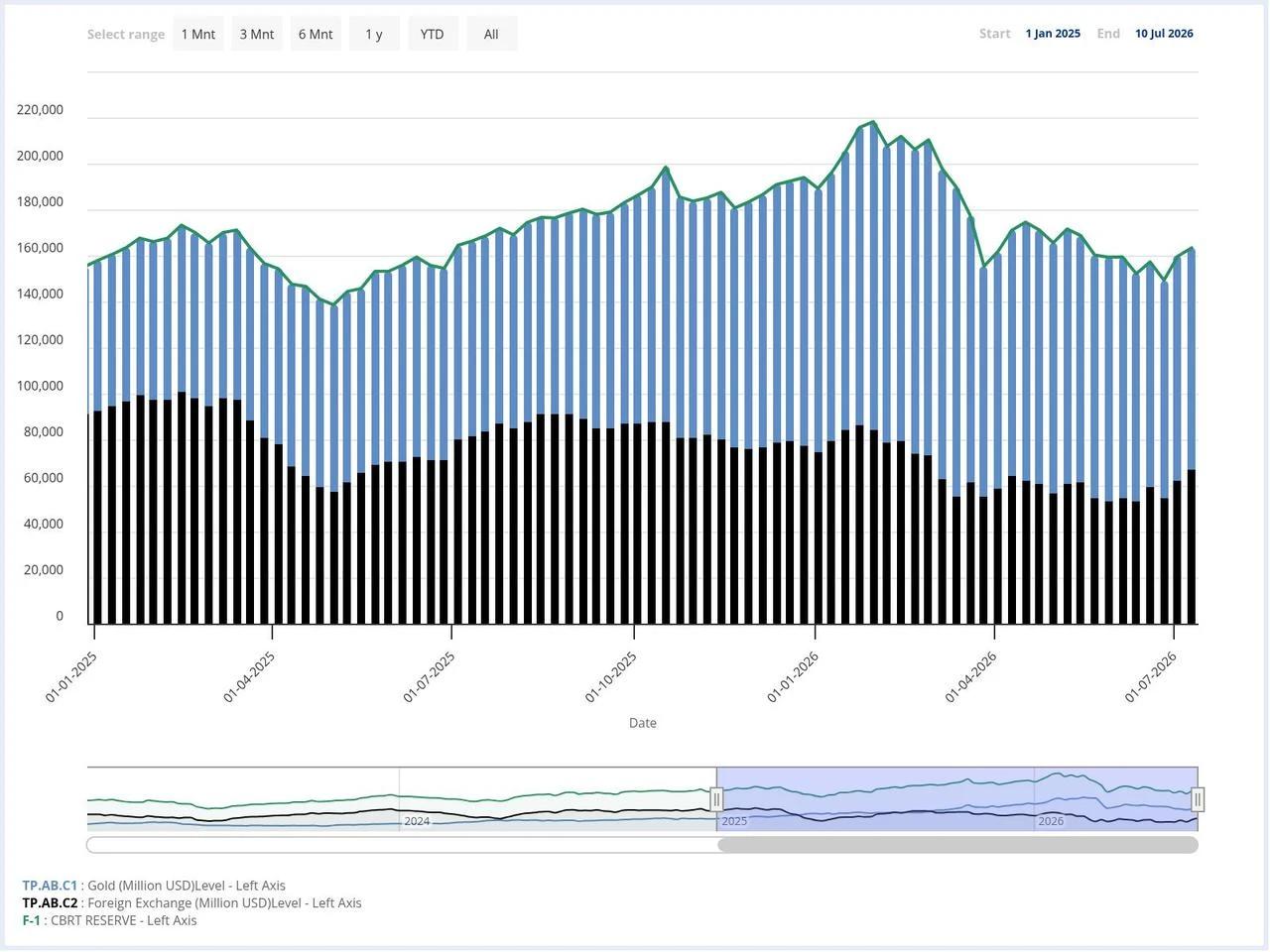
The agency said the central bank's recent 300-basis-point increase in funding costs and tighter lending rules had helped rebuild foreign exchange reserves following heavy interventions during the early stages of the U.S.-Iran conflict.
Fitch projected gross foreign exchange reserves would reach $167 billion by the end of 2026, up from the current $163.2 billion, but said reserve coverage would remain below the average for countries with a 'BB' rating.
Fitch also forecast the current account deficit would widen to 3% of GDP in 2026 from 1.5% in 2025 as weaker tourism and energy balances, along with higher imports, weighed on the external balance.

The agency said it expected some fiscal and credit support ahead of elections, which it assumed would be brought forward to late 2027, but did not expect a return to the unorthodox economic policies pursued before the current disinflation program began in mid-2023.
It warned, however, that policy risks remained given Türkiye's history of sharp shifts in economic management.
Fitch said the rating could be upgraded if Türkiye strengthened its external buffers, reduced its financing needs, and maintained policies that continued to bring inflation down.
Conversely, a sharp decline in foreign exchange reserves, renewed policy easing or a deterioration in the political or security environment could lead to a downgrade, it added.
Fitch's decision leaves Türkiye's sovereign ratings unchanged across the three major agencies, with S&P also assigning a "BB-" rating and Moody's rating the country at "Ba3," both with stable outlooks.


 Set as preferred source
 Set as preferred source


 1 min read
 1 min read