Sign in
 Newsletters




Ford Europe President Jim Baumbick has urged the European Union to reconsider its proposed "Made in Europe" rules, warning that excluding Türkiye-made vehicles from incentives and public contracts would punish the company's existing investments in the country.
In an interview with German business daily Handelsblatt, Baumbick criticized plans to limit purchase incentives and public procurement opportunities to vehicles manufactured entirely within EU borders, arguing that companies should not face penalties for investments made under existing regulations.
Ford Otosan, the U.S. automaker's Turkish joint venture, accounted for 79% of Ford's commercial vehicle sales and 41% of its passenger vehicle sales in Europe in 2025.
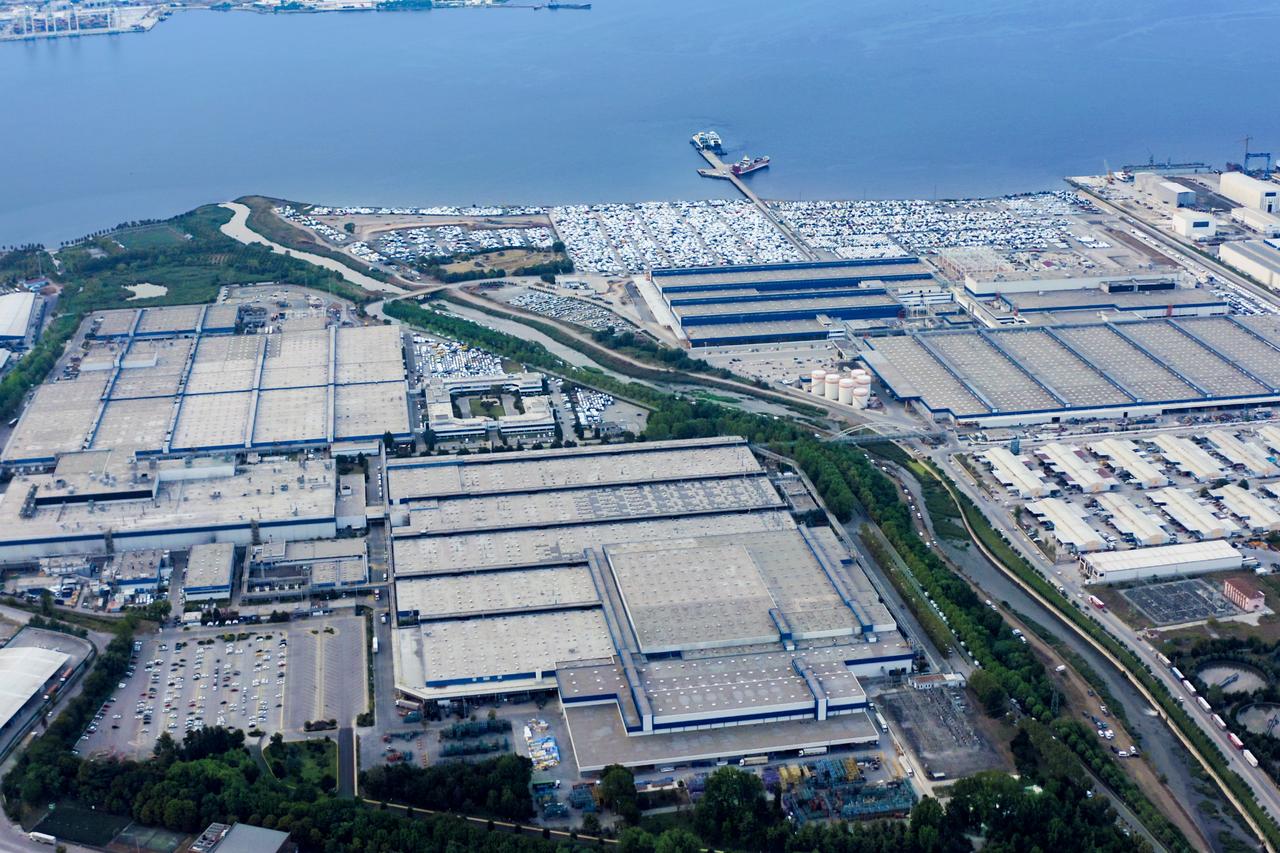
The combined investment reached €3 billion ($3.3 billion) in Türkiye and Romania between 2021 and 2025, with the restructuring of its Yenikoy plant in the northwestern province of Kocaeli ranking among the largest investments by the Turkish private sector.
The company exported 400,330 vehicles from Türkiye in 2025, generating $11.5 billion in revenue. Its total international sales, including production from Romania, reached 602,842 vehicles and generated $15.4 billion.
Türkiye exported $30.1 billion worth of automotive products directly to EU member states in 2025, accounting for the bulk of its record $41.5 billion in automotive exports, according to an analysis by the Economic Development Foundation.
The proposed EU Industrial Accelerator Act ties public support and procurement to local production, requiring eligible electric and plug-in hybrid vehicles to be assembled in the EU and meet a 70% EU-origin component threshold.
Baumbick highlighted the European development and testing behind one of Ford's best-selling models, the Transit commercial vehicle, which is manufactured in Türkiye but was developed and tested in Germany, the United Kingdom and Belgium.
Around 50% of the parts used in the Transit are produced in Europe. However, the vehicles would remain ineligible for incentives under the proposed rules because they are assembled outside the EU.
"Because the vehicles are assembled in Türkiye, they cannot benefit from 'Made in Europe' incentives," Baumbick explained.
He called for existing investments to be protected, arguing that European manufacturers should concentrate on competing with Chinese automakers rather than restricting production within their own supply chains.
"The real competitors are the Chinese, so we should focus on how the 'Team Europe' can win," he added.


Asked whether Ford could move Transit production from Türkiye to its factory in Cologne, Germany, to comply with the proposed rules, Baumbick dismissed the idea as economically counterproductive.
He pointed out that Ford's investment in Türkiye's Transit production is only three years old, warning that relocating manufacturing would bring additional costs without improving the vehicle or strengthening its competitiveness.
"If we had to move production tomorrow, we would prematurely end the vehicle's product cycle just to manufacture it somewhere else. This would not improve the product; on the contrary, it would create additional costs and would not increase our competitiveness," he remarked.
Baumbick stressed that automotive investments typically involve long-term commitments spanning 10, 20 or even 30 years.
Ford has only recently launched the Transit and has yet to fully benefit from its investment, he added, warning that shifting production could also lead to lost manufacturing capacity.
"Policymakers should encourage future investments and guide companies' future decisions, but they should not retroactively penalize investments that have already been made," Baumbick said.
Ford Otosan is a joint venture between Ford Motor Company and Turkish conglomerate Koc Holding, with each holding a 41% stake and the remaining 18% publicly traded.
Founded in 1959, the company began manufacturing the Ford Transit in Türkiye in 1967 and has since become a central part of the U.S. automaker's European supply chain.
Ford identifies the Turkish joint venture as its sole European supplier of the Transit, Transit Custom and Transit Courier commercial vehicles, as well as Puma passenger cars.
Its operations span three factories in Türkiye and another in Romania, giving it a combined annual production capacity of 934,500 vehicles.


 Set as preferred source
 Set as preferred source


 2 min read
 1 min read