Newsletters


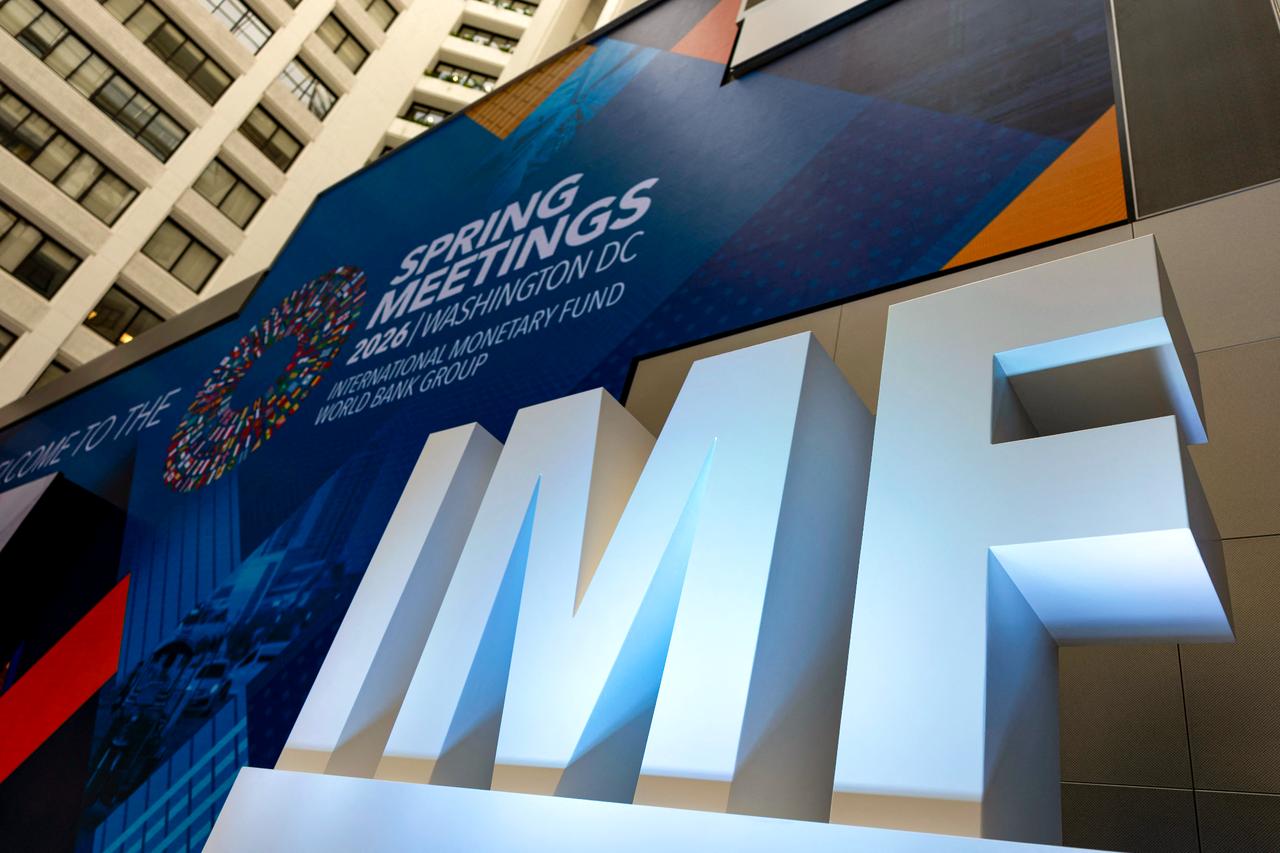


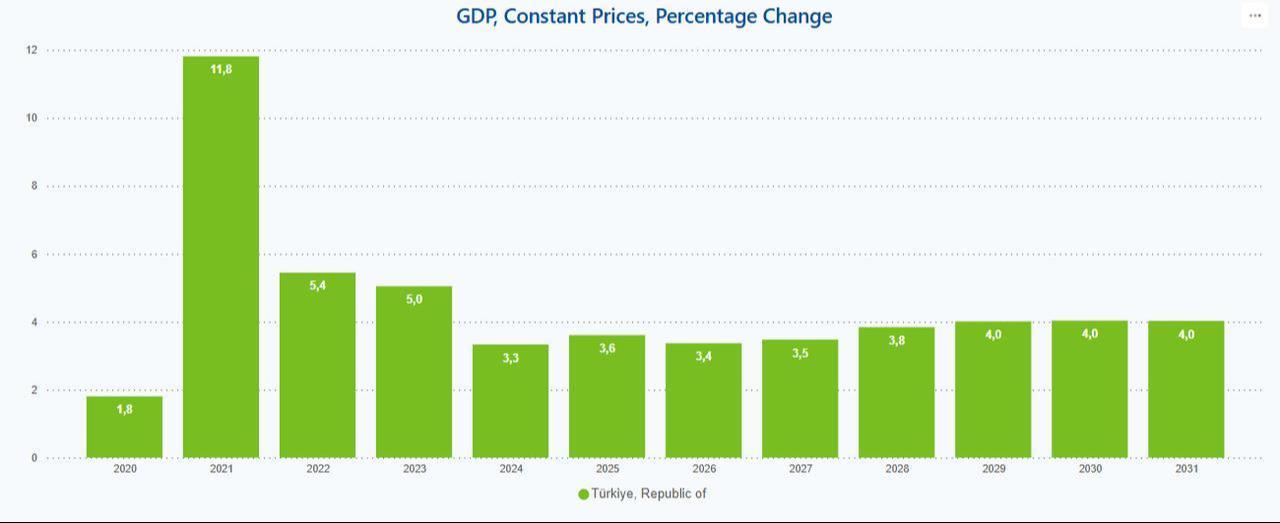
The International Monetary Fund has lowered its 2026 growth forecast for Türkiye to 3.4%, citing weaker-than-expected 2025 momentum and rising energy costs linked to geopolitical tensions.
The revision reflects a 0.8 percentage-point downgrade from the 4.2% estimate published in the January 2026 World Economic Outlook (WEO), reflecting mounting pressure from higher oil and natural gas prices on domestic economic activity.
The fund expects growth to edge up to 3.5% the following year and 3.8% in 2028 before stabilizing at 4% in 2029.

The update follows another revision by the World Bank last week, which lowered its 2026 growth forecast to 2.8% from an earlier estimate of 3.7%.
According to the IMF's report, unemployment is forecast at 8.3% in 2026, rising to 8.7% in 2027, while the current account deficit is expected to stand at -2.9% of GDP in 2026 before narrowing to -2.5% the following year.
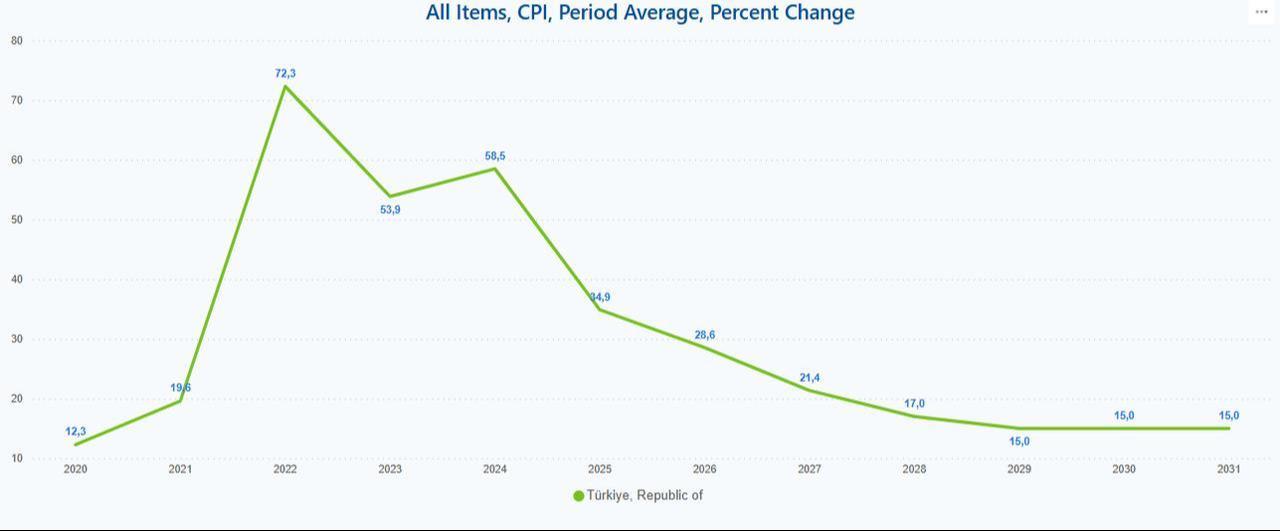
The fund also anticipates the 12-month average rate of change in inflation will reach 28.6% by the end of 2026, easing to 21.4% in 2027, indicating persistent price pressures.
Türkiye’s economy grew by 3.6% in 2025, with overall expansion capped by weakening activity in the final quarter, when growth slowed to 0.4%. Inflation, which came under pressure in the first two months of the year due to food supply shocks, remained strained in March amid rising energy costs, with the 12-month average rate of change at 32.82%.
In the previous year, the current account deficit-to-GDP ratio stood at 1.9%; however, the figure is estimated to have already surpassed 2%, with the annualized gap reaching $35 billion as of February. In the labor market, the unemployment rate rebounded to 8.5% from 7.9% at the end of 2025.
The Fund also scaled back its global growth projection for 2026 to 3.1%, down from 3.3% in January, as the economic fallout from the Middle East conflict reshapes expectations. Growth for 2027 is seen at 3.2%, remaining below the historical average of 3.7% recorded between 2000 and 2019.
Global inflation is now expected to reach 4.4% in 2026 before moderating to 3.7% in 2027, with both figures revised upward.
The report underscored that without the outbreak of war in late February, global growth projections would likely have been revised upward instead, supported by strong technology investment and resilient financial conditions.
The IMF described the war involving the United States, Israel, and Iran as a major destabilizing force, prompting the institution to shift from its standard baseline to a more cautious reference scenario. That scenario assumes the conflict remains contained and supply chain disruptions begin to ease by mid-2026. Still, risks remain firmly tilted to the downside.
If the conflict intensifies and damages critical energy infrastructure, global growth could drop as low as 2%, while inflation may exceed 6% by 2027, the report warned.
Growth downgrades were concentrated in emerging and developing economies, where forecasts were reduced by 0.3 percentage points. Advanced economies saw more limited revisions, though they remained exposed to spillover effects.
The economic toll was most visible in the Middle East. Iran’s economy was projected to contract by 6.1% that year, while Qatar and Iraq were expected to shrink by 8.6% and 6.8%, respectively.
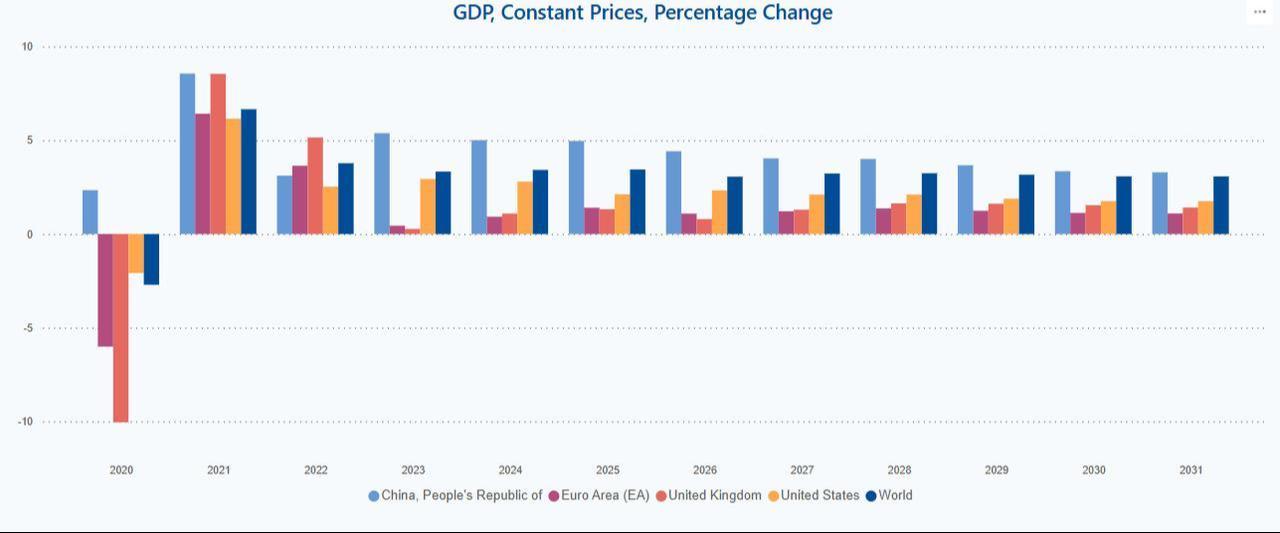
Elsewhere, the IMF trimmed its 2026 growth forecast for the United States to 2.3% and for the eurozone to 1.1%, with further reductions extending into 2027 due to weaker expectations in major economies such as Germany, France, Italy, and Spain.
China’s growth outlook was slightly lowered to 4.4% from 4.5% for this year, while its 2027 forecast stayed at 4%. In contrast, projections for India and Russia were revised upward to 6.5% and 1.1%, respectively. India’s 2027 outlook was unchanged, while Russia’s economy is expected to grow by 1.1% in 2027, up from a previous estimate of 1%.
Beyond the immediate impact of the war, the IMF flagged growing protectionism and trade tensions as additional threats, particularly around critical resources such as rare earth elements.
The institution also noted that increased defense spending could offer short-term economic support but might fuel inflation and strain public finances over time.
Separately, the IMF highlighted uncertainty around artificial intelligence markets, warning that a rapid reassessment of profit expectations could trigger sharp corrections in global financial markets.


 Set as preferred source
 Set as preferred source


 1 min read
 1 min read