Newsletters


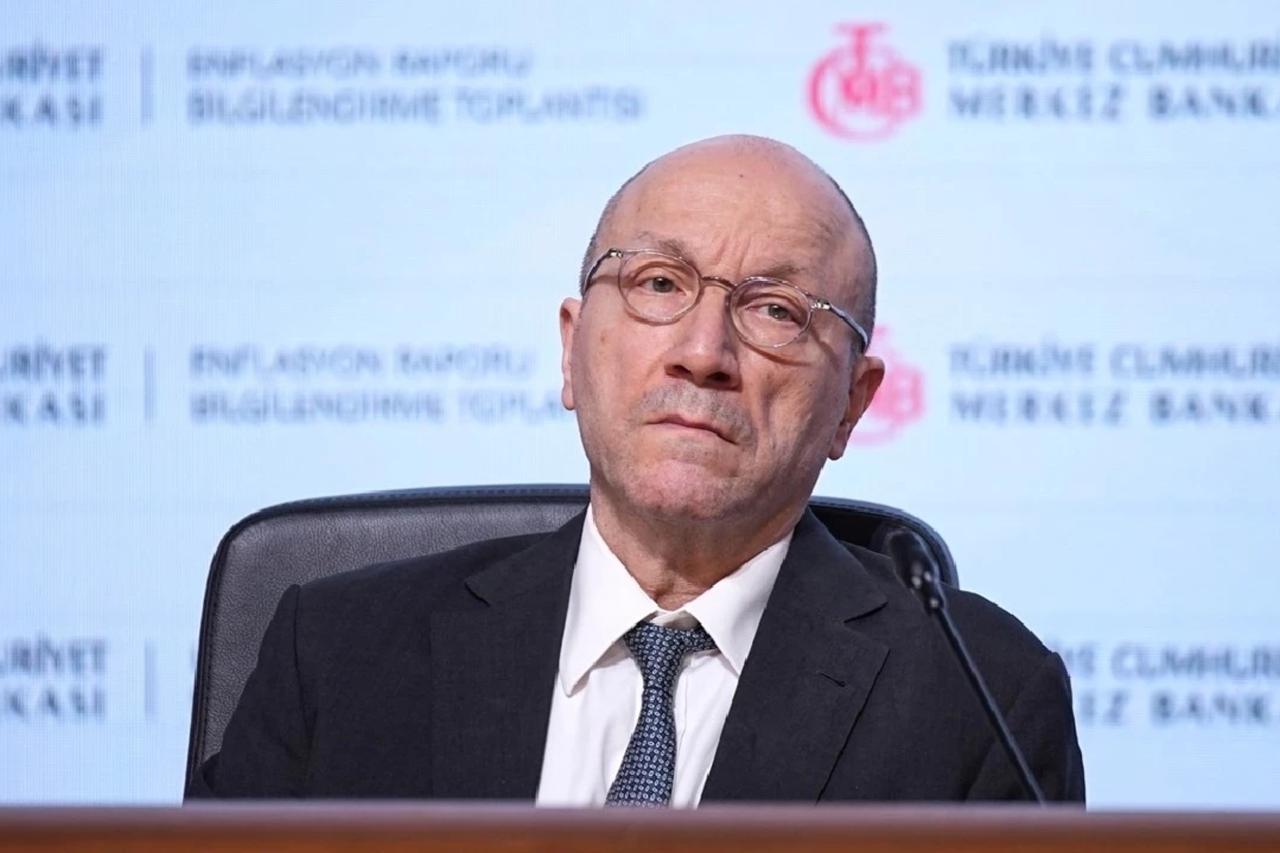


Outgoing Deputy Governor of the Central Bank of the Republic of Türkiye (CBRT) Osman Cevdet Akcay said on Tuesday that inflation could have surged to as high as 200% if authorities had not shifted back to orthodox economic policies in 2023, in his final public remarks before leaving office after reaching the legal retirement age of 65.
Speaking at a public event, and later addressing journalists, Akcay explained that Türkiye’s recent economic trajectory could be summarized as an experiment that failed and was ultimately reversed, emphasizing that the key achievement was recognizing and abandoning ineffective policies.
He pointed out that the decline in inflation from around 48% to 31% should not be assessed in isolation, arguing that a "counterfactual" approach is necessary. "If these policies had not been implemented, inflation could have reached 150%to 200%," he said, stressing that policy success should also be measured by the risks that were avoided.
Türkiye shifted to orthodox economic policies after the mid-2023 elections, with Mehmet Simsek taking the Finance Ministry and appointment of Hafize Gaye Erkan, followed by Fatih Karahan, to the central bank to implement a disinflation program after years of double-digit inflation.
The central bank initially raised policy rates in smaller steps rather than opting for a shock hike, bringing the rate to 50% by March 2024, up from 8.5% a year earlier. The approach drew strong criticism from economists who argued that it would prolong the disinflation process and prove insufficient to curb price growth. The criticism intensified in May 2024, when the annual inflation rate reached 75.5%.
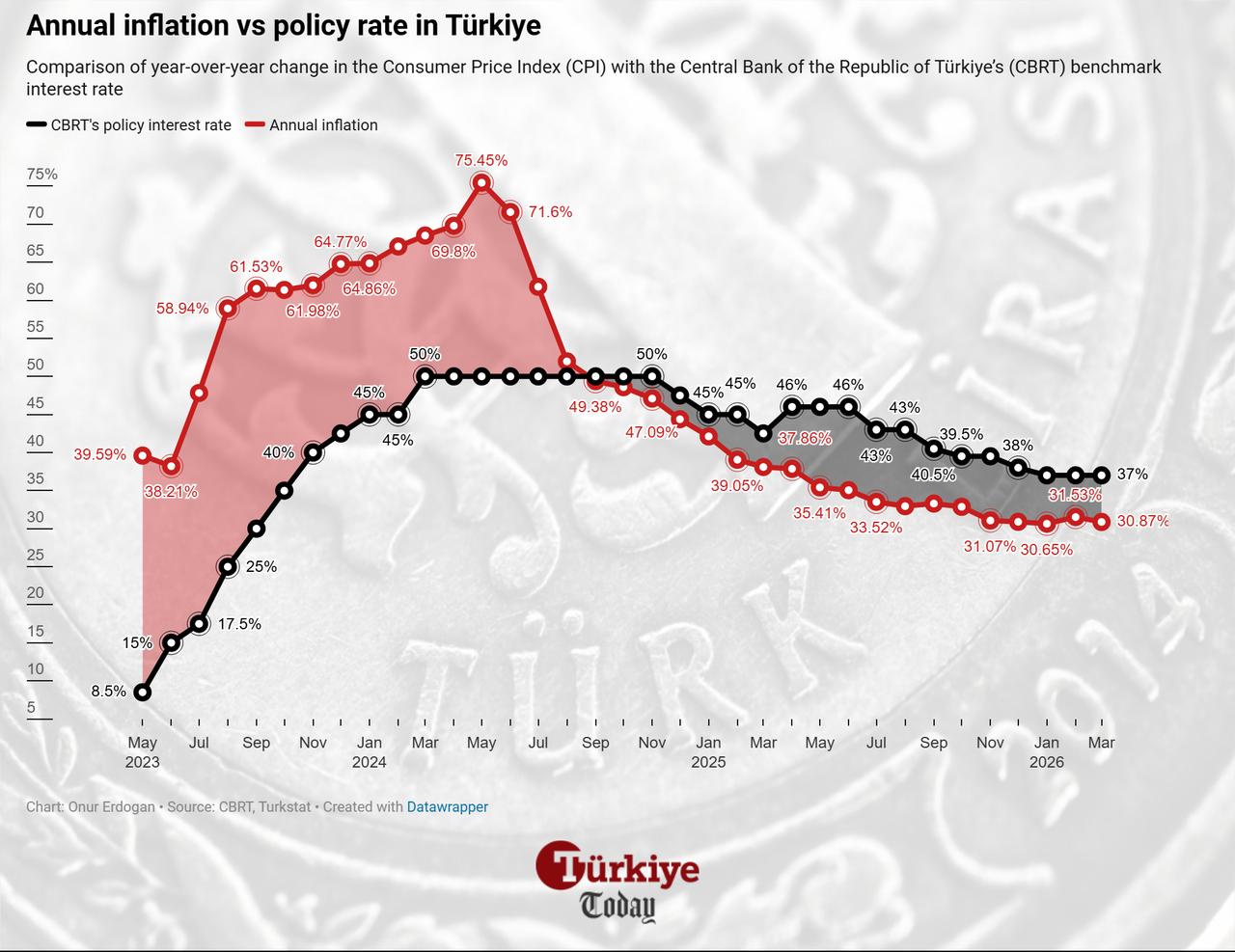

Akcay defended the central bank’s gradual tightening cycle, arguing that sharp rate hikes would not have been effective due to a damaged monetary transmission mechanism. He noted that raising rates step by step — from 17.5% to 25%, then to 30% and beyond — was intended to restore the transmission of policy decisions to markets.
"A direct move to 45% would not have been effective," he added, stressing that each rate increase was calibrated to maximize impact. "98% of this job is managing expectations, and only 2% is execution," Akcay said, acknowledging that the CBRT at times struggled to communicate the complexity of the process to the public.
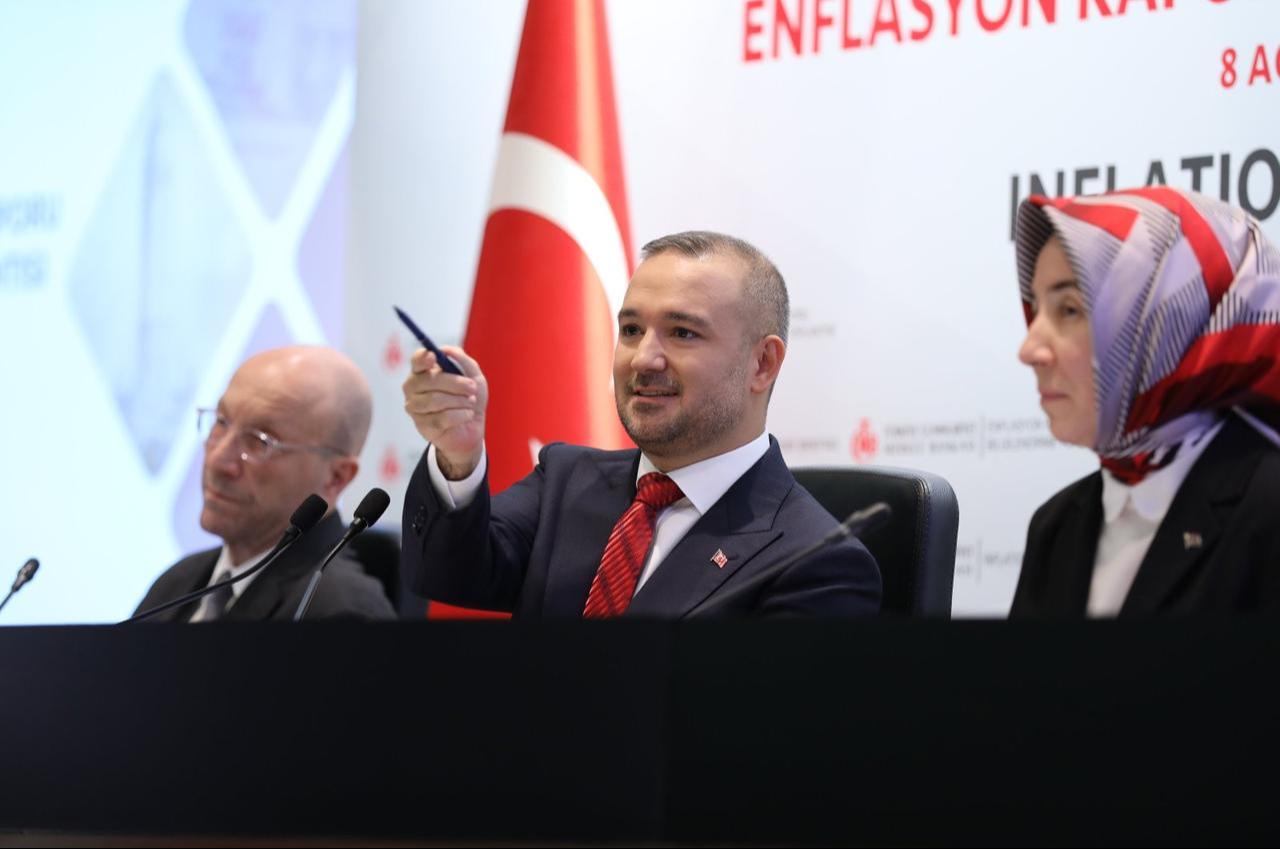
Akcay was appointed CBRT deputy governor on July 28, 2023, and became known as one of the leading hawks on the Monetary Policy Committee (MPC), playing a key role in its decisions. Akcay, however, rejected the "hawk" label, calling such classifications misleading. "I didn’t try to be a hawk or a dove — I just did what I know as central banking."
He said Türkiye’s main economic challenge remains high inflation, noting that while growth trends are similar globally, inflation sets the country apart. He attributed this divergence to past policy choices, including low interest rates and credit expansion that failed to deliver the intended investment and growth outcomes.
Responding to criticism over market interventions to stabilize the exchange rate, Akcay said that the CBRT does not directly target the currency but instead operates through a mix of interest rates and macroprudential tools. He noted that different policy combinations could produce varying exchange-rate outcomes, adding that instruments such as swaps, reserves, and gold operations should be assessed as a whole.
Akcay also stressed that central banking must be conducted cautiously, with a focus on worst-case scenarios and credibility.
Despite early reports that the bank was in talks with potential candidates to replace Akcay, the central bank has yet to announce his successor.


 Set as preferred source
 Set as preferred source


 1 min read
 1 min read