Newsletters





Wall Street soared and oil prices retreated Tuesday after Iranian President Masoud Pezeshkian signaled his country was open to ending its conflict with the United States and Israel, offering financial markets their most concrete diplomatic opening since fighting began.
The blue-chip Dow Jones Industrial Average closed up 2.5 percent, or more than 1,125 points, at 46,341.51. The S&P 500 gained 2.9 percent to 6,528.52, while the tech-heavy Nasdaq surged 3.8 percent to 21,590.63, its strongest single-session performance in weeks.
Speaking in a phone call with the president of the European Council, Pezeshkian said Iran had "the necessary will to end this conflict, provided that essential conditions are met, especially the guarantees required to prevent repetition of the aggression."
The statement marked a significant shift in tone from Tehran and was read by investors as the most substantive diplomatic signal since the United States and Israel launched joint strikes on Iran on February 28. "This is the first concrete communication coming from Iran that feels verifiable," said Art Hogan of B. Riley Wealth Management. "The market has been coiled for good news after having been down the last five weeks."
The rally had begun even before Pezeshkian's remarks, after reports emerged that President Donald Trump had indicated he was willing to end the conflict even if the Strait of Hormuz, a critical chokepoint for global oil flows, remained closed.
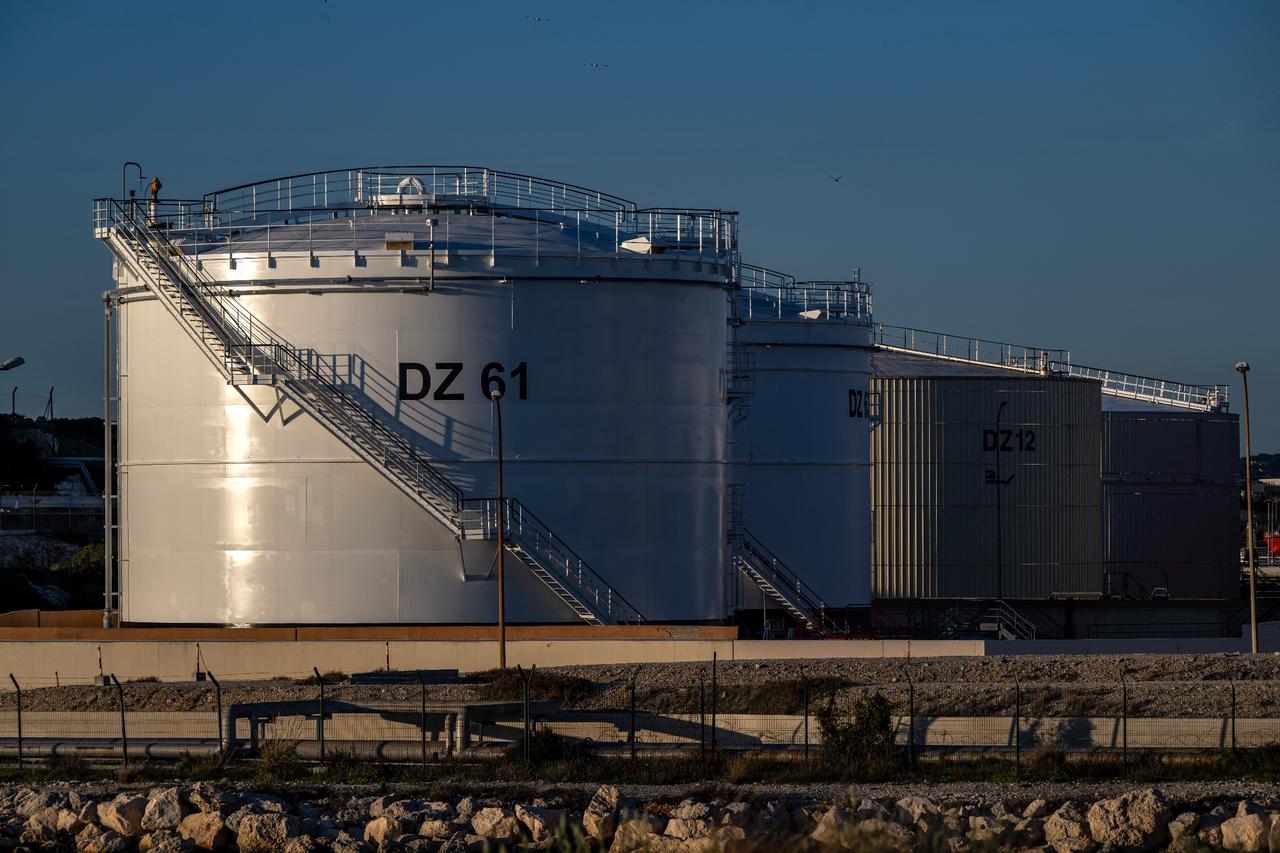
Brent crude futures fell 3.2 percent to $103.97 a barrel, while West Texas Intermediate dropped 1.5 percent to $101.38, as traders priced in the possibility of a diplomatic resolution. Oil has been a major driver of broader market volatility since hostilities began.
Still, analysts cautioned that the relief could prove short-lived. Oil "remains painfully high for economies to deal with," said Susannah Streeter, chief investment strategist at Wealth Club.
The strain on consumers was evident in domestic data released Tuesday: the American Automobile Association said average US gasoline prices crossed $4 a gallon for the first time since 2022, when Russia's invasion of Ukraine triggered a comparable energy shock.
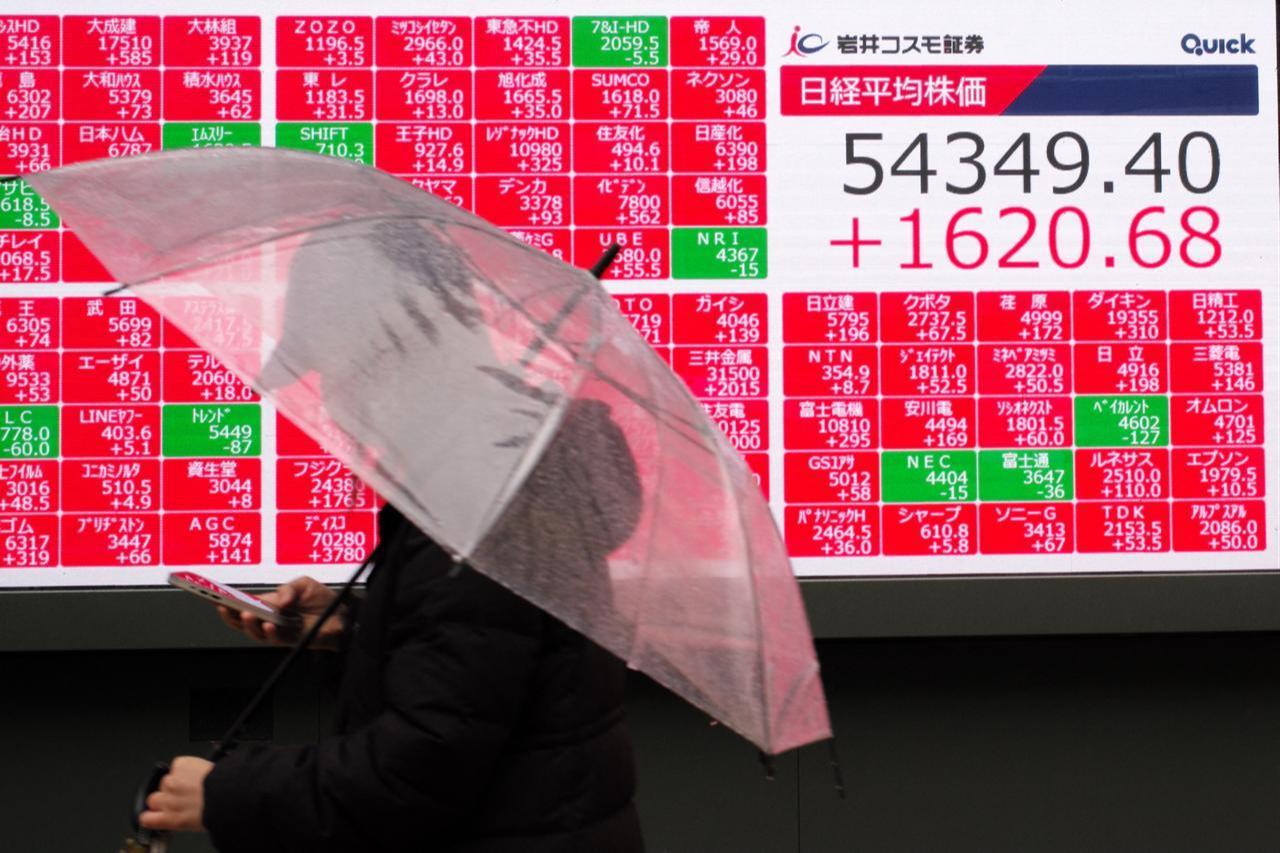

While Western markets rallied, the conflict's sharpest economic consequences are increasingly being felt in Asia, which remains heavily exposed to Middle East energy supplies. Asian stock markets closed mixed, with Tokyo's Nikkei 225 falling 1.6 percent and Shanghai's Composite losing 0.8 percent, even as Hong Kong edged up 0.2 percent.
Jean Maynier, president of maritime analytics firm Kpler, warned in an interview with AFP that the region was confronting a major energy crisis. "We think Asia will, for now, be the ones suffering the most," he said from the company's Singapore offices.
 1 min read
European equities ended higher despite fresh data showing eurozone inflation surged to its highest point since January 2025. Consumer prices rose 2.5 percent in March, a sharp acceleration from 1.9 percent in February, according to the EU's statistics agency, driven largely by soaring energy costs.
London's FTSE 100 gained 0.5 percent, the CAC 40 in Paris added 0.6 percent, and Frankfurt's DAX rose 0.5 percent. The euro climbed to $1.1551 against the dollar from $1.1465 on Monday.
Markets remained cautious about a lasting resolution. Israeli Prime Minister Benjamin Netanyahu vowed after Pezeshkian's remarks that the military campaign against Tehran was not over, promising to crush Iran's "terror regime." Investors appeared to largely set aside his comments, at least for Tuesday's session, choosing instead to focus on the rare diplomatic signal from Iran.


 Set as preferred source
 Set as preferred source



 1 min read