Newsletters


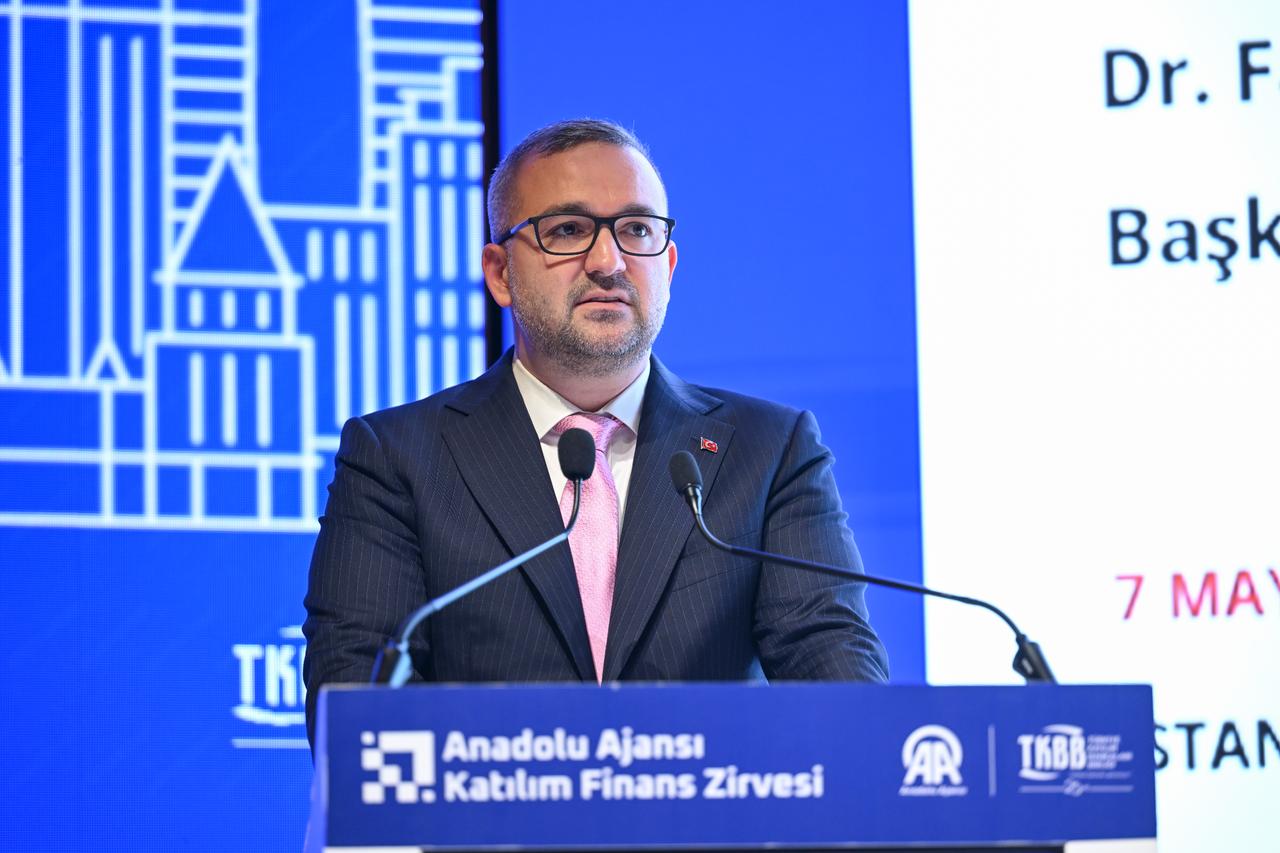


The Central Bank of the Republic of Türkiye (CBRT) governor, Fatih Karahan, stated Thursday that the bank would maintain its commitment to disinflation despite the inflationary impact of the ongoing regional conflict.
He warned that rising energy costs continue to put pressure on prices and the current account balance.
"We will not allow the recent deterioration in inflation to damage the medium-term outlook through our tight monetary policy stance," Karahan said.
"Although the war affects the disinflation process, it does not change our determination."
Speaking at the Anadolu Agency Participation Finance Summit held in the Istanbul Finance Center in cooperation with the Participation Banks Association of Türkiye (TKBB), Karahan stated that geopolitical developments and heightened global uncertainty have become key drivers of the world economy in recent months.
He noted that higher energy prices have negatively affected the global inflation outlook and added that Türkiye has also started to feel the impact of these developments on inflation and external balances.
Karahan said the effects of the conflict became clearly visible in April inflation data, particularly through energy prices, and added that energy-related pressures are likely to continue in the short term.
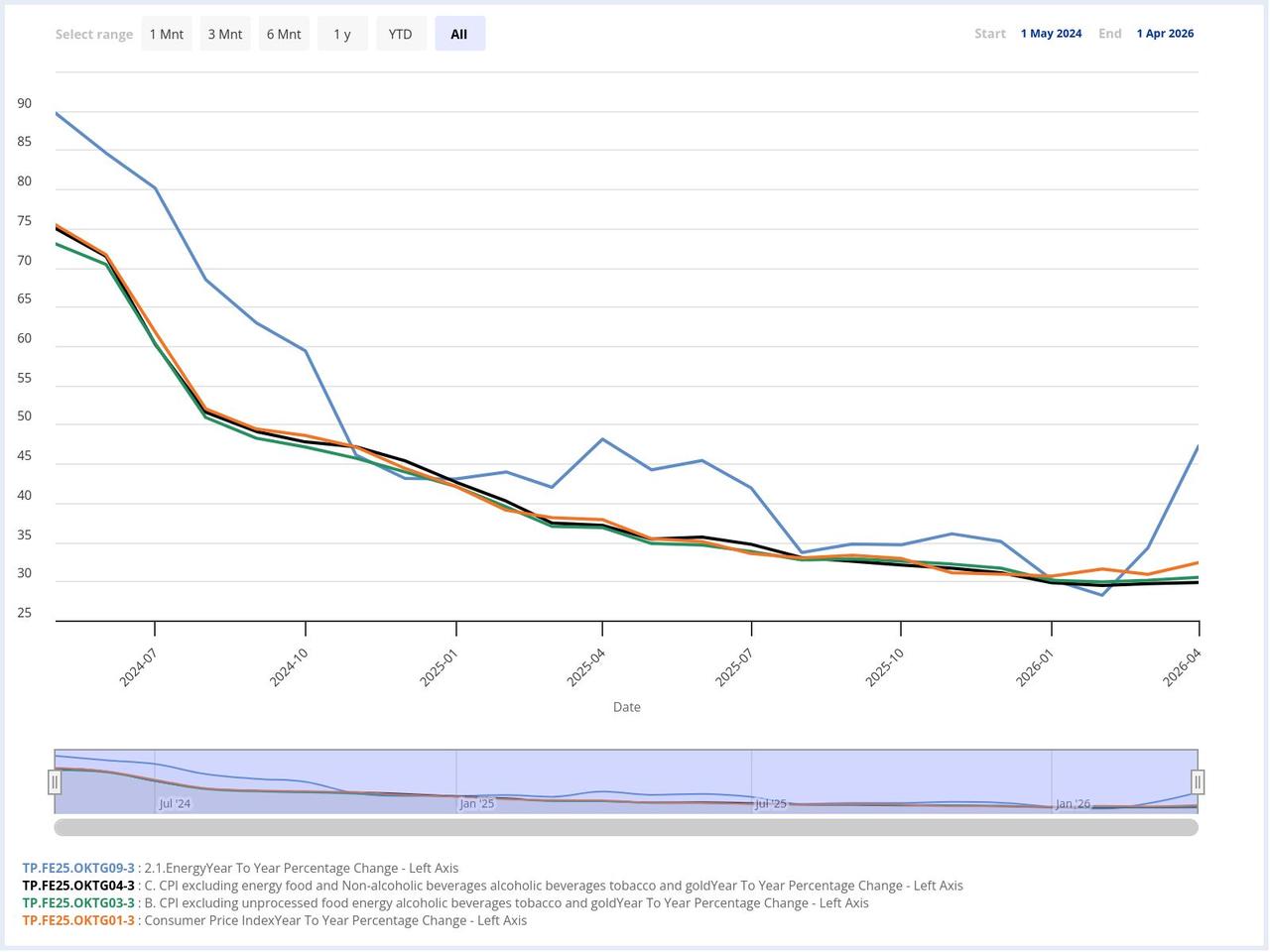
Türkiye’s monthly inflation rose 4.2% in April, while energy prices climbed 14.4%, pushing annual inflation to 32.4%.
According to Karahan, food and clothing prices also increased more than expected during the month, contributing to inflation surpassing market forecasts.
He added that the first four months of the year showed a slower but continuing disinflation trend in core goods and services, while food and energy remained the main drivers of inflation.

Karahan said higher energy prices have increased upward risks to the current account balance through rising import costs, although lower gold imports have partly offset the pressure.
Despite the risks, he stated that the current account deficit-to-GDP ratio is expected to remain below its historical average in 2026.
The central bank chief added that the bank would closely assess the impact of geopolitical risks and commodity prices while shaping future monetary policy decisions.
After the war began on Feb. 28, policymakers decided to raise the funding cost to 40% by suspending one-week repo auctions and forcing banks to borrow at the more expensive overnight rate.
The bank also kept its policy rate unchanged at 37% during the March and April meetings, citing ongoing disinflationary pressures.
Since the start of the war, the central bank has actively intervened in markets to prevent sharp volatility in the Turkish lira, selling more than $60 billion in net reserves at the peak of market stress in late March to ease foreign exchange demand and offset capital outflows, as a stable domestic currency is seen as critical to the disinflation program.
As tensions in the conflict eased, the CBRT began rebuilding its reserves.
As of the week ending May 1, Türkiye’s gross international reserves stood at $165 billion, while net reserves rose to $53.7 billion and net reserves excluding swaps reached $36.3 billion.


 Set as preferred source
 Set as preferred source


 1 min read

 1 min read