Newsletters


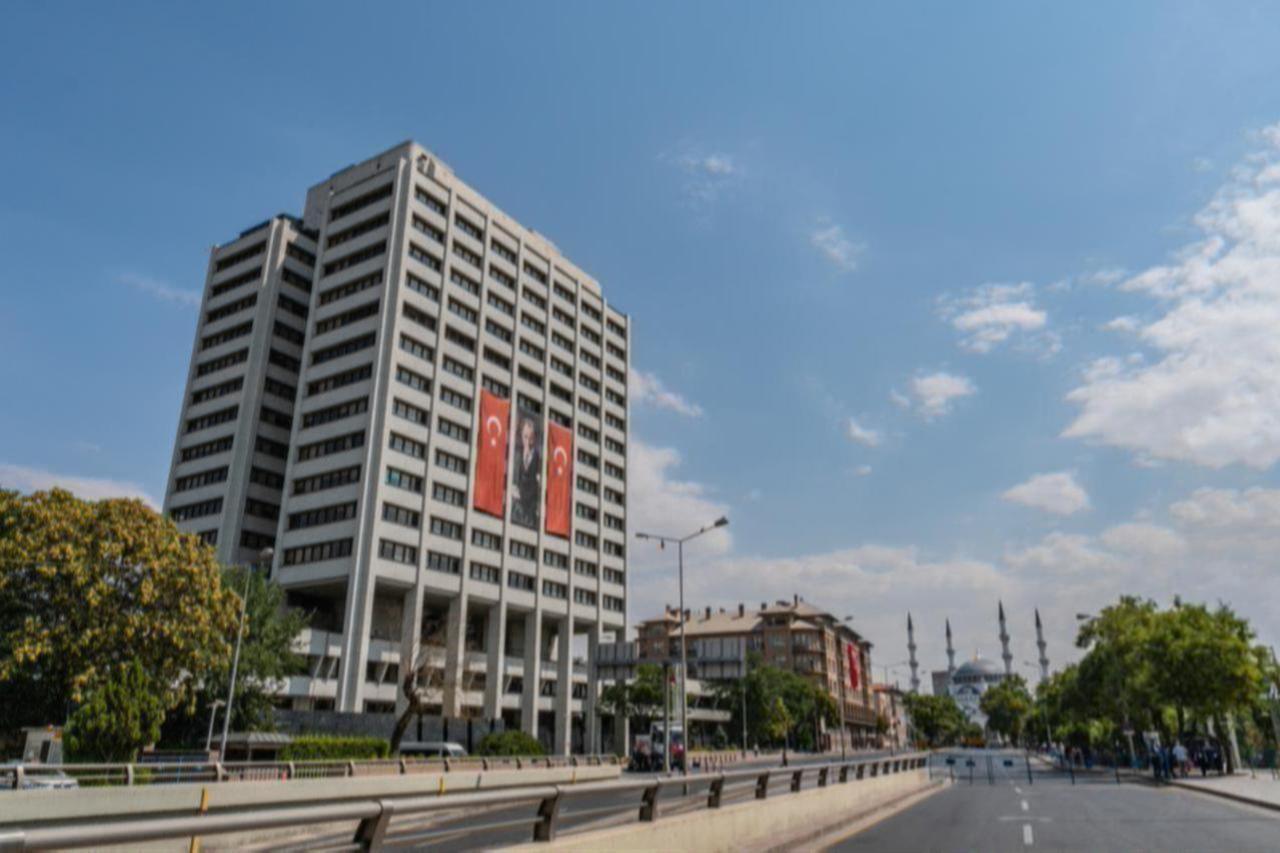


The Central Bank of the Republic of Türkiye (CBRT) kept its policy rate steady at 37% on Wednesday, citing ongoing upside risks to the disinflation process, largely driven by rising energy costs amid the Iran war.
The overnight lending rate, which the central bank has used as its funding channel since the start of the Iran conflict, was held at 40%.
In a statement following the year’s third Monetary Policy Committee (MPC) meeting—also the first since former Deputy Governor Cevdet Akcay stepped down due to retirement—the central bank said the underlying trend in inflation eased in March, but early indicators point to a slight uptick in April, with energy prices remaining elevated and volatile due to geopolitical developments.
These factors could feed into inflation through cost channels, even as economic activity shows signs of slowing, the bank warned, flagging risks of knock-on effects that could push prices higher again.
The bank reiterated that tight monetary policy will remain in place until price stability is achieved, supporting disinflation through demand, exchange rate and expectations channels. "The Committee reiterated that it remains highly attentive to upside risks on inflation," the statement emphasized.
"In case of a significant and persistent deterioration in the inflation outlook… monetary policy stance will be tightened."
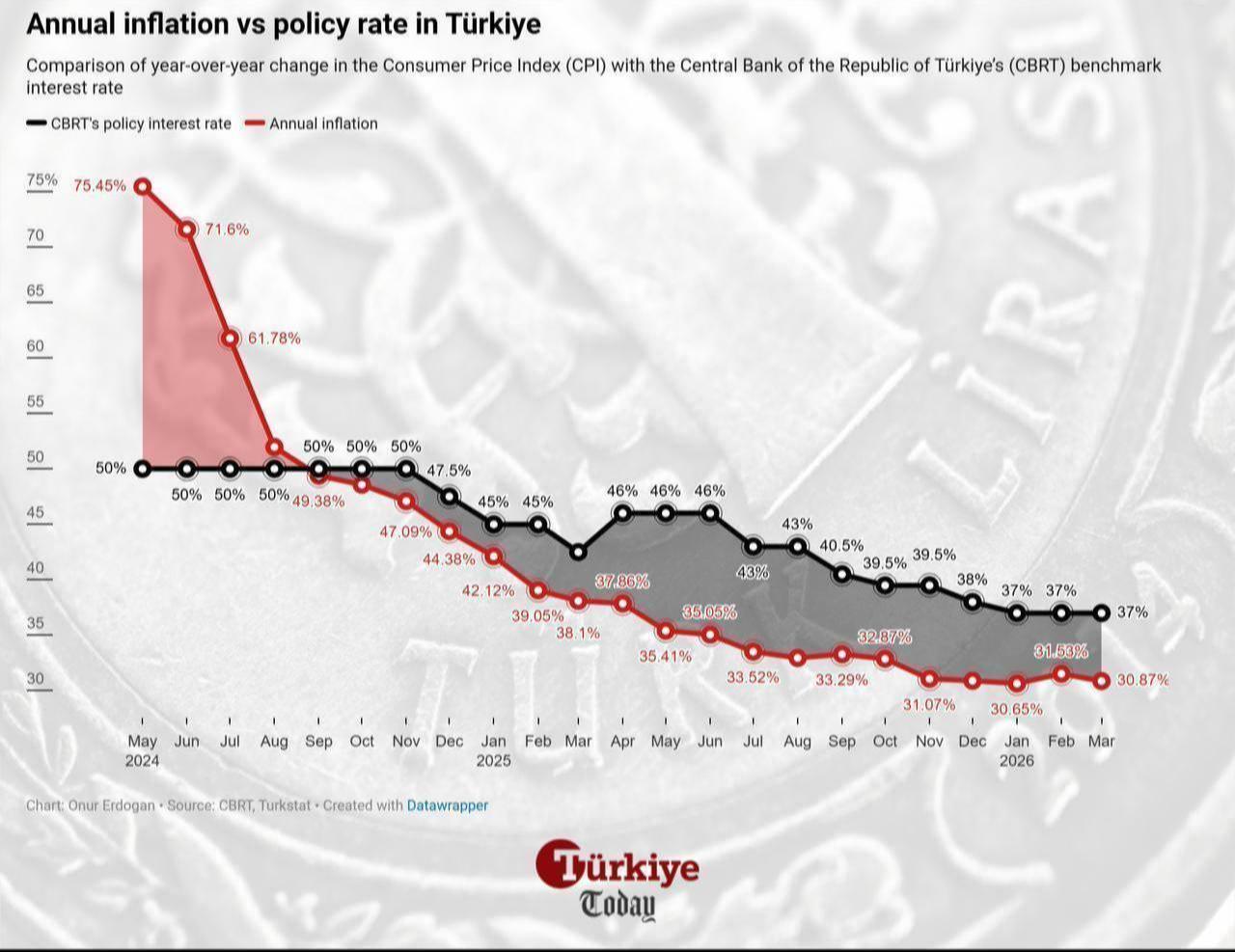

The decision mirrors the previous meeting in March, when tensions in the Iran conflict were at their peak.
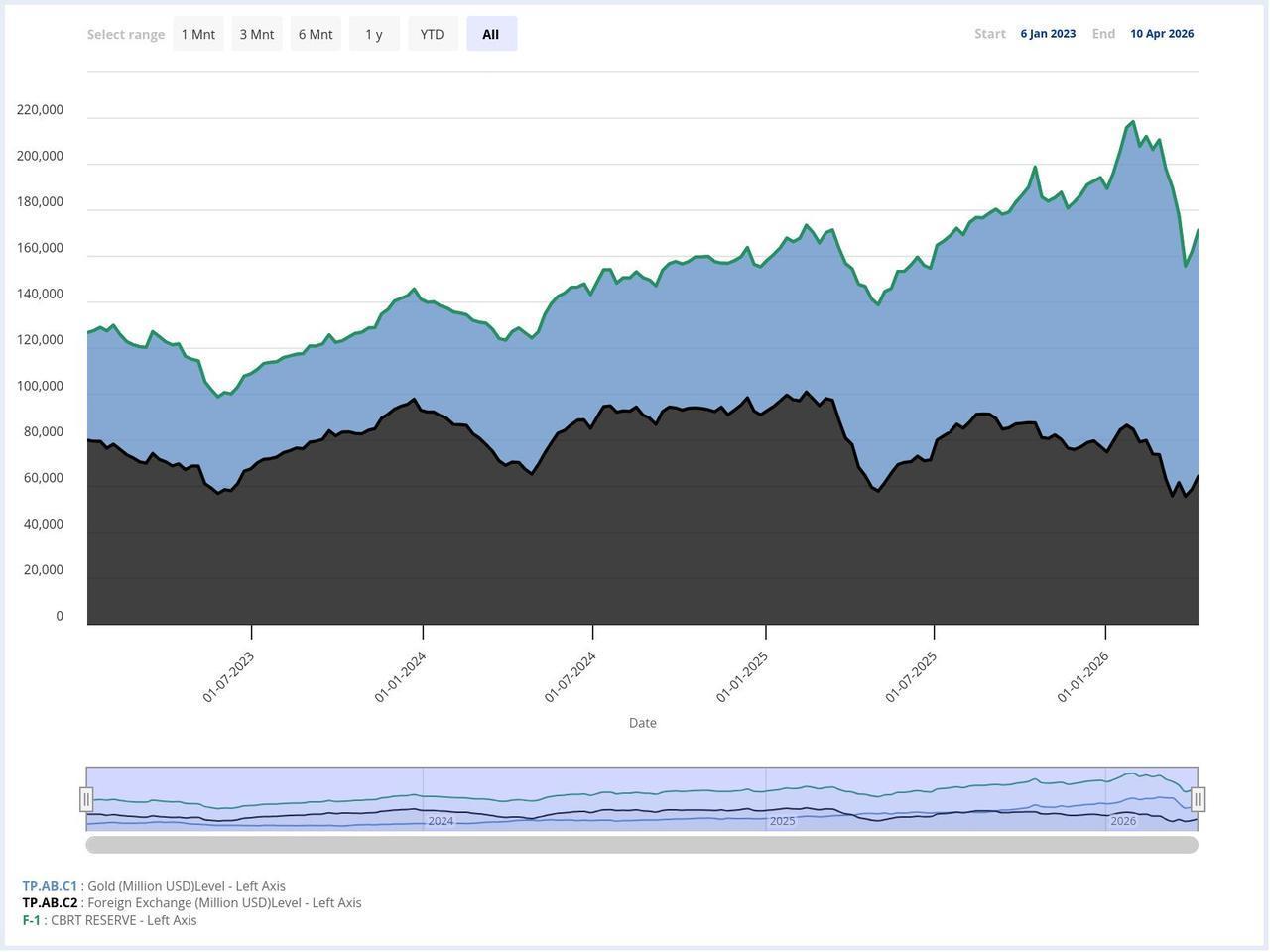
Since the start of the conflict, policymakers have intervened in the market to defend the Turkish lira against volatility, offloading nearly $60 billion from reserves at the peak to limit currency fluctuations.
The bank also partially sold its gold reserves and resumed dollar-for-lira and dollar-for-gold swap transactions to offset losses in liquid foreign reserves.
The decision to hold rates broadly aligns with market expectations, although a notable share of economists had expected a 300-basis-point hike, as a ceasefire between the U.S. and Iran reached in early April eased capital outflows and foreign currency demand, allowing the bank to recover some of its losses.
In March, Türkiye’s inflation came in at 1.9% on a monthly basis, beating expectations, while the annual inflation rate edged down to 30.9%.
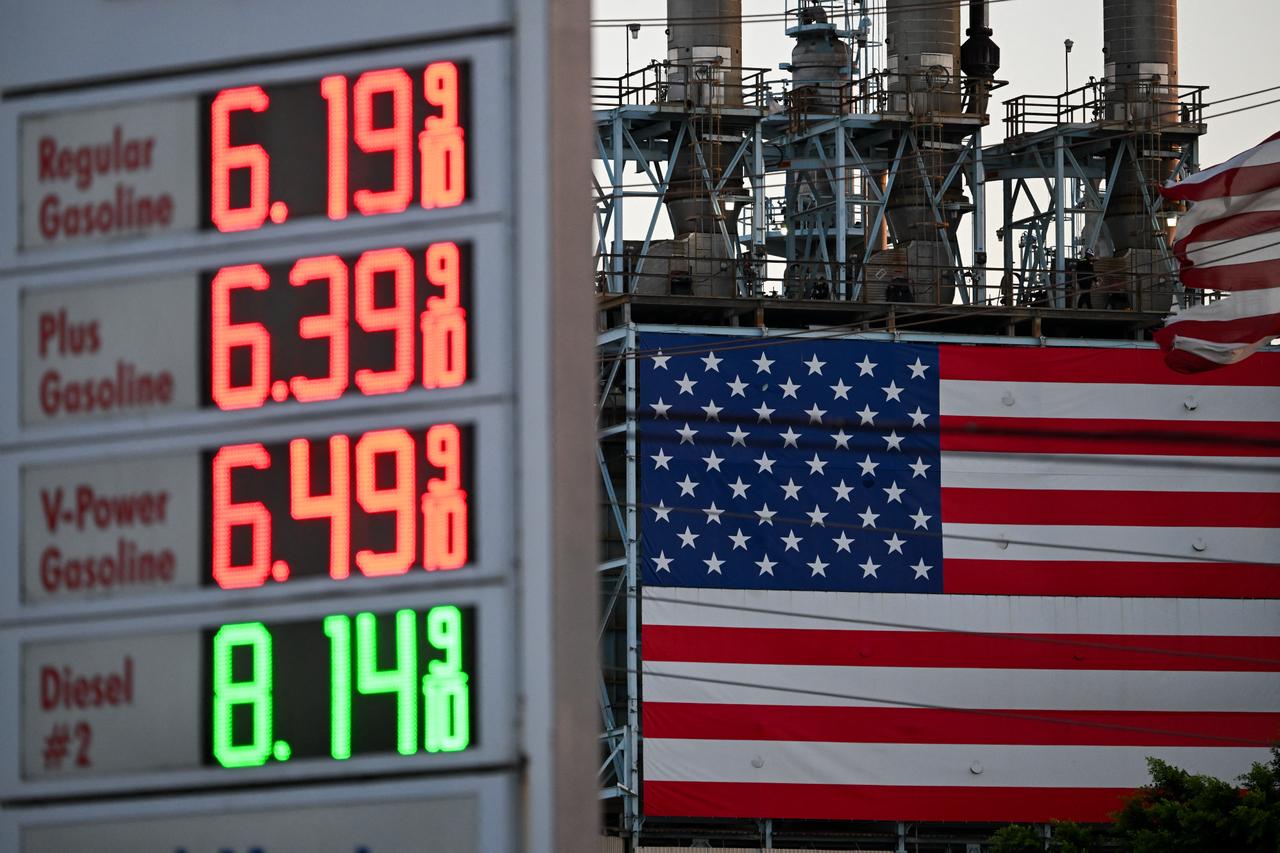
Energy costs led price growth during the month, rising 4.9%, even as a fuel tax buffer reintroduced by the government helped tame the impact of higher oil prices.
The system, known as a sliding scale fuel tax, adjusts fuel taxes in response to changes in global oil prices to help stabilize domestic pump prices.
Although fuel accounts for only 3.2% of the weight in Türkiye’s Consumer Price Index (CPI), its broader impact across sectors remains a key risk to the disinflation trend.
The central bank estimates that every 10% permanent increase in Brent crude adds 1.1 percentage points to inflation, widens the current account deficit by up to $4 billion, and trims growth by 0.4 to 0.7 percentage points over a year.
Hovering around $99.4 per barrel as of Wednesday, Brent crude is 37% above pre-war levels, implying roughly a 4 percentage point increase in inflation.


 Set as preferred source
 Set as preferred source


 2 min read
 1 min read