Newsletters




Inflation in Istanbul slowed to 1.5% in May from 3.7% a month earlier, slowing to its weakest monthly pace since December as annual retail inflation stood at 36.8% and offering an early indication that price pressures may be cooling across Türkiye.
Wholesale prices, a measure of producer inflation, rose 1.6% in May after increasing 4.3% a month earlier, while annual wholesale inflation edged up to 23.4%, Istanbul Chamber of Commerce (ICOC) reported on Monday.
Restaurants and hotels recorded the largest monthly increase among spending groups, with prices rising 4.1%. Housing costs followed with a 3% increase, while recreation and culture prices climbed 2.7%. Alcoholic beverages and tobacco were the only category to remain unchanged during the month.
The chamber said price movements in restaurants and hotels were shaped by market conditions, seasonal factors and the start of the holiday period.
Housing, recreation and culture expenditures were also affected by market-driven adjustments, while seasonal transitions continued to influence food and non-alcoholic beverage prices.
Among wholesale categories, mining posted the strongest monthly increase at 4%. Food products rose 2.7%, followed by construction materials at 1.1%, raw materials at 0.7% and chemical products at 0.6%.
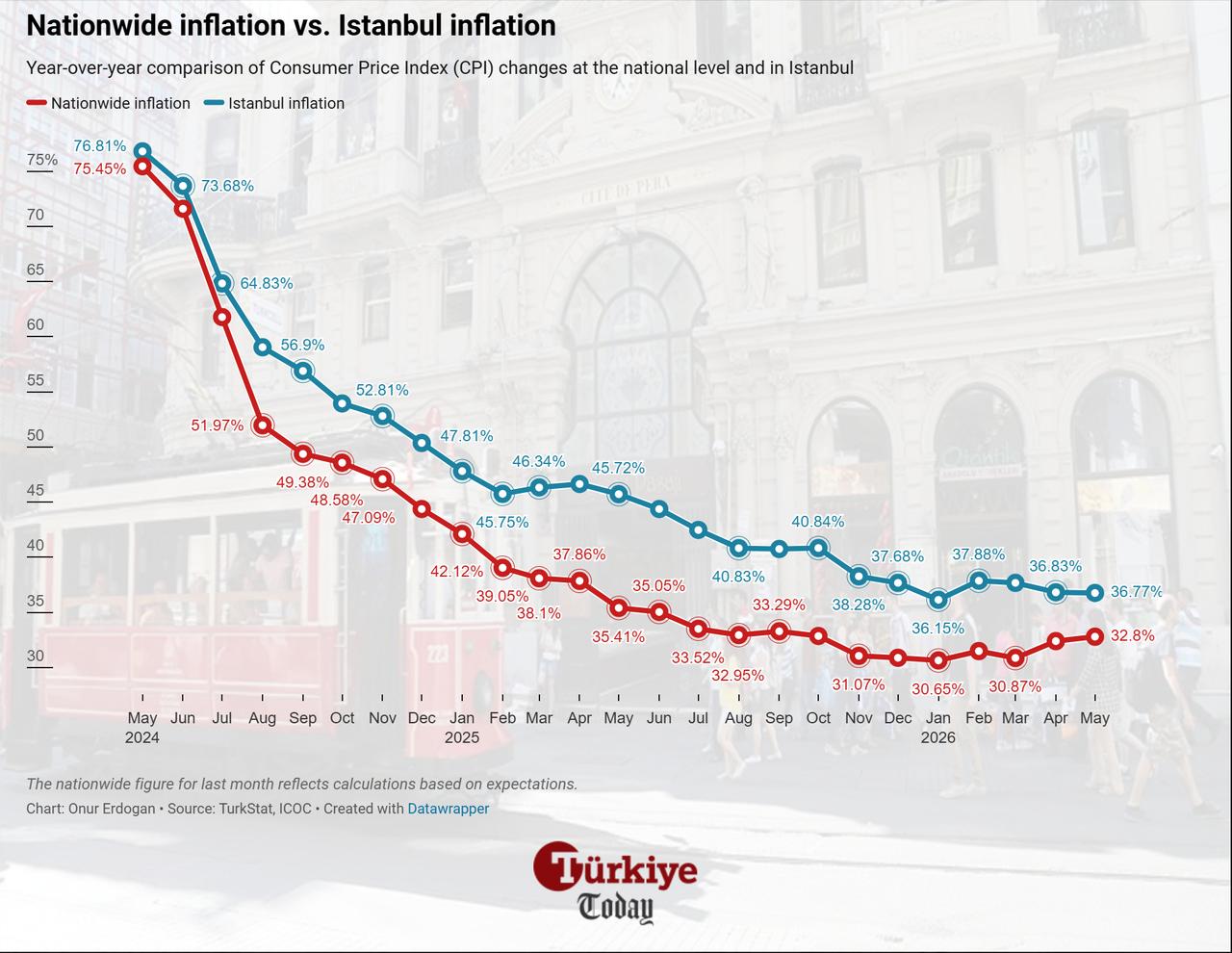

The figures point to a moderation in price growth during May as volatility in food and energy markets eased through the month, ahead of Türkiye's official inflation report due on June 5.
The Central Bank of the Republic of Türkiye's (CBRT) latest Survey of Market Participants put May inflation at 1.9%, which would bring the annual rate to 32.8%. Nationwide consumer prices rose 4.8% in April, driven largely by a 14.4% jump in energy prices amid the Iran war, lifting annual inflation to 32.4%.
However, growing hopes for a potential deal between the U.S. and Iran helped calm markets and push oil prices back below $100 per barrel, reducing fears of prolonged supply disruptions in the Gulf and weakening the energy-driven price pressures that fueled April's inflation spike.


 Set as preferred source
 Set as preferred source


 1 min read
 1 min read