Newsletters


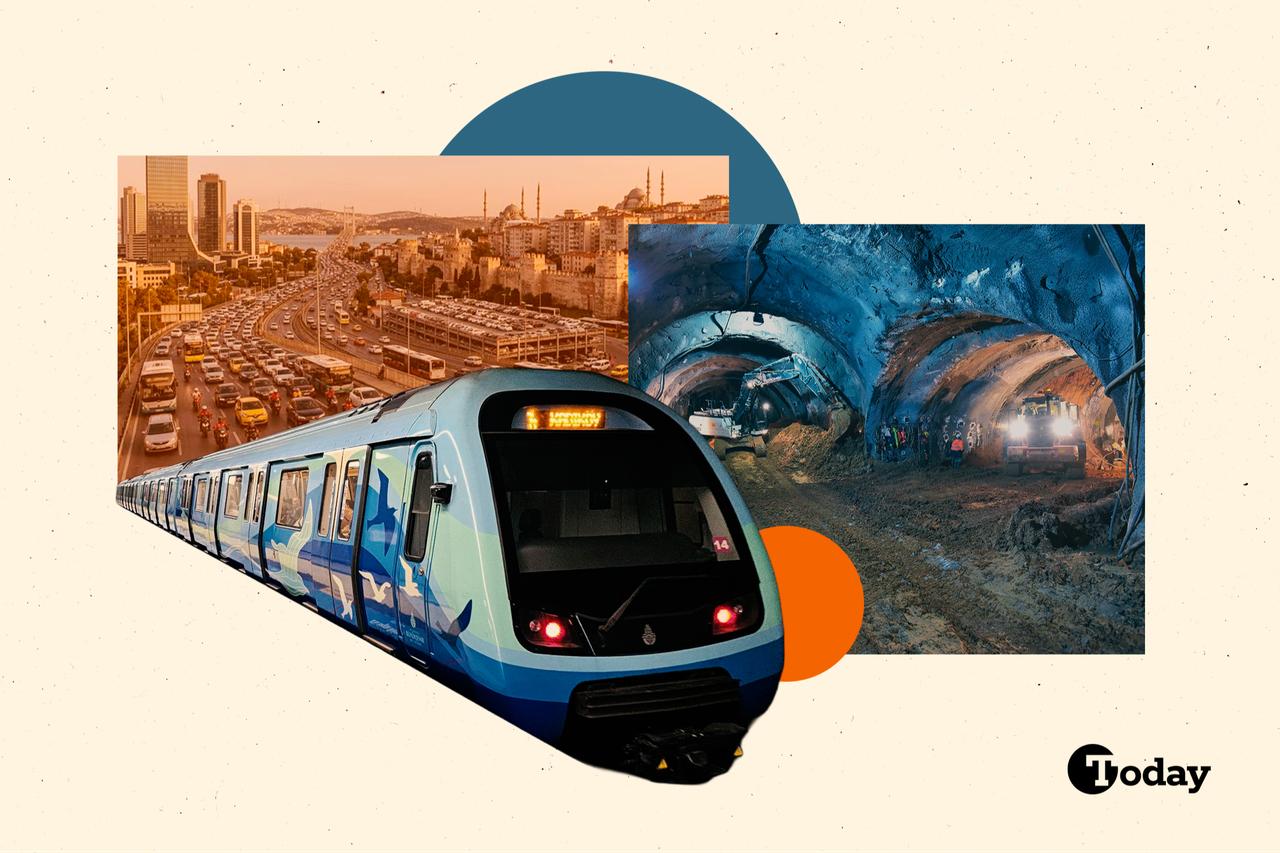


For Istanbul's 15.8 million residents, getting across the city can mean spending hours in traffic. Europe's most populous metropolitan area ranked as the world's third-most congested in 2025, with congestion averaging 62% and drivers losing 112 hours to rush-hour traffic.
Metro construction has become a familiar sight across Istanbul, and with hundreds of kilometers of new lines still needed, residents can expect years more of construction before the network catches up with the city's growing transport needs.
Most recently, Transport and Infrastructure Minister Abdulkadir Uraloglu said on Thursday that Istanbul needs another 600 kilometers (372.82 miles) of metro lines to bring its total network to 1,000 kilometers.
At an estimated $50 million per kilometer, based on earlier figures from Istanbul Metropolitan Municipality (IBB), the proposed expansion could carry a $30 billion price tag.
Istanbul currently has a 402.6-kilometer urban rail network, of which Metro Istanbul, a subsidiary of IBB, operates 245.8 kilometers.
Metro Istanbul previously set a target to expand the city's overall urban rail network to 717.1 kilometers by 2050, with 65.4 kilometers of new lines under construction. Reaching the target would require a further 249.1 kilometers of infrastructure beyond the ongoing projects.
The target covers the broader urban rail network, including metro, tram, funicular and cable-car lines, rather than metro lines alone.
The next major addition expected to enter service is the 13-kilometer Umraniye-Atasehir-Goztepe metro line on Istanbul's Asian side. The driverless M12 line consists of 11 stations, with test runs underway and passenger services targeted to begin by December.
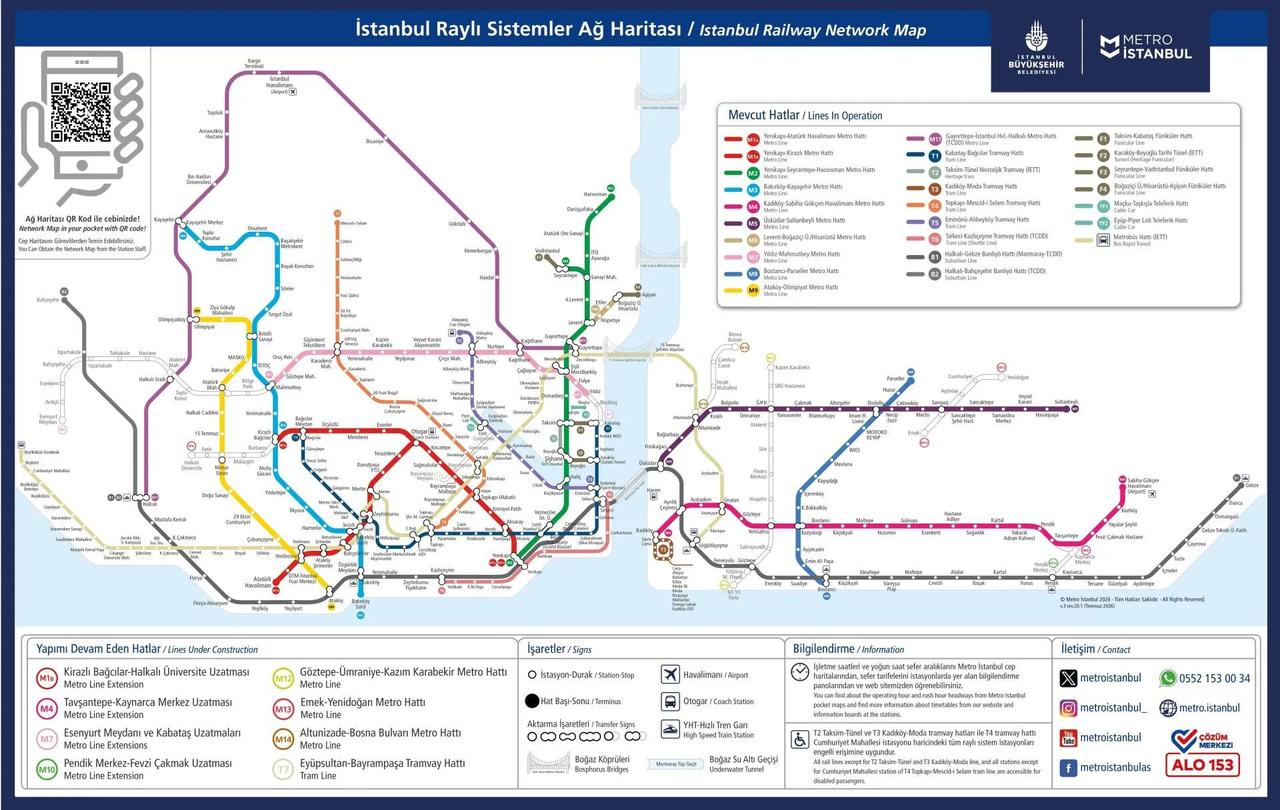

Other projects include the 24.7-kilometer M13 Sogutlucesme-Yenidogan metro line, planned to connect Cekmekoy, Sancaktepe, Umraniye, Atasehir and Kadikoy through 15 stations on the Asian side. Construction has begun on its 6.7-kilometer Yenidogan-Emek section, which will have five stations.
The municipality is also working on the 13-kilometer Kaynarca-Pendik-Tuzla metro project. Its first phase, the Pendik Merkez-Kaynarca Merkez-Fevzi Cakmak section, will connect with Marmaray and high-speed rail services at Pendik and the M4 line at Kaynarca Merkez. It is targeted to open in the first quarter of 2027.
On the European side, the 18.5-kilometer M7 extension toward Bahcesehir and Esenyurt will serve five districts through 10 planned stations. The 9.7-kilometer M1B Kirazli-Halkali extension will add nine stations and cut travel time along the route to about 15 minutes. The municipality is also developing the 3.2-kilometer Eyupsultan-Bayrampasa tram line.
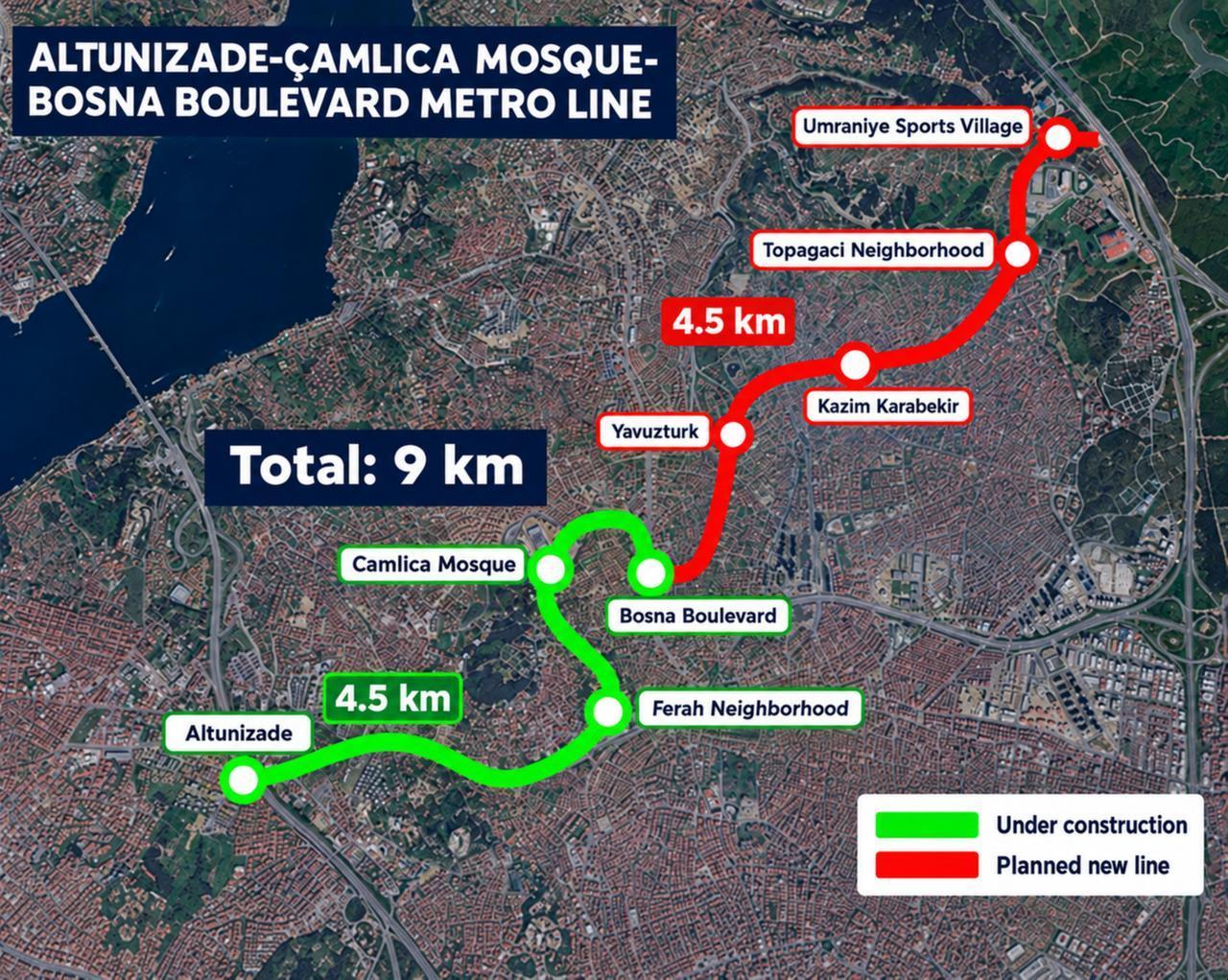
The Transport and Infrastructure Ministry is also advancing its own rail projects, including the 4.53-kilometer Altunizade-Camlica Mosque-Bosna Boulevard metro line, which will connect the existing Uskudar-Umraniye-Cekmekoy metro line and metrobus network with Camlica and surrounding residential areas.
The ministry also plans a further 4.5-kilometer extension from Bosna Boulevard through Yavuzturk, Kazim Karabekir and Topagaci to Umraniye Sports Village, bringing the combined route to about 9 kilometers.
In August 2026, the ministry also took responsibility for the planned 17.5-kilometer Umraniye-Kavacik-Beykoz rail line, which will have 14 stations. The project aims to improve connections between districts on Istanbul's Asian side, link Beykoz to the metro network and make travel across the area easier.
Two other major cross-continental rail projects are also in the pipeline, although both remain in the planning stages.
IBB has previously proposed HIZRAY, a 74.5-kilometer express rail line linking Beylikduzu on the European side with Sabiha Gokcen Airport on the Asian side. The planned line would have 13 stations and cut the journey across the city to around 53 minutes.
It is designed to carry up to 1.5 million passengers a day, while an earlier project estimate puts its cost at around $6 billion, excluding financing costs.
More concretely, the Transport and Infrastructure Ministry is also moving ahead with INRAIL, a 127-kilometer railway that would bypass Istanbul's urban center and cross the Bosphorus via the Yavuz Sultan Selim Bridge.
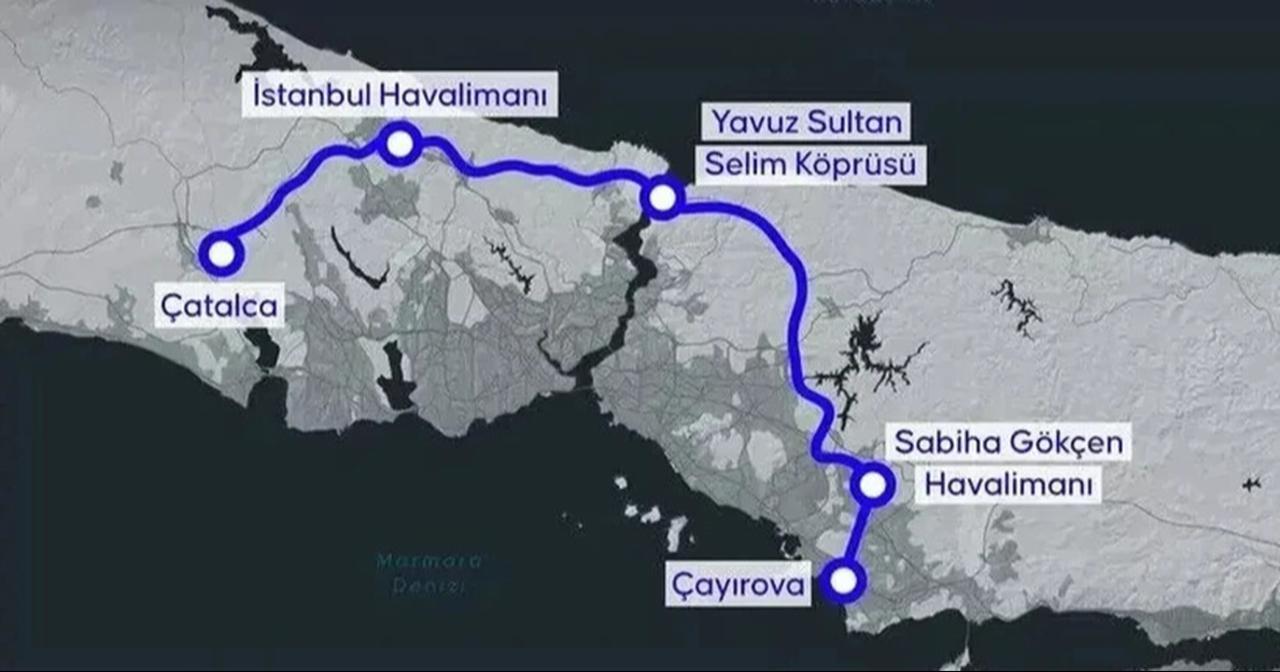
Designed to carry both passengers and freight, the line would connect the city's two airports to each other and the wider national rail network.
The project has an estimated cost of $8.3 billion, with six multilateral development banks expected to provide a combined $6.75 billion in financing. Tenders for construction and electrification are open until Oct. 14, 2026.
INRAIL is also part of Türkiye's efforts to strengthen its position along the Middle Corridor, a trade route linking Asia and Europe through Central Asia, the Caspian Sea and Türkiye.
By adding a high-capacity rail crossing over the Bosphorus, the project aims to increase freight transport capacity, reduce logistics costs and improve connections along the Trans-Caspian, Türkiye-EU and Iraq Development Road corridors, making cross-continental trade more reliable.
The World Bank projects rail freight capacity across the Bosphorus to rise from 3 million to 50 million tons annually, while Türkiye's Transport Ministry expects the line to carry 30 million tons of freight and 33 million passengers a year.


 Set as preferred source
 Set as preferred source


 1 min read
 1 min read