Newsletters




Global airline industry braces for a prolonged strain on jet fuel supply and higher fares even if the Strait of Hormuz reopens, as the head of the International Air Transport Association (IATA) warned on Wednesday, noting that it would not quickly restore balance after refinery disruptions across the Middle East.
"If it were to reopen and remain open, I think it will still take a period of months to get back to where supply needs to be," Willie Walsh told reporters in Singapore, adding that the bottleneck lies not only in crude availability but also in disrupted refining capacity across the Middle East, a key hub for global fuel processing.
Past experience shows the aviation industry tends to pass rising fuel costs on to passengers by lifting ticket prices, Walsh emphasized.
Oil prices slipped below $100 per barrel after U.S. President Donald Trump announced a two-week ceasefire agreement with Iran, tied to the immediate and safe reopening of the Strait of Hormuz, the strategic waterway typically carries about one-fifth of global oil trade.
While crude prices have eased on ceasefire expectations, the downstream fuel market continues to lag, reflecting structural constraints rather than short-term supply shifts, Walsh explained.
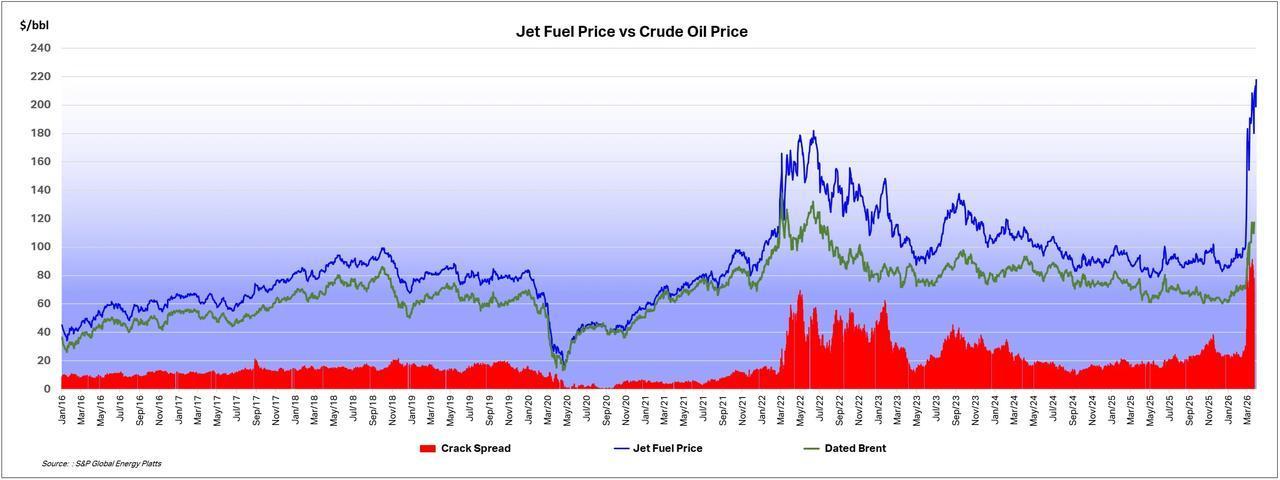
However, airlines across Asia have already begun reshaping operations to manage tighter fuel availability. Carriers are trimming flight schedules, loading extra fuel at origin airports, and adding refueling stops to navigate supply uncertainty. These adjustments come as the industry absorbs a sharp rise in fuel costs, with jet fuel prices doubling to $209 per barrel amid the ongoing war, according to IATA data.

The pressure is most visible in lower-income, import-dependent countries such as Vietnam, Myanmar, and Pakistan, Walsh stressed. Supply constraints intensified after China and Thailand halted jet fuel exports, while South Korea capped shipments at last year’s levels.
Walsh suggested that a recovery in crude flows could prompt major exporters like China and South Korea to resume shipments of refined products, offering some relief to strained markets. "There is refining capacity available once we get the crude oil flowing," he said, while cautioning that the ramp-up would not be immediate.
He added that elevated refining margins, known as the crack spread, could encourage refineries to increase jet fuel production, potentially easing supply over time.


 Set as preferred source
 Set as preferred source


 1 min read
 1 min read