Newsletters




Turkish-Greek relations are rarely without tension, but a new rivalry is simmering over U.S LNG. Both nations are now vying to become the primary entry point for U.S. LNG, turning the Mediterranean gas trade into the latest geopolitical tug-of-war.
Europe’s post-Russian gas transition is entering a decisive phase, with the U.S. aiming to become the continent’s main external supplier, while regional actors reposition themselves as indispensable transit hubs.
At the center of this recalibration sits Greece, rapidly expanding its liquefied natural gas (LNG) infrastructure and pipeline connectivity to Central and Eastern Europe.
In this context, on Feb. 26, the U.S. Department of Energy hosted officials from Bulgaria, Romania, Moldova, Ukraine, and the European Commission, along with Greek officials, to advance work on the Vertical Gas Corridor. Joshua Volz, special envoy for Global Energy Integration at the United States Department of Energy, described the initiative as "a major opportunity to expand U.S. LNG exports to Central and Eastern Europe."
An energy sector insider told Türkiye Today that while Greece’s gas network is quite limited compared to Türkiye’s, U.S. companies are finding Athens much easier to navigate. The deal-breaker? Ankara’s regulatory climate, which includes a flat-out ban on private sector gas exports.
According to the insider, Washington doesn’t have a favorite in this Mediterranean energy race. However, Türkiye’s domestic gas codes—which are currently out of sync with EU regulations—have become the ultimate roadblock to exporting U.S. LNG through Turkish infrastructure.
As Athens deepens its ties with the U.S. energy network, it raises a key question: Is Greece diminishing Türkiye's own goal of becoming the region's main gas hub?
The underlying transformation is substantial. Before 2022, Central and Eastern Europe relied on 50–70 billion cubic meters (bcm) of Russian gas annually. That volume is now being systematically replaced through a mix of LNG imports, alternative pipeline flows, and long-term supply agreements. Residual Russian gas has already fallen to roughly 30 bcm per year, with European policymakers targeting a near-complete phase-out by 2027.
Greece has moved quickly to position itself within this transition. Infrastructure such as the Alexandroupolis floating storage and regasification unit (FSRU), the Greece-Bulgaria interconnector (IGB), and the broader Vertical Gas Corridor are designed to channel LNG, primarily from the United States, into landlocked markets across the Balkans and further north toward Ukraine.
Earlier in March, Greek Prime Minister Kyriakos Mitsotakis asserted that efforts are underway to position his country as a strategic gas hub for Central and Southeastern Europe.
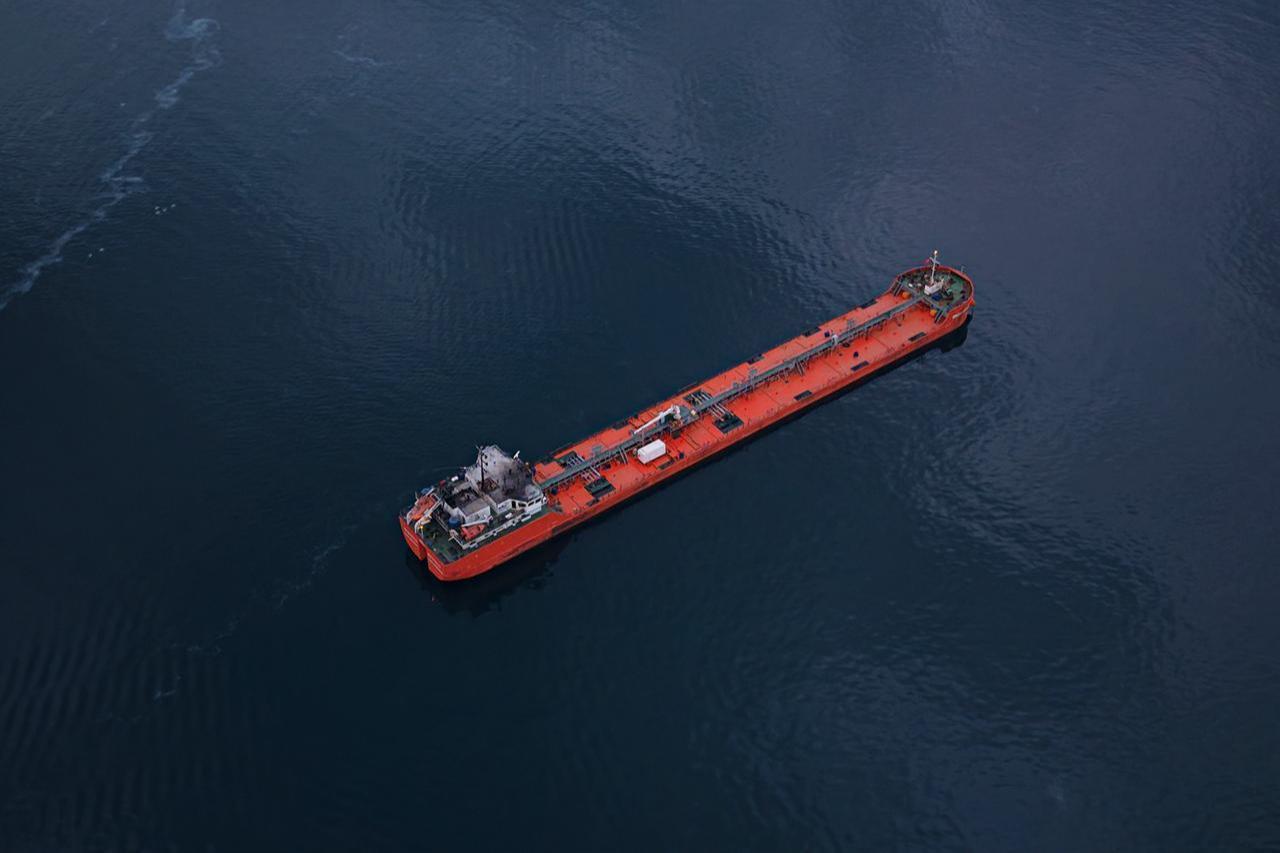

The critical point of the discussion is whether Greece is emerging as the dominant entry point for U.S. LNG into Europe, or simply one node in a broader, diversified network that includes Türkiye and other routes.
There is a divergence in how analysts interpret Washington’s approach. Some view Greece as the primary gateway, supported by targeted infrastructure investment and diplomatic backing. Others argue that the U.S. strategy is deliberately non-exclusive.
Matthew Bryza, a former U.S. ambassador, rejects the idea of a singular corridor. In talks with Türkiye Today, he points instead to market dynamics and the role of private companies, noting that Washington has supported LNG flows into Europe “from as many directions as possible,” including significant volumes entering via Türkiye.
The objective, in his view, is not to privilege one hub over another but to maximize total U.S. market penetration while enhancing supply diversity for European allies.
During a visit to a Greek LNG terminal in 2025, U.S. Interior Secretary Doug Burgum framed the strategy as expanding “energy abundance” to allies in order to reduce dependence on adversaries.
Recent U.S. Department of Energy data reinforce this distributed approach, as American LNG exports to both Türkiye and Greece stand at roughly 4 billion cubic feet (bcf) each, indicating that, so far, Washington is sustaining parallel supply routes rather than concentrating flows through a single hub.
Greece’s case rests on both geography and timing. The Vertical Gas Corridor, in particular, is designed to connect Greek LNG terminals to Bulgaria, Romania, Hungary, and beyond. Long-term supply agreements signed between 2024 and 2025 suggest that a significant share of replacement volumes, potentially up to 90% of former Russian supply in some markets, will be secured through such routes.
There are also commercial considerations. Much of the new LNG trade is being structured through long-term sales and purchase agreements (SPAs), often linked to Henry Hub pricing. This provides a degree of price stability compared to the volatility of spot LNG markets, making Greek-linked supply chains more predictable for buyers in Central and Eastern Europe.
However, Greece’s model faces structural constraints. LNG imports inherently carry a cost premium due to liquefaction, shipping, and regasification. While acceptable in the context of energy security, this premium becomes more problematic for price-sensitive markets, particularly outside the European Union.
Moreover, Greece’s throughput capacity, while expanding, remains limited relative to the scale of the region’s total demand. Its role may therefore be significant but not dominant.
Energy expert and Director of the Energy Center at Bogazici University, Prof. Gurkan Kumbaroglu, argues that the Mediterranean should be a shared win rather than a zero-sum game, calling for Turkish-Greek cooperation over rivalry.
“Both Türkiye’s and Greece’s LNG import terminals are needed under surging demand in Europe as the continent moves towards a full phaseout of Russian energy. A collaboration between Türkiye and Greece in energy would further enhance energy security, peace, and stability in the region,” he said.
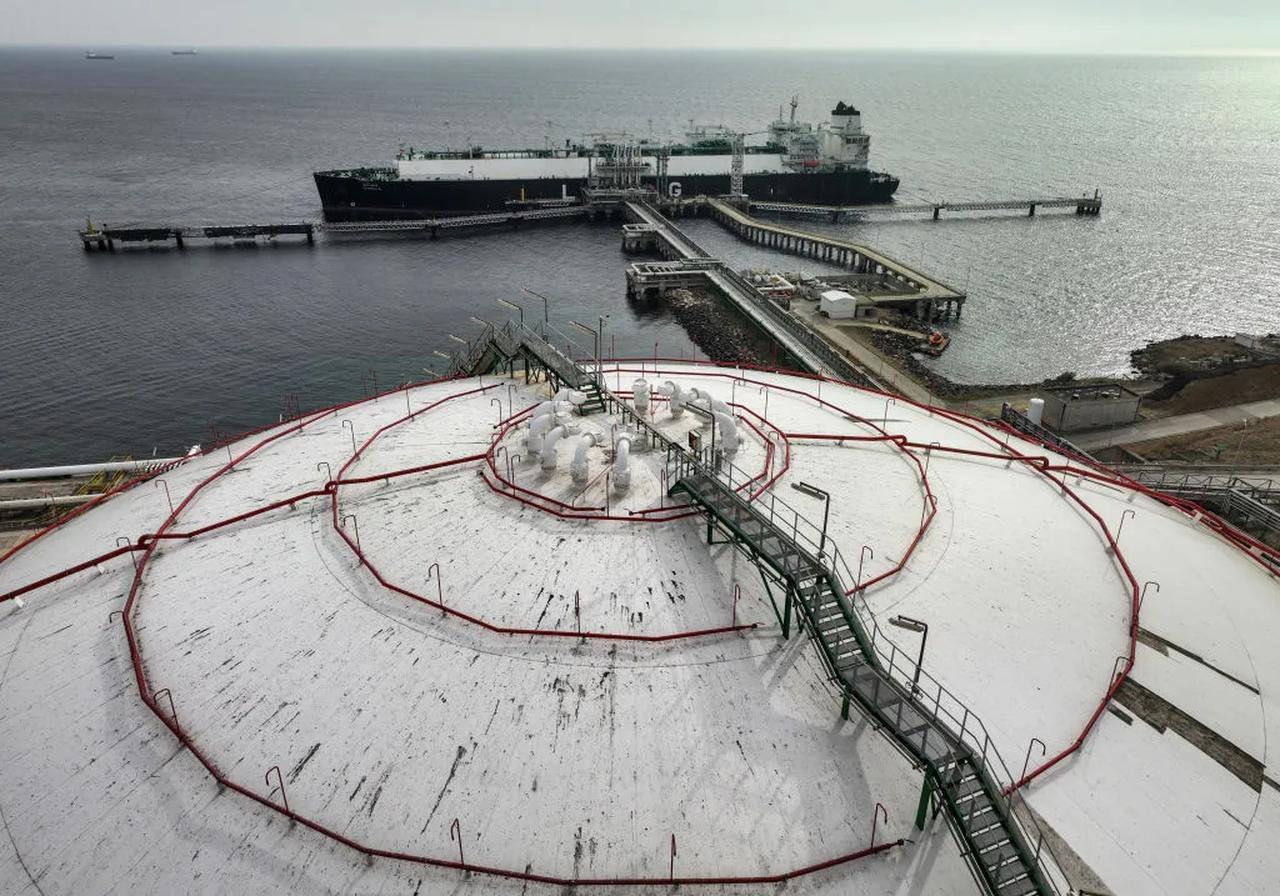
Türkiye’s position complicates the narrative of Greek ascendancy. Long before the current LNG push, Ankara had invested heavily in pipeline infrastructure, storage capacity, and regasification terminals, positioning itself as a natural bridge between producers in the Caspian, the Middle East, Russia and Europe.
In recent years, Türkiye has also become a major importer of U.S. LNG, with volumes fluctuating with market conditions.
This flexibility is central to Ankara’s hub ambitions. Unlike Greece, which is largely dependent on LNG imports, Türkiye operates within a hybrid system that combines pipeline and LNG flows. That creates opportunities for arbitrage and pricing strategies that Greece may struggle to match.
At the same time, Türkiye has pursued long-term contracts at scale, securing volumes that enhance its ability to go beyond being a transit state and act as a regional trading hub.
Energy and Natural Resources Minister Alparslan Bayraktar has repeatedly signaled the government's ambition to evolve into a sophisticated energy hub where gas is actively traded, prices are benchmarked, and strategic flows are managed.
In this context, the Turkish Energy Minister previously described the Vertical Corridor project as a boost for Ankara’s targets.
The expansion of LNG exports to Europe has been accompanied by diplomatic engagement, financial support for infrastructure, and political pressure on allies to reduce Russian imports.
In a commentary special to Türkiye Today, Johns Hopkins University’s Tim Sahay characterizes the Vertical Gas Corridor as a definitive exercise in "energy statecraft," noting that Washington is moving beyond mere private-sector encouragement to actively engineer the market conditions necessary for its viability.
This includes de-risking long-term contracts, backing infrastructure buildout, and aligning partner governments around a shared objective: replacing Russian supply with what US officials have described as “molecules of freedom.”
One issue, according to him, is market resistance. European buyers are sensitive not only to price but also to volatility, particularly in a global LNG market influenced by geopolitical tensions in the Middle East and Asia. While long-term contracts mitigate some risks, they also lock buyers into pricing structures that may become less competitive over time.
Another concern is political. U.S. threats to condition LNG supplies on trade agreements, introduce an element of coercion that could undermine trust. For European policymakers, diversification away from Russia was intended to reduce vulnerability, not replace one form of dependence with another.
A defining feature of the contested region is that economic realities often outweigh political considerations, according to LNG analyst Thamer al-Qershi.
The Yemen-based analyst tells Türkiye Today that “cost differentials may constrain full adoption, especially in non-EU countries, where affordability is as crucial as supply security.”
He argues that the ultimate advantage will go to those securing the largest volumes through long-term contracts, as such agreements provide predictable pricing and, particularly under tolling structures linked to Henry Hub, tend to be more competitive than volatile spot LNG markets.
In his view, it is this volume security and contractual stability, rather than political backing alone, that will determine the frontrunners in this evolving LNG landscape.
In practice, European buyers are likely to use both routes. Diversification is not only about replacing Russian gas but also about avoiding overreliance on any single supplier or corridor. From that perspective, Greece and Türkiye may be less rivals than complementary components of a more resilient system.


 Set as preferred source
 Set as preferred source


 1 min read
 1 min read